Department of Cancer Biology, Wake Forest School of Medicine, Winston-Salem, North Carolina, USA.
Institute of Pathology and Southwest Cancer Center, Key Laboratory of Tumor Immunopathology of Ministry of Education of China, Southwest Hospital, Third Military Medical University, Chongqing, China.
J Clin Invest. 2022 Mar 1;132(5). doi: 10.1172/JCI141797.
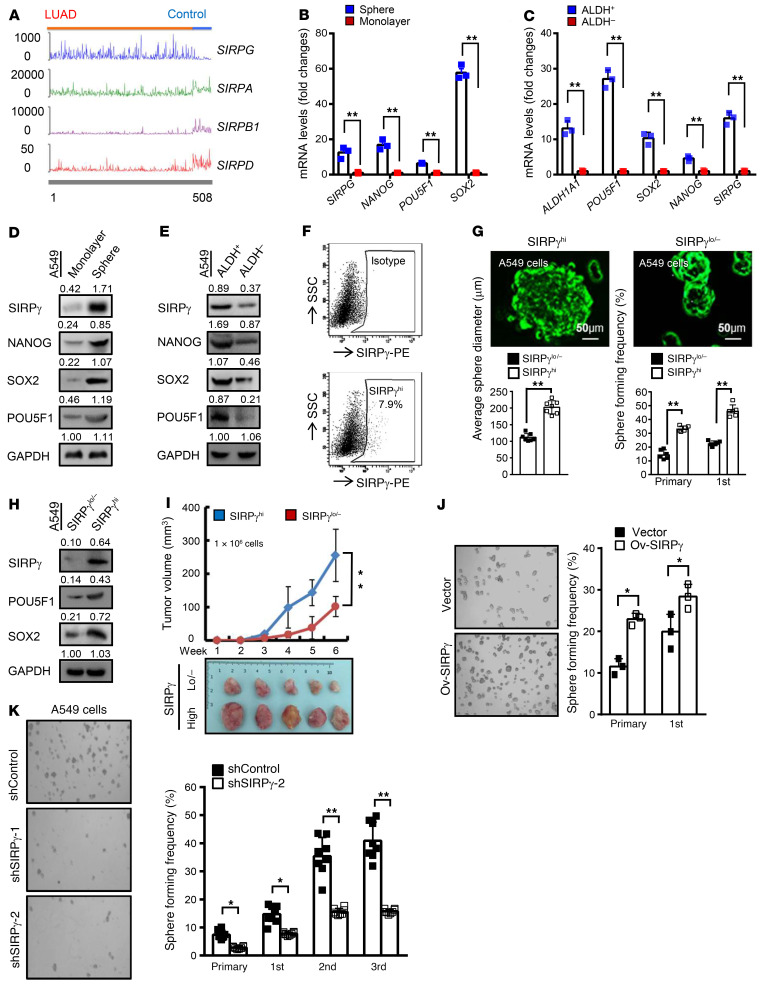
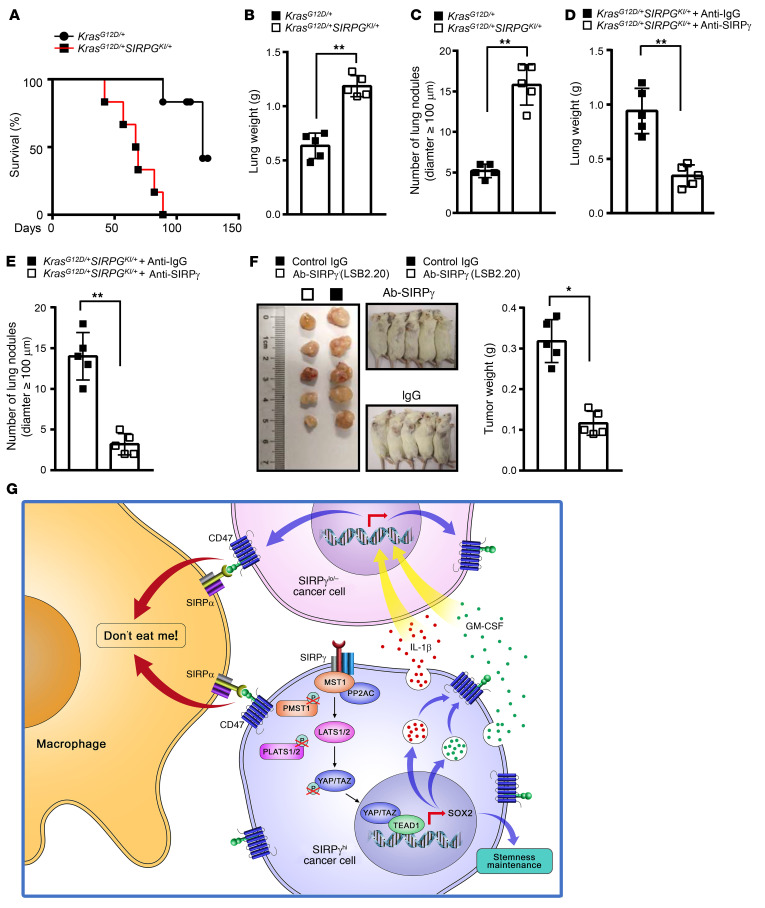
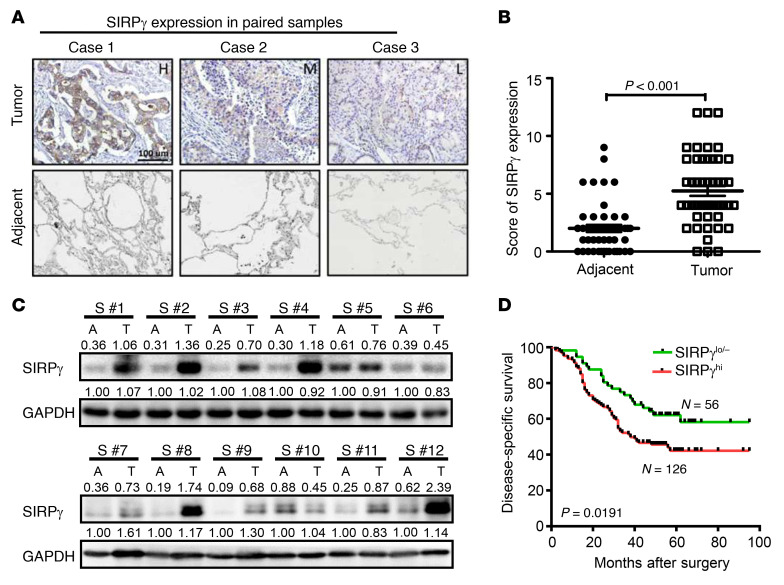
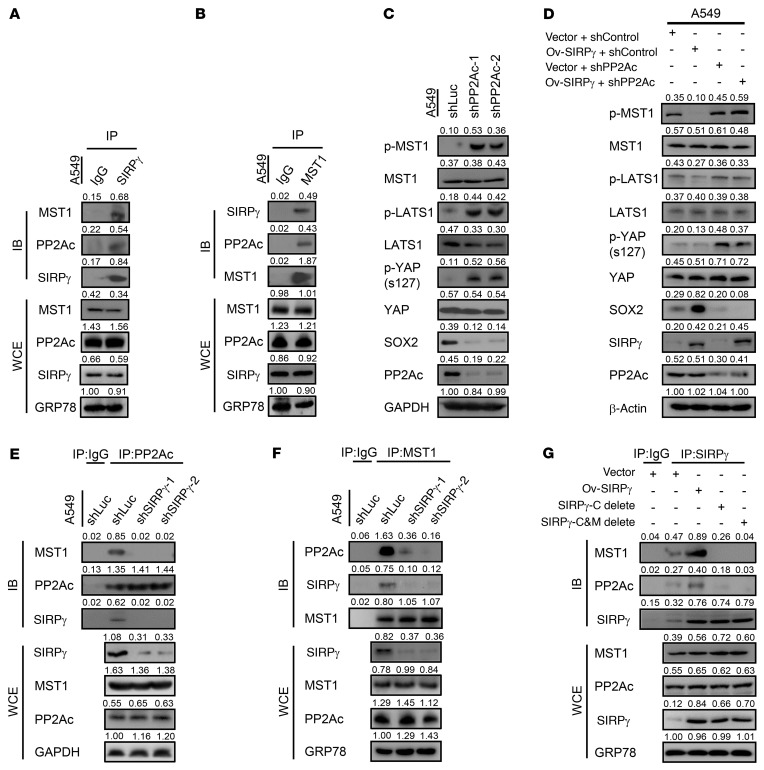
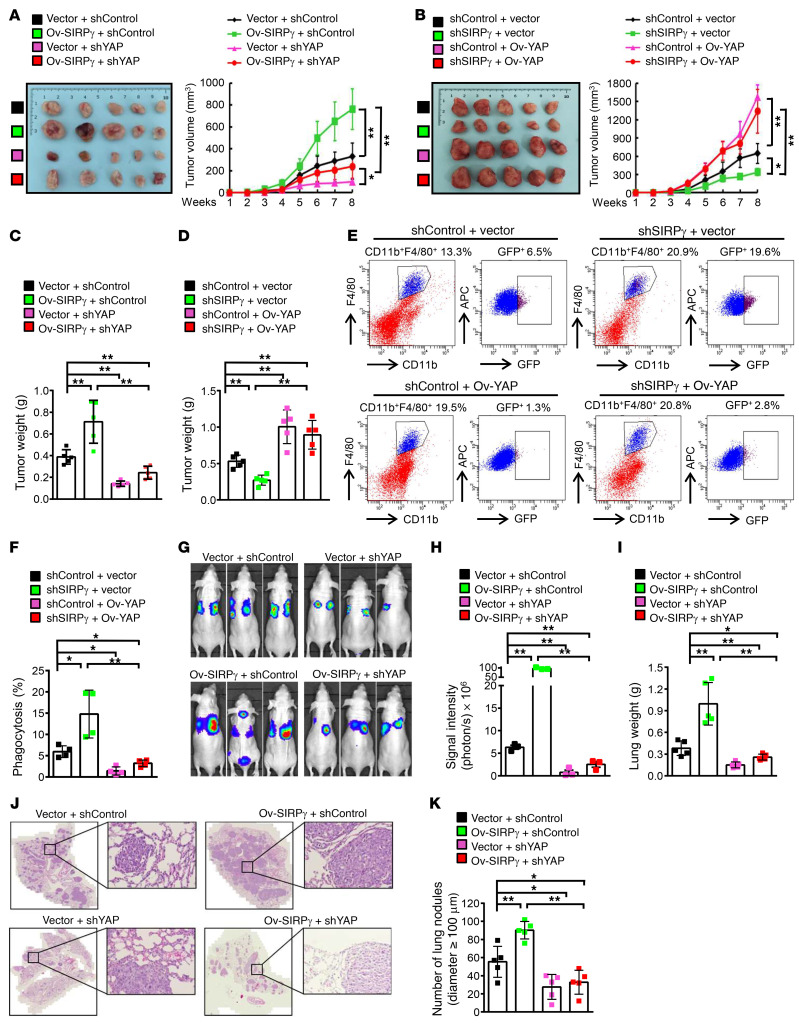
Cancer stem-like cells (CSLCs) acquire enhanced immune checkpoint responses to evade immune cell killing and promote tumor progression. Here we showed that signal regulatory protein γ (SIRPγ) determined CSLC properties and immune evasiveness in a small population of lung adenocarcinoma (LUAD) cancer cells. A SIRPγhi population displayed CSLC properties and transmitted the immune escape signal through sustaining CD47 expression in both SIRPγhi and SIRPγlo/- tumor cells. SIRPγ bridged MST1 and PP2A to facilitate MST1 dephosphorylation, resulting in Hippo/YAP activation and leading to cytokine release by CSLCs, which stimulated CD47 expression in LUAD cells and consequently inhibited tumor cell phagocytosis. SIRPγ promoted tumor growth and metastasis in vivo through YAP signaling. Notably, SIRPγ targeting with genetic SIRPγ knockdown or a SIRPγ-neutralizing antibody inhibited CSLC phenotypes and elicited phagocytosis that suppressed tumor growth in vivo. SIRPG was upregulated in human LUAD and its overexpression predicted poor survival outcome. Thus, SIRPγhi cells serve as CSLCs and tumor immune checkpoint-initiating cells, propagating the immune escape signal to the entire cancer cell population. Our study identifies Hippo/YAP signaling as the first mechanism by which SIRPγ is engaged and reveals that targeting SIRPγ represents an immune- and CSLC-targeting strategy for lung cancer therapy.
癌症干细胞样细胞(CSLCs)获得增强的免疫检查点反应,以逃避免疫细胞杀伤并促进肿瘤进展。在这里,我们表明信号调节蛋白γ(SIRPγ)决定了一小部分肺腺癌(LUAD)癌细胞的 CSLC 特性和免疫逃逸。SIRPγ hi 群体表现出 CSLC 特性,并通过在 SIRPγ hi 和 SIRPγ lo/-肿瘤细胞中维持 CD47 表达来传递免疫逃避信号。SIRPγ 将 MST1 和 PP2A 桥接起来,促进 MST1 去磷酸化,导致 Hippo/YAP 激活,并导致 CSLC 释放细胞因子,刺激 LUAD 细胞中的 CD47 表达,从而抑制肿瘤细胞吞噬作用。SIRPγ 通过 YAP 信号促进体内肿瘤生长和转移。值得注意的是,用遗传 SIRPγ 敲低或 SIRPγ 中和抗体靶向 SIRPγ 抑制了 CSLC 表型并引发吞噬作用,从而抑制体内肿瘤生长。SIRPG 在人 LUAD 中上调,其过表达预示着预后不良。因此,SIRPγ hi 细胞作为 CSLCs 和肿瘤免疫检查点起始细胞,将免疫逃避信号传播到整个癌细胞群体。我们的研究确定 Hippo/YAP 信号是 SIRPγ 参与的第一个机制,并表明靶向 SIRPγ 代表了肺癌治疗的免疫和 CSLC 靶向策略。