Zhou Wenqing, Luo Jinzhuo, Xie Xiaohong, Yang Shangqing, Zhu Dan, Huang Hongming, Yang Dongliang, Liu Jia
Department of Infectious Diseases, Union Hospital, Tongji Medical College, Huazhong University of Science and Technology, Wuhan, Hubei, China.
J Clin Transl Hepatol. 2022 Feb 28;10(1):17-25. doi: 10.14218/JCTH.2020.00161. Epub 2021 Jun 11.
Change of gut microbiota composition is associated with the outcome of hepatitis B virus (HBV) infection, yet the related mechanisms are not fully characterized. The objective of this study was to investigate the immune mechanism associated with HBV persistence induced by gut microbiota dysbiosis.
C57BL/6 mice were sterilized for gut-microbiota by using an antibiotic (ABX) mixture protocol, and were monitored for their serum endotoxin (lipopolysaccharide [LPS]) levels. An HBV-replicating mouse model was established by performing HBV-expressing plasmid pAAV/HBV1.2 hydrodynamic injection (HDI) with or without LPS, and was monitored for serum hepatitis B surface antigen, hepatitis B e antigen, HBV DNA, and cytokine levels. Kupffer cells (KCs) were purified from antibiotic-treated mice and HBV-replicating mice and analyzed for IL-10 production and T cell suppression ability.
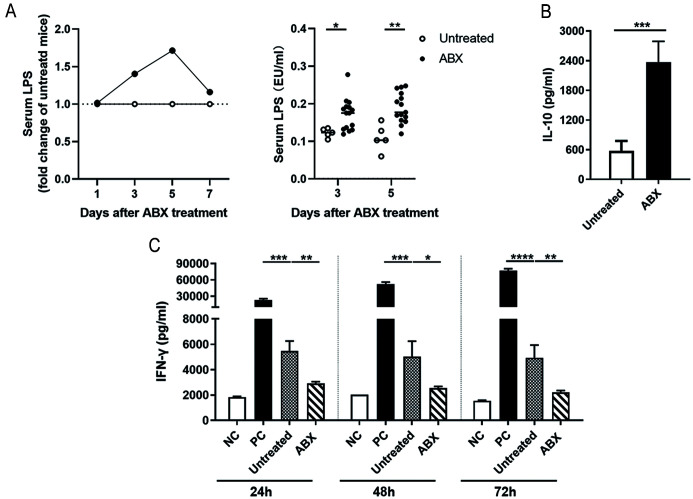
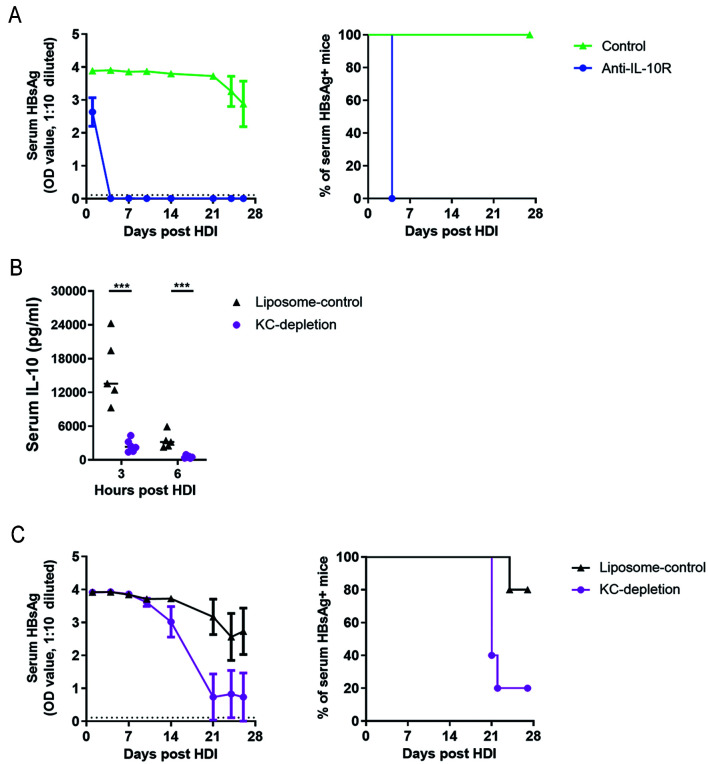
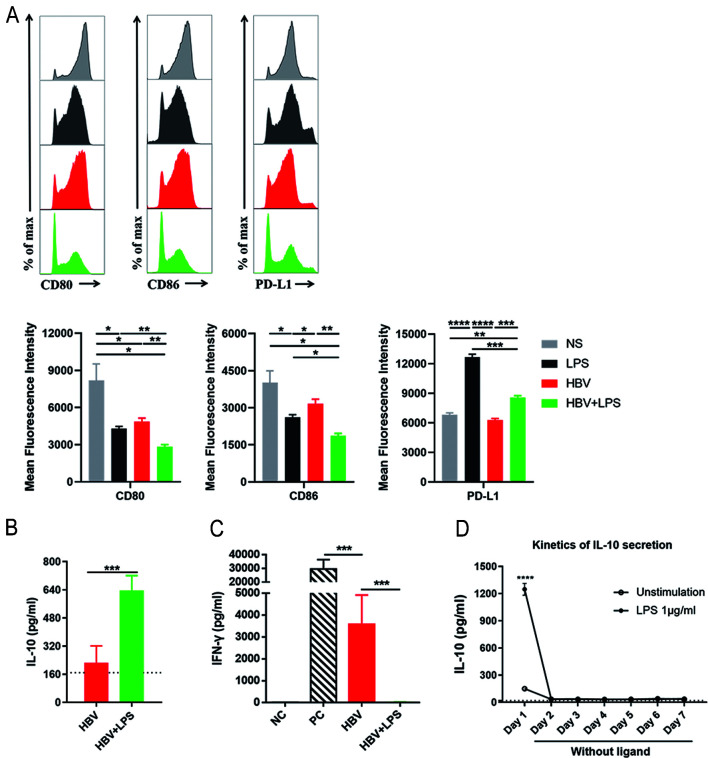
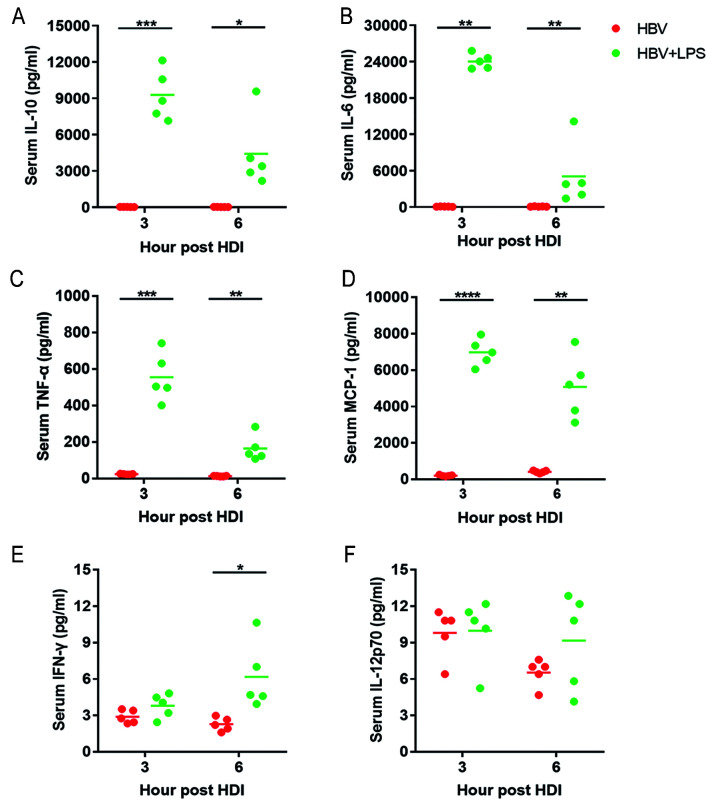
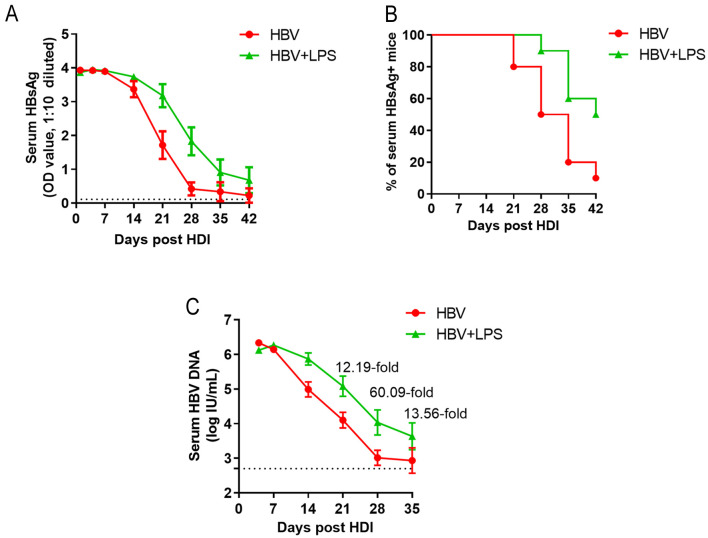
ABX treatment resulted in increased serum LPS levels in mice. The KCs separated from both ABX-treated and LPS-treated HBV-replicating mice showed significantly increased IL-10 production and enhanced ability to suppress IFN-γ production of TCR-activated T cells than the KCs separated from their counterpart controls. HDI of pAAV/HBV1.2 in combination with LPS in mice led to a delayed HBV clearance and early elevation of serum IL-10 levels compared to pAAV/HBV1.2 HDI alone. Moreover, IL-10 function blockade or KC depletion led to accelerated HBV clearance in LPS-treated HBV-replicating mice.
Our results suggest that dysbiosis of the gut microbiota in mice leads to endotoxemia, which induces KC IL-10 production and strengthens KC-mediated T cell suppression, and thus facilitates HBV persistence.
肠道微生物群组成的变化与乙型肝炎病毒(HBV)感染的结局相关,但其相关机制尚未完全明确。本研究的目的是探讨肠道微生物群失调诱导HBV持续感染的免疫机制。
采用抗生素(ABX)混合方案对C57BL/6小鼠进行肠道微生物群清除,并监测其血清内毒素(脂多糖[LPS])水平。通过进行表达HBV的质粒pAAV/HBV1.2的水动力注射(HDI),在有或无LPS的情况下建立HBV复制小鼠模型,并监测血清乙型肝炎表面抗原、乙型肝炎e抗原、HBV DNA和细胞因子水平。从抗生素处理的小鼠和HBV复制小鼠中纯化库普弗细胞(KC),并分析其IL-10产生和T细胞抑制能力。
ABX处理导致小鼠血清LPS水平升高。与从相应对照中分离的KC相比,从ABX处理和LPS处理的HBV复制小鼠中分离的KC显示出IL-10产生显著增加,以及抑制TCR激活的T细胞产生IFN-γ的能力增强。与单独进行pAAV/HBV1.2 HDI相比,在小鼠中联合LPS进行pAAV/HBV1.2 HDI导致HBV清除延迟和血清IL-10水平早期升高。此外,IL-10功能阻断或KC清除导致LPS处理的HBV复制小鼠中HBV清除加速。
我们的结果表明,小鼠肠道微生物群失调导致内毒素血症,诱导KC产生IL-10并增强KC介导的T细胞抑制,从而促进HBV持续感染。