Yu Jian-Xiu, Wu Jun, Chen Xin, Zang Su-Gang, Li Xue-Bin, Wu Li-Pei, Xuan Shi-Hai
Medical Laboratory Department, Affiliated Dongtai Hospital of Nantong University, Dongtai, China.
Front Med (Lausanne). 2025 Jun 4;12:1615839. doi: 10.3389/fmed.2025.1615839. eCollection 2025.
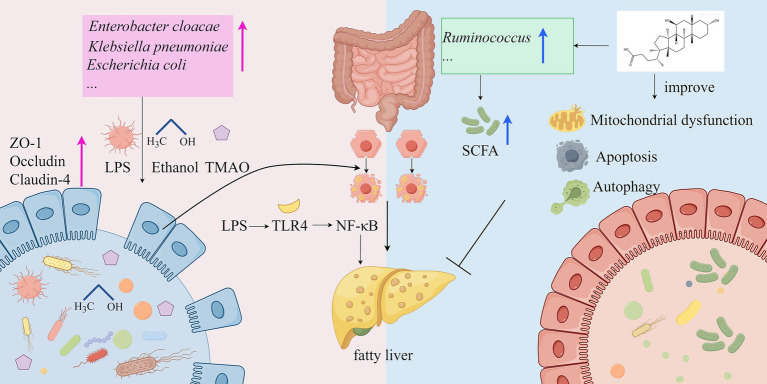
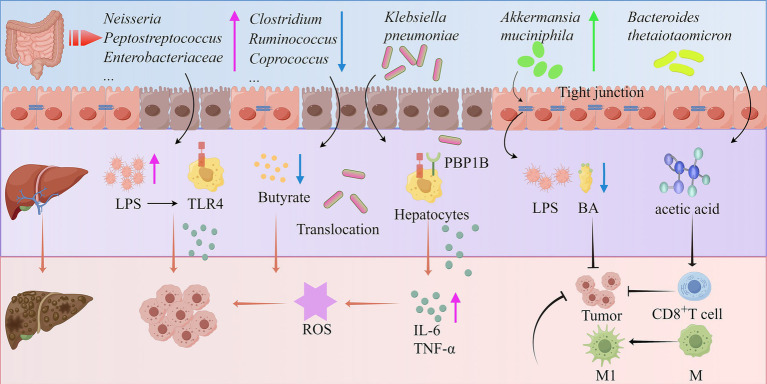
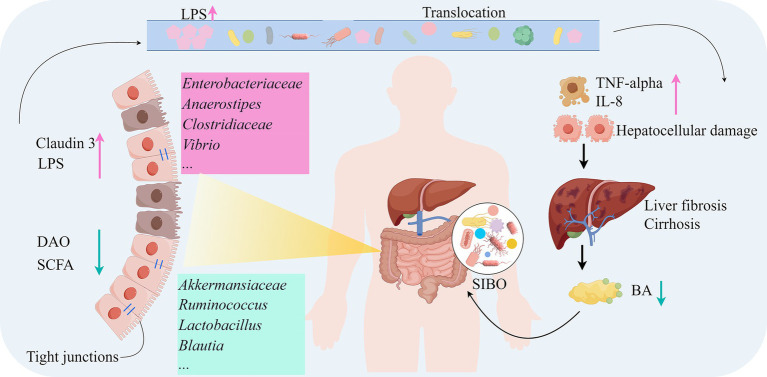
The gut microbiota plays a pivotal role in the pathogenesis and progression of various liver diseases, including viral hepatitis, alcoholic fatty liver disease, metabolic dysfunction-associated steatotic liver disease, drug-induced hepatitis, liver cirrhosis, hepatocellular carcinoma, and other hepatic disorders. Research indicates that dysbiosis of the gut microbiota can disrupt the integrity of the intestinal barrier and interfere with the immune functions of the gut-liver axis, thereby mediating the progression of liver diseases. Analysis of microbial composition and metabolites in fecal samples can assess the diversity of gut microbiota and the abundance of specific microbial populations, providing auxiliary diagnostic information for liver diseases. Furthermore, interventions such as fecal microbiota transplantation, probiotics, prebiotics, bacteriophages, and necessary antibiotic treatments offer multiple approaches to modulate the gut microbiota, presenting promising new strategies for the prevention and treatment of liver diseases. This review summarizes the latest research advances on the role of gut microbiota in liver diseases, offering novel theoretical foundations and practical directions for the diagnosis and treatment of hepatic disorders.
肠道微生物群在各种肝脏疾病的发病机制和进展中起着关键作用,包括病毒性肝炎、酒精性脂肪性肝病、代谢功能障碍相关脂肪性肝病、药物性肝炎、肝硬化、肝细胞癌和其他肝脏疾病。研究表明,肠道微生物群失调会破坏肠道屏障的完整性,并干扰肠-肝轴的免疫功能,从而介导肝脏疾病的进展。分析粪便样本中的微生物组成和代谢产物可以评估肠道微生物群的多样性和特定微生物种群的丰度,为肝脏疾病提供辅助诊断信息。此外,粪便微生物群移植、益生菌、益生元、噬菌体和必要的抗生素治疗等干预措施提供了多种调节肠道微生物群的方法,为肝脏疾病的预防和治疗提供了有前景的新策略。这篇综述总结了肠道微生物群在肝脏疾病中作用的最新研究进展,为肝脏疾病的诊断和治疗提供了新的理论基础和实践方向。