• 文献检索
  • 文档翻译
  • 深度研究
  • 学术资讯
  • Suppr Zotero 插件Zotero 插件
  • 邀请有礼
  • 套餐&价格
  • 历史记录
应用&插件
Suppr Zotero 插件Zotero 插件浏览器插件Mac 客户端Windows 客户端微信小程序
定价
高级版会员购买积分包购买API积分包
服务
文献检索文档翻译深度研究API 文档MCP 服务
关于我们
关于 Suppr公司介绍联系我们用户协议隐私条款
关注我们

Suppr 超能文献

核心技术专利:CN118964589B侵权必究
粤ICP备2023148730 号-1Suppr @ 2026

文献检索

告别复杂PubMed语法,用中文像聊天一样搜索,搜遍4000万医学文献。AI智能推荐,让科研检索更轻松。

立即免费搜索

文件翻译

保留排版,准确专业,支持PDF/Word/PPT等文件格式,支持 12+语言互译。

免费翻译文档

深度研究

AI帮你快速写综述,25分钟生成高质量综述,智能提取关键信息,辅助科研写作。

立即免费体验

移动医疗干预措施在高血压自我管理中的应用:参与度、互动性和个性化定制的框架及系统评价。

mHealth Interventions for Self-management of Hypertension: Framework and Systematic Review on Engagement, Interactivity, and Tailoring.

机构信息

Department of Biomedical Informatics, The Ohio State University, Columbus, OH, United States.

Division of Cardiovascular Medicine, The Ohio State University College of Medicine, Columbus, OH, United States.

出版信息

JMIR Mhealth Uhealth. 2022 Mar 2;10(3):e29415. doi: 10.2196/29415.

DOI:10.2196/29415
PMID:35234655
原文链接:https://pmc.ncbi.nlm.nih.gov/articles/PMC8928043/
Abstract

BACKGROUND

Engagement is essential for the effectiveness of digital behavior change interventions. Existing systematic reviews examining hypertension self-management interventions via mobile apps have primarily focused on intervention efficacy and app usability. Engagement in the prevention or management of hypertension is largely unknown.

OBJECTIVE

This systematic review explores the definition and role of engagement in hypertension-focused mobile health (mHealth) interventions, as well as how determinants of engagement (ie, tailoring and interactivity) have been implemented.

METHODS

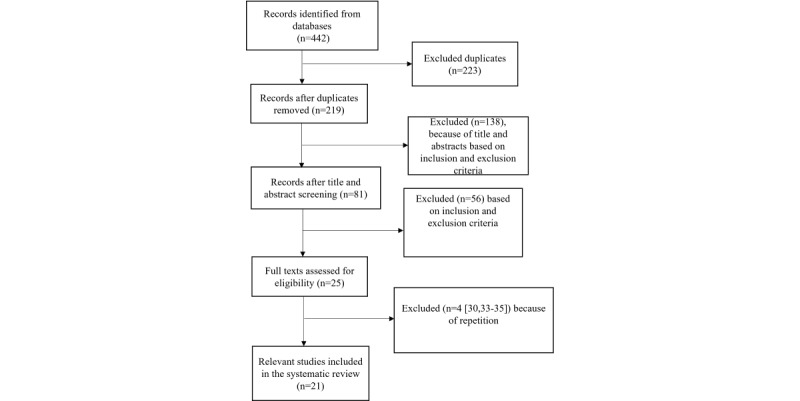
A systematic review of mobile app interventions for hypertension self-management targeting adults, published from 2013 to 2020, was conducted. A total of 21 studies were included in this systematic review.

RESULTS

The engagement was defined or operationalized as a microlevel concept, operationalized as interaction with the interventions (ie, frequency of engagement, time or duration of engagement with the program, and intensity of engagement). For all 3 studies that tested the relationship, increased engagement was associated with better biomedical outcomes (eg, blood pressure change). Interactivity was limited in digital behavior change interventions, as only 7 studies provided 2-way communication between users and a health care professional, and 9 studies provided 1-way communication in possible critical conditions; that is, when abnormal blood pressure values were recorded, users or health care professionals were notified. The tailoring of interventions varied at different aspects, from the tailoring of intervention content (including goals, patient education, advice and feedback from health professionals, reminders, and motivational messages) to the tailoring of intervention dose and communication mode. Tailoring was carried out in a number of ways, considering patient characteristics such as goals, preferences, disease characteristics (eg, hypertension stage and medication list), disease self-management experience levels, medication adherence rate, and values and beliefs.

CONCLUSIONS

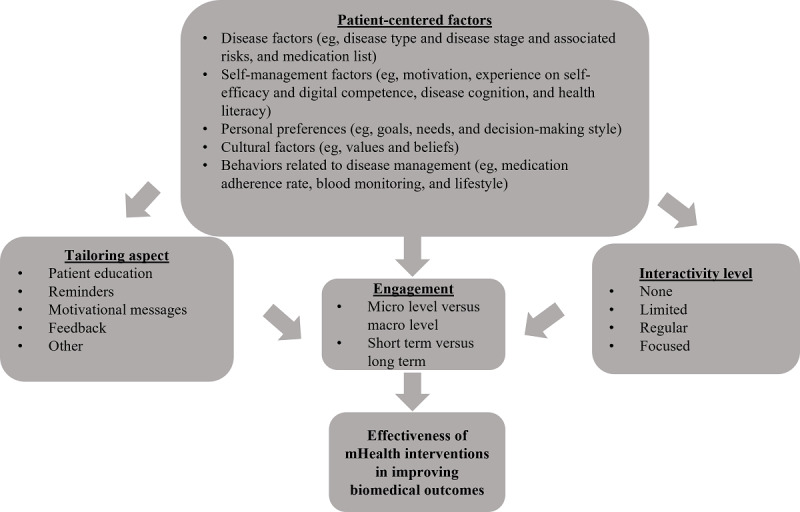
Available studies support the importance of engagement in intervention effectiveness as well as the essential roles of patient factors in tailoring, interactivity, and engagement. A patient-centered engagement framework for hypertension self-management using mHealth technology is proposed here, with the intent of facilitating intervention design and disease self-management using mHealth technology.

摘要

背景

参与对于数字行为改变干预措施的有效性至关重要。现有的系统评价检查通过移动应用程序进行的高血压自我管理干预措施主要集中在干预效果和应用程序可用性上。对高血压的预防或管理的参与情况在很大程度上尚不清楚。

目的

本系统评价探讨了以高血压为重点的移动健康(mHealth)干预措施中参与的定义和作用,以及参与的决定因素(即定制和交互性)的实施情况。

方法

对 2013 年至 2020 年期间针对成年人的高血压自我管理的移动应用程序干预措施进行了系统评价。本系统评价共纳入 21 项研究。

结果

参与被定义或操作化为微观层面的概念,操作化为与干预措施的相互作用(即参与的频率、参与程序的时间或持续时间以及参与的强度)。对于所有 3 项测试相关性的研究,增加参与度与更好的生物医学结果(例如,血压变化)相关。数字行为改变干预措施中的交互性有限,因为只有 7 项研究在用户和医疗保健专业人员之间提供了双向通信,并且 9 项研究在可能的危急情况下提供了单向通信;也就是说,当记录到异常血压值时,通知用户或医疗保健专业人员。干预措施的定制在不同方面有所不同,从干预内容的定制(包括目标、患者教育、来自健康专业人员的建议和反馈、提醒和激励信息)到干预剂量和通信模式的定制。考虑到患者特征,例如目标、偏好、疾病特征(例如,高血压阶段和药物清单)、疾病自我管理经验水平、药物依从率以及价值观和信念,以多种方式进行了定制。

结论

现有研究支持参与干预效果的重要性,以及患者因素在定制、交互性和参与方面的重要作用。本文提出了一种基于 mHealth 技术的高血压自我管理的以患者为中心的参与框架,旨在促进使用 mHealth 技术进行干预设计和疾病自我管理。
https://cdn.ncbi.nlm.nih.gov/pmc/blobs/8815/8928043/e6e48854de63/mhealth_v10i3e29415_fig2.jpg
https://cdn.ncbi.nlm.nih.gov/pmc/blobs/8815/8928043/51cdbc727eb4/mhealth_v10i3e29415_fig1.jpg
https://cdn.ncbi.nlm.nih.gov/pmc/blobs/8815/8928043/e6e48854de63/mhealth_v10i3e29415_fig2.jpg
https://cdn.ncbi.nlm.nih.gov/pmc/blobs/8815/8928043/51cdbc727eb4/mhealth_v10i3e29415_fig1.jpg
https://cdn.ncbi.nlm.nih.gov/pmc/blobs/8815/8928043/e6e48854de63/mhealth_v10i3e29415_fig2.jpg

相似文献

1
mHealth Interventions for Self-management of Hypertension: Framework and Systematic Review on Engagement, Interactivity, and Tailoring.移动医疗干预措施在高血压自我管理中的应用:参与度、互动性和个性化定制的框架及系统评价。
JMIR Mhealth Uhealth. 2022 Mar 2;10(3):e29415. doi: 10.2196/29415.
2
Factors Influencing Adherence to mHealth Apps for Prevention or Management of Noncommunicable Diseases: Systematic Review.影响移动医疗应用程序用于预防或管理非传染性疾病的依从性的因素:系统评价。
J Med Internet Res. 2022 May 25;24(5):e35371. doi: 10.2196/35371.
3
Exploring engagement patterns within a mobile health intervention for women at risk of gestational diabetes.探索针对有妊娠期糖尿病风险的女性的移动健康干预中的参与模式。
Womens Health (Lond). 2025 Jan-Dec;21:17455057251327510. doi: 10.1177/17455057251327510. Epub 2025 Jun 5.
4
Mobile Apps to Improve Medication Adherence in Cardiovascular Disease: Systematic Review and Meta-analysis.移动应用程序改善心血管疾病患者的药物依从性:系统评价和荟萃分析。
J Med Internet Res. 2021 May 25;23(5):e24190. doi: 10.2196/24190.
5
The Implementation of Behavior Change Techniques in mHealth Apps for Sleep: Systematic Review.移动健康应用程序中行为改变技术的实施:系统评价。
JMIR Mhealth Uhealth. 2022 Apr 4;10(4):e33527. doi: 10.2196/33527.
6
Tools for Evaluating the Content, Efficacy, and Usability of Mobile Health Apps According to the Consensus-Based Standards for the Selection of Health Measurement Instruments: Systematic Review.根据基于共识的健康测量仪器选择标准评估移动健康应用程序的内容、疗效和可用性的工具:系统评价。
JMIR Mhealth Uhealth. 2021 Dec 1;9(12):e15433. doi: 10.2196/15433.
7
Mobile phone-based interventions for improving adherence to medication prescribed for the primary prevention of cardiovascular disease in adults.基于手机的干预措施,用于提高成年人心血管疾病一级预防中所开药物的依从性。
Cochrane Database Syst Rev. 2018 Jun 22;6(6):CD012675. doi: 10.1002/14651858.CD012675.pub2.
8
Persuasive Technology in an mHealth App Designed for Pelvic Floor Muscle Training Among Women: Systematic Review.用于女性盆底肌训练的移动健康应用中的说服技术:系统评价。
JMIR Mhealth Uhealth. 2022 Mar 22;10(3):e28751. doi: 10.2196/28751.
9
mHealth Strategies Related to HIV Postexposure Prophylaxis Knowledge and Access: Systematic Literature Review, Technology Prospecting of Patent Databases, and Systematic Search on App Stores.移动医疗策略与 HIV 暴露后预防知识和获取相关:系统文献综述、专利数据库技术展望以及应用商店系统检索。
JMIR Mhealth Uhealth. 2021 Feb 16;9(2):e23912. doi: 10.2196/23912.
10
Home treatment for mental health problems: a systematic review.心理健康问题的居家治疗:一项系统综述
Health Technol Assess. 2001;5(15):1-139. doi: 10.3310/hta5150.

引用本文的文献

1
Planning for the Unexpected and Unintended Effects of mHealth Interventions: Systematic Review.移动健康干预意外及非预期效果的规划:系统评价
J Med Internet Res. 2025 Aug 7;27:e68909. doi: 10.2196/68909.
2
Impact of Patient Engagement on Blood Pressure Control Among Older Individuals With Hypertension in a Mobile Health Intervention: Longitudinal Analysis Using Latent Growth Curve Modeling.移动健康干预中患者参与对老年高血压患者血压控制的影响:使用潜在增长曲线模型的纵向分析
J Med Internet Res. 2025 Jul 31;27:e71668. doi: 10.2196/71668.
3
Preventive Health Behavior and Readiness for Self-Management in a Multilingual Adult Population: A Representative Study from Northern Italy.

本文引用的文献

1
Barriers to and Facilitators for Using Nutrition Apps: Systematic Review and Conceptual Framework.使用营养应用程序的障碍与促进因素:系统评价与概念框架
JMIR Mhealth Uhealth. 2021 Apr 1;9(6). doi: 10.2196/20037.
2
Effectiveness of Mobile App-Assisted Self-Care Interventions for Improving Patient Outcomes in Type 2 Diabetes and/or Hypertension: Systematic Review and Meta-Analysis of Randomized Controlled Trials.移动应用辅助自我护理干预在改善 2 型糖尿病和/或高血压患者结局中的有效性:随机对照试验的系统评价和荟萃分析。
JMIR Mhealth Uhealth. 2020 Aug 4;8(8):e15779. doi: 10.2196/15779.
3
A Mobile Health Coaching Intervention for Controlling Hypertension: Single-Arm Pilot Pre-Post Study.
多语言成年人群体的预防性健康行为与自我管理准备情况:来自意大利北部的一项代表性研究
Nurs Rep. 2025 Jul 1;15(7):240. doi: 10.3390/nursrep15070240.
4
Home-based blood pressure monitoring using the AHOMKA care model: a longitudinal single-group pilot study in Accra.使用AHOMKA护理模式进行家庭血压监测:阿克拉的一项纵向单组试点研究。
Health Sci Investig J. 2024;6(2):960-968. doi: 10.46829/hsijournal.2024.12.6.2.960-968. Epub 2024 Dec 30.
5
Trends analysis of the global burden of hypertensive heart disease from 1990 to 2021: a population-based study.1990年至2021年全球高血压性心脏病负担的趋势分析:一项基于人群的研究。
BMC Public Health. 2025 Jul 2;25(1):2233. doi: 10.1186/s12889-025-23389-6.
6
Public perceptions and engagement in mHealth: a European survey on attitudes toward health apps use and data sharing.公众对移动健康的认知与参与:一项关于对健康应用使用和数据共享态度的欧洲调查。
Eur J Public Health. 2025 Jun 1;35(3):401-406. doi: 10.1093/eurpub/ckaf036.
7
Exploring the Feasibility of a 5-Week mHealth Intervention to Enhance Physical Activity and an Active, Healthy Lifestyle in Community-Dwelling Older Adults: Mixed Methods Study.探索为期5周的移动健康干预措施在社区居住的老年人中增强身体活动及促进积极健康生活方式的可行性:混合方法研究
JMIR Aging. 2025 Jan 27;8:e63348. doi: 10.2196/63348.
8
Precision medicine at the intersection of metabolic health, hypertension, and cultural preferences.代谢健康、高血压与文化偏好交叉领域的精准医学。
Hypertens Res. 2025 Apr;48(4):1667-1668. doi: 10.1038/s41440-025-02112-3. Epub 2025 Jan 17.
9
How does mHealth benefit older Chinese adults' quality of life? Examining the roles of eHealth literacy, health motivation, and patient activation.移动健康如何有益于中国老年人的生活质量?审视电子健康素养、健康动机和患者激活的作用。
Digit Health. 2025 Jan 13;11:20552076241313160. doi: 10.1177/20552076241313160. eCollection 2025 Jan-Dec.
10
An approach to boost adherence to self-data reporting in mHealth applications for users without specific health conditions.一种提高无特定健康状况用户对移动健康应用中自我数据报告依从性的方法。
BMC Med Inform Decis Mak. 2025 Jan 10;25(1):16. doi: 10.1186/s12911-024-02833-4.
一项用于控制高血压的移动健康指导干预措施:单臂前后对照试点研究。
JMIR Form Res. 2020 May 7;4(5):e13989. doi: 10.2196/13989.
4
Mobile health applications for the management of primary hypertension: A multicenter, randomized, controlled trial.用于原发性高血压管理的移动健康应用程序:一项多中心、随机、对照试验。
Medicine (Baltimore). 2020 Apr;99(16):e19715. doi: 10.1097/MD.0000000000019715.
5
The Effectiveness of Self-Management of Hypertension in Adults Using Mobile Health: Systematic Review and Meta-Analysis.使用移动健康技术管理成年人高血压的效果:系统评价和荟萃分析。
JMIR Mhealth Uhealth. 2020 Mar 27;8(3):e17776. doi: 10.2196/17776.
6
Using Goal-Directed Design to Create a Mobile Health App to Improve Patient Compliance With Hypertension Self-Management: Development and Deployment.运用目标导向设计创建移动医疗应用以提高高血压患者自我管理的依从性:开发与部署。
JMIR Mhealth Uhealth. 2020 Feb 25;8(2):e14466. doi: 10.2196/14466.
7
Effect of Home Blood Pressure Monitoring via a Smartphone Hypertension Coaching Application or Tracking Application on Adults With Uncontrolled Hypertension: A Randomized Clinical Trial.智能手机高血压管理应用程序中的家庭血压监测或跟踪应用程序对血压控制不佳的成年人的影响:一项随机临床试验。
JAMA Netw Open. 2020 Mar 2;3(3):e200255. doi: 10.1001/jamanetworkopen.2020.0255.
8
Efficacy of Mobile Health for Self-management of Cardiometabolic Risk Factors: A Theory-Guided Systematic Review.移动健康在心脏代谢风险因素自我管理中的功效:基于理论指导的系统评价。
J Cardiovasc Nurs. 2021 Jan/Feb;36(1):34-55. doi: 10.1097/JCN.0000000000000659.
9
The impact of personal and cultural beliefs on medication adherence of patients with chronic illnesses: a systematic review.个人和文化信仰对慢性病患者药物治疗依从性的影响:一项系统综述
Patient Prefer Adherence. 2019 Jul 1;13:1019-1035. doi: 10.2147/PPA.S212046. eCollection 2019.
10
Smartphone Apps to Support Self-Management of Hypertension: Review and Content Analysis.智能手机应用程序支持高血压的自我管理:综述与内容分析。
JMIR Mhealth Uhealth. 2019 May 28;7(5):e13645. doi: 10.2196/13645.