Department of Neurological Surgery, University of California, San Francisco, CA, United States of America.
MRC Brain Network Dynamics Unit, Nuffield Department of Clinical Neurosciences, University of Oxford, Oxford, United Kingdom.
J Neural Eng. 2022 Mar 31;19(2). doi: 10.1088/1741-2552/ac59a3.
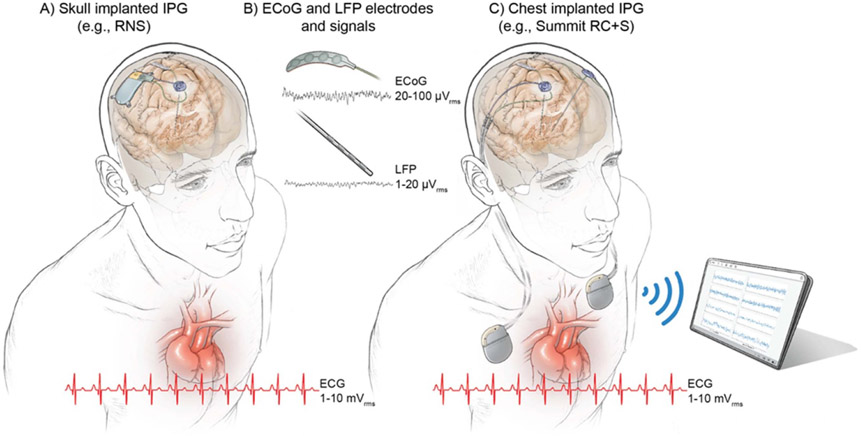
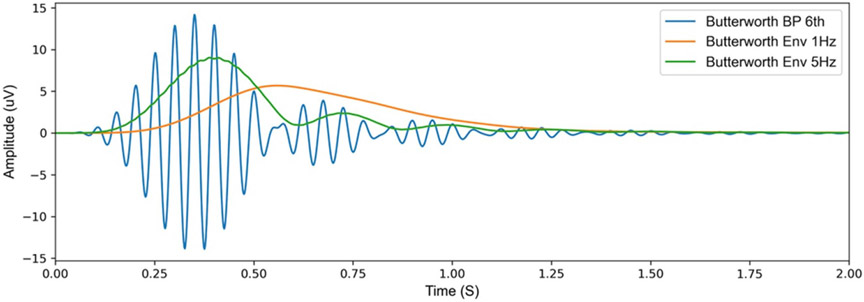
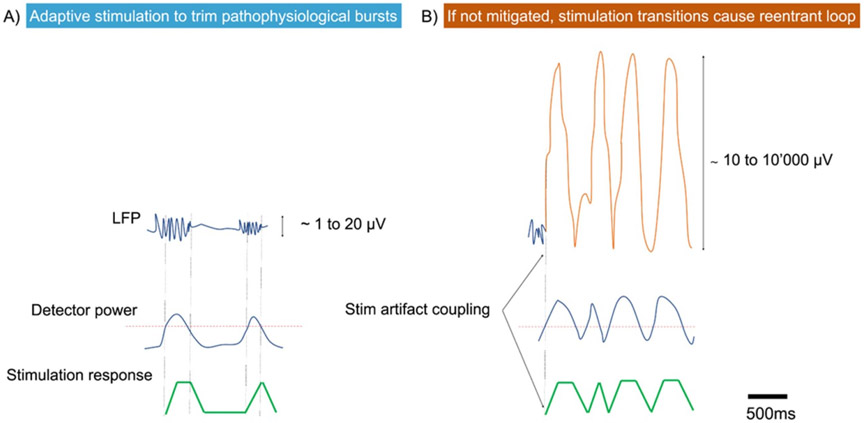
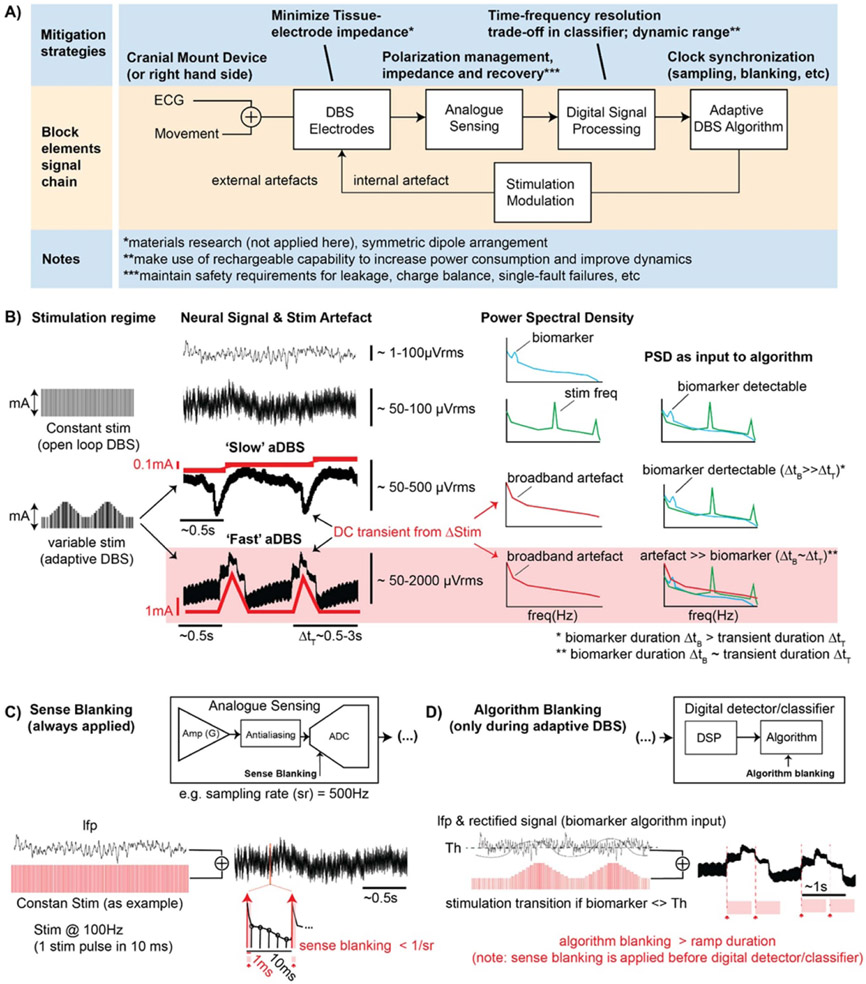
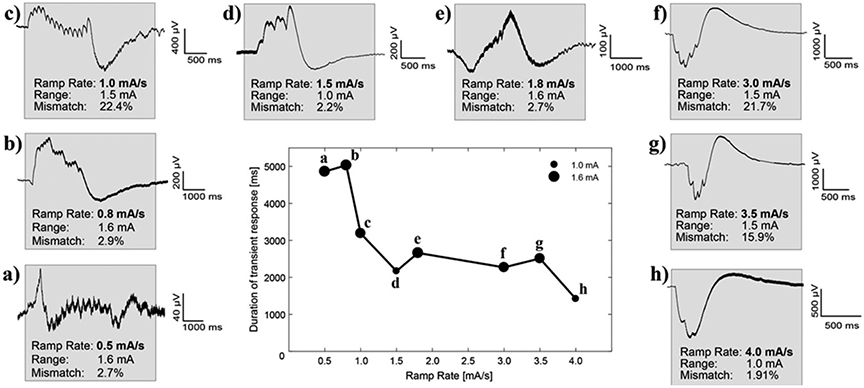
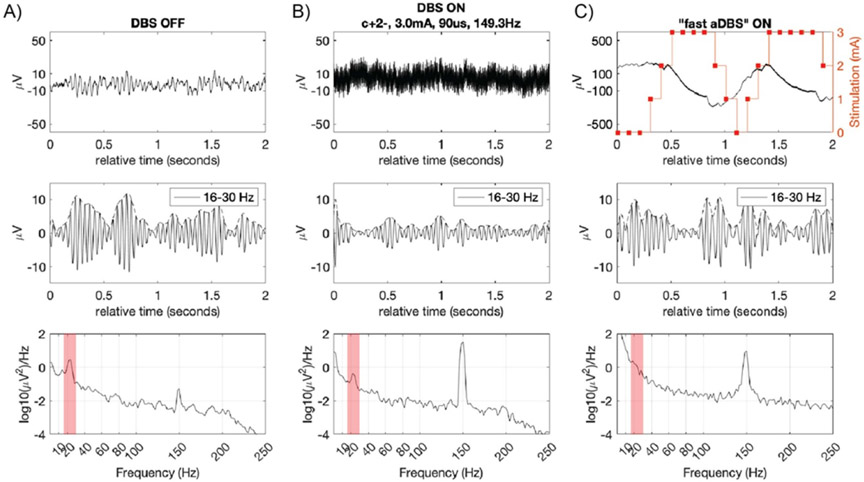
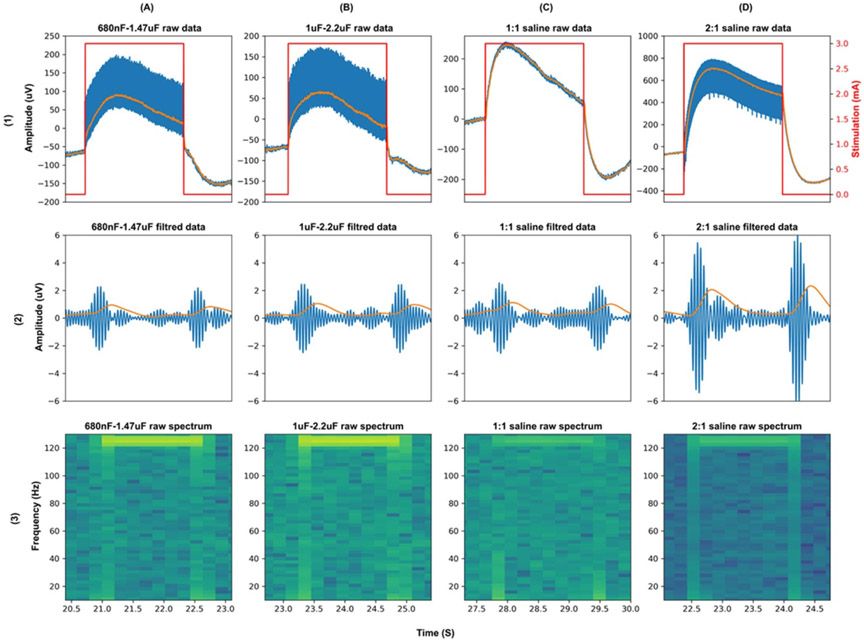
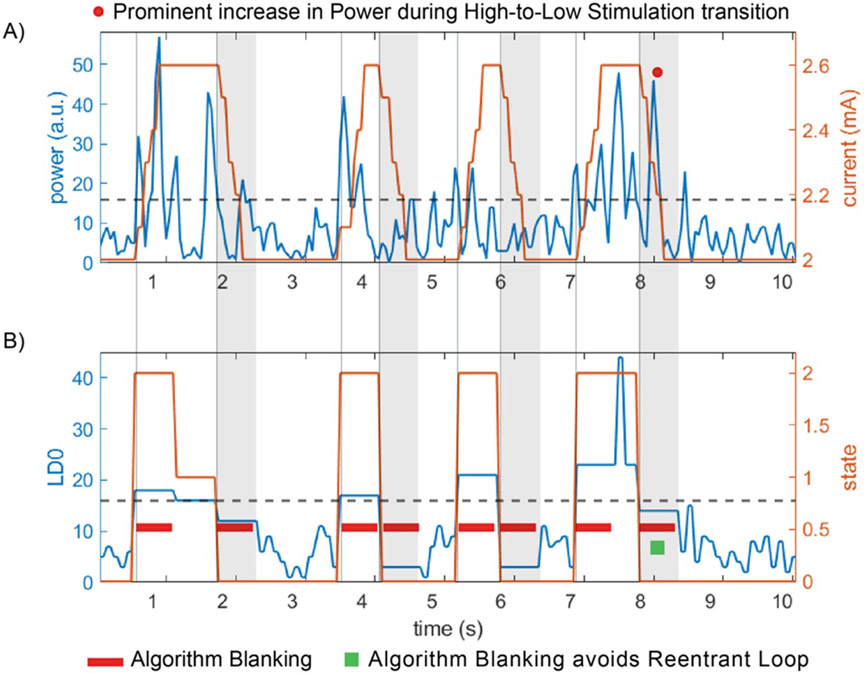
. To provide a design analysis and guidance framework for the implementation of concurrent stimulation and sensing during adaptive deep brain stimulation (aDBS) with particular emphasis on artifact mitigations.. We defined a general architecture of feedback-enabled devices, identified key components in the signal chain which might result in unwanted artifacts and proposed methods that might ultimately enable improved aDBS therapies. We gathered data from research subjects chronically-implanted with an investigational aDBS system, Summit RC + S, to characterize and explore artifact mitigations arising from concurrent stimulation and sensing. We then used a prototype investigational implantable device, DyNeuMo, and a bench-setup that accounts for tissue-electrode properties, to confirm our observations and verify mitigations. The strategies to reduce transient stimulation artifacts and improve performance during aDBS were confirmed in a chronic implant using updated configuration settings.We derived and validated a 'checklist' of configuration settings to improve system performance and areas for future device improvement. Key considerations for the configuration include (a) active instead of passive recharge, (b) sense-channel blanking in the amplifier, (c) high-pass filter settings, (d) tissue-electrode impedance mismatch management, (e) time-frequency trade-offs in the classifier, (f) algorithm blanking and transition rate limits. Without proper channel configuration, the aDBS algorithm was susceptible to limit-cycles of oscillating stimulation independent of physiological state. By applying the checklist, we could optimize each block's performance characteristics within the overall system. With system-level optimization, a 'fast' aDBS prototype algorithm was demonstrated to be feasible without reentrant loops, and with noise performance suitable for subcortical brain circuits.. We present a framework to study sources and propose mitigations of artifacts in devices that provide chronic aDBS. This work highlights the trade-offs in performance as novel sensing devices translate to the clinic. Finding the appropriate balance of constraints is imperative for successful translation of aDBS therapies.Institutional Review Board and Investigational Device Exemption numbers: NCT02649166/IRB201501021 (University of Florida), NCT04043403/IRB52548 (Stanford University), NCT03582891/IRB1824454 (University of California San Francisco). IDE #180 097.
. 为了在自适应深度脑刺激(aDBS)中实施同时刺激和感应提供设计分析和指导框架,特别强调对伪影的缓解。. 我们定义了一种具有反馈功能的设备的通用架构,确定了信号链中可能导致不必要伪影的关键组件,并提出了最终可能实现改进的 aDBS 治疗方法。我们从长期植入研究对象的研究用 aDBS 系统Summit RC + S 中收集数据,以描述和探索同时刺激和感应引起的伪影缓解。然后,我们使用原型研究用可植入设备 DyNeuMo 和考虑组织-电极特性的台式设备,来确认我们的观察结果并验证缓解措施。通过使用更新的配置设置,在慢性植入物中验证了减少暂态刺激伪影和提高 aDBS 期间性能的策略。我们得出并验证了一份用于改善系统性能和未来设备改进领域的配置设置“清单”。配置的关键考虑因素包括(a) 主动而不是被动充电,(b) 放大器中的感应通道空白,(c) 高通滤波器设置,(d) 组织-电极阻抗不匹配管理,(e) 分类器中的时频权衡,(f) 算法空白和转换率限制。如果没有适当的通道配置,aDBS 算法很容易受到与生理状态无关的振荡刺激的限制循环影响。通过应用清单,我们可以在整个系统中优化每个块的性能特征。通过系统级优化,演示了一种“快速”aDBS 原型算法是可行的,没有再进入循环,并且噪声性能适合皮质下脑回路。. 我们提出了一个框架来研究为慢性 aDBS 提供设备中的伪影源并提出缓解措施。这项工作强调了随着新型感应设备转化为临床应用,性能上的权衡取舍。找到适当的约束平衡对于成功转化 aDBS 治疗至关重要。机构审查委员会和研究设备豁免号:NCT02649166/IRB201501021(佛罗里达大学),NCT04043403/IRB52548(斯坦福大学),NCT03582891/IRB1824454(加利福尼亚大学旧金山分校)。IDE #180 097。