Pfizer Inc., La Jolla, California, USA.
Pfizer Ltd., Surrey, UK.
Br J Clin Pharmacol. 2022 Jul;88(7):3392-3403. doi: 10.1111/bcp.15294. Epub 2022 Mar 18.
This phase I study investigated talazoparib pharmacokinetics (PK) and safety in patients with advanced solid tumours and varying degrees of hepatic function.
Patients with advanced solid tumours and normal hepatic function or varying degrees of hepatic impairment (mild, moderate or severe, based on National Cancer Institute Organ Dysfunction Working Group classification) received talazoparib 0.5 mg once daily for 22 calendar days. Plasma and urine samples after single and multiple doses were collected and analysed for talazoparib using validated assays. Plasma PK data from all patients were analysed using the population PK method. Plasma and urine PK parameters in PK-evaluable patients were calculated using noncompartmental analysis (NCA). Safety was monitored in all enrolled patients.
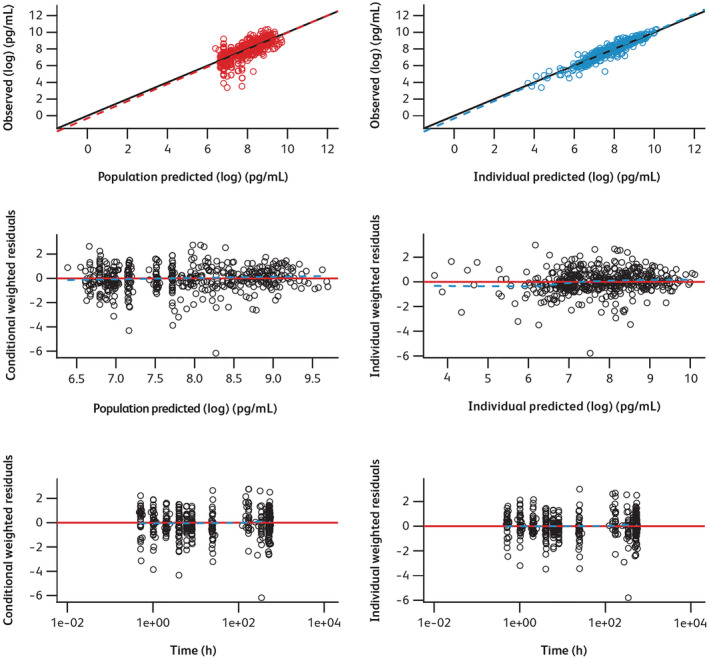
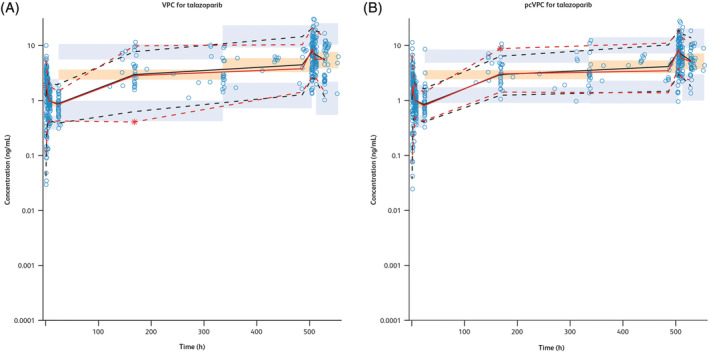
Thirty-eight patients were enrolled; 37 had ≥1 PK concentration, among which 17 were evaluable for NCA. Population PK analysis (n = 37) indicated no significant impact of hepatic function on apparent clearance (CL/F) of talazoparib. Baseline creatinine clearance was the only significant covariate on CL/F (α = 0.05). NCA of data (n = 17) showed no clear trend for increase in exposure on day 22 with worsening hepatic function. Talazoparib protein binding was comparable in patients with varying hepatic function. Talazoparib was generally well tolerated, and the safety profile observed in this study was consistent with the known safety profile of the drug.
Hepatic impairment (mild, moderate or severe) has no impact on the PK of talazoparib. No dose modification is recommended for patients with advanced solid tumours and various degrees of hepatic impairment, and this labelling language has been approved by the US Food and Drug Administration and the European Medicines Agency.
这项 I 期研究旨在调查不同肝功能水平的晚期实体瘤患者中他拉唑帕尼的药代动力学(PK)和安全性。
具有正常肝功能或不同程度肝损伤(根据美国国立癌症研究所器官功能障碍工作组分类,轻度、中度或重度)的晚期实体瘤患者接受他拉唑帕尼 0.5mg,每日一次,连用 22 天。采集单次和多次给药后患者的血浆和尿液样本,使用验证后的检测方法分析他拉唑帕尼浓度。使用群体 PK 方法分析所有患者的 PK 数据。采用非房室分析(NCA)计算 PK 可评价患者的血浆和尿液 PK 参数。所有入组患者均进行安全性监测。
共纳入 38 例患者;37 例患者有≥1 个 PK 浓度,其中 17 例可用于 NCA 分析。群体 PK 分析(n=37)表明,肝功能对他拉唑帕尼表观清除率(CL/F)无显著影响。基线肌酐清除率是 CL/F 的唯一显著协变量(α=0.05)。随着肝功能恶化,NCA 数据(n=17)未见暴露增加的明显趋势。不同肝功能患者的他拉唑帕尼蛋白结合率相当。他拉唑帕尼总体耐受性良好,本研究观察到的安全性特征与该药已知的安全性特征一致。
轻、中、重度肝损伤对他拉唑帕尼的 PK 无影响。对于晚期实体瘤和不同程度肝损伤的患者,不建议调整剂量,这一标签语言已获得美国食品药品监督管理局和欧洲药品管理局的批准。