Department of Pure and Applied Chemistry, University of Strathclyde, Glasgow, United Kingdom.
Translational Neurosurgery, Centre for Clinical Brain Sciences, University of Edinburgh, Edinburgh, United Kingdom.
J Neurotrauma. 2022 Jun;39(11-12):773-783. doi: 10.1089/neu.2021.0410. Epub 2022 Apr 7.
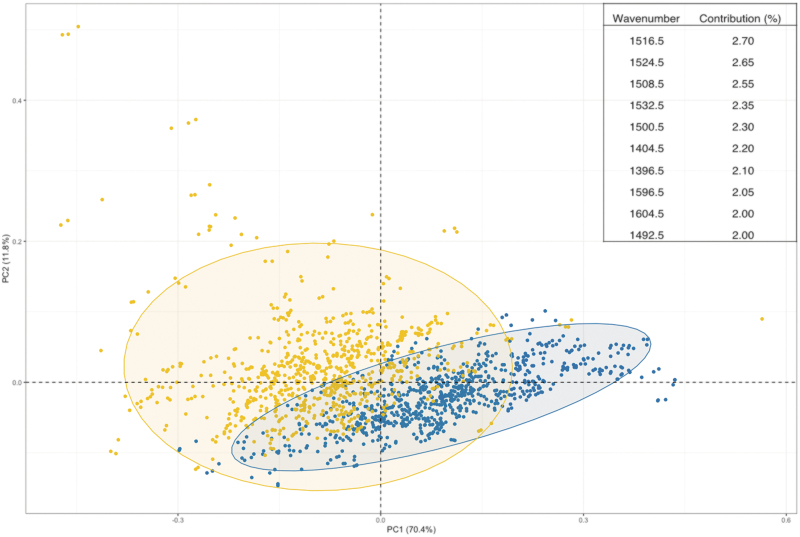
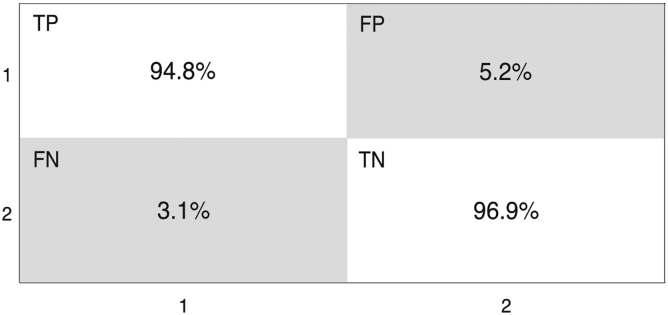
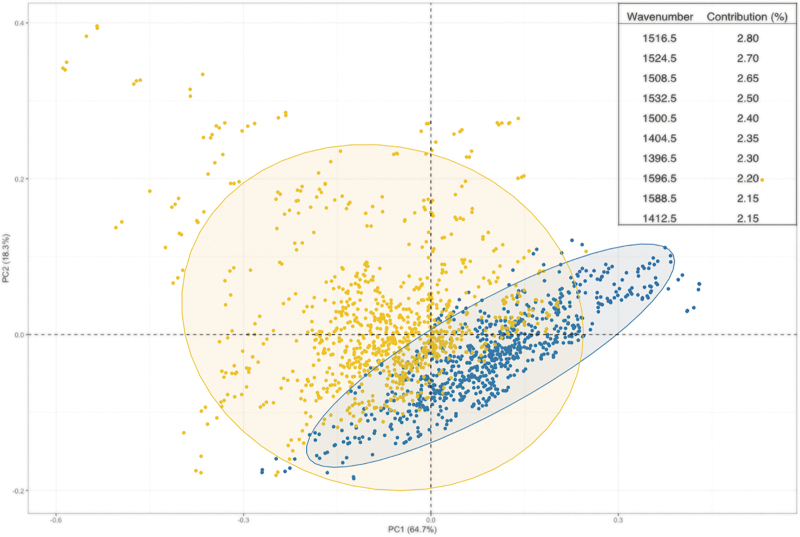
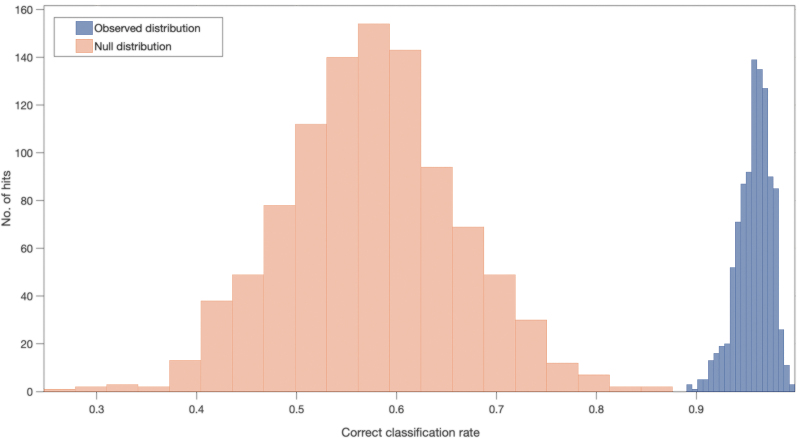
Computed tomography (CT) brain imaging is routinely used to support clinical decision-making in patients with traumatic brain injury (TBI). Only 7% of scans, however, demonstrate evidence of TBI. The other 93% of scans contribute a significant cost to the healthcare system and a radiation risk to patients. There may be better strategies to identify which patients, particularly those with mild TBI, are at risk of deterioration and require hospital admission. We introduce a blood serum liquid biopsy that utilizes attenuated total reflectance (ATR)-Fourier transform infrared (FTIR) spectroscopy with machine learning algorithms as a decision-making tool to identify which patients with mild TBI will most likely present with a positive CT scan. Serum samples were obtained from patients ( = 298) patients who had acquired a TBI and were enrolled in CENTER-TBI and from asymptomatic control patients ( = 87). Injury patients (all severities) were stratified against non-injury controls. The cohort with mild TBI was further examined by stratifying those who had at least one CT abnormality against those who had no CT abnormalities. The test performed exceptionally well in classifications of patients with mild injury versus non-injury controls (sensitivity = 96.4% and specificity = 98.0%) and also provided a sensitivity of 80.2% when stratifying mild patients with at least one CT abnormality against those without. The results provided illustrate the test ability to identify four of every five CT abnormalities and show great promise to be introduced as a triage tool for CT priority in patients with mild TBI.
计算机断层扫描(CT)脑成像常用于支持创伤性脑损伤(TBI)患者的临床决策。然而,只有 7%的扫描显示有 TBI 的证据。其他 93%的扫描给医疗保健系统带来了巨大的成本,并给患者带来了辐射风险。可能有更好的策略来确定哪些患者,特别是那些有轻度 TBI 的患者,有恶化的风险并需要住院治疗。我们引入了一种血清液体活检,利用衰减全反射(ATR)-傅里叶变换红外(FTIR)光谱和机器学习算法作为决策工具,以识别哪些轻度 TBI 患者最有可能出现 CT 扫描阳性。从CENTER-TBI 中获得了 TBI 并被纳入研究的患者( = 298 例)和无症状对照患者( = 87 例)的血清样本。损伤患者(所有严重程度)与非损伤对照进行分层。进一步对轻度 TBI 患者进行分层,将至少有一次 CT 异常的患者与没有 CT 异常的患者进行分层。该测试在轻度损伤与非损伤对照组患者的分类中表现非常出色(敏感性 = 96.4%和特异性 = 98.0%),并且当将至少有一次 CT 异常的轻度患者与无 CT 异常的患者分层时,敏感性为 80.2%。结果表明,该测试能够识别出每五个 CT 异常中的四个,有望作为轻度 TBI 患者 CT 优先的分诊工具引入。