Department of Biostatistics, Product Development, Genentech, Inc, 1 DNA Way, MS 444A, South San Francisco, CA, 94080, USA.
Oncology Biomarker Development, Genentech, Inc, South San Francisco, CA, USA.
BMC Cancer. 2022 Mar 3;22(1):231. doi: 10.1186/s12885-022-09237-5.
Diffuse large B-cell lymphoma (DLBCL) is a heterogeneous disease defined using a number of well-established molecular subsets. Application of non-negative matrix factorization (NMF) to whole exome sequence data has previously been used to identify six distinct molecular clusters in DLBCL with potential clinical relevance. In this study, we applied NMF-clustering to targeted sequencing data utilizing the FoundationOne Heme® panel from the Phase III GOYA (NCT01287741) and Phase Ib/II CAVALLI studies (NCT02055820) in de novo DLBCL. Biopsy samples, survival outcomes, RNA-Seq and targeted exome-sequencing data were available for 423 patients in GOYA (obinutuzumab [G]-cyclophosphamide, doxorubicin, vincristine, and prednisone [CHOP] vs rituximab [R]-CHOP) and 86 patients in CAVALLI (venetoclax+[G/R]-CHOP).
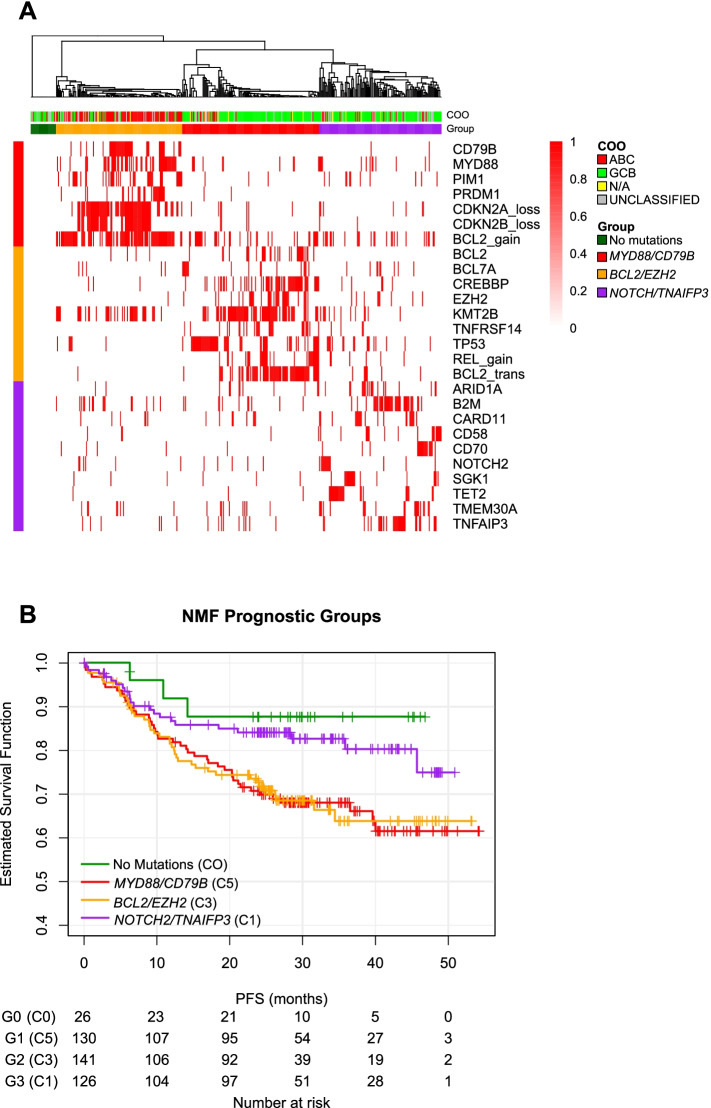
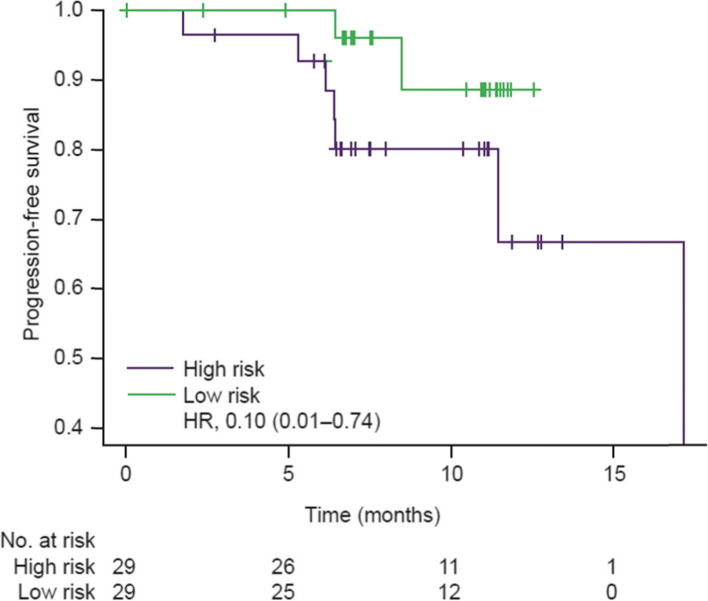
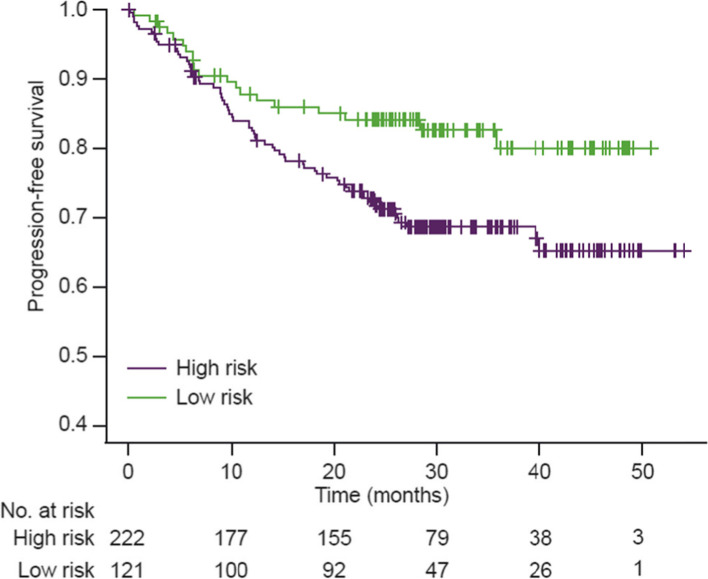
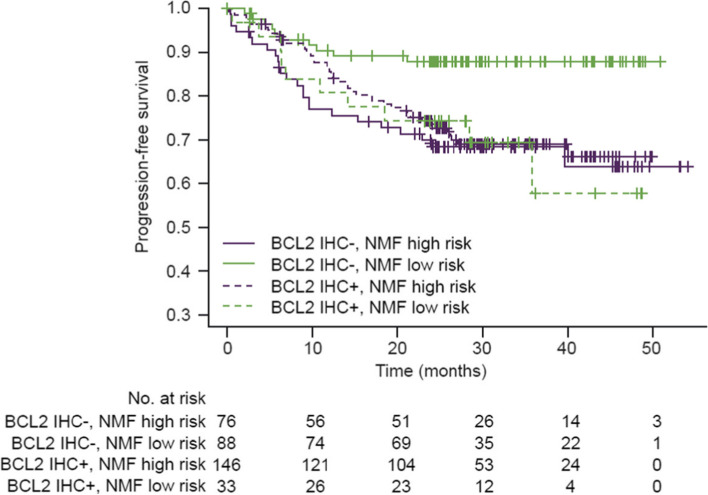
When the NMF algorithm was applied to samples from the GOYA study analyzed using a comprehensive genomic profiling platform, four of the six groups previously reported were observed: MYD88/CD79B, BCL2/EZH2, NOTCH2/TNFAIP3, and no mutations. Mutation profiles, cell-of-origin subset distributions and clinical associations of MYD88/CD79B and BCL2/EZH2 groups were similar to those described in previous NMF studies. In contrast, application of NMF to the CAVALLI study yielded only three; MYD88/CD79B-, BCL2/EZH2-like clusters, and a no mutations group, and there was a trend towards improved outcomes for BCL2/EZH2 over MYD88/CD79B.
This analysis supports the utility of NMF used in conjunction with targeted sequencing platforms for identifying patients with different prognostic subsets. The observed trend for improved overall survival in the BCL2/EZH2 group is consistent with the mechanism of action of venetoclax, suggesting that targeting sequencing and NMF has potential for identifying patients who are more likely to gain benefit from venetoclax therapy.
弥漫性大 B 细胞淋巴瘤(DLBCL)是一种使用多种成熟的分子亚型定义的异质性疾病。非负矩阵分解(NMF)在全外显子序列数据中的应用,以前曾用于在 DLBCL 中鉴定出六个具有潜在临床意义的不同分子簇。在这项研究中,我们应用 NMF 聚类对靶向测序数据进行分析,使用来自 III 期 GOYA(NCT01287741)和 Ib/II 期 CAVALLI(NCT02055820)研究的 FoundationOne Heme®面板在初治 DLBCL 中进行。GOYA 中的 423 例患者和 CAVALLI 中的 86 例患者可获得活检样本、生存结局、RNA-Seq 和靶向外显子测序数据(奥滨尤妥珠单抗[G]-环磷酰胺、多柔比星、长春新碱和泼尼松[CHOP]与利妥昔单抗[R]-CHOP)。
当将 NMF 算法应用于使用综合基因组分析平台分析的 GOYA 研究中的样本时,观察到了以前报道的六个组中的四个:MYD88/CD79B、BCL2/EZH2、NOTCH2/TNFAIP3 和无突变。MYD88/CD79B 和 BCL2/EZH2 组的突变谱、细胞起源亚群分布和临床相关性与之前的 NMF 研究中描述的相似。相比之下,将 NMF 应用于 CAVALLI 研究仅产生了三个:MYD88/CD79B-、BCL2/EZH2 样簇和无突变组,并且 BCL2/EZH2 组的总生存结果有改善的趋势。
该分析支持使用靶向测序平台与 NMF 结合使用,以识别具有不同预后亚群的患者。观察到 BCL2/EZH2 组的总生存改善趋势与 venetoclax 的作用机制一致,表明靶向测序和 NMF 有可能识别出更有可能从 venetoclax 治疗中获益的患者。