Morin-Poulard Ismaël, Destalminil-Letourneau Manon, Bataillé Laetitia, Frendo Jean-Louis, Lebreton Gaëlle, Vanzo Nathalie, Crozatier Michèle
Unité de Biologie Moléculaire et Cellulaire et du Développement (MCD), Centre de Biologie Intégrative (CBI), Université de Toulouse UMR 5077/CNRS, Toulouse, France.
CNRS, INSERM, IGDR (Institut de Génétique et Développement de Rennes), UMR6290, ERL U1305, Rennes, France.
Front Cell Dev Biol. 2022 Feb 14;10:834720. doi: 10.3389/fcell.2022.834720. eCollection 2022.
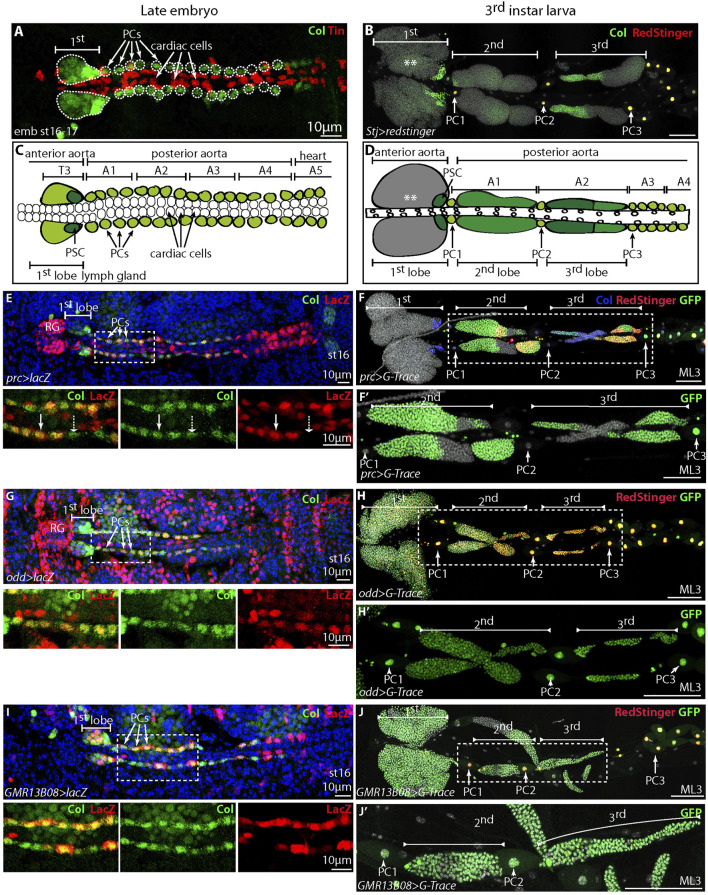
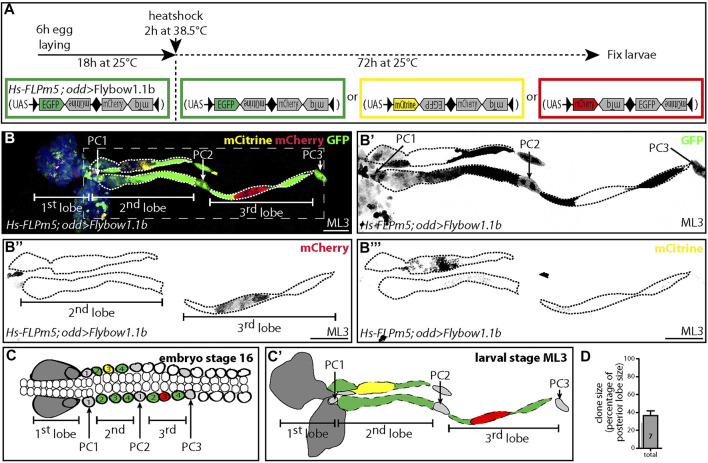
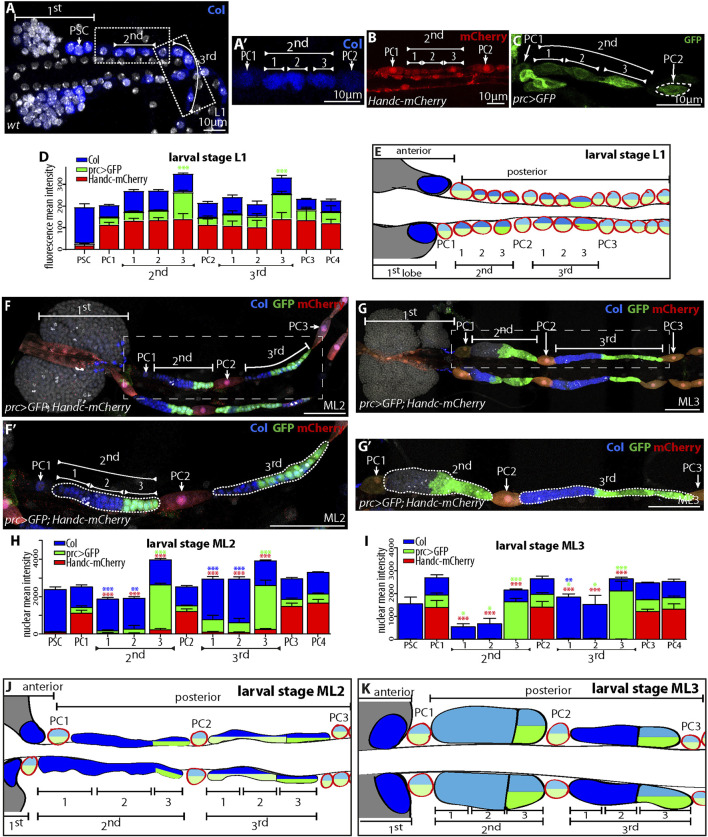
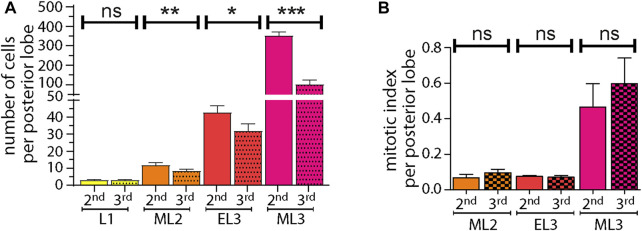
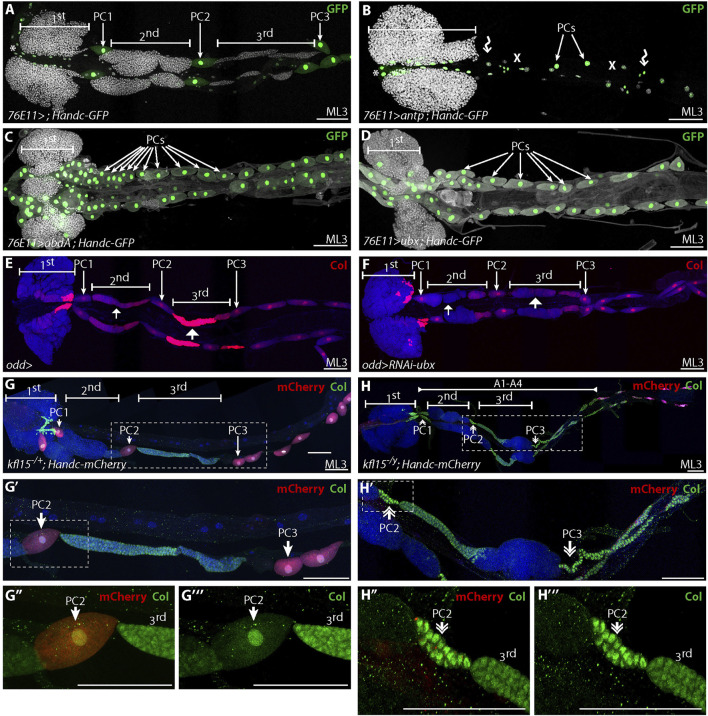
The lymph gland is the larval hematopoietic organ and is aligned along the anterior part of the cardiovascular system, composed of cardiac cells, that form the cardiac tube and its associated pericardial cells or nephrocytes. By the end of embryogenesis the lymph gland is composed of a single pair of lobes. Two additional pairs of posterior lobes develop during larval development to contribute to the mature lymph gland. In this study we describe the ontogeny of lymph gland posterior lobes during larval development and identify the genetic basis of the process. By lineage tracing we show here that each posterior lobe originates from three embryonic pericardial cells, thus establishing a bivalent blood cell/nephrocyte potential for a subset of embryonic pericardial cells. The posterior lobes of L3 larvae posterior lobes are composed of heterogeneous blood progenitors and their diversity is progressively built during larval development. We further establish that in larvae, homeotic genes and the transcription factor Klf15 regulate the choice between blood cell and nephrocyte fates. Our data underline the sequential production of blood cell progenitors during larval development.
淋巴腺是幼虫的造血器官,沿着心血管系统的前部排列,由形成心管的心肌细胞及其相关的心包细胞或肾细胞组成。在胚胎发育结束时,淋巴腺由一对叶组成。在幼虫发育过程中会额外发育出两对后叶,以形成成熟的淋巴腺。在本研究中,我们描述了幼虫发育过程中淋巴腺后叶的个体发生,并确定了这一过程的遗传基础。通过谱系追踪,我们在此表明每个后叶起源于三个胚胎心包细胞,从而为一部分胚胎心包细胞建立了双价血细胞/肾细胞潜能。L3幼虫的后叶由异质性血液祖细胞组成,它们的多样性在幼虫发育过程中逐渐形成。我们进一步确定,在幼虫中,同源异型基因和转录因子Klf15调节血细胞和肾细胞命运之间的选择。我们的数据强调了幼虫发育过程中血细胞祖细胞的顺序产生。