Clinical Collaboration Unit Translational Immunology, Department of Internal Medicine, German Cancer Consortium (DKTK), University Hospital Tübingen, Otfried-Müller-Str. 10, 72076, Tübingen, Germany.
Department of Immunology, Institute for Cell Biology, University of Tübingen, 72076, Tübingen, Germany.
Cell Mol Life Sci. 2022 Mar 3;79(3):171. doi: 10.1007/s00018-022-04145-0.
Upstream open reading frames (uORFs) represent translational control elements within eukaryotic transcript leader sequences. Recent data showed that uORFs can encode for biologically active proteins and human leukocyte antigen (HLA)-presented peptides in malignant and benign cells suggesting their potential role in cancer cell development and survival. However, the role of uORFs in translational regulation of cancer-associated transcripts as well as in cancer immune surveillance is still incompletely understood.
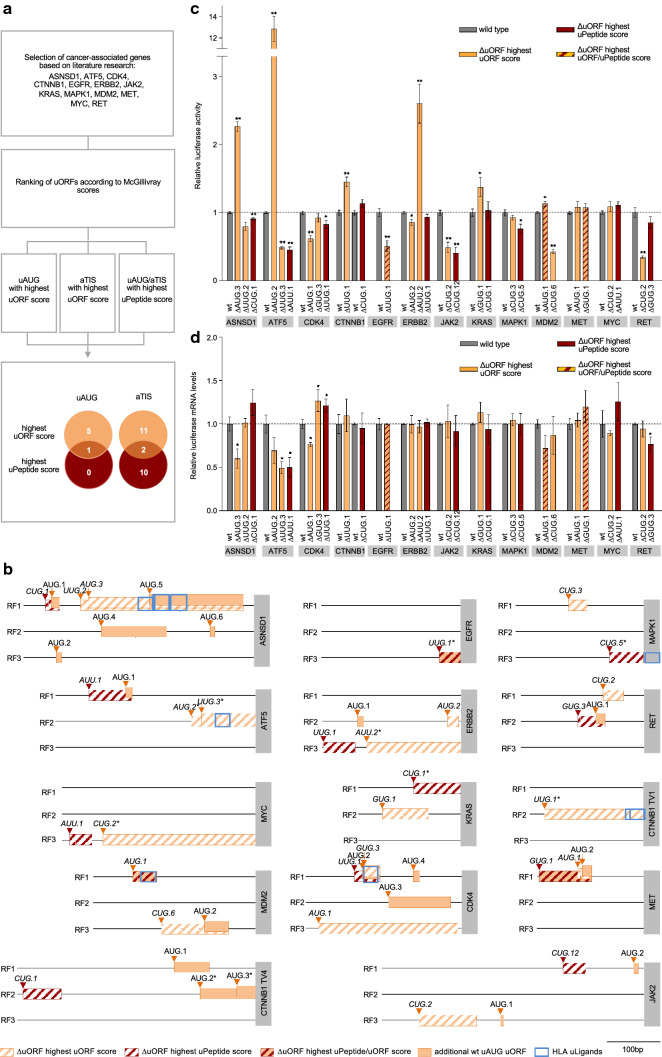
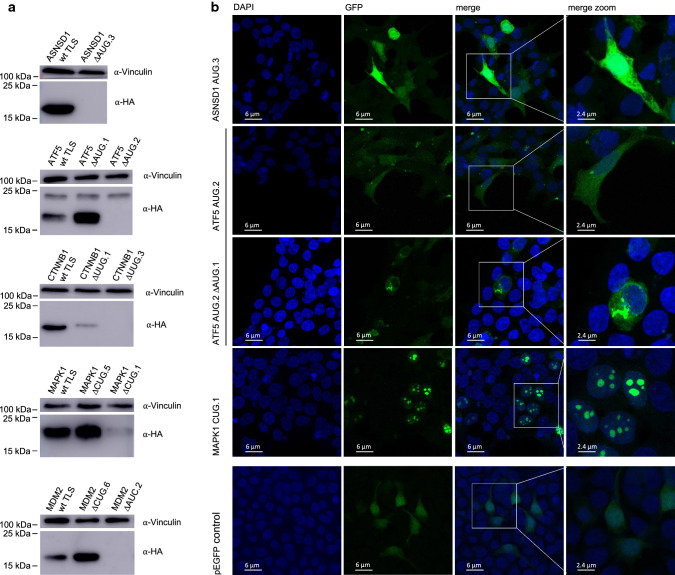
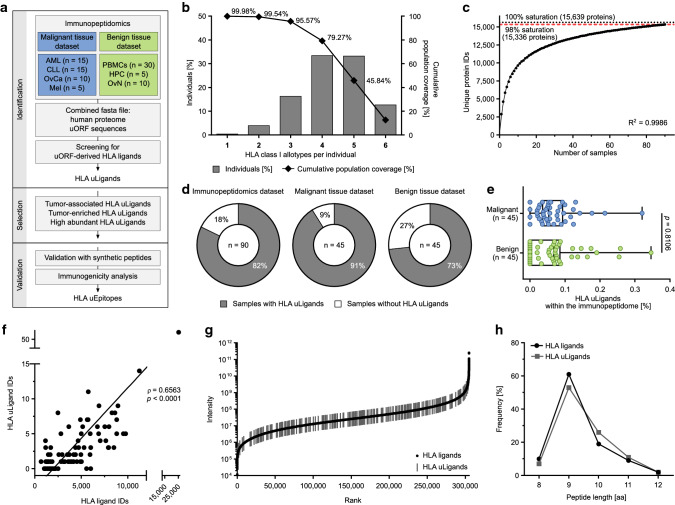
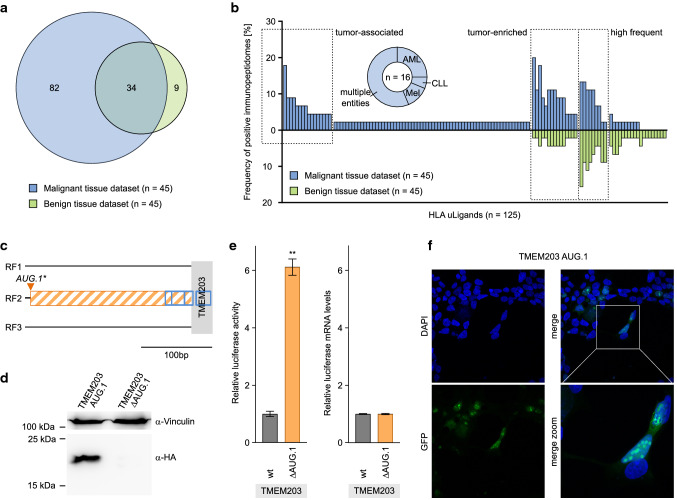
We examined the translational regulatory effect of 29 uORFs in 13 cancer-associated genes by dual-luciferase assays. Cellular expression and localization of uORF-encoded peptides (uPeptides) were investigated by immunoblotting and immunofluorescence-based microscopy. Furthermore, we utilized mass spectrometry-based immunopeptidome analyses in an extensive dataset of primary malignant and benign tissue samples for the identification of naturally presented uORF-derived HLA-presented peptides screening for more than 2000 uORFs.
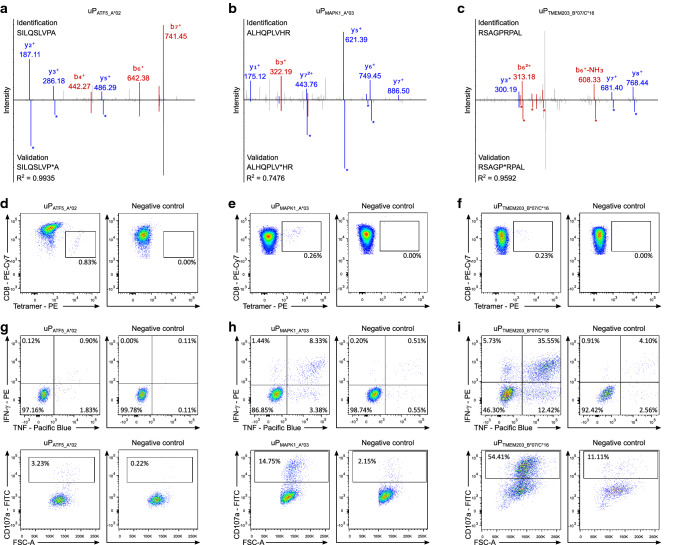
We provide experimental evidence for similarly effective translational regulation of cancer-associated transcripts through uORFs initiated by either canonical AUG codons or by alternative translation initiation sites (aTISs). We further demonstrate frequent cellular expression and reveal occasional specific cellular localization of uORF-derived peptides, suggesting uPeptide-specific biological implications. Immunopeptidome analyses delineated a set of 125 naturally presented uORF-derived HLA-presented peptides. Comparative immunopeptidome profiling of malignant and benign tissue-derived immunopeptidomes identified several tumor-associated uORF-derived HLA ligands capable to induce multifunctional T cell responses.
Our data provide direct evidence for the frequent expression of uPeptides in benign and malignant human tissues, suggesting a potentially widespread function of uPeptides in cancer biology. These findings may inspire novel approaches in direct molecular as well as immunotherapeutic targeting of cancer-associated uORFs and uPeptides.
上游开放阅读框(uORFs)代表真核转录起始序列中的翻译控制元件。最近的数据表明,uORFs 可以编码具有生物活性的蛋白质和人类白细胞抗原(HLA)呈递的肽,在恶性和良性细胞中都有表达,这表明它们在癌细胞的发展和存活中具有潜在作用。然而,uORFs 在癌症相关转录物的翻译调控以及癌症免疫监视中的作用仍不完全清楚。
我们通过双荧光素酶报告基因检测研究了 13 个癌症相关基因中的 29 个 uORF 的翻译调控效应。通过免疫印迹和基于免疫荧光的显微镜技术研究 uORF 编码肽(uPeptides)的细胞表达和定位。此外,我们利用基于质谱的免疫肽组学分析方法,在广泛的原发性恶性和良性组织样本数据集上鉴定自然呈递的 uORF 衍生的 HLA 呈递肽,对 2000 多个 uORFs 进行筛选。
我们提供了实验证据,证明通过使用常规的 AUG 密码子或替代翻译起始位点(aTISs),uORFs 可以对癌症相关转录物进行类似有效的翻译调控。我们进一步证明了 uORF 衍生肽的频繁细胞表达,并揭示了其偶尔的特定细胞定位,这表明 uPeptide 具有特定的生物学意义。免疫肽组学分析确定了一组 125 个自然呈递的 uORF 衍生的 HLA 呈递肽。对恶性和良性组织衍生免疫肽组的比较免疫肽组学分析,鉴定了一些肿瘤相关的 uORF 衍生的 HLA 配体,能够诱导多功能 T 细胞反应。
我们的数据提供了 uPeptides 在良性和恶性人类组织中频繁表达的直接证据,表明 uPeptides 在癌症生物学中具有潜在的广泛功能。这些发现可能为直接靶向癌症相关 uORFs 和 uPeptides 的分子和免疫治疗方法提供新的思路。