The Department of Pharmacology, School of Basic Medicine, Kunming Medical University, Kunming, Yunnan Province, China.
The Department of Pathology, School of Basic Medicine, Yunnan University of Traditional Chinese Medicine, Kunming, Yunnan Province, China.
PLoS One. 2022 Mar 3;17(3):e0264696. doi: 10.1371/journal.pone.0264696. eCollection 2022.
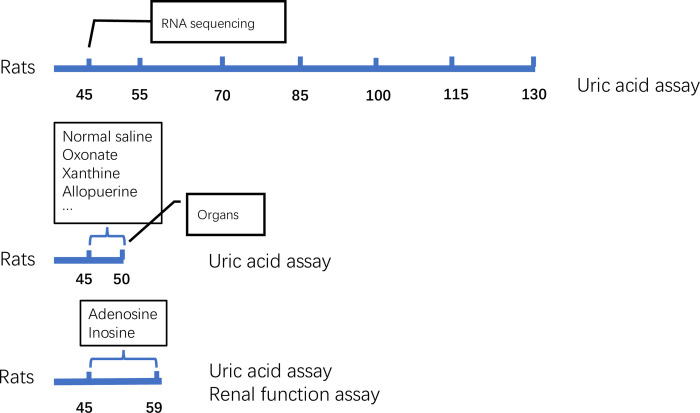
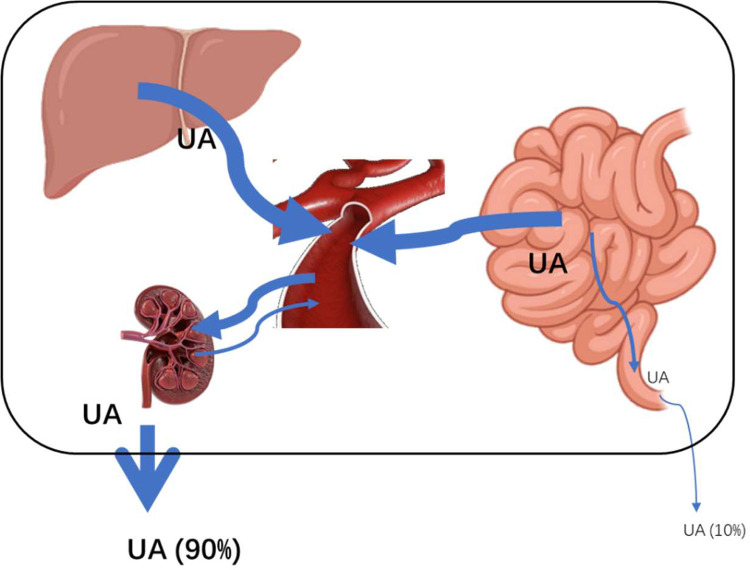
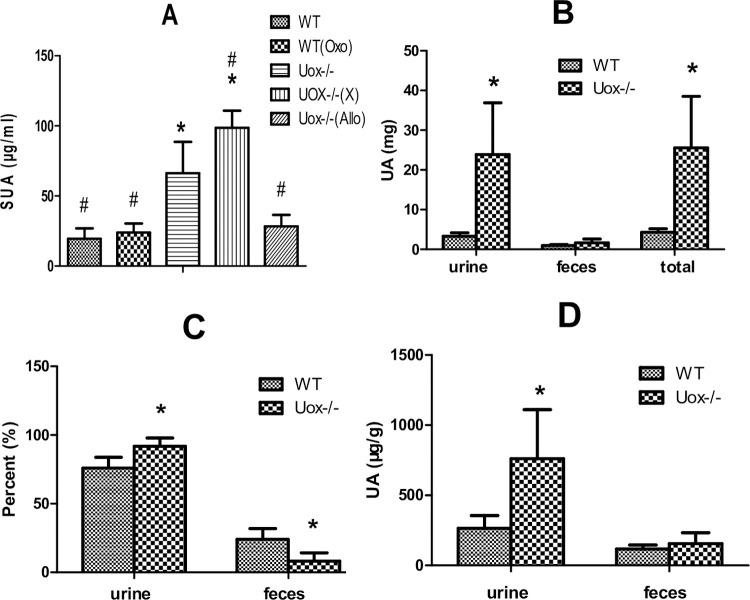
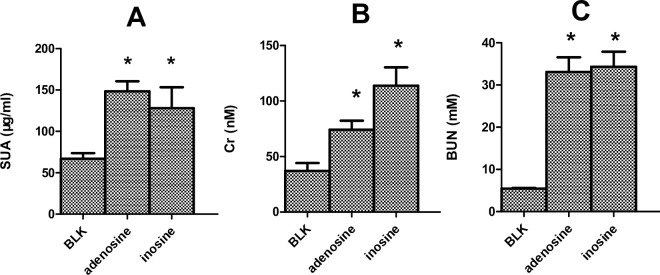
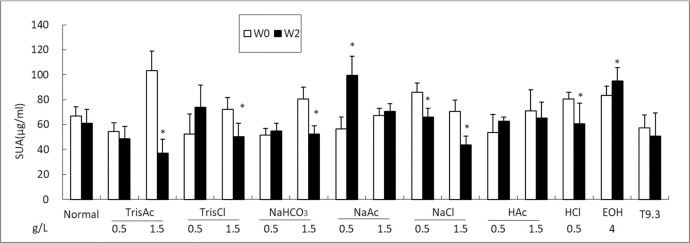
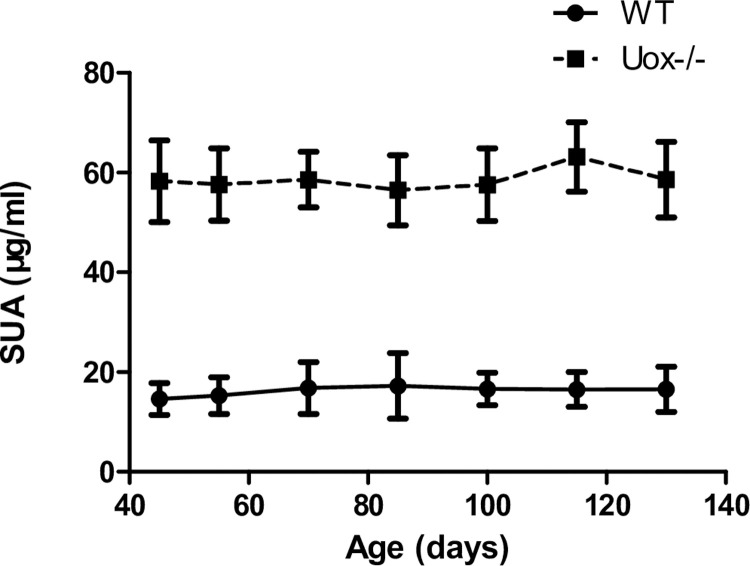
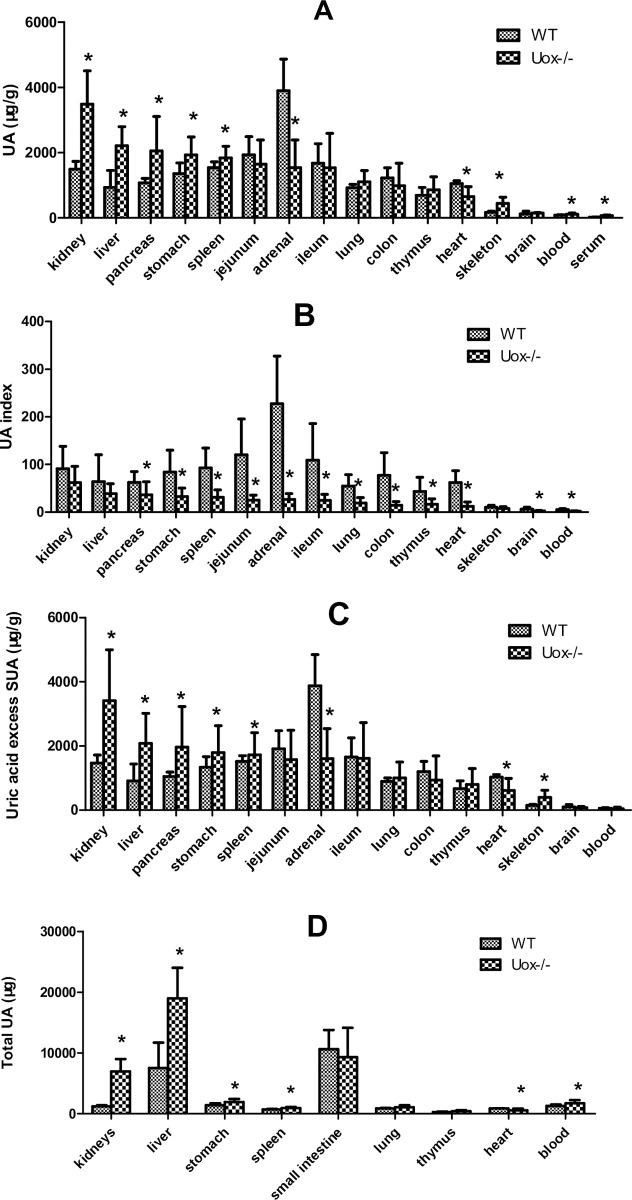
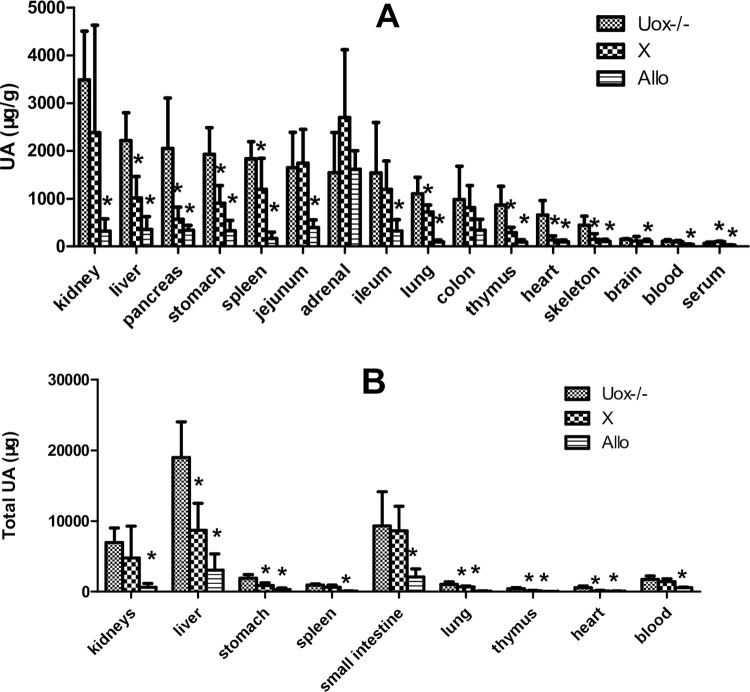
The aim of this study was to provide a sensitive model animal for studying hyperuricemia. Male uricase-deficient rats, named Kunming-DY rats, were raised for 130 days, or orally administered with purines and other chemicals. Serum uric acid (SUA) in the animals was assayed, and the UA level in their organs and their 24-h excretion was determined. Genes in the jejunum, ileum, kidney and liver related to UA synthesis and transportation were detected by quantitative RNA sequencing. Uricase-deficient rats have a high level of SUA and are sensitive to xanthine, adenosine, inosine, allopurinol, and alcohol. Besides, the high level of SUA in male uricase-deficient rats was stable, much higher than that in wild-type rats but similar to that in men. The distribution pattern of UA in uricase-deficient rats' organs was different from that in wild-type rats. The kidney, liver, and small intestine were the top three organs where UA distributed, but the UA in the small intestine, colon, lung, thymus, and brain was less affected by uricase deficiency, indicating that these organs are constitutive distribution organs in UA. The 24-h UA excreted by a uricase-deficient rat was about five times higher than that excreted by a wild-type rat. However, the 24-h UA excreted through feces was not significantly changed. Both the urine volume and UA in uricase-deficient rats significantly increased, and more than 90% of UA was excreted via urine. The expression of xanthine dehydrogenase was not upregulated. Some genes of transporter associated with uric acid excretion in the kidney were significantly regulated, though not sufficient to explain the increase in SUA. In conclusion, male uricase-deficient rats' UA metabolism is similar to that of men. The elevation of SUA in uricase-deficient rats is caused by uricase deficiency, and uricase-deficient rats are a sensitive model for studying hyperuricemia.
本研究旨在提供一种研究高尿酸血症的敏感模型动物。雄性尿酸酶缺陷大鼠(昆明-DY 大鼠)饲养 130 天,或口服嘌呤和其他化学物质。测定动物血清尿酸(SUA),检测其器官 UA 水平及其 24 小时排泄量。采用定量 RNA 测序检测回肠、空肠、肾脏和肝脏中与 UA 合成和转运相关的基因。尿酸酶缺陷大鼠的 SUA 水平较高,对黄嘌呤、腺嘌呤、次黄嘌呤、别嘌呤醇和酒精敏感。此外,雄性尿酸酶缺陷大鼠的高 SUA 水平稳定,远高于野生型大鼠,但与男性相似。尿酸酶缺陷大鼠器官中 UA 的分布模式与野生型大鼠不同。肾脏、肝脏和小肠是 UA 分布最多的前三个器官,但小肠、结肠、肺、胸腺和大脑中的 UA 受尿酸酶缺乏的影响较小,表明这些器官是 UA 的固有分布器官。尿酸酶缺陷大鼠 24 小时 UA 排泄量约为野生型大鼠的五倍。然而,粪便中 24 小时 UA 排泄量没有明显变化。尿酸酶缺陷大鼠的尿量和 UA 明显增加,超过 90%的 UA 通过尿液排泄。黄嘌呤脱氢酶的表达没有上调。肾脏中与 UA 排泄相关的转运体的一些基因表达显著调节,但不足以解释 SUA 的增加。综上所述,雄性尿酸酶缺陷大鼠的 UA 代谢与男性相似。尿酸酶缺陷大鼠 SUA 的升高是由尿酸酶缺乏引起的,尿酸酶缺陷大鼠是研究高尿酸血症的敏感模型。