Im Hyeonyeong, Lee Jaewon, Kim Kyungmin, Son Yeonho, Lee Yun-Hee
College of Pharmacy and Research Institute of Pharmaceutical Sciences, Seoul National University, 20-Room # 428,1 Gwanak-ro, Gwanak-gu, Seoul, 08826, Republic of Korea.
Nutr Metab (Lond). 2022 Mar 3;19(1):14. doi: 10.1186/s12986-022-00648-6.
Adipose tissue thermogenesis is a potential therapeutic target to increase energy expenditure and thereby combat obesity. The aim of the present study was to investigate the thermogenic and anti-obesity effects of heat-transformed green tea extract (HTGT) and enzymatically modified isoquercetin (EMIQ).
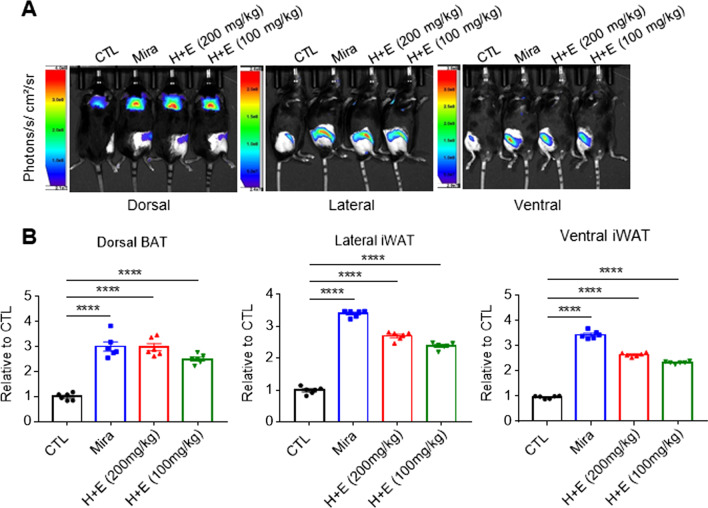
Immortalized brown pre-adipocytes and C3H10T1/2 cells were used for in vitro analyses. A high-fat diet (HFD)-induced obesity mouse model and CIDEA-reporter mice were used for in vivo experiments. The effects of HTGT and EMIQ on mitochondrial metabolism were evaluated by immunoblot, mitochondrial staining, and oxygen consumption rate analyses. In vivo anti-obesity effects of HTGT and EMIQ were measured using indirect calorimetry, body composition analyses, glucose tolerance tests, and histochemical analyses.
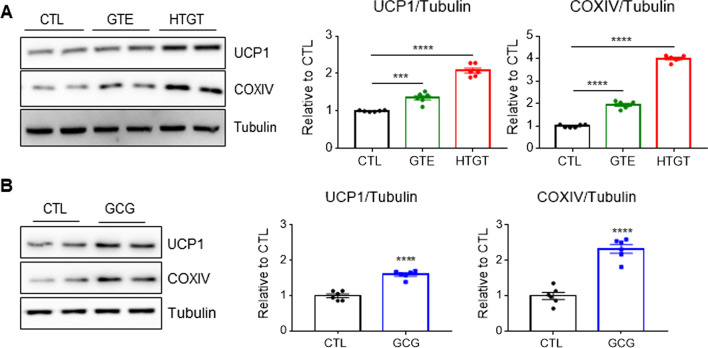
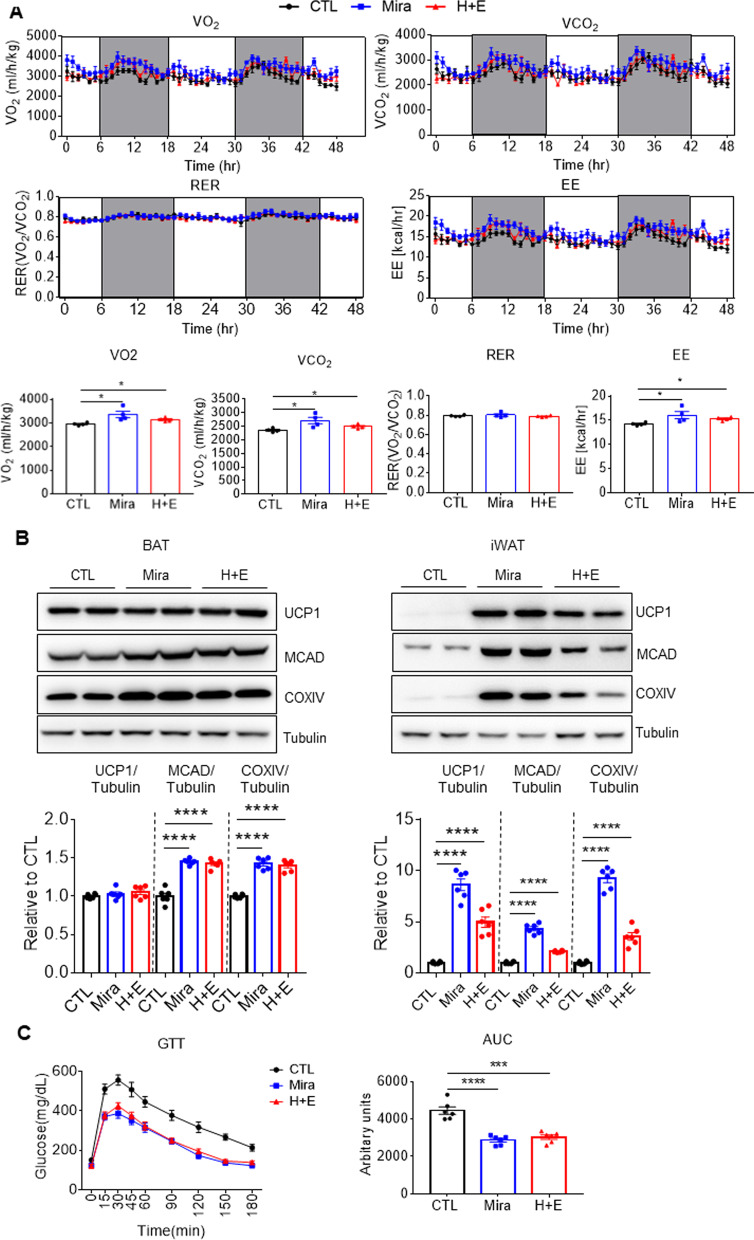
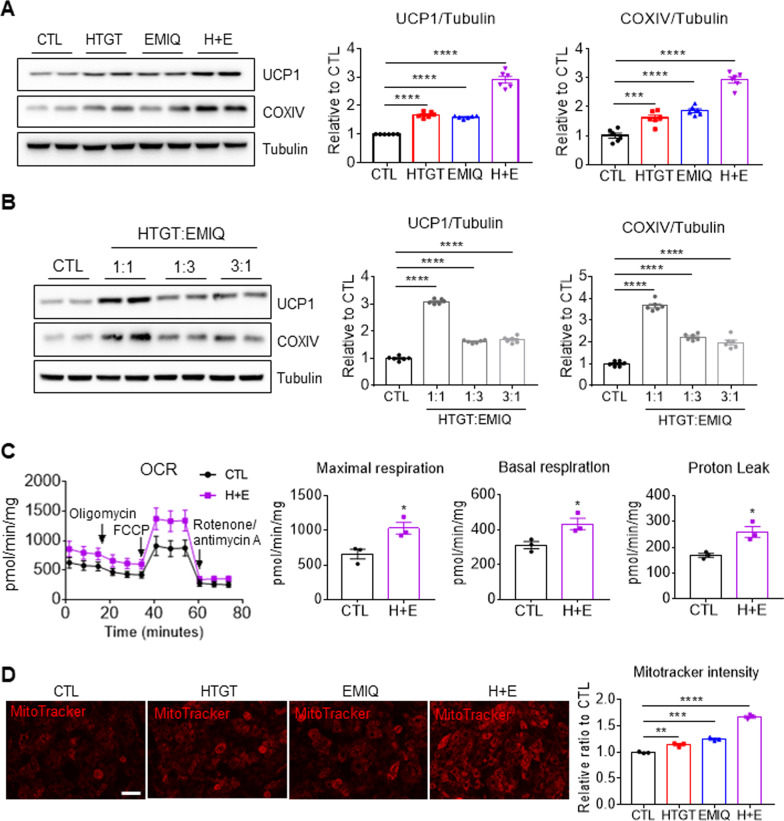
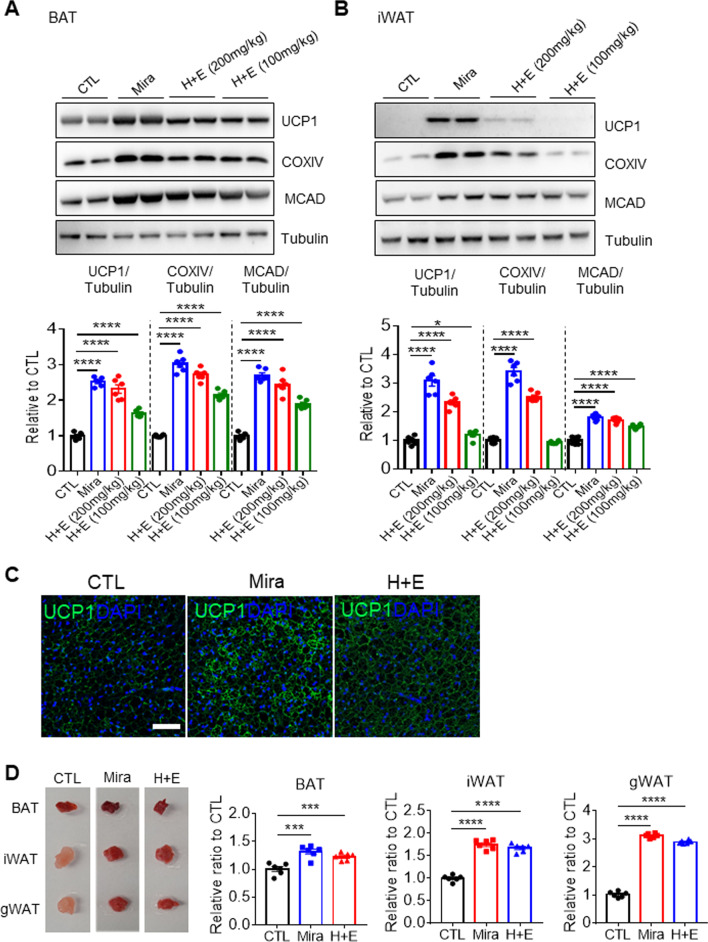
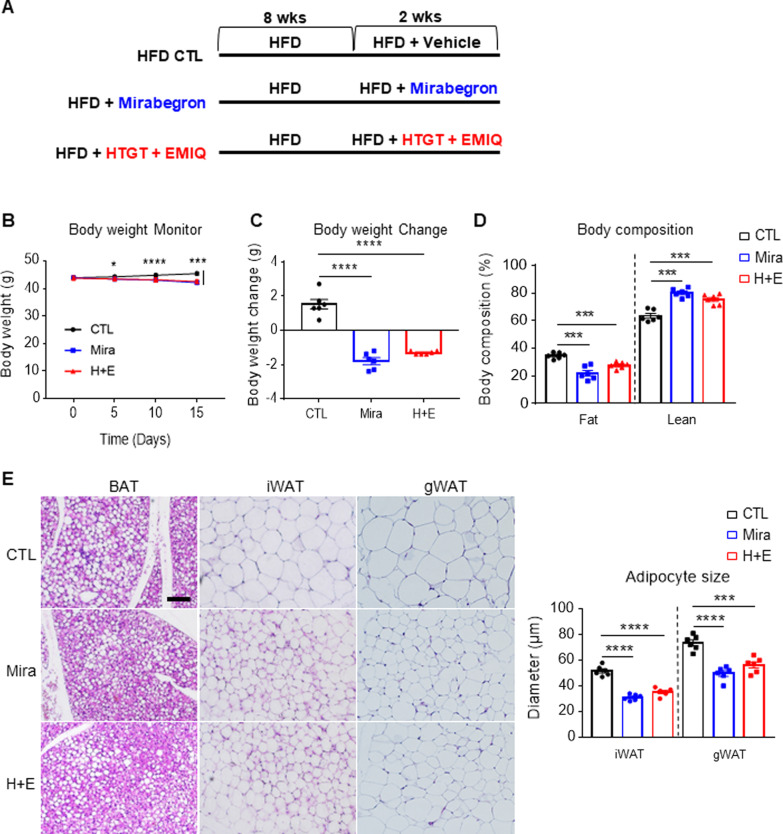
Co-treatment with HTGT and EMIQ (50 μg/mL each) for 48 h increased brown adipocyte marker and mitochondrial protein levels (UCP1 and COXIV) in brown adipocytes by 2.9-fold, while the maximal and basal oxygen consumption rates increased by 1.57- and 1.39-fold, respectively. Consistently, HTGT and EMIQ treatment increased the fluorescence intensity of mitochondrial staining in C3H10T1/2 adipocytes by 1.68-fold. The combination of HTGT and EMIQ (100 mg/kg each) increased the expression levels of brown adipocyte markers and mitochondrial proteins in adipose tissue. Two weeks of HTGT and EMIQ treatment (100 mg/kg each) led to a loss of 3% body weight and 7.09% of body fat. Furthermore, the treatment increased energy expenditure by 8.95% and improved glucose tolerance in HFD-fed mice.
The current study demonstrated that HTGT and EMIQ have in vivo anti-obesity effects partly by increasing mitochondrial metabolism in adipocytes. Our findings suggest that a combination of HTGT and EMIQ is a promising therapeutic agent for the treatment of obesity and related metabolic diseases.
脂肪组织产热是增加能量消耗从而对抗肥胖的一个潜在治疗靶点。本研究的目的是探究热转化绿茶提取物(HTGT)和酶法改性异槲皮素(EMIQ)的产热及抗肥胖作用。
永生化棕色前脂肪细胞和C3H10T1/2细胞用于体外分析。高脂饮食(HFD)诱导的肥胖小鼠模型和CIDEA报告基因小鼠用于体内实验。通过免疫印迹、线粒体染色和耗氧率分析评估HTGT和EMIQ对线粒体代谢的影响。使用间接测热法、身体成分分析、葡萄糖耐量试验和组织化学分析来测量HTGT和EMIQ的体内抗肥胖作用。
HTGT和EMIQ(各50μg/mL)共同处理48小时,使棕色脂肪细胞中棕色脂肪细胞标志物和线粒体蛋白水平(UCP1和COXIV)增加了2.9倍,而最大和基础耗氧率分别增加了1.57倍和1.39倍。同样,HTGT和EMIQ处理使C3H10T1/2脂肪细胞中线粒体染色的荧光强度增加了1.68倍。HTGT和EMIQ(各100mg/kg)联合使用增加了脂肪组织中棕色脂肪细胞标志物和线粒体蛋白的表达水平。HTGT和EMIQ处理(各100mg/kg)两周导致体重减轻3%,体脂减少7.09%。此外,该处理使高脂饮食喂养小鼠的能量消耗增加了8.95%,并改善了葡萄糖耐量。
当前研究表明,HTGT和EMIQ通过增加脂肪细胞中的线粒体代谢部分发挥体内抗肥胖作用。我们的研究结果表明,HTGT和EMIQ联合使用是治疗肥胖及相关代谢疾病的一种有前景的治疗药物。