Department of Dermatology and Venerology, Peking University First Hospital, Beijing, 100034, China.
Beijing Key Laboratory of Molecular Diagnosis on Dermatoses, Beijing, 100034, China.
Nat Commun. 2022 Mar 3;13(1):1158. doi: 10.1038/s41467-022-28799-3.
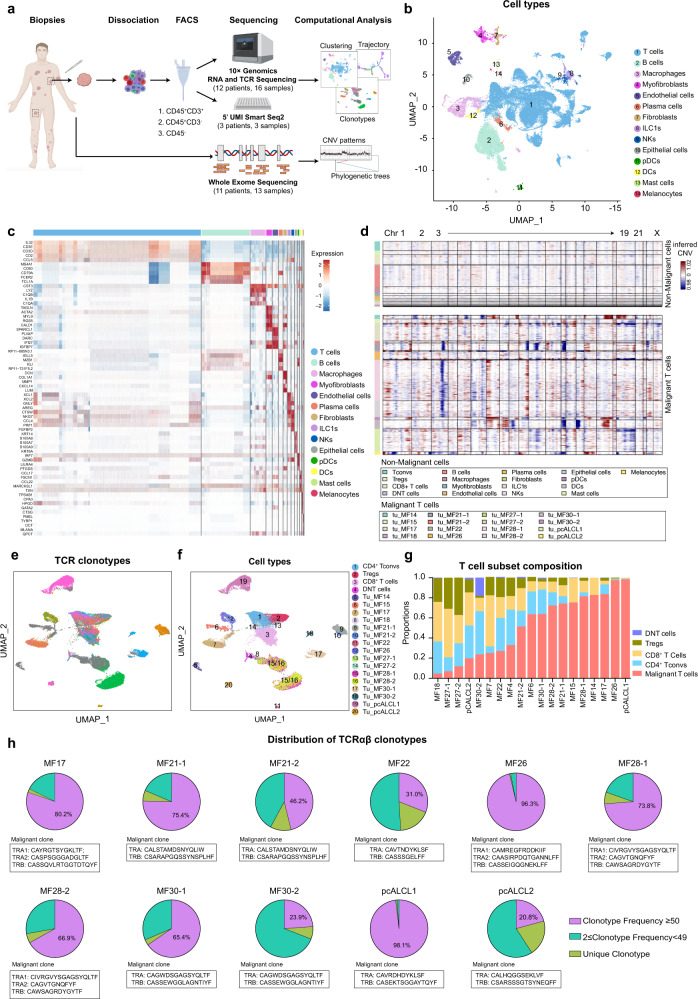
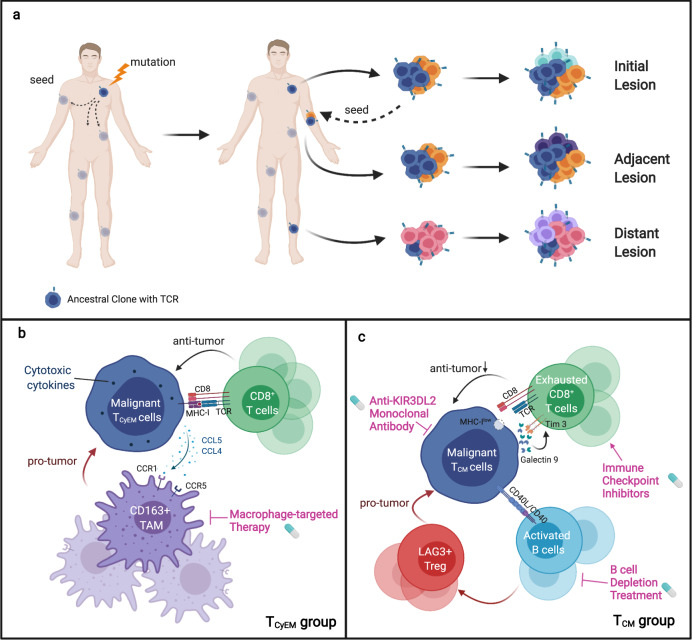
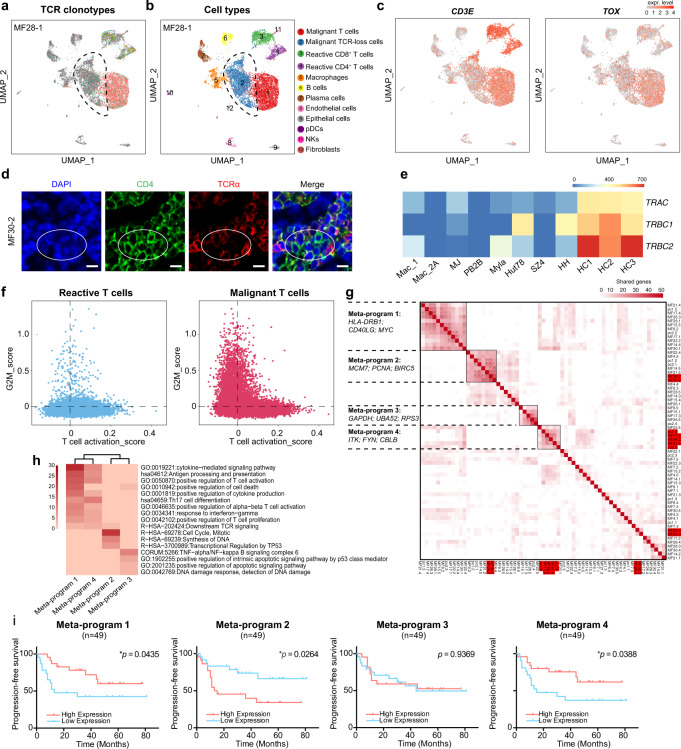
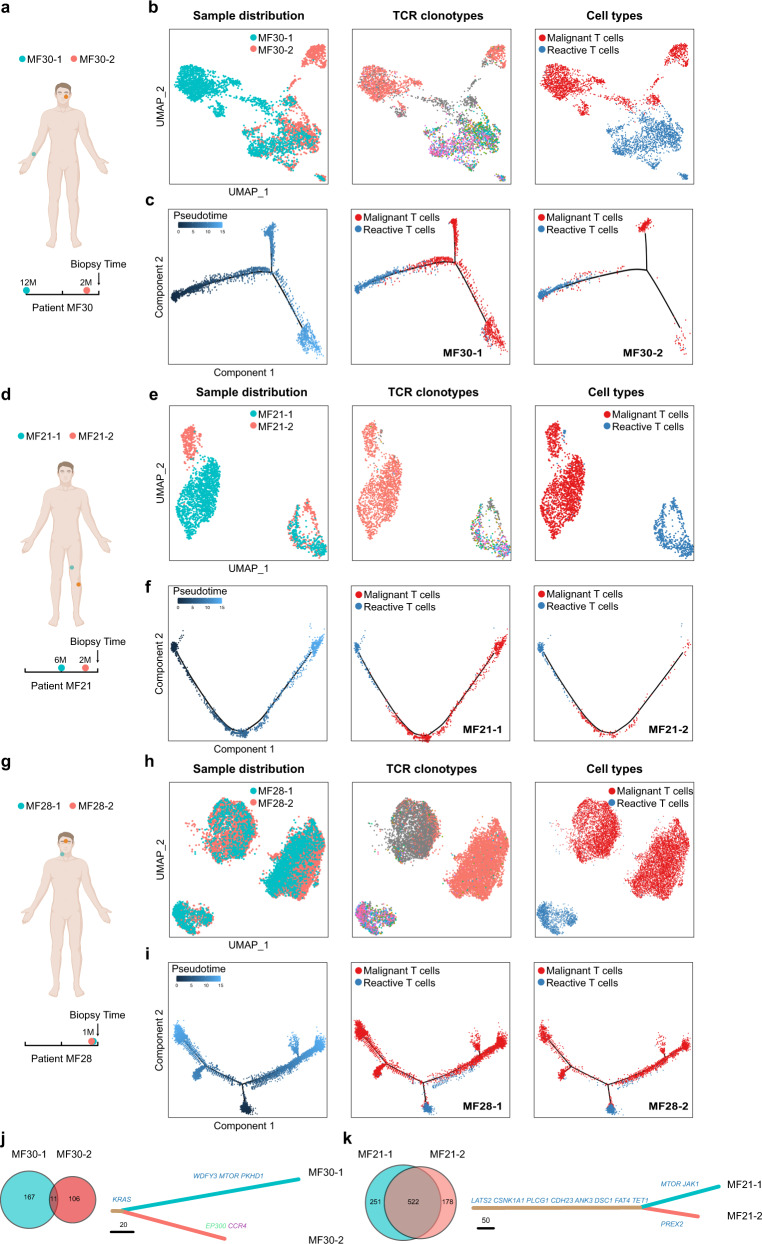
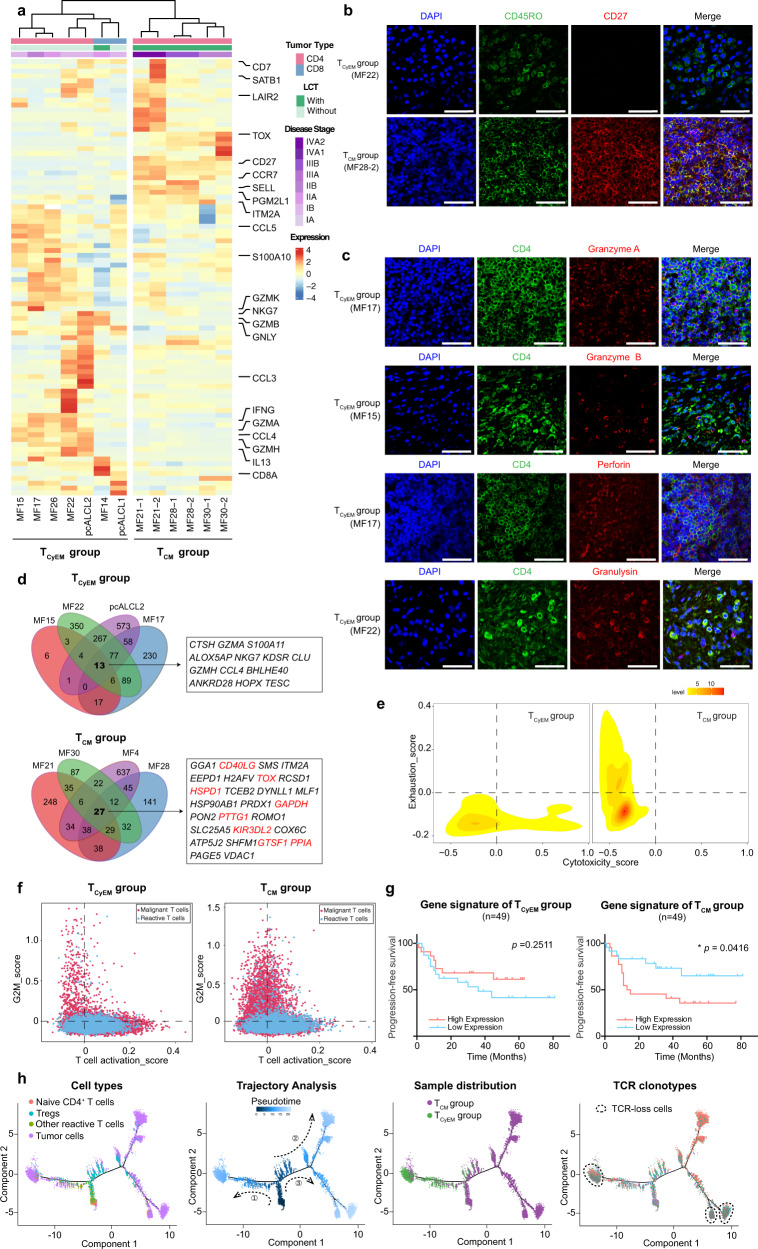
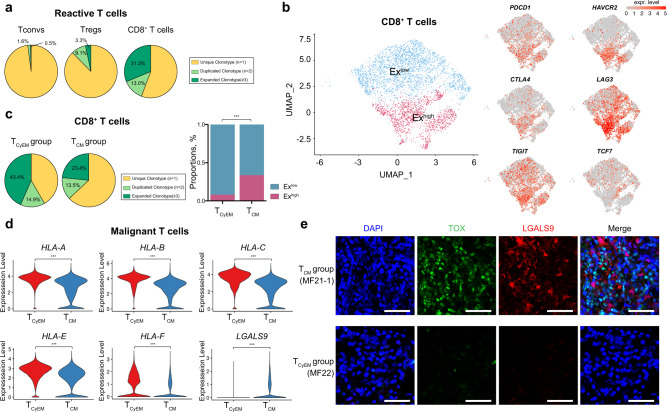
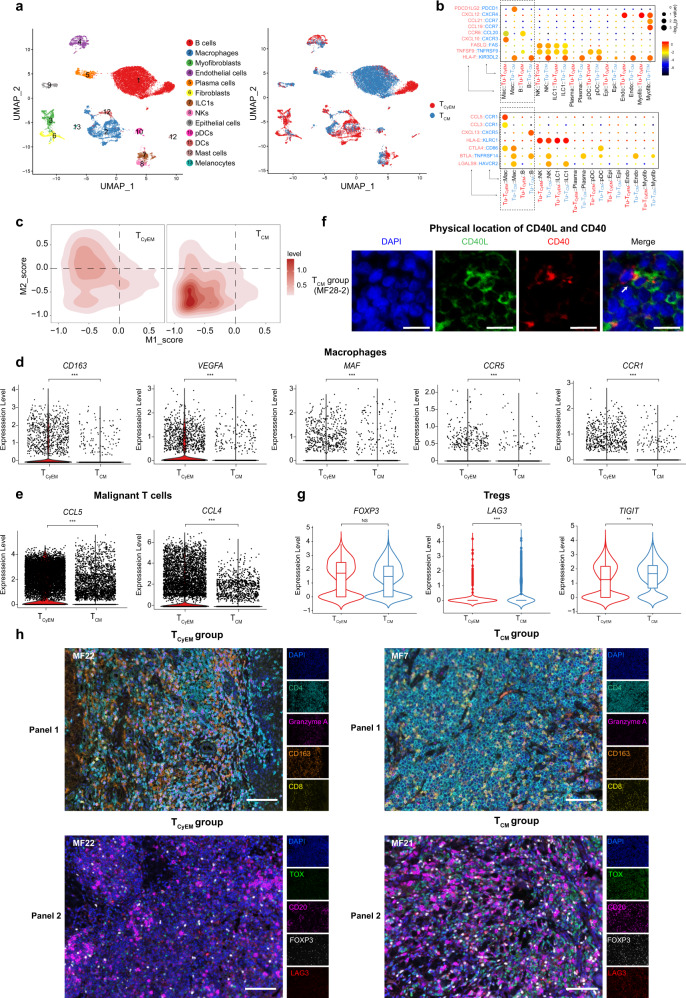
Cutaneous T cell lymphoma (CTCL) represents a heterogeneous group of non-Hodgkin lymphoma distinguished by the presence of clonal malignant T cells. The heterogeneity of malignant T cells and the complex tumor microenvironment remain poorly characterized. With single-cell RNA analysis and bulk whole-exome sequencing on 19 skin lesions from 15 CTCL patients, we decipher the intra-tumor and inter-lesion diversity of CTCL patients and propose a multi-step tumor evolution model. We further establish a subtyping scheme based on the molecular features of malignant T cells and their pro-tumorigenic microenvironments: the T group, demonstrating a cytotoxic effector memory T cell phenotype, shows more M2 macrophages infiltration, while the T group, featured by a central memory T cell phenotype and adverse patient outcome, is infiltrated by highly exhausted CD8 reactive T cells, B cells and Tregs with suppressive activities. Our results establish a solid basis for understanding the nature of CTCL and pave the way for future precision medicine for CTCL patients.
皮肤 T 细胞淋巴瘤 (CTCL) 是一组异质性非霍奇金淋巴瘤,其特征是存在克隆性恶性 T 细胞。恶性 T 细胞的异质性和复杂的肿瘤微环境仍未得到充分描述。通过对 15 名 CTCL 患者的 19 个皮肤病变进行单细胞 RNA 分析和全外显子组测序,我们破译了 CTCL 患者的肿瘤内和病变间的多样性,并提出了一个多步骤的肿瘤进化模型。我们进一步根据恶性 T 细胞及其促肿瘤微环境的分子特征建立了一种分型方案:T 组表现出细胞毒性效应记忆 T 细胞表型,显示出更多的 M2 巨噬细胞浸润,而 T 组则表现出中央记忆 T 细胞表型和不良的患者预后,浸润着具有高度耗竭性的 CD8 反应性 T 细胞、B 细胞和具有抑制活性的 Tregs。我们的研究结果为理解 CTCL 的本质奠定了坚实的基础,并为 CTCL 患者的未来精准医学铺平了道路。