Kumar Dinesh, Kumar Pawan, Vikram Kumar, Singh Himmat
ICMR-National Institute of Malaria Research, Dwarka, New Delhi 110077, India.
Saudi J Biol Sci. 2022 Feb;29(2):1134-1146. doi: 10.1016/j.sjbs.2021.09.052. Epub 2021 Sep 20.
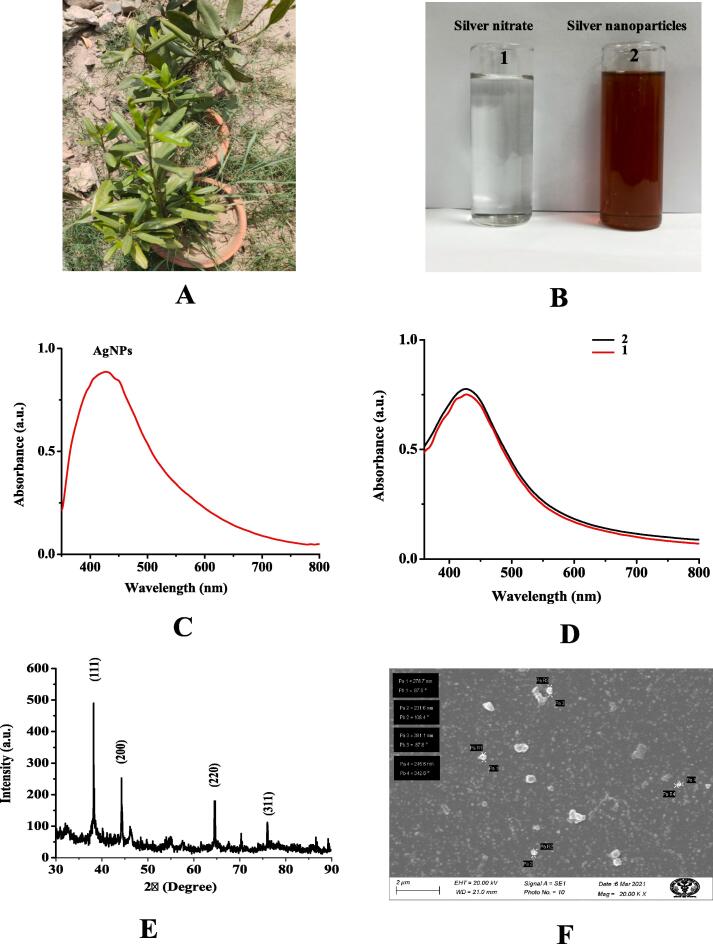
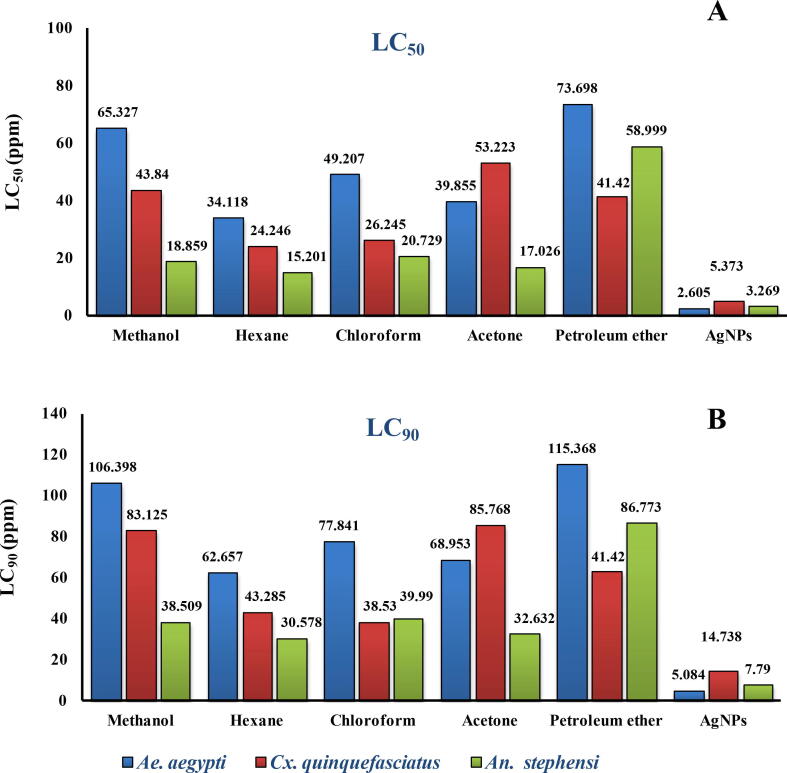
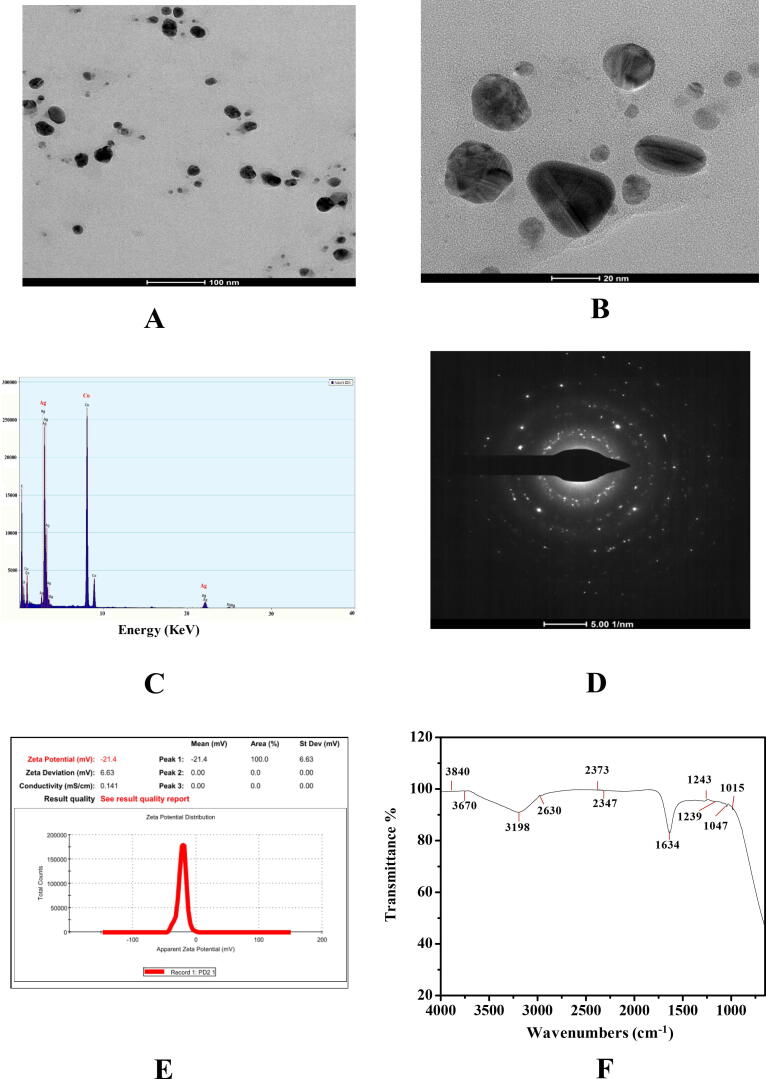
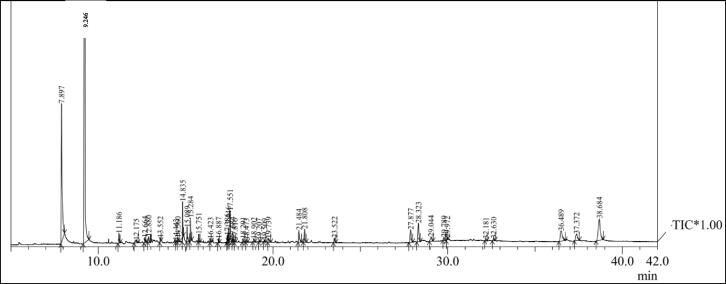
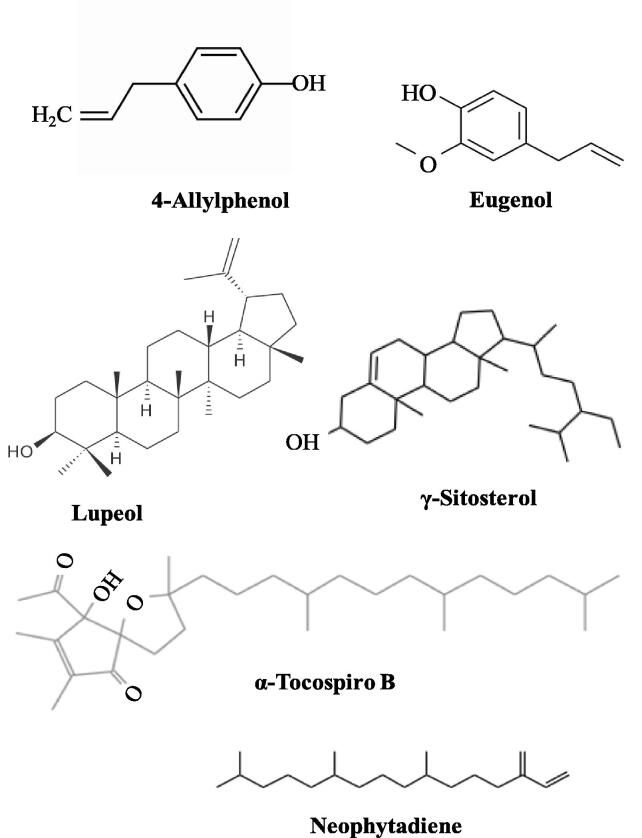
The current works report the bio-efficacy of leaf derived silver nanoparticles (Pd@AgNPs) and leaf extract obtained trough different solvents against the larvae of malaria, filarial and dengue vectors. Synthesis of silver nanoparticles (AgNPs) was done by adding 10 ml of leaf extract into 90 ml of 1 mM silver nitrate solution, a slow colour change was observed depicting the formation of AgNPs. Further, Pd@AgNPs was confirmed through Ultraviolet-visible spectroscopy which exhibited characteristic absorption peak at 422 nm wavelength. X-ray diffraction and selected area electron diffraction analysis confirmed monodispersed and crystalline nature of Pd@AgNPs with 32 nm an average size. Scanning electron microscopy and transmission electron microscopy showed the most of Pd@AgNPs were spherical and triangular in shape and energy-dispersive X-ray spectroscopy revealed silver elemental nature of nanoparticles. Zeta potential of Pd@AgNPs is highly negative which confirmed its stable nature. Pd@AgNPs showed prominent absorption peaks at 1015, 1047, 1243, 1634, 2347, 2373, 2697 and 3840 cm which are corresponding to following compounds polysaccharides, carboxylic acids, water, alcohols, esters, ethers, amines, amides and phenol, respectively as reported by Fourier-transform infrared spectroscopy analysis. Gas chromatography-mass spectrometry and Liquid chromatography-mass spectrometry analysis revealed 39 and 70 compounds, respectively, which might be contributed for bio-reduction, capping, stabilization and larvicidal behavior of AgNPs. A comparable lethality (LC and LC) was observed in case of Pd@AgNPs over leaf extract alone. The potential larvicidal activity of Pd@AgNPs was observed against the larvae of (LC 2.605; LC 5.084 ppm) (LC 3.269; LC 7.790 ppm) and (LC 5.373; LC 14.738 ppm without affecting non-targeted organism, after 72 hr of exposure. This study entails green chemistry behind synthesis of AgNPs which offers effective technique for mosquito control and other therapeutic applications.
当前的研究报告了叶衍生的银纳米颗粒(Pd@AgNPs)以及通过不同溶剂获得的叶提取物对疟疾、丝虫病和登革热媒介幼虫的生物功效。通过将10毫升叶提取物加入90毫升1毫摩尔硝酸银溶液中来合成银纳米颗粒(AgNPs),观察到颜色缓慢变化,表明AgNPs形成。此外,通过紫外可见光谱法确认了Pd@AgNPs,其在422纳米波长处呈现特征吸收峰。X射线衍射和选区电子衍射分析证实了Pd@AgNPs的单分散和晶体性质,平均尺寸为32纳米。扫描电子显微镜和透射电子显微镜显示,大多数Pd@AgNPs呈球形和三角形,能量色散X射线光谱揭示了纳米颗粒的银元素性质。Pd@AgNPs的zeta电位高度为负,证实了其稳定性质。傅里叶变换红外光谱分析表明,Pd@AgNPs在1015、1047、1243、1634、2347、2373、2697和3840厘米处有突出吸收峰,分别对应多糖、羧酸、水、醇、酯、醚、胺、酰胺和酚等化合物。气相色谱-质谱联用和液相色谱-质谱联用分析分别揭示了39种和70种化合物,这些化合物可能对AgNPs的生物还原、封端、稳定和杀幼虫行为有贡献。与单独的叶提取物相比,Pd@AgNPs表现出相当的致死率(LC和LC)。在暴露72小时后,观察到Pd@AgNPs对(LC 2.605;LC 5.084 ppm)、(LC 3.269;LC 7.790 ppm)和(LC 5.373;LC 14.738 ppm)幼虫具有潜在的杀幼虫活性,且不影响非目标生物。本研究揭示了AgNPs合成背后的绿色化学,为蚊虫控制和其他治疗应用提供了有效技术。