Castañeda-Murillo Cristian Camilo, Rojas-Ortiz Javier Gustavo, Sánchez-Reinoso Alefsi David, Chávez-Arias Cristhian Camilo, Restrepo-Díaz Hermann
Universidad Nacional de Colombia, Sede Bogotá, Facultad de Ciencias Agrarias, Departamento de Agronomía, Carrera 30 No. 45-03, Bogotá, 111321, Colombia.
Heliyon. 2022 Feb 19;8(2):e08977. doi: 10.1016/j.heliyon.2022.e08977. eCollection 2022 Feb.
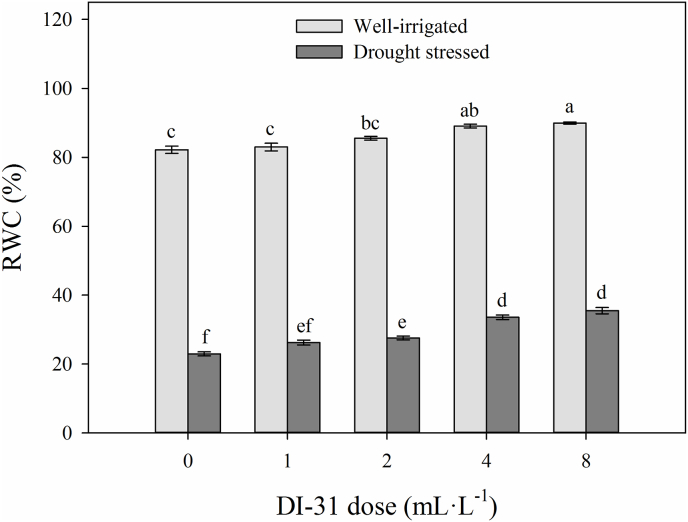
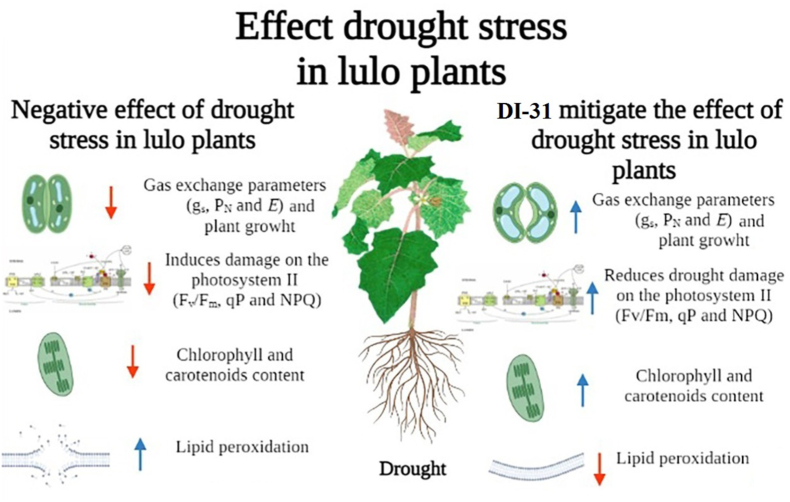
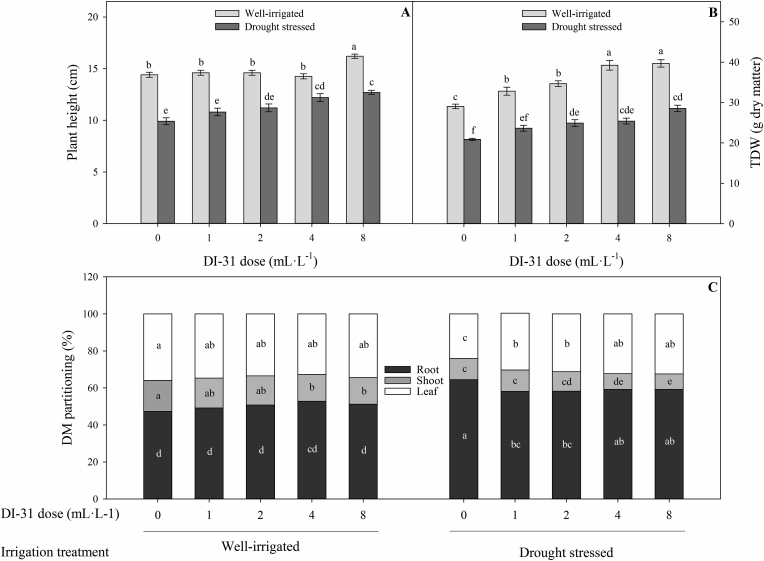
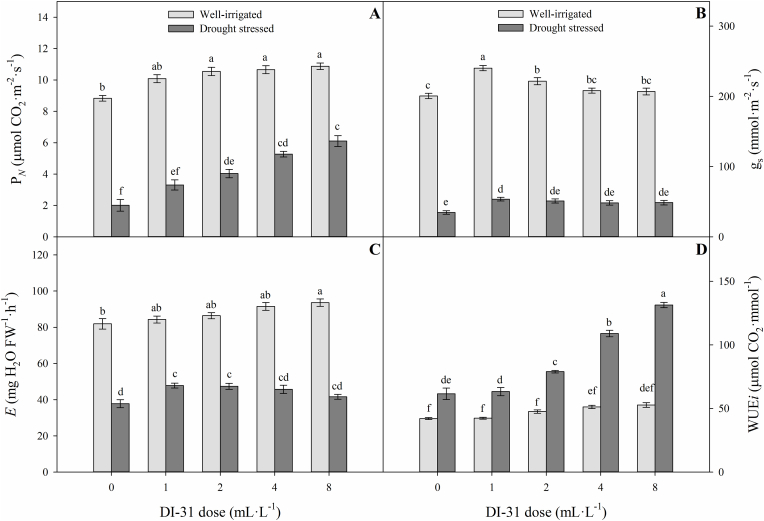
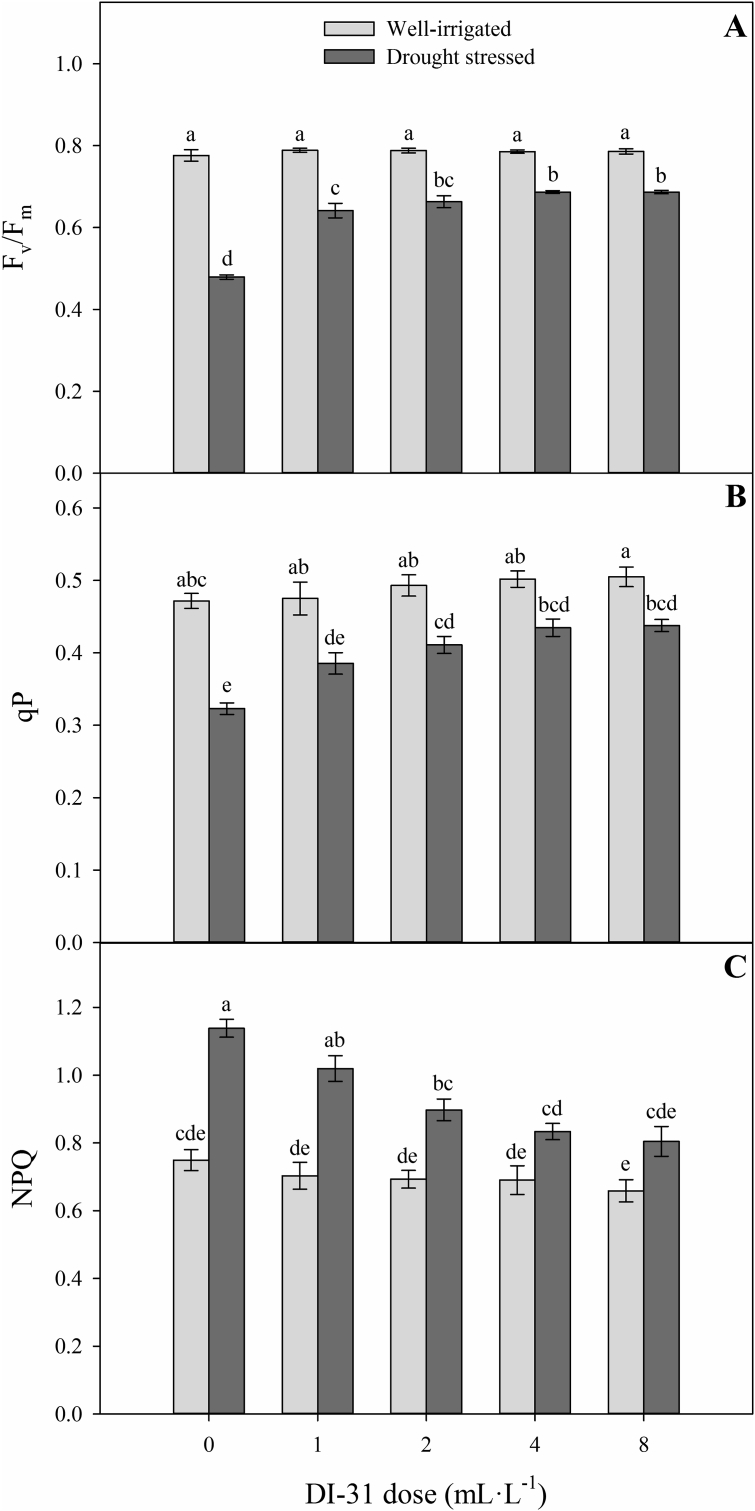
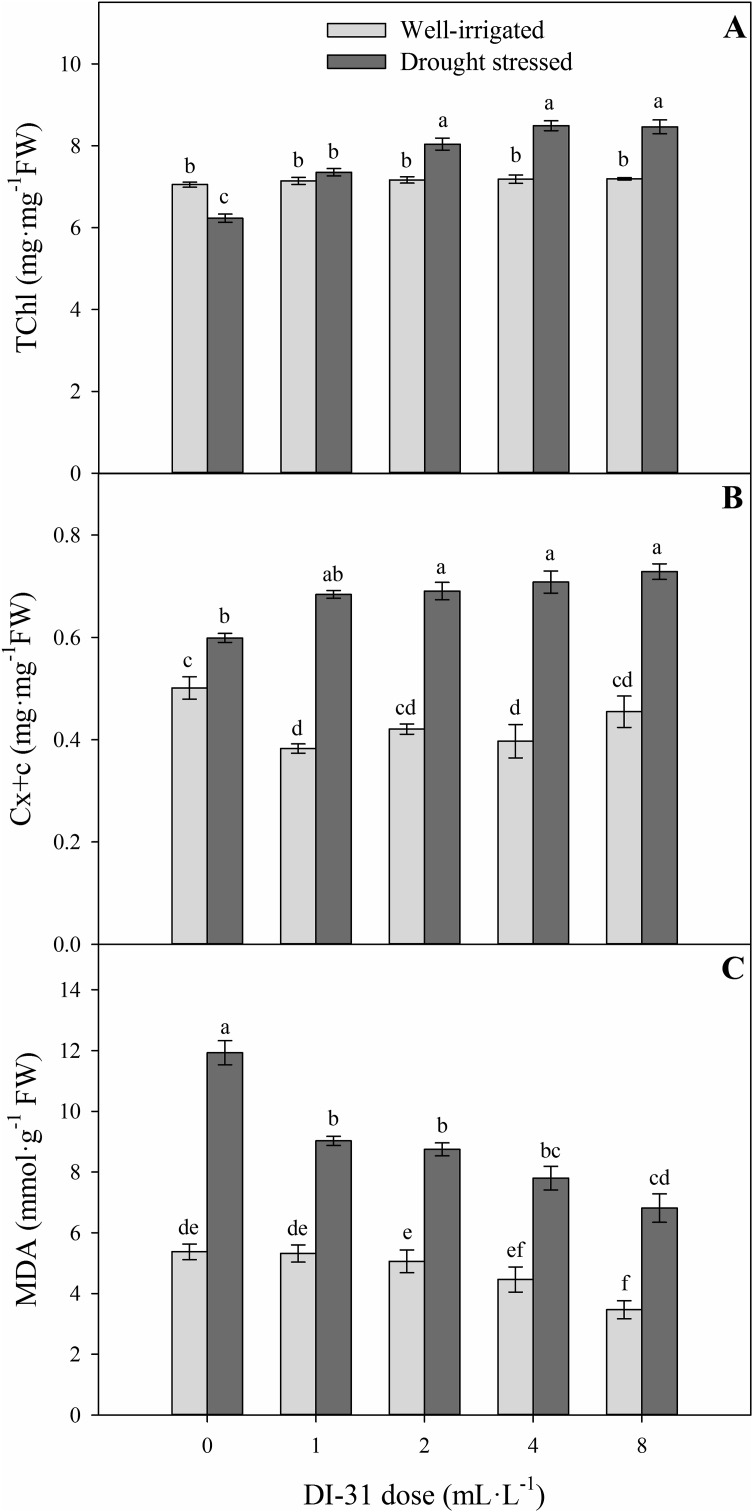
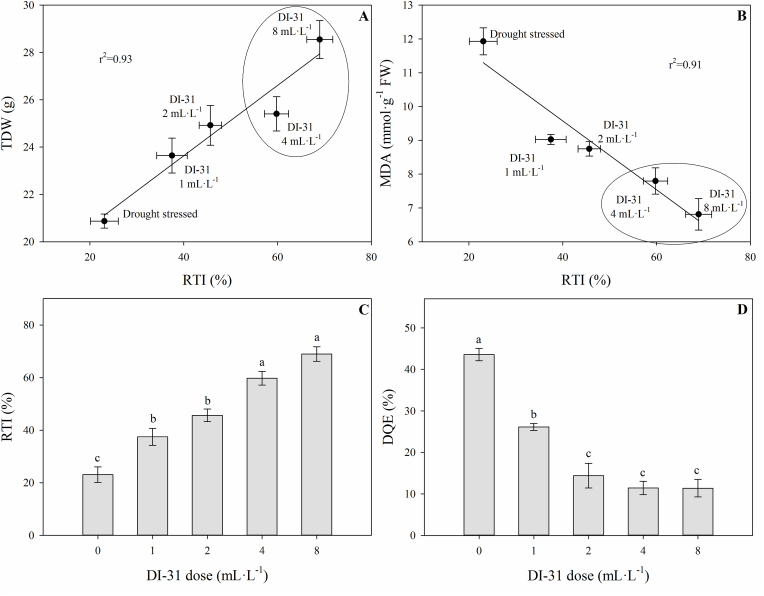
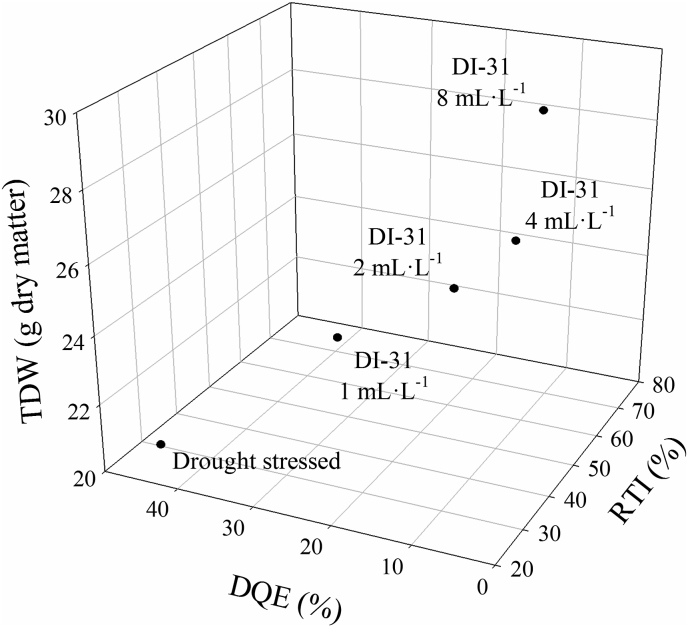
The use of agronomic alternatives such as plant hormone sprays has been considered a tool to mitigate drought stress. This research aimed to evaluate the use of foliar brassinosteroid analogue DI-31 (BRs) sprays on plant growth, leaf exchange and chlorophyll fluorescence parameters, and biochemical variables in lulo ( L. cv. ) seedlings grown under drought stress conditions. Seedlings were grown in plastic pots (3 L) using a mix between peat and sand (1:1 v/v) as substrate. Lulo plants were subjected to drought stress by suppressing 100% of the water needs at 30-37 and 73-80 days after transplanting (DAT). Foliar BRs analogue (DI-31) sprays were carried out at four different rates (0, 1, 2, 4, or 8 mL of analogue per liter) at different times (30, 33, 44, 60, 73, and 76 DAT). Drought stress caused a reduction in the F/F ratio, leaf gas exchange properties, total biomass, and relative water content. Foliar DI-31 sprays enhanced leaf photosynthesis in well-watered (WW) (∼10.7 μmol m s) or water-stressed plants (WS) (∼6.1 μmol m s) when lulo plants were treated at a dose of 4 and 8 mL·L compared to their respective controls (0 mL·L for WW: 8.83 μmol m s and WS: 2.01 μmol m s). Also, DI-31 sprays enhanced the photochemical efficiency of PSII, and plant growth. They also increased the concentration of photosynthetic pigments (TChl and Cx + c) and reduced lipid peroxidation of membranes (MDA) under drought conditions. The results allow us to suggest that the use of DI-31 at a dose of 4 or 8 mL·L can be a tool for managing water stress conditions caused by low water availability in the soil in lulo-producing areas to face situations of moderate water deficit at different times of the year.
使用植物激素喷雾等农艺替代方法被认为是缓解干旱胁迫的一种手段。本研究旨在评估在干旱胁迫条件下生长的卢洛(L. cv.)幼苗上,叶面喷施油菜素内酯类似物DI - 31(BRs)对植物生长、叶片气体交换和叶绿素荧光参数以及生化变量的影响。幼苗种植在3升的塑料盆中,以泥炭和沙子(1:1 v/v)的混合物作为基质。在移栽后30 - 37天和73 - 80天,通过抑制100%的水分需求,使卢洛植株遭受干旱胁迫。在不同时间(移栽后30、33、44、60、73和76天)以四种不同浓度(每升0、1、2、4或8毫升类似物)进行叶面BRs类似物(DI - 31)喷雾处理。干旱胁迫导致F/F比值、叶片气体交换特性、总生物量和相对含水量降低。当以4和8毫升·升的剂量处理卢洛植株时,与各自对照(浇灌良好(WW)组为0毫升·升:8.83微摩尔·米·秒,水分胁迫(WS)组为2.01微摩尔·米·秒)相比,叶面喷施DI - 31提高了浇灌良好(WW)(约10.7微摩尔·米·秒)或水分胁迫植株(WS)(约6.1微摩尔·米·秒)的叶片光合作用。此外,DI - 31喷雾提高了PSII的光化学效率和植物生长。它们还增加了光合色素(总叶绿素和类胡萝卜素)的浓度,并在干旱条件下降低了膜的脂质过氧化(丙二醛)。结果表明,以4或8毫升·升的剂量使用DI - 31可以作为应对卢洛产区土壤水分供应不足导致的水分胁迫状况的一种手段,以应对一年中不同时期的中度水分亏缺情况。