Li Angela S, Pasricha Malini Veerappan, Mishra Kapil, Nguyen Quan D, Beres Shannon J, Wood Edward H
Stanford University School of Medicine, Stanford University, Palo Alto, CA, USA.
Department of Ophthalmology, Byers Eye Institute, Stanford University, Palo Alto, CA, USA.
Am J Ophthalmol Case Rep. 2022 Feb 20;26:101444. doi: 10.1016/j.ajoc.2022.101444. eCollection 2022 Jun.
To describe the unusual case of inflammatory CRB1-associated retinal dystrophy that initially presented with self-resolving opsoclonus.
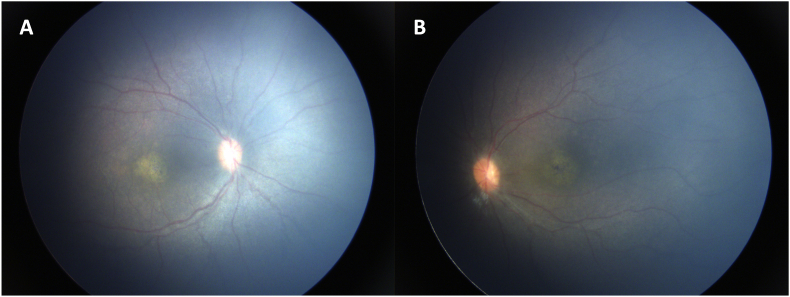
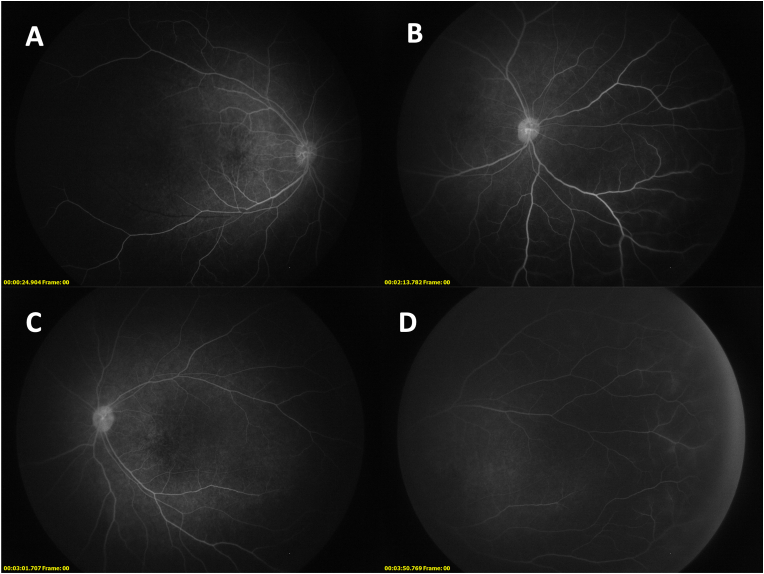
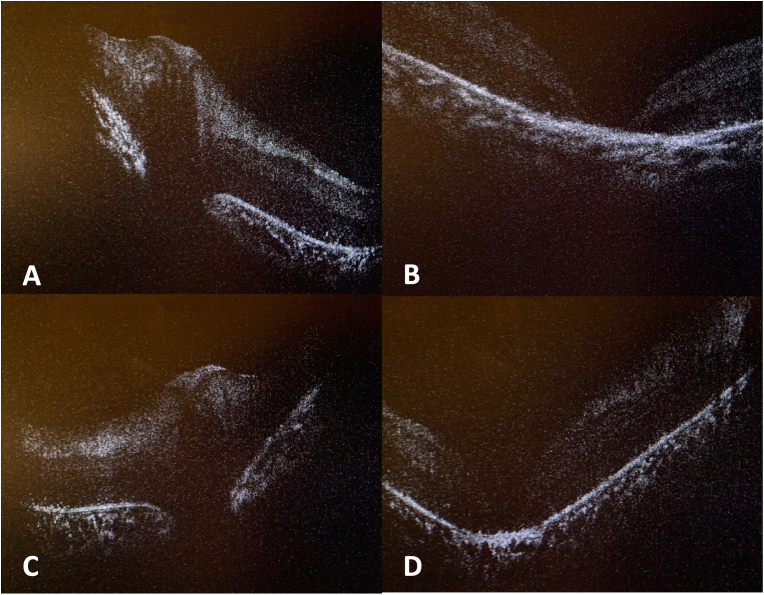
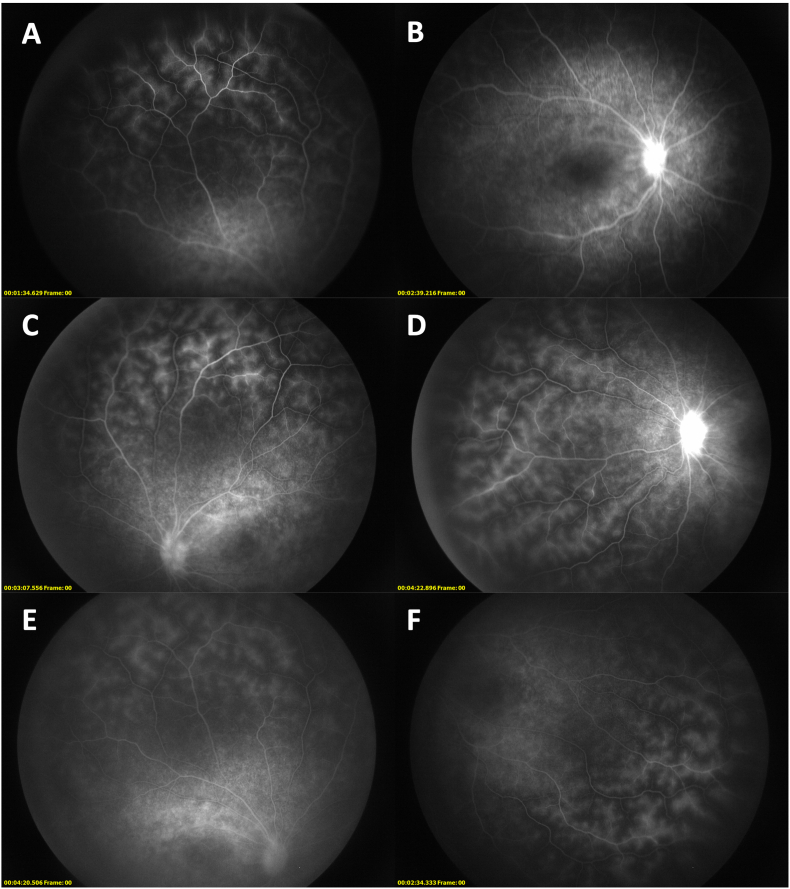
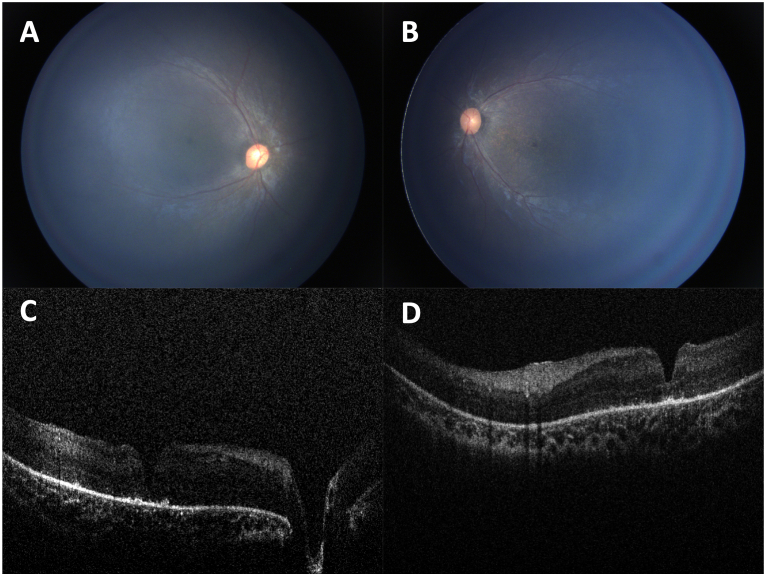
We report the case of a now 2-year-old female who developed opsoclonus without myoclonus at the age of 4 months. An extensive workup for neuroblastoma and other systemic diseases was unremarkable, and all unusual eye movements self-resolved at age 10 months. Twenty-one months after initial presentation, she began having reduced visual behaviors, and comprehensive ophthalmic exam at that time revealed recurrent saccadic intrusions as well as severe, chronic retinal inflammation and dystrophic changes. An extensive infectious and inflammatory workup was negative. Genetic sequencing revealed two variants in CRB1: a heterozygous missense mutation and a heterozygous novel deletion involving exon 12. The patient was treated with monthly infliximab and methylprednisolone infusions with improvement in her optic disc and macular capillary leakage. The patient's 8-month-old sister also harbored the same variants in CRB1 and had early signs of retinal dystrophy and peripheral vascular leakage on exam.
Saccadic intrusions may be the first sign of a retinal dystrophy, and infants and children with this presentation should undergo a complete eye exam. We further highlight the link between CRB1-associated retinal dystrophy and inflammation, and how systemic steroids and tumor necrosis factor alpha (TNF-α) inhibitors may be effective therapies. Finally, we report a novel deletion in CRB1 that is likely highly penetrant.
描述一例罕见的炎症性CRB1相关视网膜营养不良病例,该病例最初表现为可自行缓解的眼阵挛。
我们报告了一例现2岁的女性病例,该患者在4个月大时出现了无肌阵挛的眼阵挛。针对神经母细胞瘤和其他全身性疾病进行的广泛检查结果均无异常,所有异常眼动在10个月大时自行缓解。首次出现症状21个月后,她开始出现视觉行为减退,当时的全面眼科检查发现反复出现扫视性侵入以及严重的慢性视网膜炎症和营养不良性改变。广泛的感染和炎症检查结果为阴性。基因测序显示CRB1基因存在两个变异:一个杂合错义突变和一个涉及外显子12的杂合新型缺失。患者接受了每月一次的英夫利昔单抗和甲泼尼龙输注治疗,视盘和黄斑毛细血管渗漏情况有所改善。患者8个月大的妹妹在CRB1基因中也携带相同的变异,检查发现有视网膜营养不良和周边血管渗漏的早期迹象。
扫视性侵入可能是视网膜营养不良的首个迹象,出现这种表现的婴幼儿应接受全面的眼科检查。我们进一步强调了CRB1相关视网膜营养不良与炎症之间的联系,以及全身性类固醇和肿瘤坏死因子α(TNF-α)抑制剂可能是有效的治疗方法。最后,我们报告了CRB1基因中的一个新型缺失,其可能具有高度的外显率。