Prasuhn Jannik, Göttlich Martin, Gerkan Friederike, Kourou Sofia, Ebeling Britt, Kasten Meike, Hanssen Henrike, Klein Christine, Brüggemann Norbert
Institute of Neurogenetics, University of Lübeck, Ratzeburger Allee 160, 23538, Lübeck, Germany.
Department of Neurology, University Medical Center Schleswig-Holstein, Campus Lübeck, Lübeck, Germany.
Mol Med. 2022 Mar 4;28(1):28. doi: 10.1186/s10020-021-00426-9.
The underlying pathophysiology of Parkinson's disease is complex, involving different molecular pathways, including brain iron deposition and mitochondrial dysfunction. At a molecular level, these disease mechanisms are likely interconnected. Therefore, they offer potential strategies for disease-modifying treatments. We aimed to investigate subcortical brain iron deposition as a potential predictor of the bioenergetic status in patients with idiopathic Parkinson's disease.
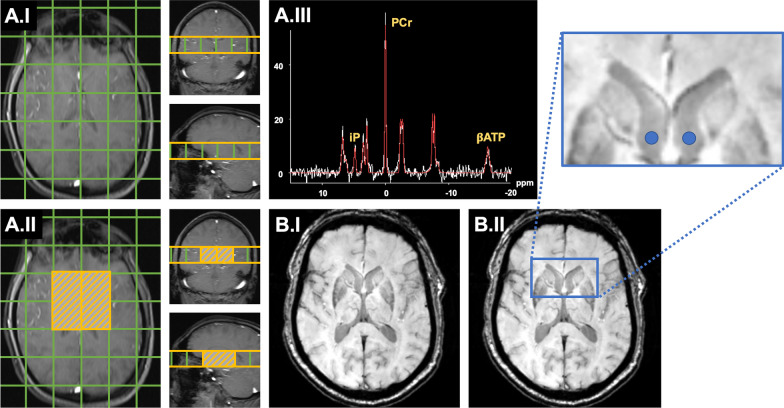
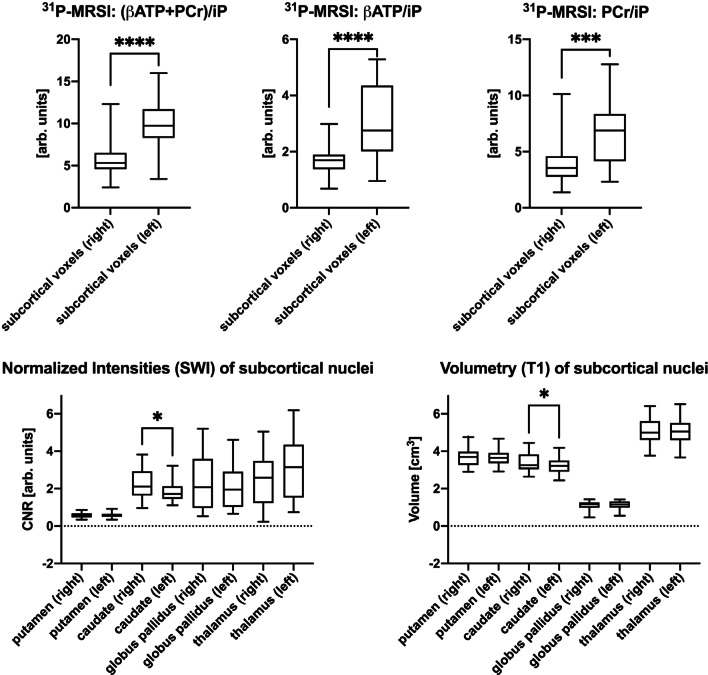
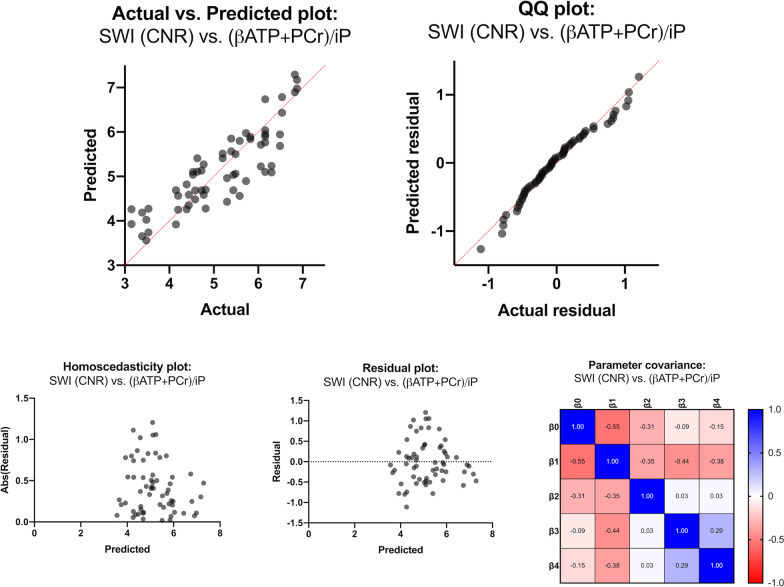
Thirty patients with idiopathic Parkinson's disease underwent multimodal MR imaging (T1, susceptibility-weighted imaging, SWI) and phosphorus magnetic resonance spectroscopy imaging. SWI contrast-to-noise ratios served as a measure for brain iron deposition in the putamen, caudate, globus pallidus, and thalamus and were used in a multiple linear regression model to predict in-vivo energy metabolite ratios.
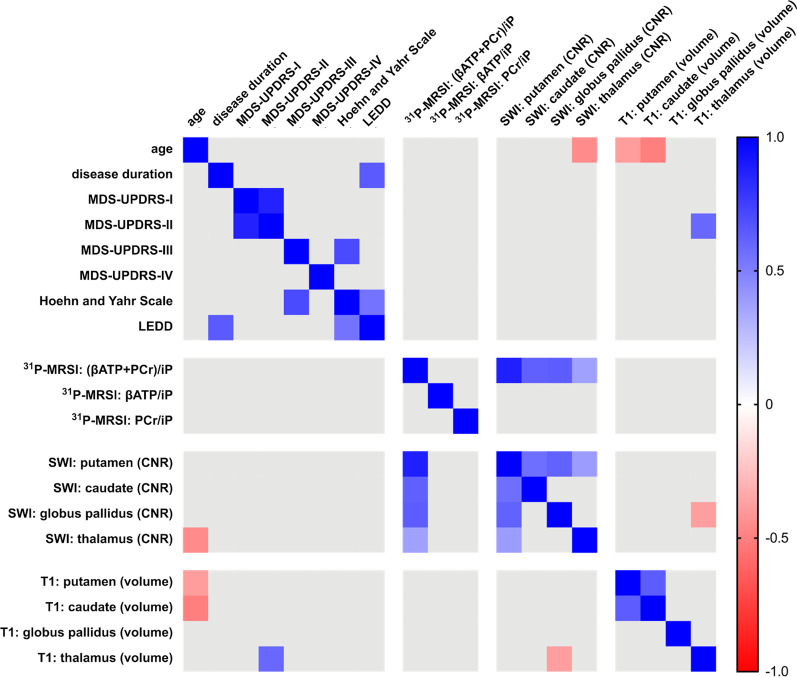
Subcortical brain iron deposition, particularly in the putamen and globus pallidus, was highly predictive of the region-specific amount of high-energy-containing phosphorus metabolites in our subjects.
Our study suggests that brain iron deposition but not the variability of individual volumetric measurements are highly predictive of mitochondrial impairment in vivo. These findings offer the opportunity, e.g., by using chelating therapies, to improve mitochondrial bioenergetics in patients with idiopathic Parkinson's disease.
帕金森病的潜在病理生理学很复杂,涉及不同的分子途径,包括脑铁沉积和线粒体功能障碍。在分子水平上,这些疾病机制可能相互关联。因此,它们为疾病修饰治疗提供了潜在策略。我们旨在研究皮质下脑铁沉积作为特发性帕金森病患者生物能量状态的潜在预测指标。
30例特发性帕金森病患者接受了多模态磁共振成像(T1、磁敏感加权成像,SWI)和磷磁共振波谱成像。SWI的对比噪声比作为壳核、尾状核、苍白球和丘脑脑铁沉积的指标,并用于多元线性回归模型以预测体内能量代谢物比率。
皮质下脑铁沉积,尤其是壳核和苍白球的铁沉积,高度预测了我们研究对象中特定区域含高能磷代谢物的量。
我们的研究表明,脑铁沉积而非个体体积测量的变异性高度预测体内线粒体损伤。这些发现提供了机会,例如通过螯合疗法,来改善特发性帕金森病患者的线粒体生物能量学。