Zhou Shi, Yamashita Akira, Su Jingyang, Zhang Yang, Wang Wuyang, Hao Liying, Yamanaka Akihiro, Kuwaki Tomoyuki
Department of Physiology, Kagoshima University Graduate School of Medical and Dental Sciences, Kagoshima, 890-8544, Japan.
Department of Pharmaceutical Toxicology, China Medical University, Shenyang, 110122, Liaoning, China.
Mol Brain. 2022 Mar 4;15(1):21. doi: 10.1186/s13041-022-00907-w.
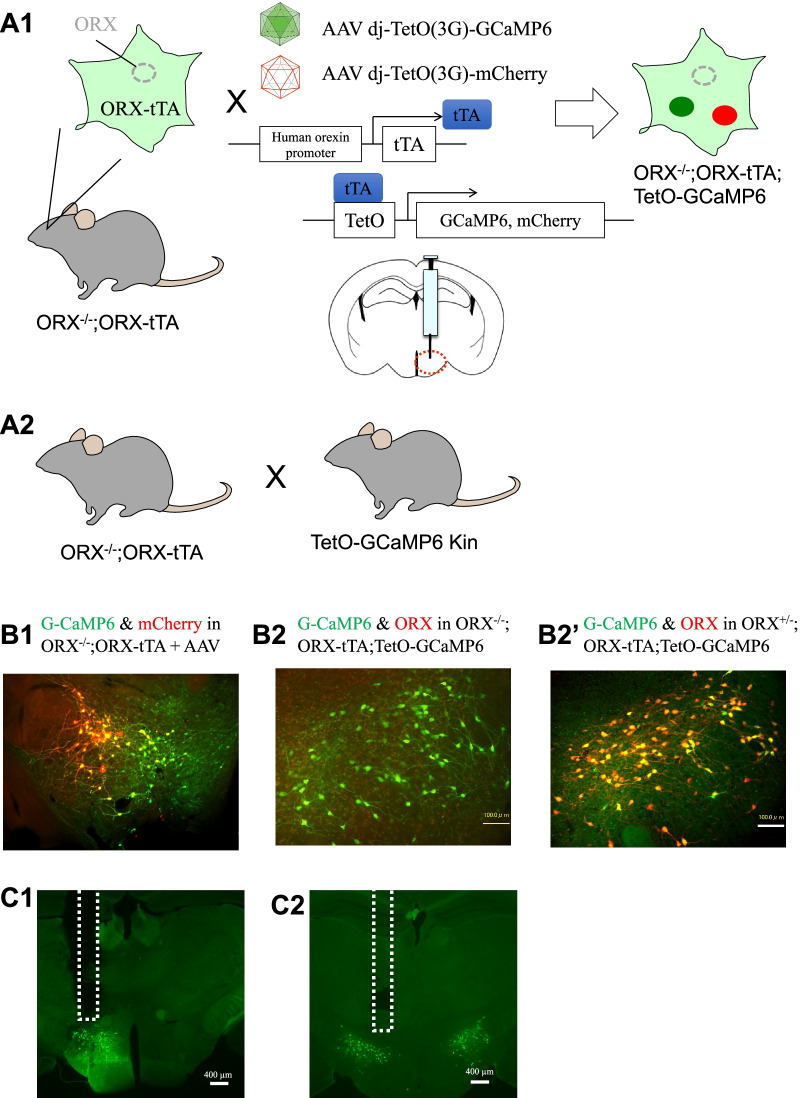
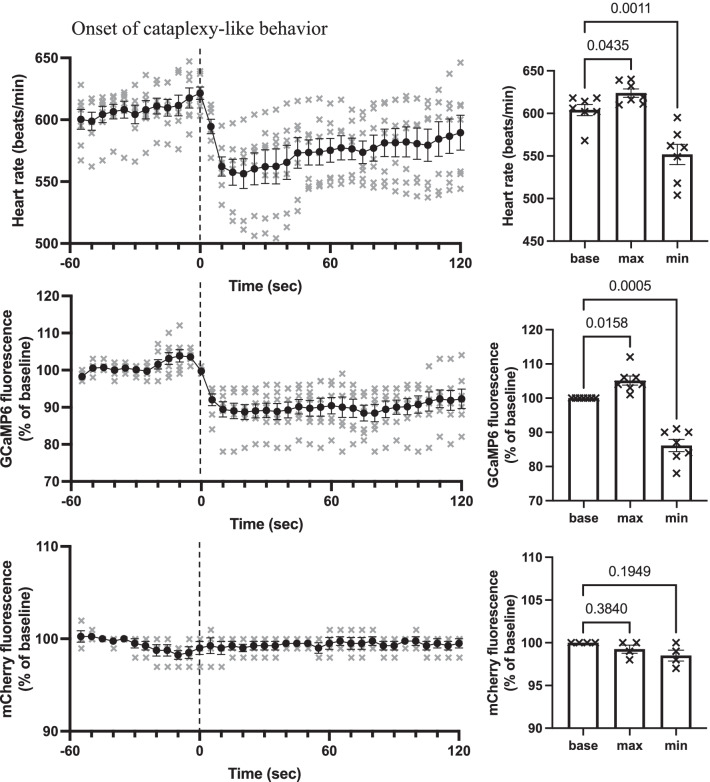
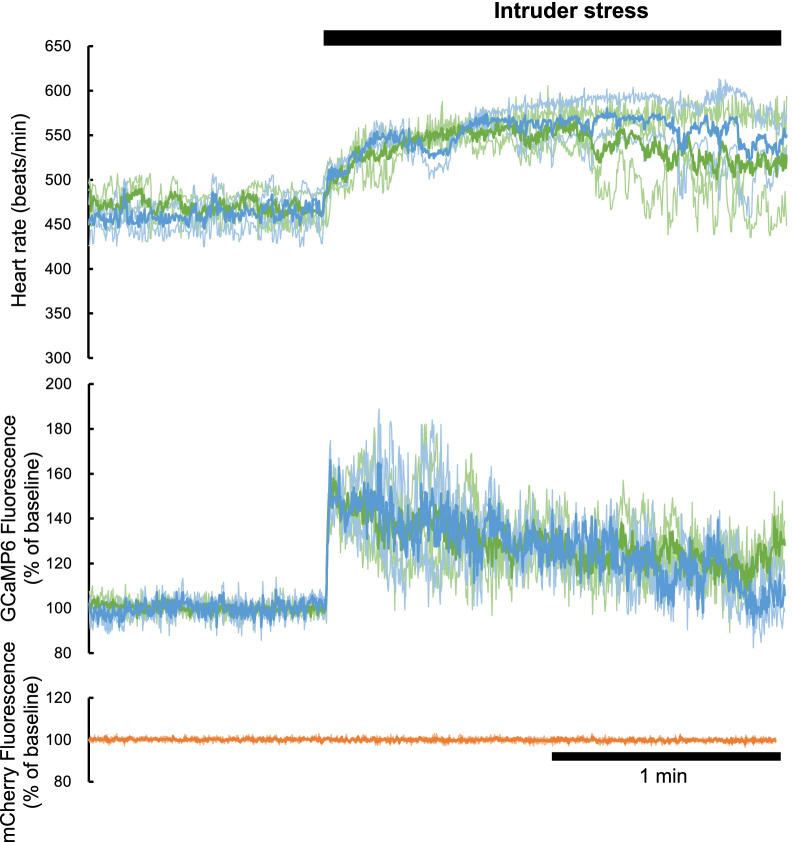
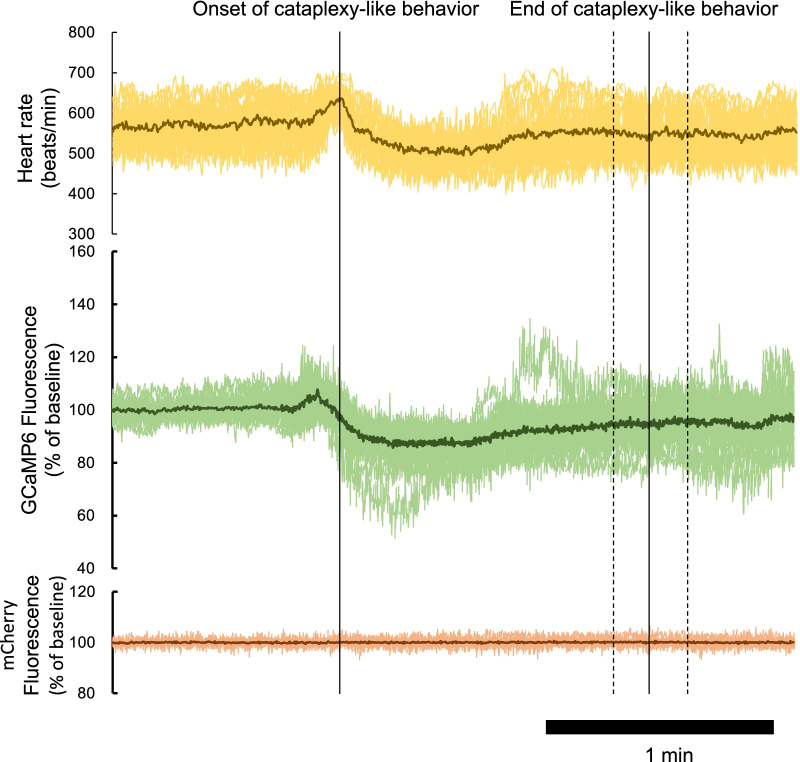
It is unclear why orexin-deficient animals, but not wild-type mice, show cataplexy. The current hypothesis predicts simultaneous excitation of cataplexy-inhibiting orexin neurons and cataplexy-inducing amygdala neurons. To test this hypothesis, we measured the activity of putative orexin neurons in orexin-knockout mice during cataplexy episodes using fiber photometry. We created two animal models of orexin-knockout mice with a GCaMP6 fluorescent indicator expressed in putative orexin neurons. We first prepared orexin-knockout mice crossed with transgenic mice carrying a tetracycline-controlled transactivator transgene under the control of the orexin promoter. TetO-GCaMP6 was then introduced into mice via an adeno-associated virus injection or natural crossing. The resulting two models showed restricted expression of GCaMP6 in the hypothalamus, where orexin neurons should be located, and showed excitation to an intruder stress that was similar to that observed in orexin-intact mice in our previous study. The activity of these putative orexin neurons increased immediately before the onset of cataplexy-like behavior but decreased (approximately - 20% of the baseline) during the cataplexy-like episode. We propose that the activity of orexin neurons during cataplexy is moderately inhibited by an unknown mechanism. The absence of cataplexy in wild-type mice may be explained by basal or residual activity-induced orexin release, and emotional stimulus-induced counter activation of orexin neurons may not be necessary. This study will serve as a basis for better treatment of cataplexy in narcolepsy patients.
目前尚不清楚为何缺乏食欲素的动物会出现猝倒症,而野生型小鼠却不会。当前的假说预测,抑制猝倒症的食欲素神经元和诱发猝倒症的杏仁核神经元会同时被激活。为了验证这一假说,我们使用光纤光度法测量了发作性睡病小鼠在猝倒发作期间假定的食欲素神经元的活性。我们创建了两种食欲素基因敲除小鼠的动物模型,在假定的食欲素神经元中表达GCaMP6荧光指示剂。我们首先培育了食欲素基因敲除小鼠与转基因小鼠的杂交后代,该转基因小鼠在食欲素启动子的控制下携带四环素调控的反式激活因子转基因。然后通过腺相关病毒注射或自然杂交将TetO-GCaMP6导入小鼠体内。得到的两种模型在下丘脑(食欲素神经元应该所在的位置)显示出GCaMP6的限制性表达,并且对入侵者应激表现出兴奋,这与我们之前研究中观察到的食欲素完整小鼠的情况相似。这些假定的食欲素神经元的活性在类猝倒行为发作前立即增加,但在类猝倒发作期间降低(约为基线的-20%)。我们认为,在猝倒发作期间,食欲素神经元的活性受到一种未知机制的适度抑制。野生型小鼠不存在猝倒症,可能是由于基础或残余活性诱导的食欲素释放,并且情绪刺激诱导的食欲素神经元的反式激活可能并非必要。这项研究将为更好地治疗发作性睡病患者的猝倒症奠定基础。