Liver Research Center, Beijing Friendship Hospital, Capital Medical University, Beijing Key Laboratory of Translational Medicine on Liver Cirrhosis and National Clinical Research Center for Digestive Diseases, No. 95 Yong-An Road, Beijing, 100050, China.
BOE Regenerative Medicine Technology Co., Ltd., Beijing, 100015, China.
Stem Cell Res Ther. 2022 Mar 4;13(1):94. doi: 10.1186/s13287-022-02754-x.
Acetaminophen (APAP) overdose is a major cause of the morbidity of acute liver failure. The current clinically approved treatment for APAP poisoning, N-acetylcysteine (NAC), has a limited therapeutic window, and prolonged treatment with NAC delays liver regeneration. Mesenchymal stem cells (MSCs) also have therapeutic effects on APAP-induced mouse liver failure, but whether the effects are comparable to those of NAC has not been determined, and the mechanism still needs further exploration.
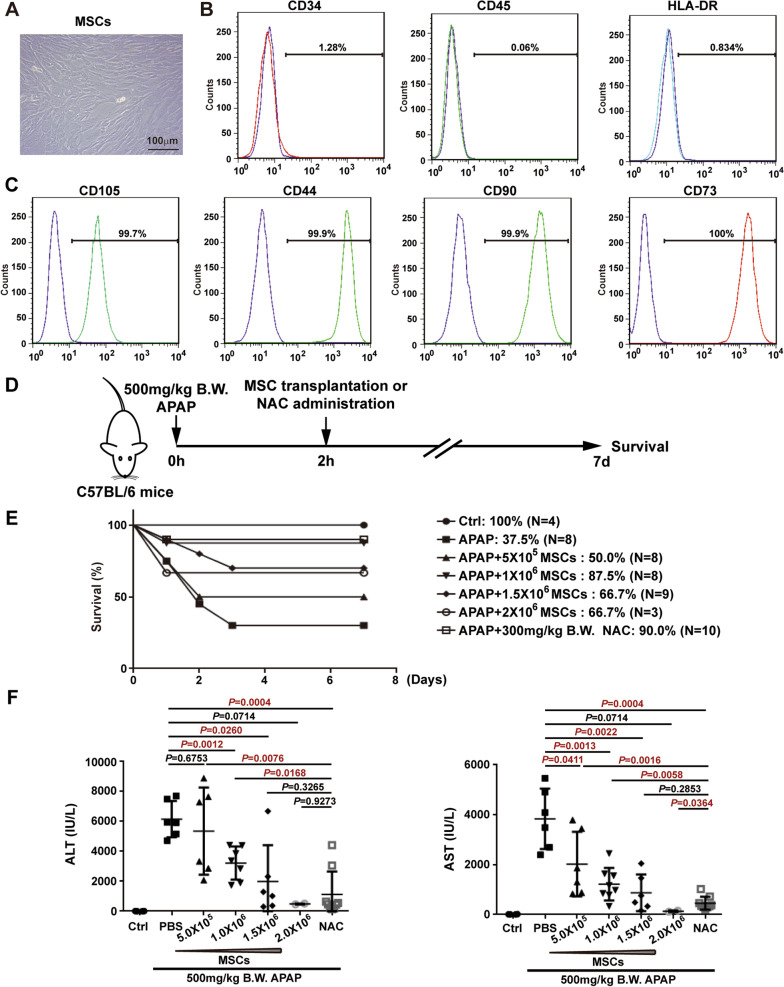
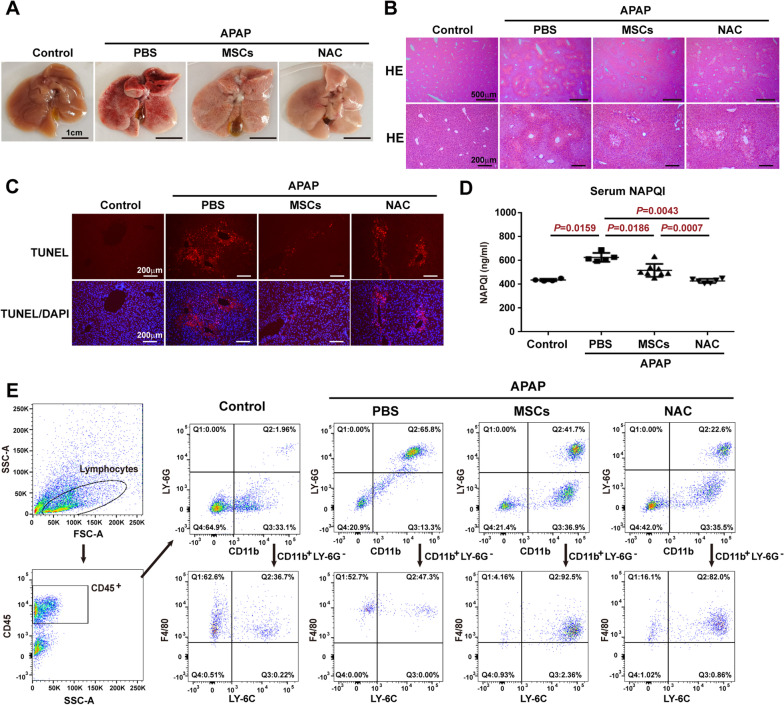
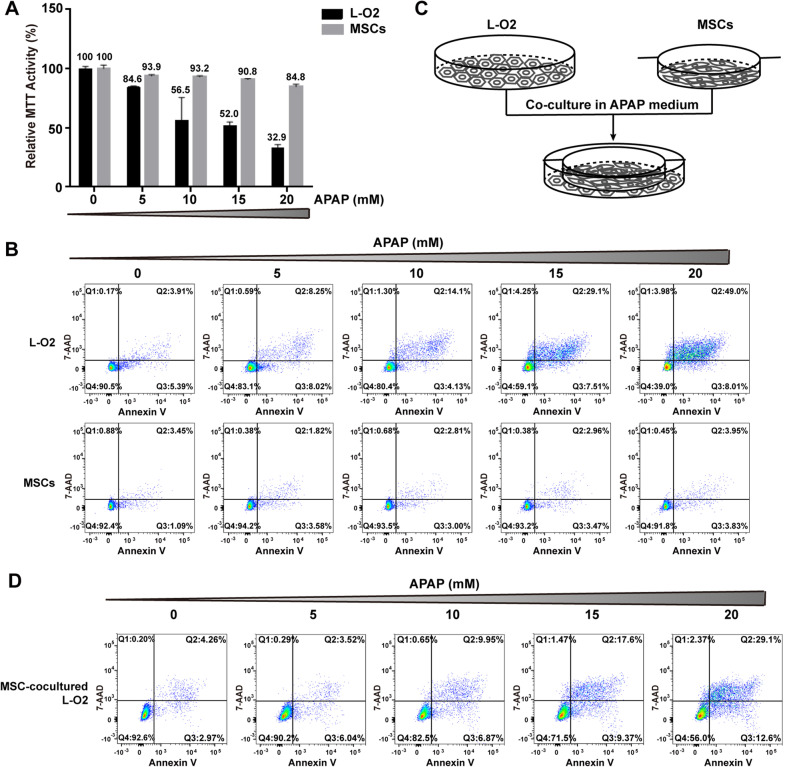
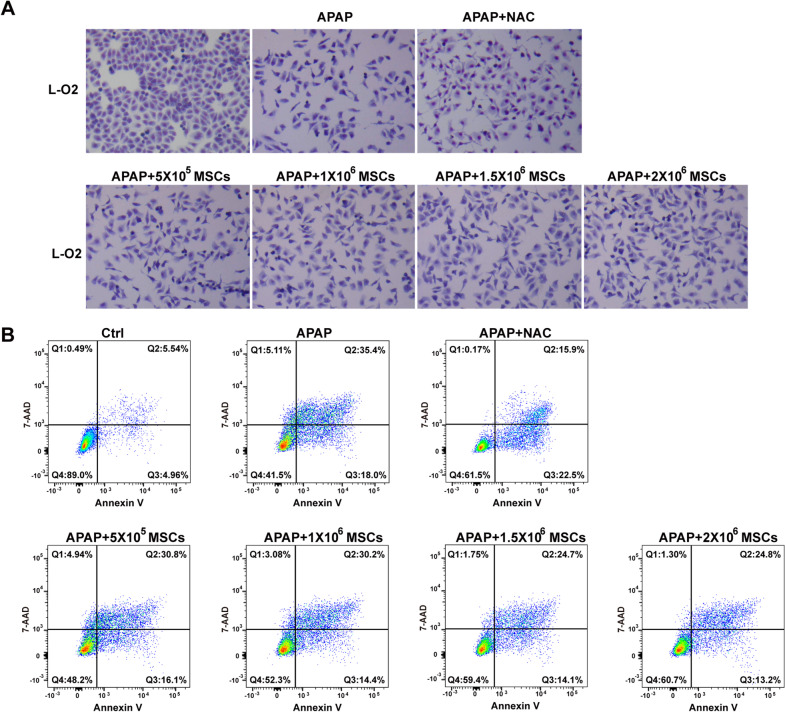
Fasted C57BL/6 mice that received 500 mg/kg APAP were treated intravenously with 300 mg/kg NAC or different amounts of MSCs at 2 h after APAP to investigate survival, hepatocyte necrosis and neutrophil/macrophage recruitment. In vitro co-culture was performed to study the anti-necrotic effects of MSCs on the APAP-injured hepatocyte cell line L-O2.
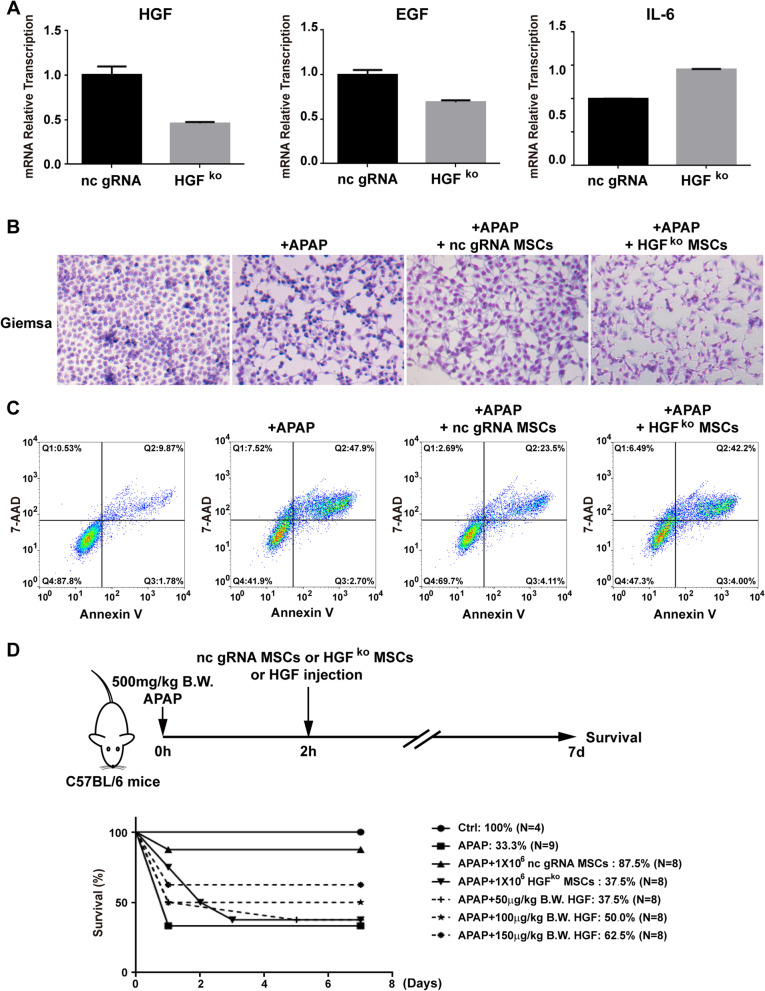
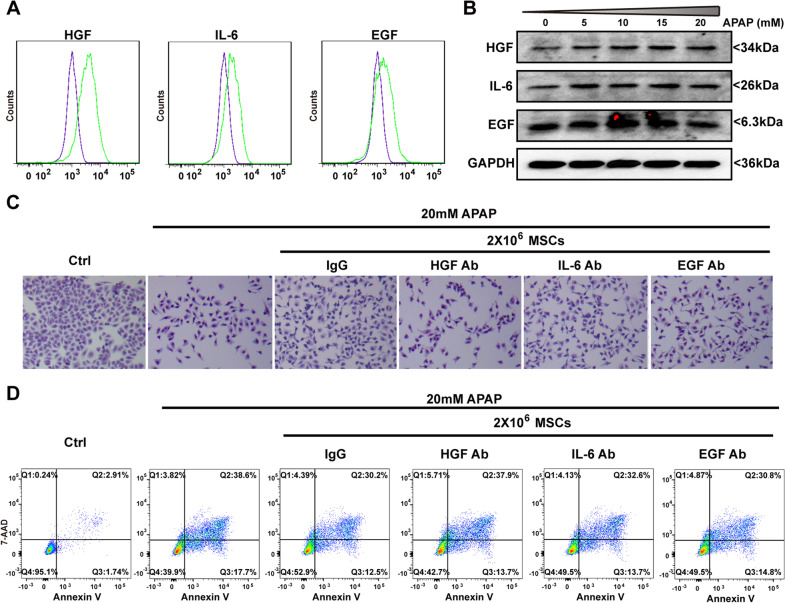
MSCs dose-dependently rescued the C57BL/6J mice from APAP-induced liver failure, with 87.5% of MSCs (1 × 10) surviving similar to that of NAC (90%). MSC has similar effects on reduced hepatocyte necrosis and granulocytic myeloid-derived suppressor cells (MDSC) infiltration but enhanced the proportion of regenerative monocytic MDSC when compared to NAC. Mechanistically, MSCs attenuate hepatocyte necrosis by secreting hepatocyte growth factor (HGF). When HGF was knocked down, the protective effects of MSCs were reduced on APAP-induced hepatocyte necrosis and mouse liver failure.
MSCs are comparable to NAC against APAP-induced liver failure by secreting HGF with less regenerative retardation concerns, thus facilitating the application of MSCs in clinical therapy for APAP liver failure.
对乙酰氨基酚(APAP)过量是导致急性肝衰竭发病率的主要原因。目前,临床批准用于治疗 APAP 中毒的药物 N-乙酰半胱氨酸(NAC)的治疗窗有限,并且 NAC 的延长治疗会延迟肝再生。间充质干细胞(MSCs)对 APAP 诱导的小鼠肝衰竭也有治疗作用,但效果是否与 NAC 相当尚未确定,其机制仍需进一步探讨。
禁食的 C57BL/6 小鼠在接受 500mg/kg APAP 后 2 小时内静脉注射 300mg/kg NAC 或不同剂量的 MSCs,以研究存活率、肝细胞坏死和中性粒细胞/巨噬细胞募集情况。体外共培养用于研究 MSCs 对 APAP 损伤的肝细胞系 L-O2 的抗坏死作用。
MSCs 剂量依赖性地使 C57BL/6J 小鼠从 APAP 诱导的肝衰竭中恢复,其中 87.5%的 MSCs(1×10)的存活率与 NAC(90%)相似。与 NAC 相比,MSC 对减少肝细胞坏死和粒细胞髓源性抑制细胞(MDSC)浸润具有相似的作用,但增强了再生单核细胞 MDSC 的比例。在机制上,MSCs 通过分泌肝细胞生长因子(HGF)来减轻肝细胞坏死。当 HGF 被敲低时,MSCs 对 APAP 诱导的肝细胞坏死和小鼠肝衰竭的保护作用降低。
MSCs 通过分泌 HGF 来对抗 APAP 诱导的肝衰竭,与 NAC 相当,且再生延迟问题较少,从而促进 MSCs 在 APAP 肝衰竭的临床治疗中的应用。