de Bengy Puyvallée Antoine, Storeng Katerini Tagmatarchi
Centre for Development & the Environment, University of Oslo, Postboks 1116 Blindern, 0317, Oslo, Norway.
London School of Hygiene & Tropical Medicine, London, UK.
Global Health. 2022 Mar 5;18(1):26. doi: 10.1186/s12992-022-00801-z.
In 2021, donor countries, the pharmaceutical industry, and the COVAX initiative promoted vaccine donation or "dose-sharing" as a main solution to the inequitable global distribution of Covid-19 vaccines. COVAX positioned itself as a global vaccine-sharing hub that promised to share doses "equitably, effectively and transparently," according to rational criteria overseen by independent scientists. This article provides a critical analysis of the principles and practice of "dose-sharing," showing how it reveals the politics at play within COVAX.
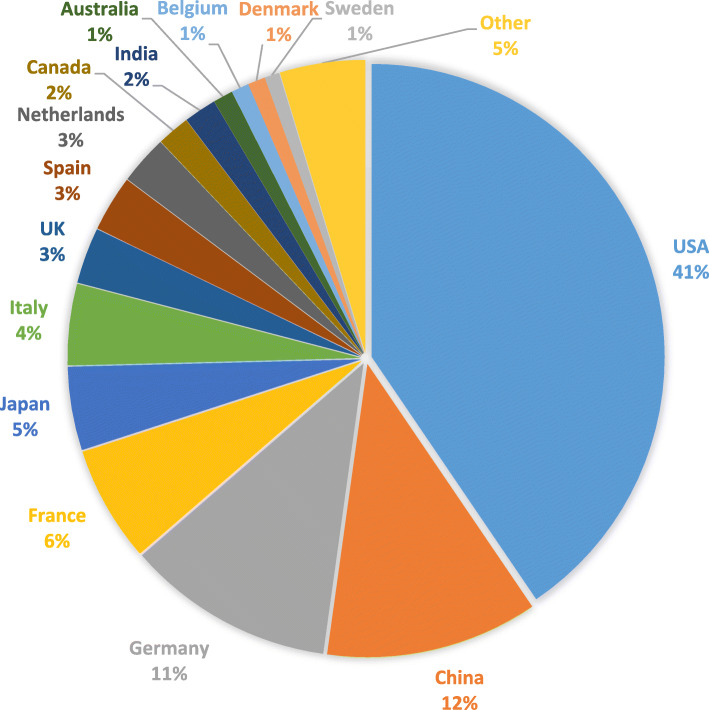
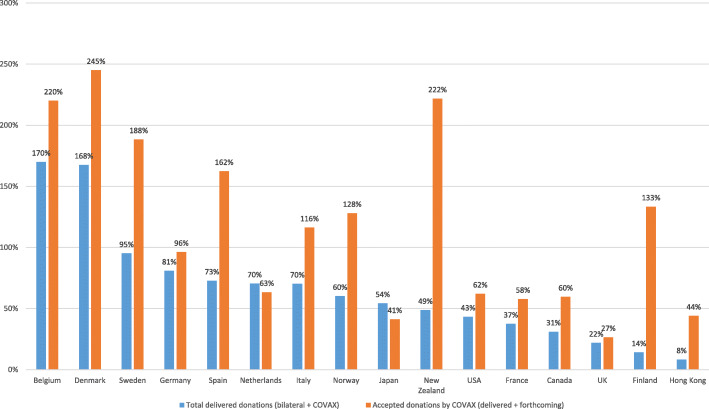
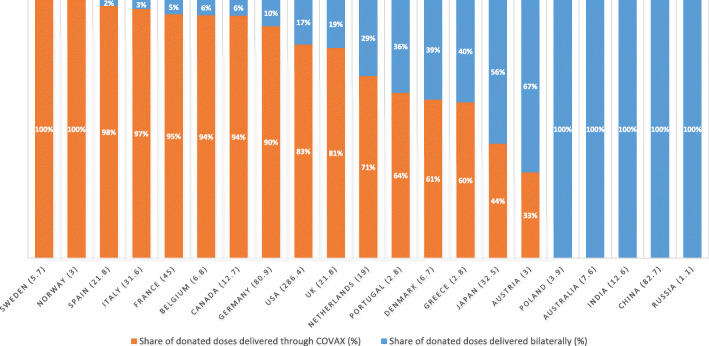
Donated doses were an important source of COVAX's vaccine supply in 2021, accounting for 60% of the doses the initiative delivered (543 million out of 910 million). However, donations could not compensate fully for COVAX's persistent procurement struggles: it delivered less than half of the two billion doses it originally projected for 2021, a fraction of the 9.25 billion doses that were administered globally in 2021. Donor countries and vaccine manufacturers systematically broke COVAX's principles for maximizing the impact of dose-sharing, delivering doses late, in smaller quantities than promised, and in ad hoc ways that made roll-out in recipient countries difficult. Some donors even earmarked doses for specific recipients, complicating and potentially undermining COVAX's equitable allocation mechanism.
COVAX's pivot from global vaccine procurement mechanism to dose-sharing hub can be seen as a "win-win-win" solution for COVAX itself (who could claim success by having access to more doses), for donor countries (who could rebrand themselves as charitable donors rather than "vaccine hoarders"), and for the pharmaceutical industry (maintaining the status quo on intellectual property rights and protecting their commercial interests). Although dose-sharing helped COVAX's vaccine delivery, its impact was undermined by donors' and industry's pursuit of national security, diplomatic and commercial interests, which COVAX largely accommodated. The lack of transparency and accountability mechanisms within COVAX's overly complex governance structure as a global public-private partnership enabled these practices.
2021年,捐助国、制药行业和新冠疫苗全球获得机制(COVAX)倡议将疫苗捐赠或“剂量共享”作为解决新冠疫苗全球分配不公问题的主要方案。COVAX将自己定位为全球疫苗共享中心,承诺根据独立科学家监督的合理标准“公平、有效和透明地”分配剂量。本文对“剂量共享”的原则和实践进行了批判性分析,揭示了COVAX内部的政治博弈。
捐赠剂量是2021年COVAX疫苗供应的重要来源,占该倡议分发剂量的60%(9.1亿剂中的5.43亿剂)。然而,捐赠无法完全弥补COVAX持续的采购困境:它分发的剂量不到其2021年最初预计的20亿剂的一半,仅占2021年全球接种的92.5亿剂的一小部分。捐助国和疫苗制造商系统性地违反了COVAX关于最大化剂量共享影响的原则,延迟交付剂量,交付数量低于承诺数量,且方式随意,给受援国的疫苗推广带来困难。一些捐助者甚至为特定受援者指定剂量,使COVAX的公平分配机制复杂化并可能遭到破坏。
COVAX从全球疫苗采购机制转向剂量共享中心,对COVAX自身(通过获得更多剂量可以宣称取得成功)、捐助国(可以将自己重塑为慈善捐助者而非“疫苗囤积者”)和制药行业(维持知识产权现状并保护其商业利益)来说可被视为一个“三赢”方案。尽管剂量共享有助于COVAX的疫苗分发,但其影响因捐助者和行业对国家安全、外交和商业利益的追求而受到削弱,而COVAX在很大程度上对此予以了迁就。作为全球公私伙伴关系,COVAX过于复杂的治理结构中缺乏透明度和问责机制,使得这些行为得以发生。