Herder Matthew, Benavides Ximena
Faculty of Medicine, Department of Pharmacology, Dalhousie University, Halifax, Canada.
Health Justice Institute, Schulich School of Law, Dalhousie University, Halifax, Canada.
PLOS Glob Public Health. 2024 Sep 23;4(9):e0003173. doi: 10.1371/journal.pgph.0003173. eCollection 2024.
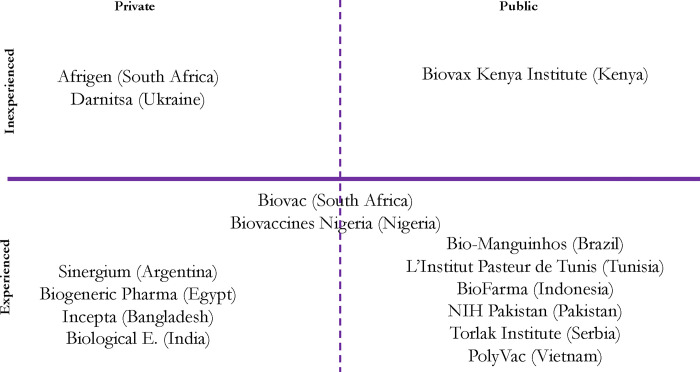
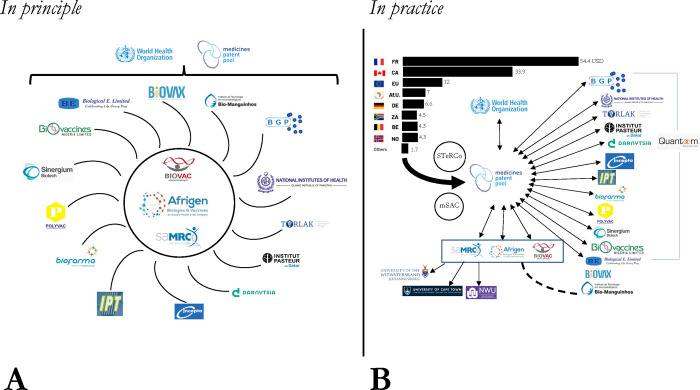
In June 2021 the World Health Organization (WHO) and the Medicines Patent Pool (MPP) launched an mRNA technology transfer programme. With a South African consortium serving as the hub, the programme aimed to increase vaccine manufacturing capacity in low- and middle-income countries (LMICs) in view of the "vaccine apartheid" that was observed during COVID-19. Following Clarke's "situational analysis," the present study assessed whether the mRNA programme differs from the approach and practices that comprise current biopharmaceutical production. Numerous documentary sources, including legal agreements underpinning the programme, funding agreements, and patent filings, were reviewed. Semi-structured interviews with 35 individuals, ranging from the programme's architects and university scientists to representatives from LMIC vaccine manufacturers taking part in the programme were also conducted. While the mRNA programme may improve the sharing of knowledge, other design features, in particular, weak conditionalities around product affordability, participants' freedom to contract with third parties, and acceptance of market-based competition, are in line with the status quo. Further, WHO and MPP's tight control over the programme evokes the dynamics that are often in play in global health, to the detriment of empowering LMIC-based manufacturers to generate mRNA products in response to local health needs.
2021年6月,世界卫生组织(WHO)和药品专利池(MPP)发起了一项mRNA技术转让计划。该计划以一个南非财团为中心,鉴于在新冠疫情期间观察到的“疫苗种族隔离”现象,旨在提高低收入和中等收入国家(LMICs)的疫苗生产能力。继克拉克的“情况分析”之后,本研究评估了mRNA计划是否不同于构成当前生物制药生产的方法和实践。研究审查了众多文献资料,包括该计划的相关法律协议、资助协议和专利申请。还对35个人进行了半结构化访谈,这些人涵盖了该计划的设计者、大学科学家以及参与该计划的低收入和中等收入国家疫苗制造商的代表。虽然mRNA计划可能会促进知识共享,但其他设计特点,特别是在产品可负担性方面的条件薄弱、参与者与第三方签约的自由以及对基于市场竞争的接受,与现状相符。此外,世卫组织和药品专利池对该计划的严格控制引发了全球卫生领域经常出现的动态变化,不利于增强低收入和中等收入国家制造商根据当地卫生需求生产mRNA产品的能力。