Department of Archaeology, Classics and Egyptology, University of Liverpool, Liverpool, UK.
Department of Zoology, University of Cambridge, Cambridge, UK.
Sci Rep. 2022 Mar 7;12(1):3689. doi: 10.1038/s41598-022-07742-y.
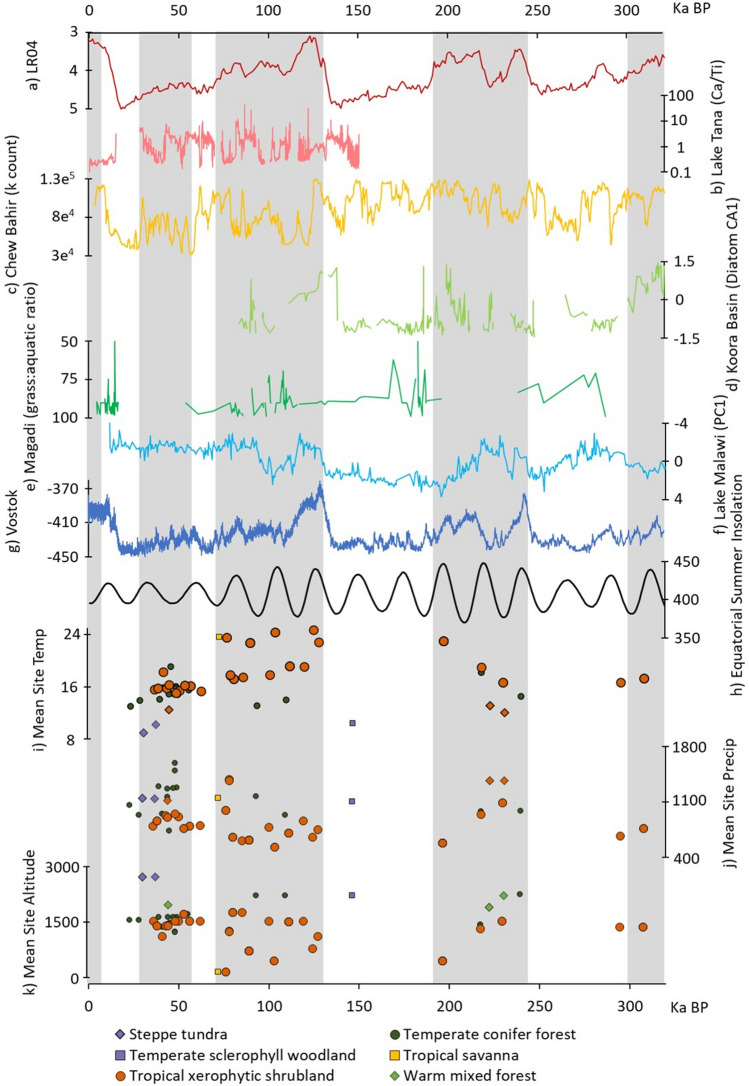
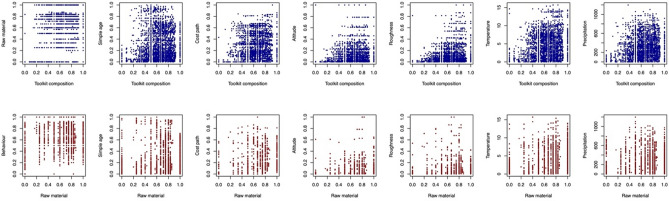
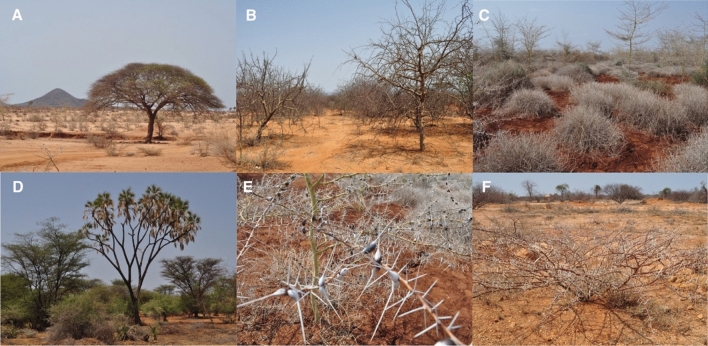
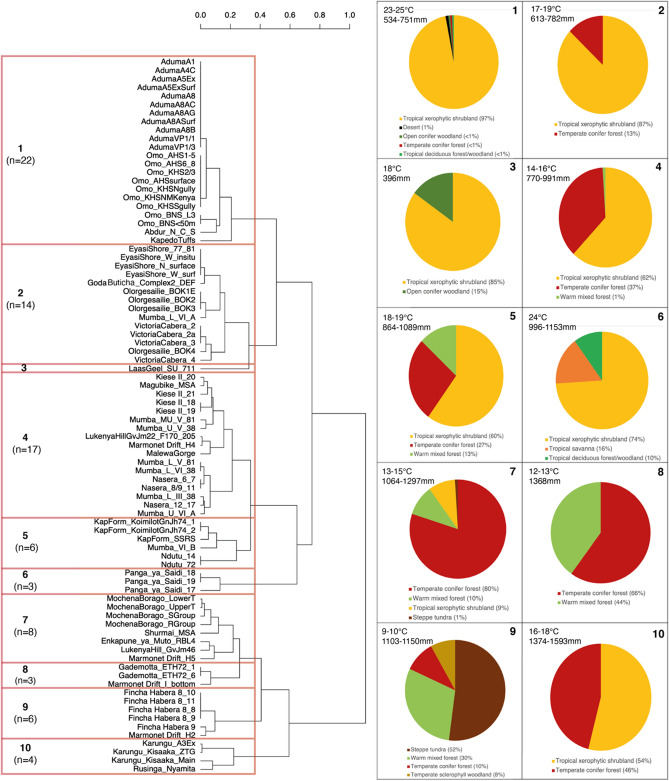
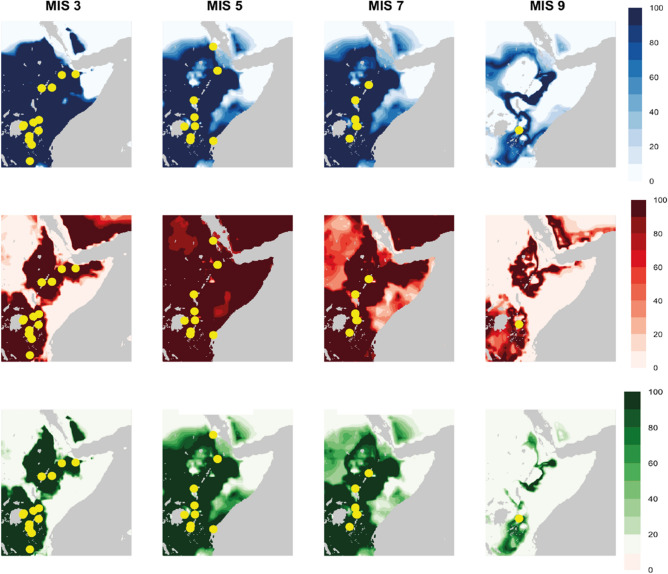
Eastern Africa has played a prominent role in debates about human evolution and dispersal due to the presence of rich archaeological, palaeoanthropological and palaeoenvironmental records. However, substantial disconnects occur between the spatial and temporal resolutions of these data that complicate their integration. Here, we apply high-resolution climatic simulations of two key parameters, mean annual temperature and precipitation, and a biome model, to produce a highly refined characterisation of the environments inhabited during the eastern African Middle Stone Age. Occupations are typically found in sub-humid climates and landscapes dominated by or including tropical xerophytic shrubland. Marked expansions from these core landscapes include movement into hotter, low-altitude landscapes in Marine Isotope Stage 5 and cooler, high-altitude landscapes in Marine Isotope Stage 3, with the recurrent inhabitation of ecotones between open and forested habitats. Through our use of high-resolution climate models, we demonstrate a significant independent relationship between past precipitation and patterns of Middle Stone Age stone tool production modes overlooked by previous studies. Engagement with these models not only enables spatiotemporally explicit examination of climatic variability across Middle Stone Age occupations in eastern Africa but enables clearer characterisation of the habitats early human populations were adapted to, and how they changed through time.
东非在人类进化和迁徙的辩论中扮演了重要角色,因为这里有丰富的考古学、古人类学和古环境记录。然而,这些数据的空间和时间分辨率之间存在很大的不连续性,这使得它们的整合变得复杂。在这里,我们应用了两个关键参数(平均年温度和降水)的高分辨率气候模拟以及一个生物群落模型,对东非中石器时代的居住环境进行了高度精细化的描述。人类活动通常发生在亚湿润气候和以热带旱生灌丛为主或包括热带旱生灌丛的景观中。从这些核心景观中明显扩展的包括在海洋同位素阶段 5 进入更热、低海拔的景观和在海洋同位素阶段 3 进入更冷、高海拔的景观,反复居住在开放和森林生境之间的生态过渡带。通过使用高分辨率气候模型,我们证明了过去降水与中石器时代石器生产模式之间存在显著的独立关系,而这一关系被先前的研究所忽视。与这些模型的接触不仅使我们能够在东非的中石器时代遗址中对气候变异性进行时空明确的研究,而且能够更清楚地描述早期人类适应的栖息地以及它们随时间的变化。