Nutrition and Endocrine Research Center, Research Institute for Endocrine Sciences, Shahid Beheshti University of Medical Sciences, No. 24, Sahid-Erabi St, Yemen St, Chamran Exp, P.O.Box: 19395-4763, Tehran, Iran.
Department of Biochemistry, School of Paramedical Sciences, Dezful University of Medical Sciences, Dezful, Iran.
BMC Endocr Disord. 2022 Mar 8;22(1):59. doi: 10.1186/s12902-022-00976-x.
This study aimed to determine the association of urinary microalbumin concentrations with type 2 diabetes mellitus (T2DM), metabolic syndrome (MetS), and its phenotypes. The optimum cut-off values of urinary microalbumin and microalbumin-to-creatinine ratio (MCR) for predicting the chance of having T2DM and MetS were also defined.
Adult men and women (n = 1192) participated in the sixth phase (2014-2017) of the Tehran Lipid and Glucose Study (TLGS), with completed data, were included in the analyses. Odds ratios (ORs) (and 95% confidence intervals (CIs)) of T2DM, MetS, and its components across tertile categories of urinary microalbumin concentrations were estimated using multivariable logistic regressions. The optimal cut-off points of urinary microalbumin and MCR were determined using the receiver operator characteristic (ROC) curve analysis.
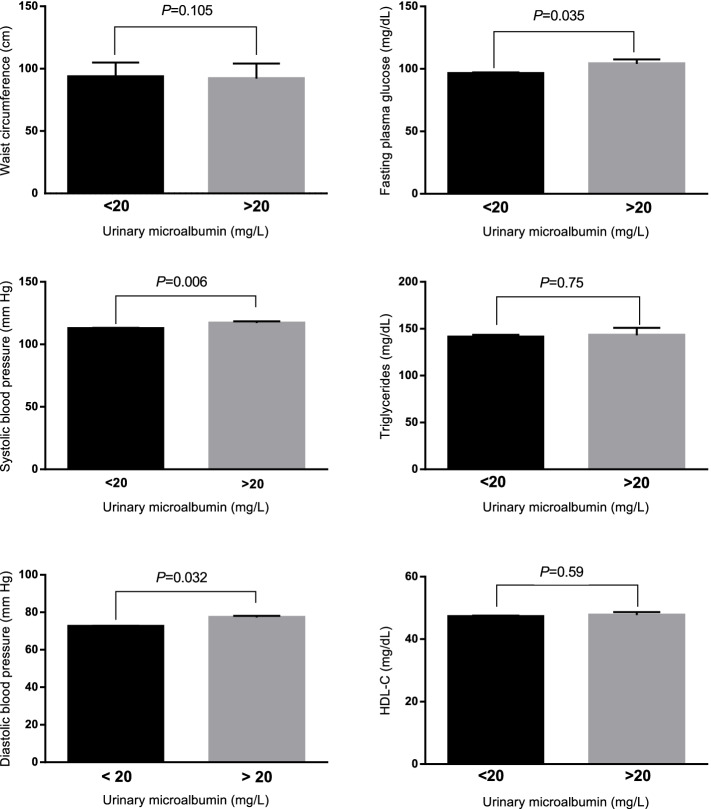
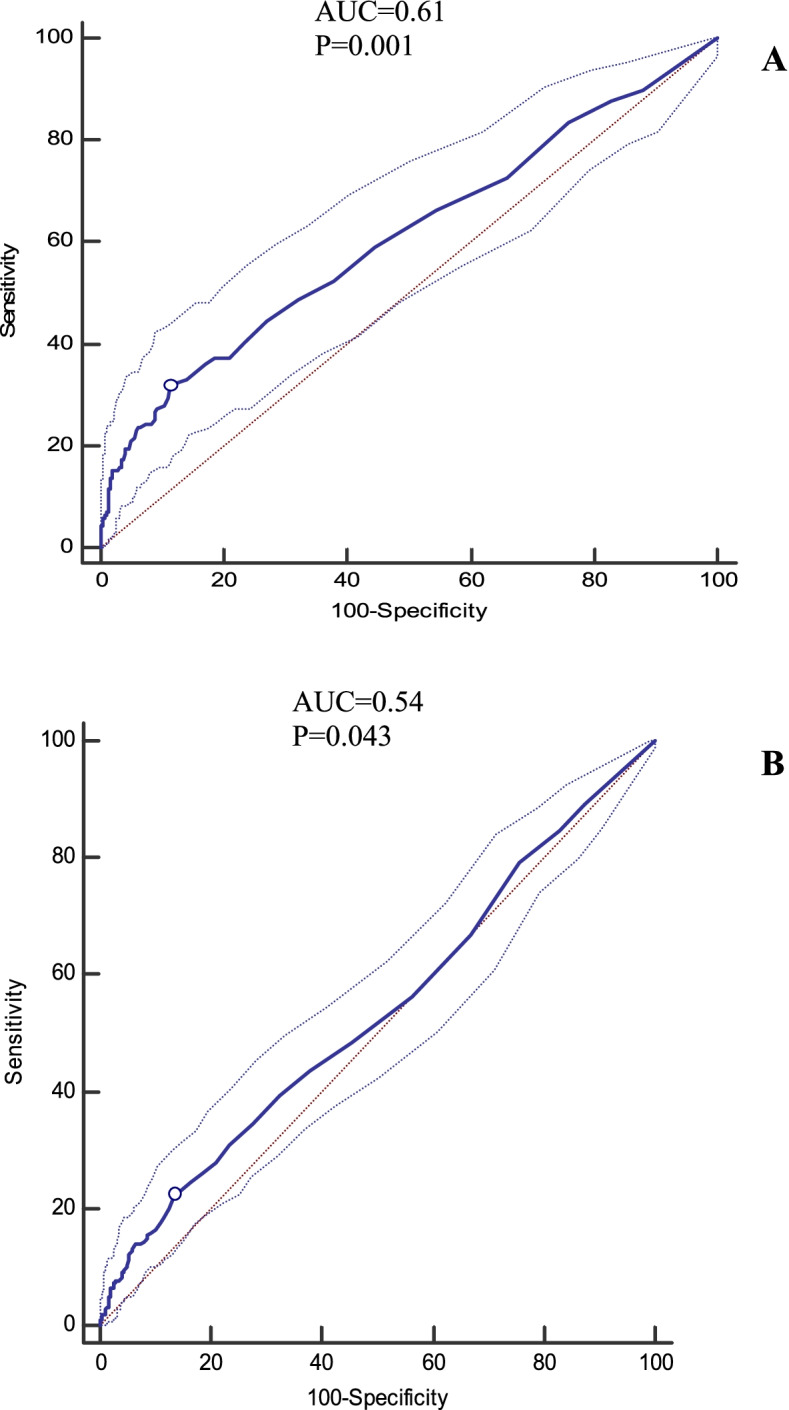
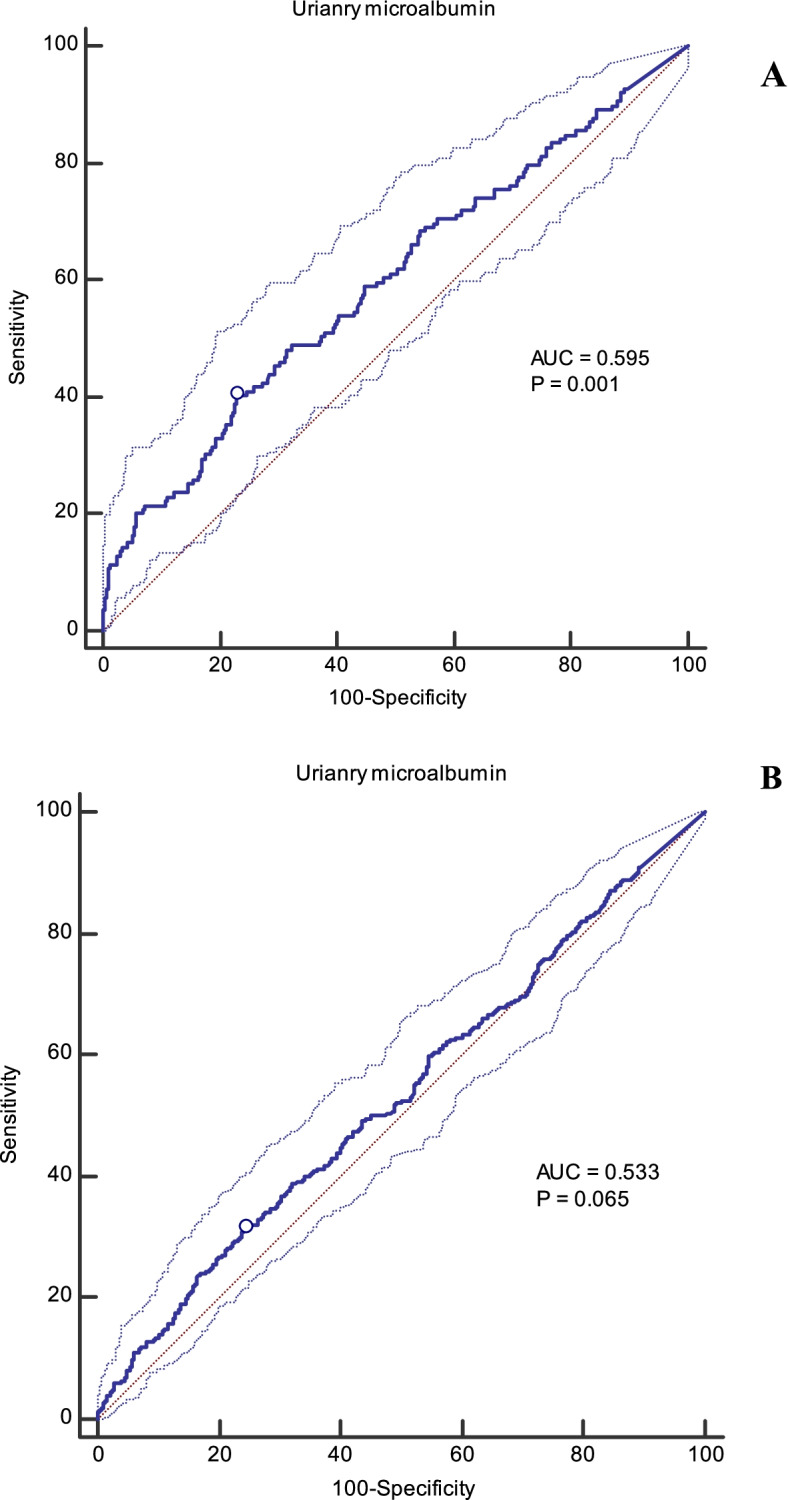
Participants' mean (±SD) age was 44.9 (±14.0) years, and 44.6% of the participants were men. The prevalence of microalbuminuria was 14.4%. Chance of having T2DM was significantly higher in the highest tertile of urinary microalbumin concentration (OR = 2.29, 95% CI = 1.43-3.67) and MCR (OR = 1.82, 95% CI = 1.15-2.89). Subjects with the highest urinary microalbumin concentration were more likely to have MetS (OR = 1.66, 95% CI = 1.17-2.35), hypertension (OR = 1.63, 95% CI = 1.16-2.30) and hyperglycemia (OR = 1.78, 95% CI = 1.24-2.56). No significant association was observed between urinary microalbumin concentrations and other components of MetS. The optimal cut-off points of urinary microalbumin for predicting the chance of having T2DM and MetS were 14.0 and 13.6 mg/L, respectively.
Elevated spot urinary microalbumin, below the values defined as microalbuminuria, was associated with the chance of having T2DM and MetS.
本研究旨在确定尿微量白蛋白浓度与 2 型糖尿病(T2DM)、代谢综合征(MetS)及其表型的关系。还定义了尿微量白蛋白和微量白蛋白/肌酐比值(MCR)的最佳截断值,以预测 T2DM 和 MetS 的发生概率。
1192 名成年男女(n=1192)参加了德黑兰血脂和血糖研究(TLGS)的第六阶段(2014-2017 年),并完成了数据分析。使用多变量逻辑回归估计尿微量白蛋白浓度三分位组的 T2DM、MetS 及其成分的比值比(OR)(和 95%置信区间(CI))。使用接收者操作特征(ROC)曲线分析确定尿微量白蛋白和 MCR 的最佳截断点。
参与者的平均(±SD)年龄为 44.9(±14.0)岁,其中 44.6%为男性。微量白蛋白尿的患病率为 14.4%。尿微量白蛋白浓度最高三分位的 T2DM 发生概率显著较高(OR=2.29,95%CI=1.43-3.67)和 MCR(OR=1.82,95%CI=1.15-2.89)。尿微量白蛋白浓度最高的受试者更有可能患有 MetS(OR=1.66,95%CI=1.17-2.35)、高血压(OR=1.63,95%CI=1.16-2.30)和高血糖(OR=1.78,95%CI=1.24-2.56)。尿微量白蛋白浓度与 MetS 的其他成分之间无显著相关性。尿微量白蛋白预测 T2DM 和 MetS 发生概率的最佳截断点分别为 14.0 和 13.6mg/L。
微量白蛋白尿以下的点尿微量白蛋白升高与 T2DM 和 MetS 的发生概率有关。