Crop Improvement Division, ICAR-National Rice Research Institute (NRRI), Cuttack, Odisha, 753006, India.
Department of Plant Physiology, Orissa University of Agriculture and Technology, Bhubaneswar, Odisha, 751003, India.
Sci Rep. 2022 Mar 8;12(1):4089. doi: 10.1038/s41598-022-07781-5.
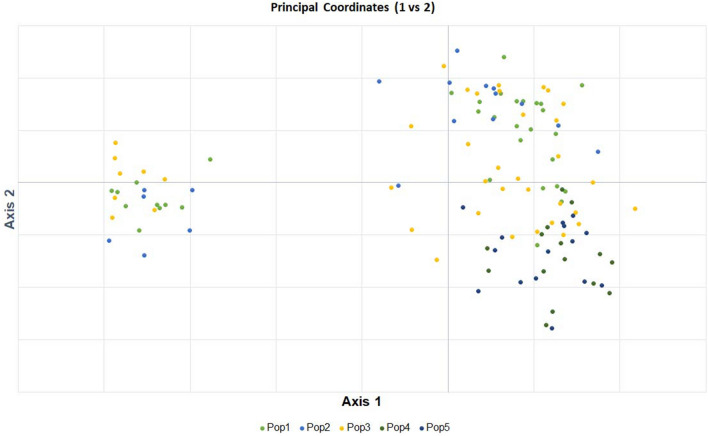
We studied variation in adaptive traits and genetic association to understand the low P responses, including the symbiotic association of arbuscular mycorrhizal (AM) fungal colonization in Oryza species (O. sativa, O. nivara, and O. rufipogon). In the present experiment, we performed the phenotypic variability of the morphometric and geometric traits for P deficiency tolerance and conducted the association studies in GLM and MLM methods. A positive association between the geometric trait of the top-view area and root traits suggested the possibility of exploring a non-destructive approach in screening genotypes under low P. The AMOVA revealed a higher proportion of variation among the individuals as they belonged to different species of Oryza and the NM value was 2.0, indicating possible gene flow between populations. A sub-cluster with superior-performing accessions had a higher proportion of landraces (42.85%), and O. rufipogon (33.3%) was differentiated by four Pup1-specific markers. Association mapping identified seven notable markers (RM259, RM297, RM30, RM6966, RM242, RM184, and PAP1) and six potential genotypes (IC459373, Chakhao Aumbi, AC100219, AC100062, Sekri, and Kumbhi Phou), which will be helpful in the marker-assisted breeding to improve rice for P-deprived condition. In addition, total root surface area becomes a single major trait that helps in P uptake under deficit P up to 33% than mycorrhizal colonization. Further, the phenotypic analysis of the morphometric and geometric trait variations and their interactions provides excellent potential for selecting donors for improving P-use efficiency. The identified potential candidate genes and markers offered new insights into our understanding of the molecular and physiological mechanisms driving PUE and improving grain yield under low-P conditions.
我们研究了适应性状的变异和遗传关联,以了解低磷响应,包括在稻属物种(O. sativa、O. nivara 和 O. rufipogon)中丛枝菌根(AM)真菌定殖的共生关联。在本实验中,我们对磷缺乏耐受性的形态和几何性状进行了表型变异分析,并在 GLM 和 MLM 方法中进行了关联研究。顶视图面积的几何性状与根系性状之间存在正关联,这表明在低磷条件下筛选基因型可能需要探索一种非破坏性方法。AMOVA 表明,由于个体属于不同的稻属物种,因此个体之间存在更高比例的变异,NM 值为 2.0,表明种群之间可能存在基因流。表现优异的亚群中具有较高比例的地方品种(42.85%),而 O. rufipogon 则由四个 Pup1 特异性标记区分。关联图谱鉴定出七个显著标记(RM259、RM297、RM30、RM6966、RM242、RM184 和 PAP1)和六个潜在基因型(IC459373、Chakhao Aumbi、AC100219、AC100062、Sekri 和 Kumbhi Phou),这将有助于利用标记辅助选择来改善水稻在缺磷条件下的磷利用效率。此外,在磷缺乏条件下,总根表面积成为一种主要性状,有助于磷吸收,比丛枝菌根定殖多 33%。此外,形态和几何性状变化及其相互作用的表型分析为选择提高磷利用效率的供体提供了巨大潜力。鉴定出的潜在候选基因和标记为我们理解驱动磷利用效率的分子和生理机制以及在低磷条件下提高籽粒产量提供了新的见解。