Division of Comprehensive Prosthodontics, Faculty of Dentistry and Graduate School of Medical and Dental Sciences, Niigata University, 2-5274 Gakkocho-dori, Niigata, 951-8514, Japan.
Department of Medical Informatics, Niigata University Medical and Dental Hospital, Niigata, 951-8520, Japan.
Sci Rep. 2022 Mar 8;12(1):4117. doi: 10.1038/s41598-022-08084-5.
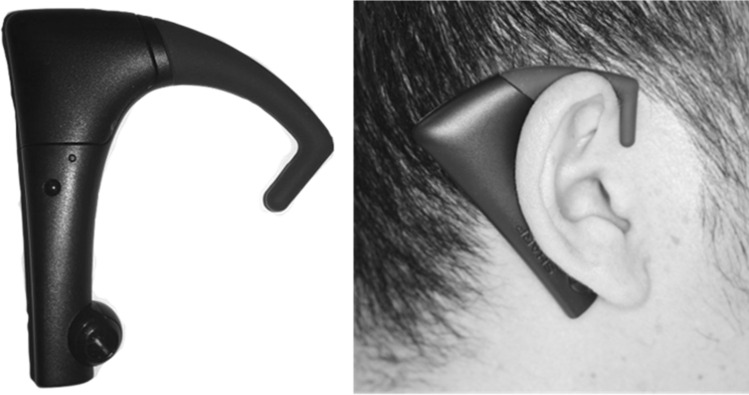
Numerous studies have evaluated the relationship between eating behavior and obesity, however few studies have objectively assessed eating behavior. Additionally, the association of masticatory behaviors with masticatory performance remains unclear. This study aimed to verify the relationship between masticatory performance and behavior measured by a wearable masticatory counter, and BMI. 365 healthy adults participated. Mastication behaviors, i.e. number of chews and bites, chewing rate, and chewing time, were measured using wearable masticatory counter while consuming one rice ball (100 g). Masticatory performance was evaluated using testing gummy jelly. Lifestyle habits including exercise, walking, and breakfast, were surveyed by questionnaire. The correlation coefficients between masticatory behaviors and performance and BMI were analyzed. Furthermore, multiple regression analysis was performed. The number of chews showed positive correlation with chewing rate, number of bites and chewing time, but no correlation with masticatory performance. BMI had weak but significant negative correlation with number of chews, bites, chewing time, and masticatory performance, but had no correlation with chewing rate. Multiple regression analysis revealed that BMI was associated with sex, age, number of chews, bites, masticatory performance, and walking speed. In conclusion, masticatory behavior and performance were not interrelated, but both were independently associated with BMI weakly.
许多研究评估了饮食行为与肥胖之间的关系,但很少有研究客观评估饮食行为。此外,咀嚼行为与咀嚼性能之间的关联尚不清楚。本研究旨在验证可穿戴咀嚼计数器测量的咀嚼行为与 BMI 之间的关系。共有 365 名健康成年人参与。在咀嚼一个 100 克的米饭球时,使用可穿戴咀嚼计数器测量咀嚼行为,即咀嚼次数和咀嚼速度、咀嚼时间。使用测试用的 gummy jelly 评估咀嚼性能。通过问卷调查了包括运动、散步和早餐在内的生活方式习惯。分析咀嚼行为和性能与 BMI 之间的相关系数。此外,还进行了多元回归分析。咀嚼次数与咀嚼速度、咀嚼次数和咀嚼时间呈正相关,但与咀嚼性能无关。BMI 与咀嚼次数、咀嚼次数、咀嚼时间和咀嚼性能呈弱但显著负相关,但与咀嚼速度无关。多元回归分析显示,BMI 与性别、年龄、咀嚼次数、咀嚼次数、咀嚼性能和步行速度有关。总之,咀嚼行为和性能之间没有相关性,但两者都与 BMI 有微弱的独立关联。