College of Psychology, Liaoning Normal University, Dalian, 116029, China.
College of Basic Medical Sciences, Dalian Medical University, Dalian, 116044, China.
Sci Rep. 2022 Mar 8;12(1):4120. doi: 10.1038/s41598-022-08080-9.
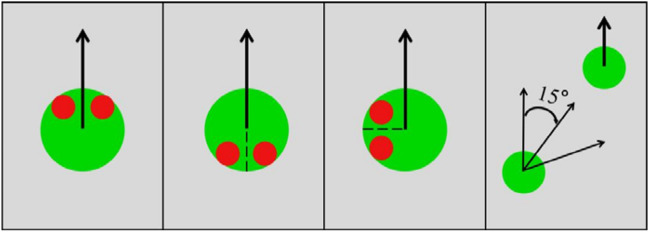
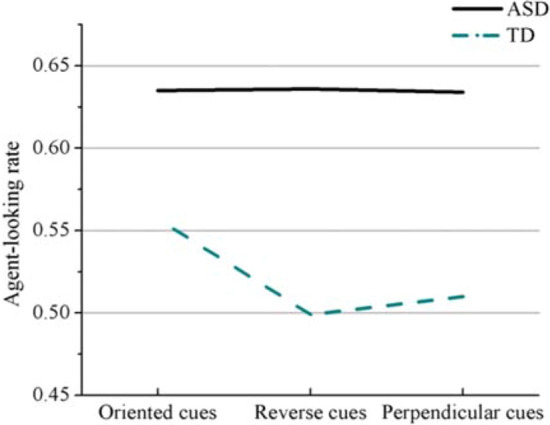
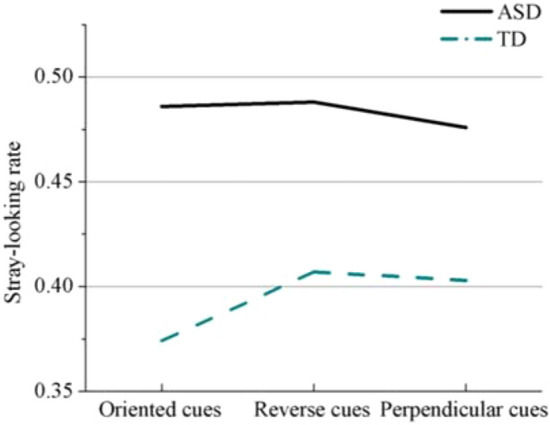
Psychological studies have generally shown that individuals with Autism Spectrum Disorder (ASD) have particularity in the processing of social information by using static or abstract images. Yet, a recent study showed that there was no difference in their use of social or non-social cues in dynamic interactive situations. To establish the cause of the inconsistent results, we added gaze cues in different directions to the chase detection paradigm to explore whether they would affect the performance of participants with ASD. Meanwhile, eye-tracking methodology was used to investigate whether the processing patterns of gaze cues were different between individuals with ASD and TD. In this study, unlike typical controls, participants with ASD showed no detection advantage when the direction of gaze was consistent with the direction of movement (oriented condition). The results suggested that individuals with ASD may utilize an atypical processing pattern, which makes it difficult for them to use social information contained in oriented gaze cues in dynamic interactive situations.
心理学研究普遍表明,自闭症谱系障碍(ASD)个体在使用静态或抽象图像处理社会信息时具有特殊性。然而,最近的一项研究表明,他们在动态互动情境中使用社会或非社会线索方面没有差异。为了确定不一致结果的原因,我们在追逐检测范式中添加了不同方向的注视线索,以探究它们是否会影响 ASD 患者的表现。同时,使用眼动追踪方法来研究 ASD 个体和 TD 个体之间的注视线索处理模式是否不同。在这项研究中,与典型对照组不同,当注视方向与运动方向一致时(定向条件),ASD 患者没有表现出检测优势。结果表明,ASD 个体可能使用一种非典型的处理模式,这使得他们难以在动态互动情境中使用定向注视线索中包含的社会信息。