Department of Internal Medicine, University of Iowa Carver College of Medicine, Iowa City, IA.
Natera, Inc., Austin, TX.
JCO Precis Oncol. 2022 Mar;6:e2100181. doi: 10.1200/PO.21.00181.
Earlier detection of cancer recurrence using circulating tumor DNA (ctDNA) to detect molecular residual disease (MRD) has the potential to dramatically affect cancer management. We review evidence supporting the use of ctDNA as a biomarker for detection of MRD and highlight the potential impact that ctDNA testing could have on the conduct of clinical trials.
We searched the literature using MEDLINE (via PubMed) for articles from January 1, 2000, focusing on studies that assessed ctDNA as a predictor of cancer recurrence. Broadly focused searches on ctDNA and cancer were also performed to provide additional background information. www.clinialtrials.gov was searched to identify trials that incorporate ctDNA testing.
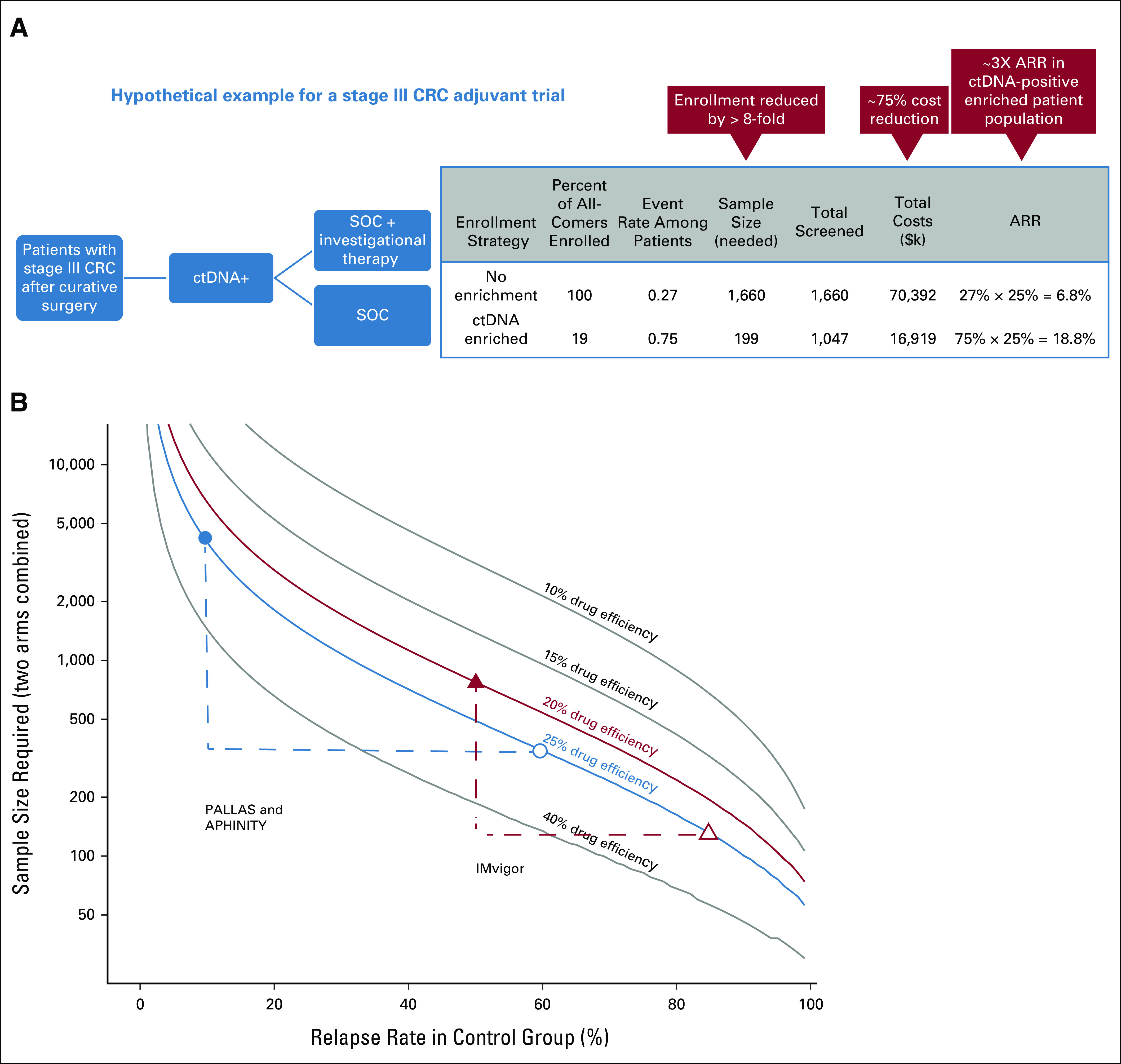
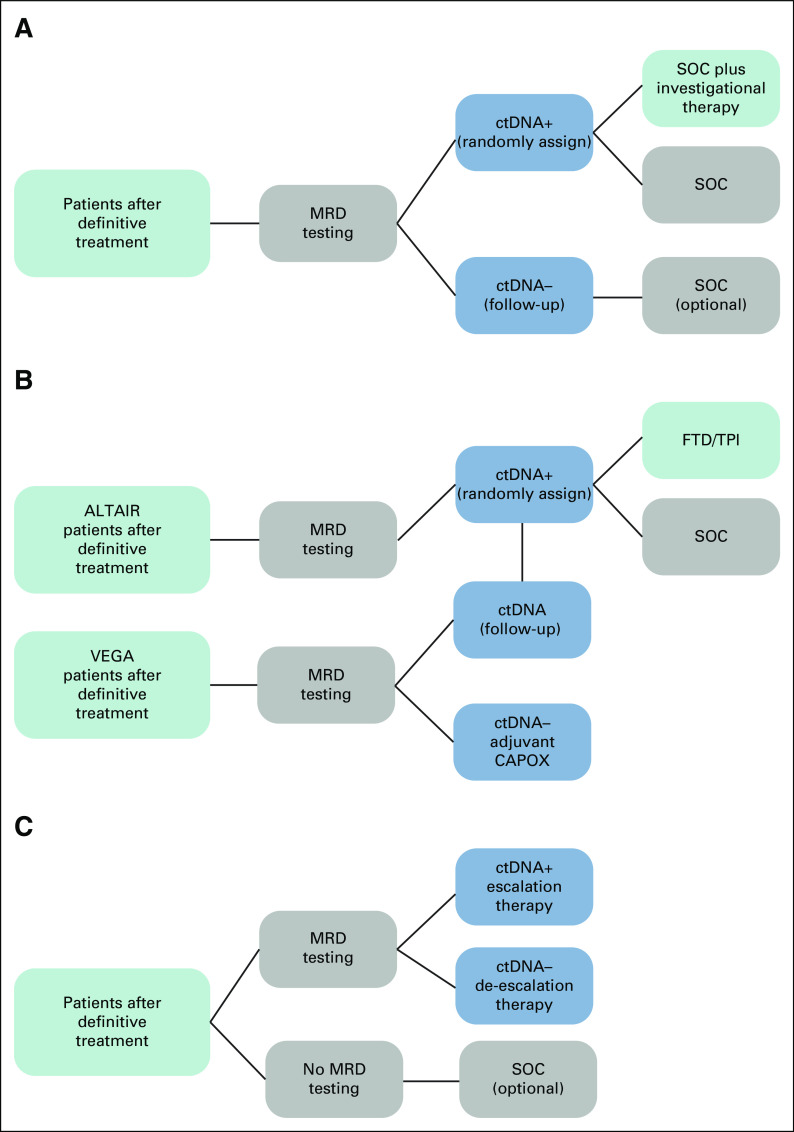
Numerous studies across different cancer types indicate that ctDNA-based MRD detection predicts recurrence with high sensitivity and specificity, and with lead times that precede standard imaging by up to 12 months. Recently, ctDNA testing has started being used to enroll MRD-positive patients at high risk of recurrence into trials, promising gains in statistical power that allow clinical utility to be demonstrated with smaller cohorts. Trials where ctDNA testing based-MRD detection is used to stratify patients into low or high-risk categories for treatment assignment are also ongoing. In addition, there is increasing evidence supporting the use of ctDNA dynamics or clearance as a surrogate end point, which could significantly reduce trial duration.
ctDNA-based trial enrichment across many cancers seems likely to become increasingly common for cost- and time-reduction benefits. Trial efficiency could also benefit from using ctDNA as a surrogate end point, leading to accelerated approval of new therapeutics. A clear demonstration of efficacy from trials that use ctDNA-based MRD detection to assign treatment could transform clinical practice.
利用循环肿瘤 DNA(ctDNA)检测分子残留疾病(MRD)来更早地发现癌症复发,这有可能显著影响癌症的治疗管理。我们综述了支持将 ctDNA 用作检测 MRD 生物标志物的证据,并强调了 ctDNA 检测可能对临床试验开展产生的潜在影响。
我们通过 MEDLINE(PubMed 检索)进行文献检索,检索时间截至 2000 年 1 月 1 日,主要关注评估 ctDNA 作为癌症复发预测指标的研究。我们还广泛检索了关于 ctDNA 和癌症的文献,以提供更多背景信息。我们还在 www.clinicaltrials.gov 上检索了纳入 ctDNA 检测的试验。
不同癌症类型的大量研究表明,基于 ctDNA 的 MRD 检测具有高灵敏度和特异性,可以在标准影像学检查提前 12 个月预测复发,而且具有提前发现的优势。最近,ctDNA 检测已开始用于招募 MRD 阳性且有高复发风险的患者入组试验,有望增加统计学效力,从而可以在较小的队列中证明其临床实用性。基于 ctDNA 检测的 MRD 检测用于将患者分层为低风险或高风险治疗分配类别的试验也正在进行中。此外,越来越多的证据支持使用 ctDNA 动力学或清除作为替代终点,这可能会显著缩短试验持续时间。
ctDNA 作为试验富集策略似乎很有可能在多种癌症中变得越来越普遍,以降低成本和节省时间。使用 ctDNA 作为替代终点也可能使试验效率受益,从而加速新疗法的审批。如果使用 ctDNA 检测 MRD 来分配治疗的试验能明确显示出疗效,将可能改变临床实践。