Bioinformatics Core Facility, Faculty of Health and Medical Sciences, University of Surrey, Guildford, UK.
School of Biosciences and Medicine, Faculty of Health and Medical Sciences, University of Surrey, Guildford, UK.
BMC Biol. 2022 Mar 9;20(1):63. doi: 10.1186/s12915-022-01258-7.
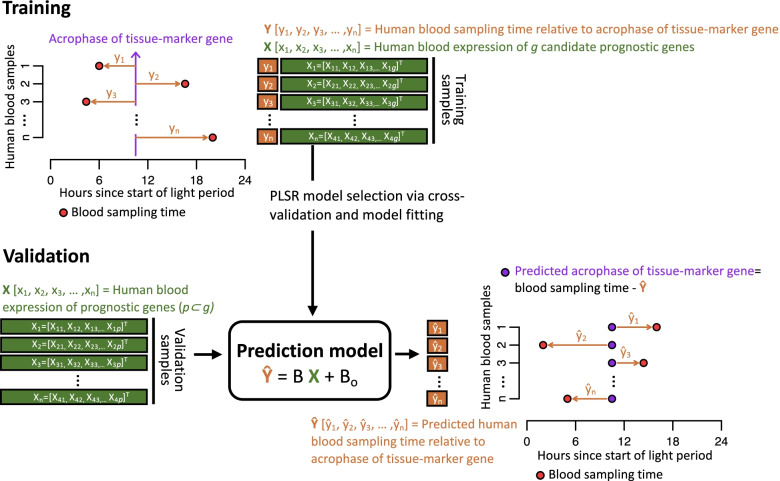
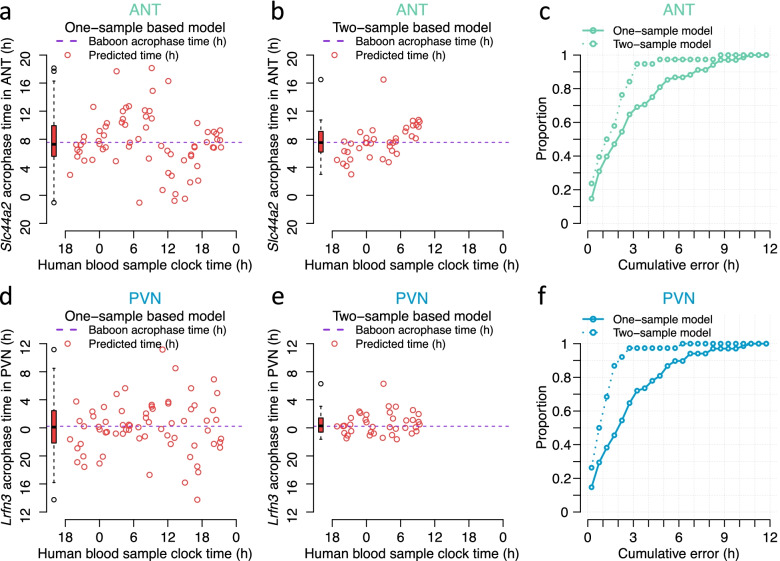
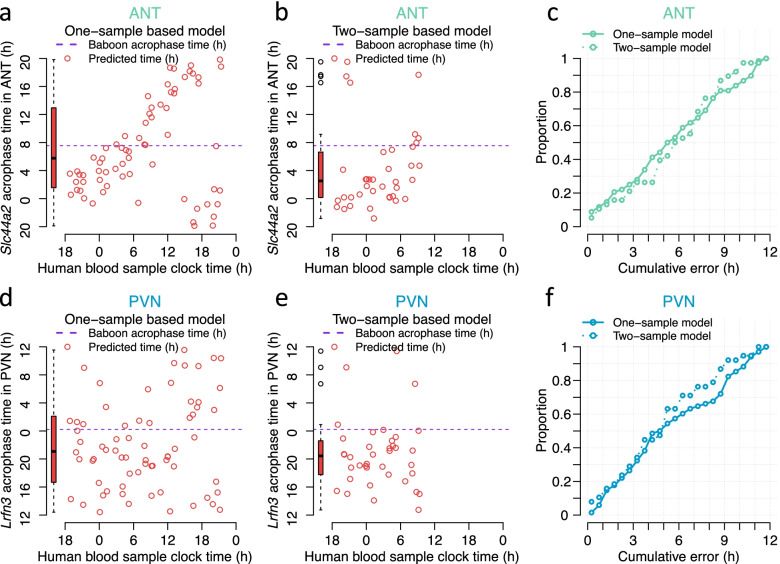
Twenty-four-hour rhythmicity in mammalian tissues and organs is driven by local circadian oscillators, systemic factors, the central circadian pacemaker and light-dark cycles. At the physiological level, the neural and endocrine systems synchronise gene expression in peripheral tissues and organs to the 24-h-day cycle, and disruption of such regulation has been shown to lead to pathological conditions. Thus, monitoring rhythmicity in tissues/organs holds promise for circadian medicine; however, most tissues and organs are not easily accessible in humans and alternative approaches to quantify circadian rhythmicity are needed. We investigated the overlap between rhythmic transcripts in human blood and transcripts shown to be rhythmic in 64 tissues/organs of the baboon, how these rhythms are aligned with light-dark cycles and each other, and whether timing of tissue-specific rhythmicity can be predicted from a blood sample.
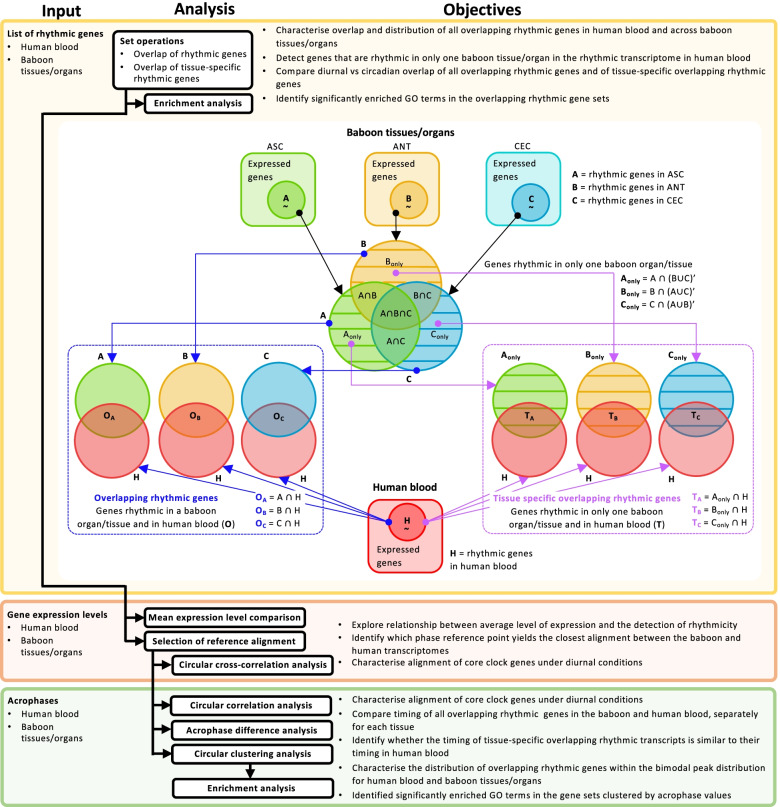
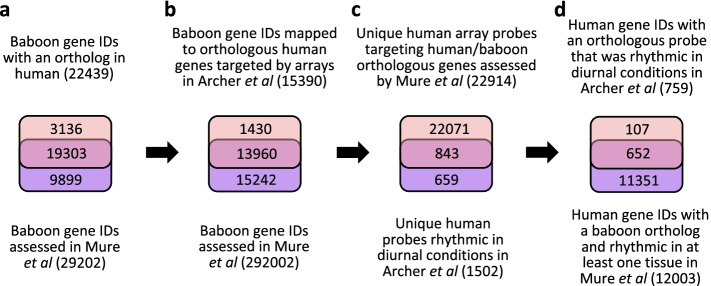
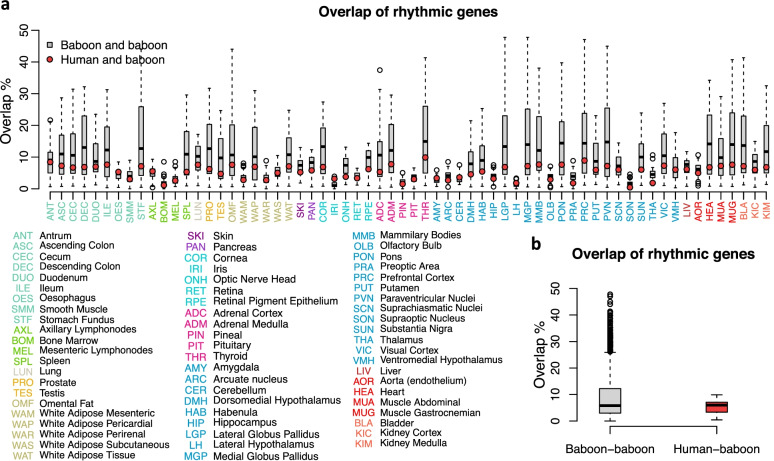
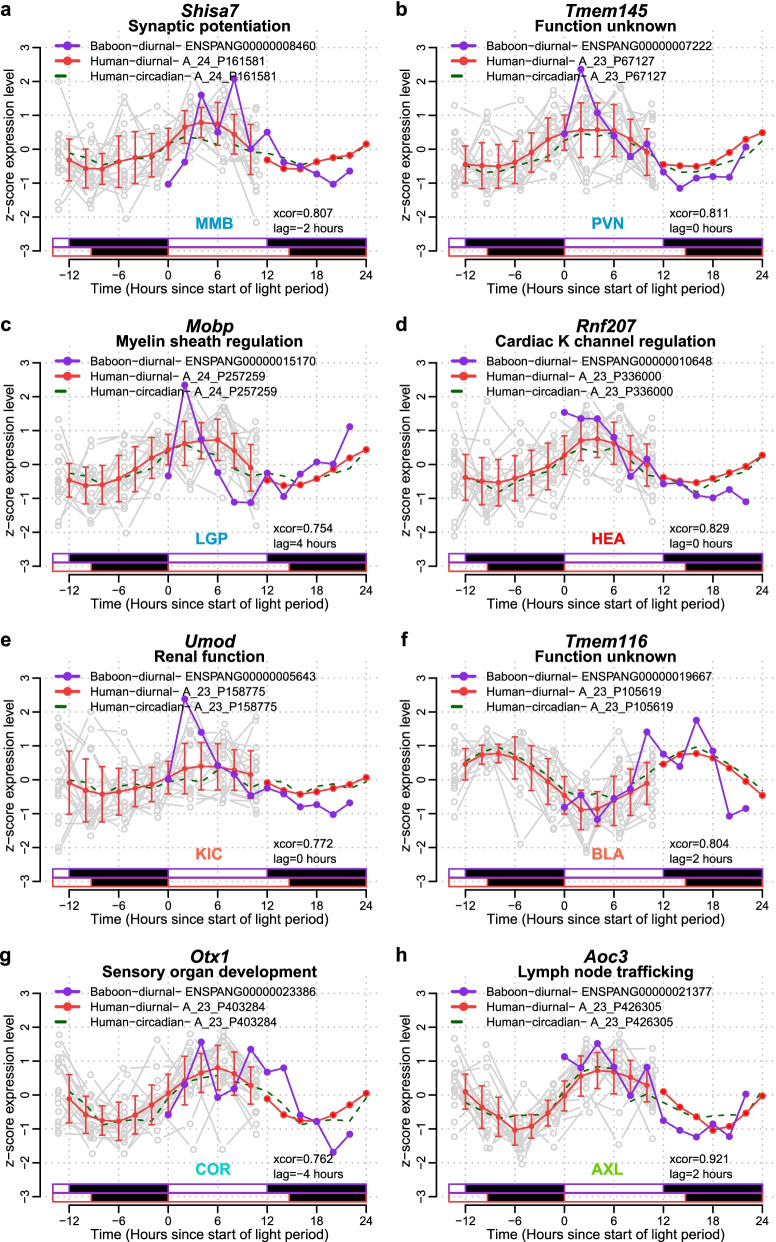
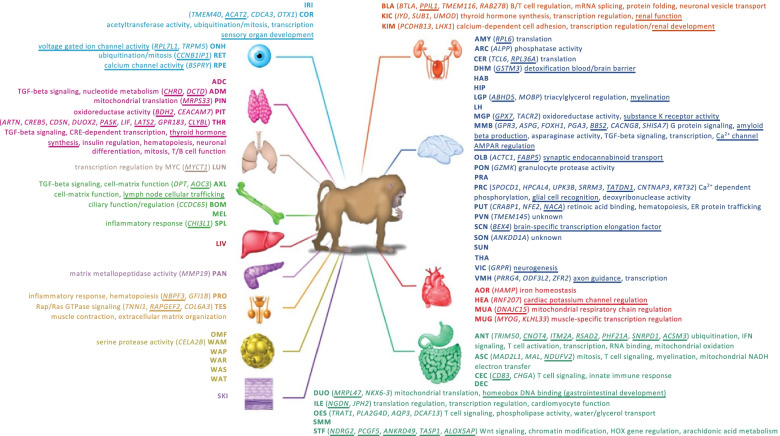
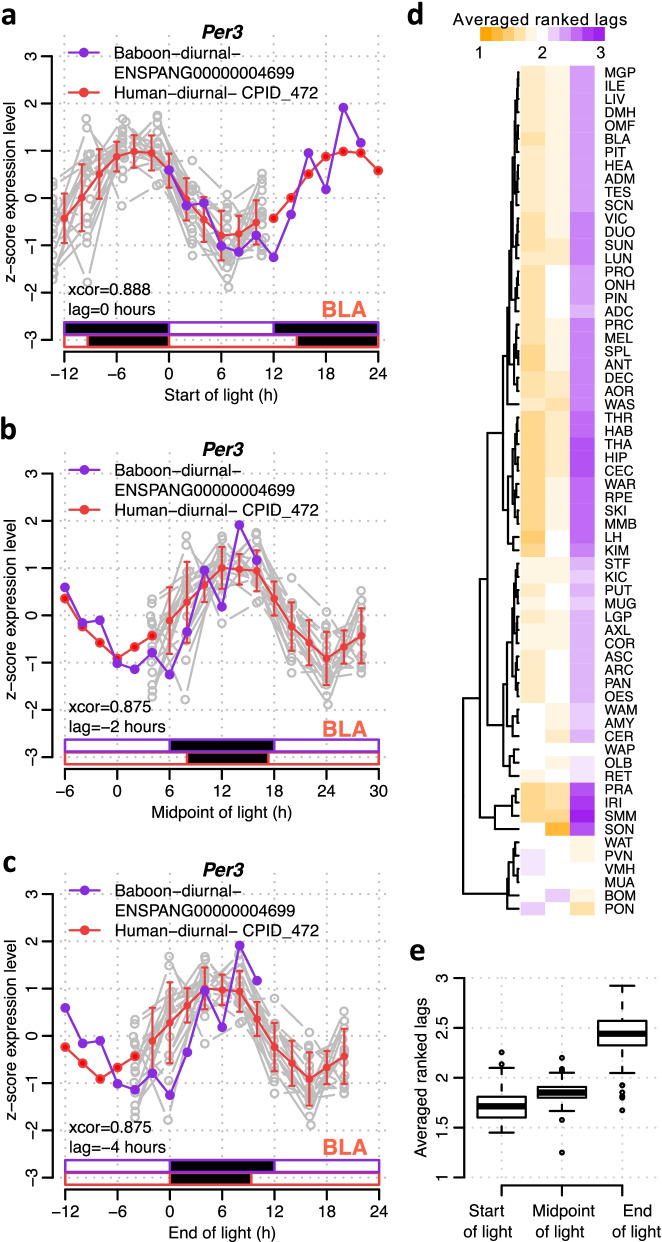
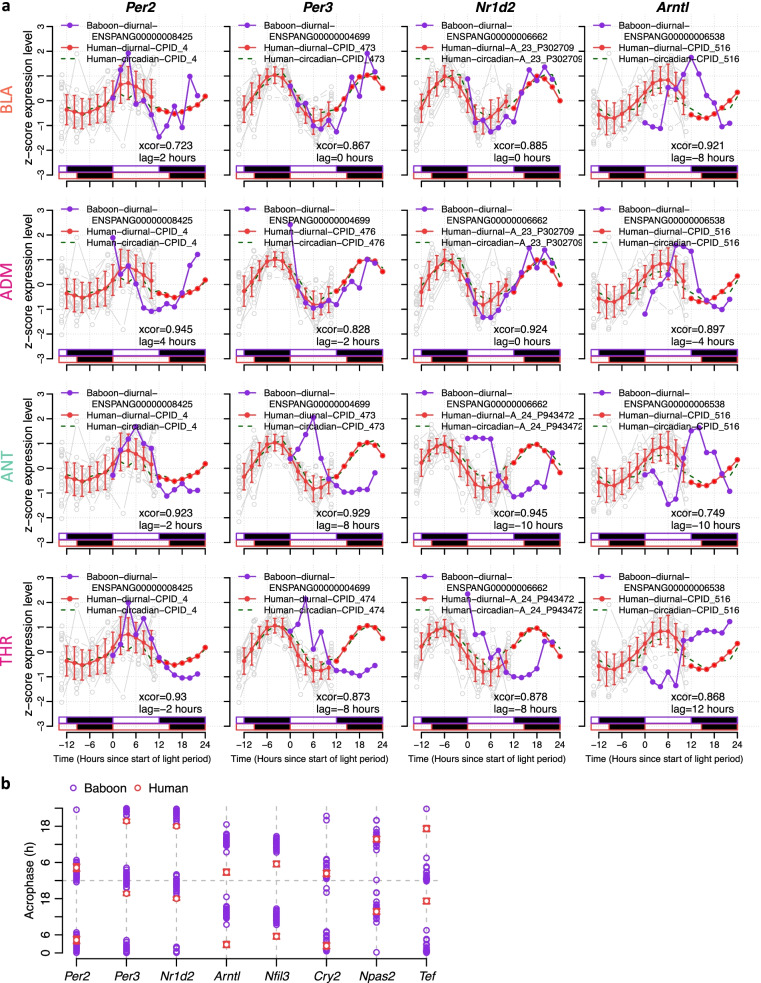
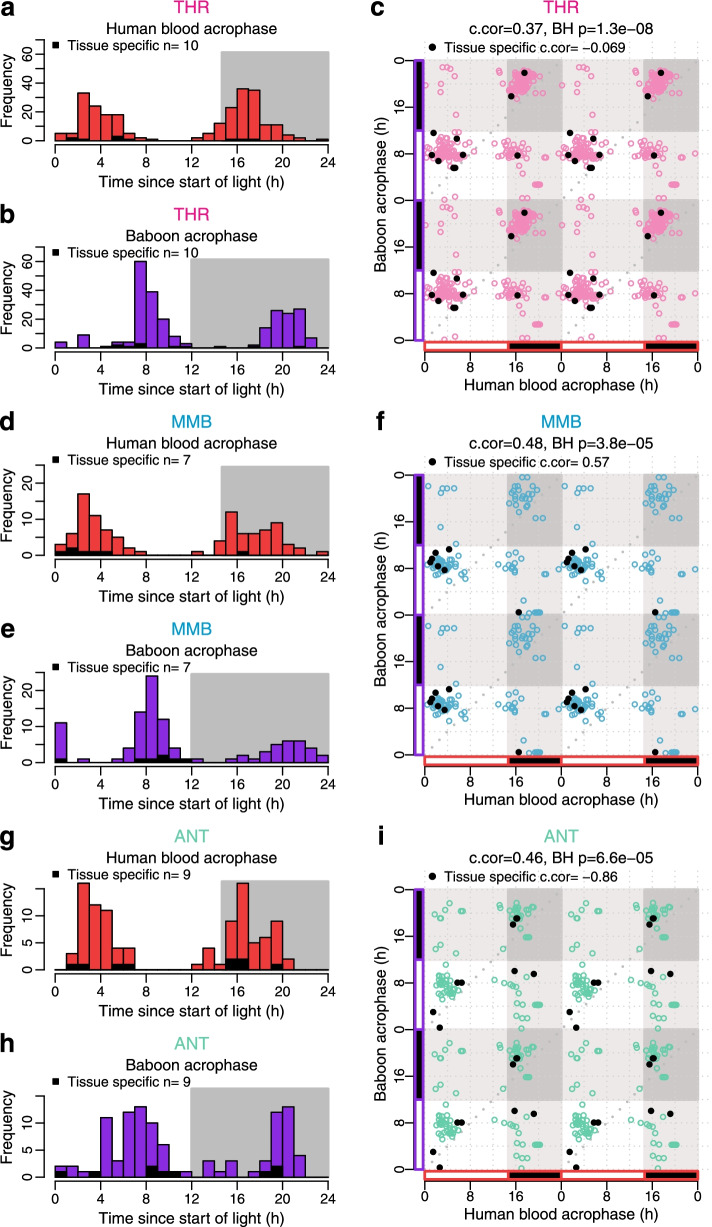
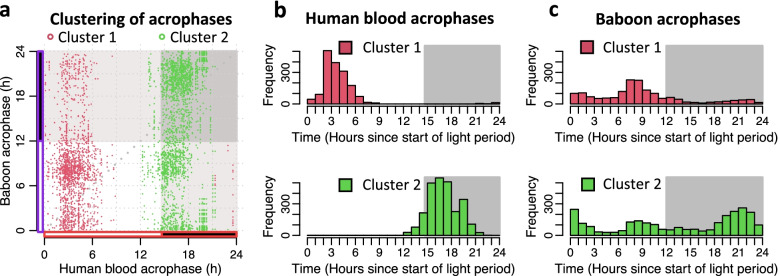
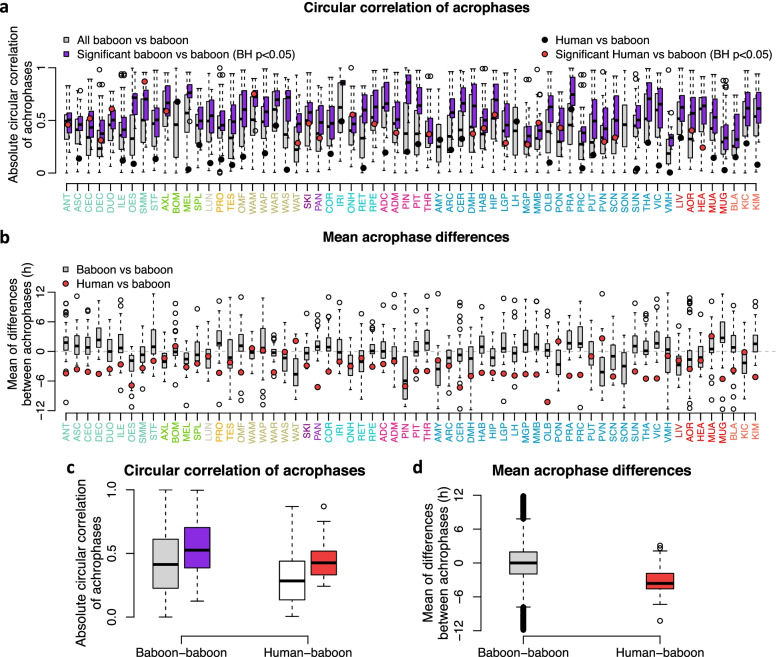
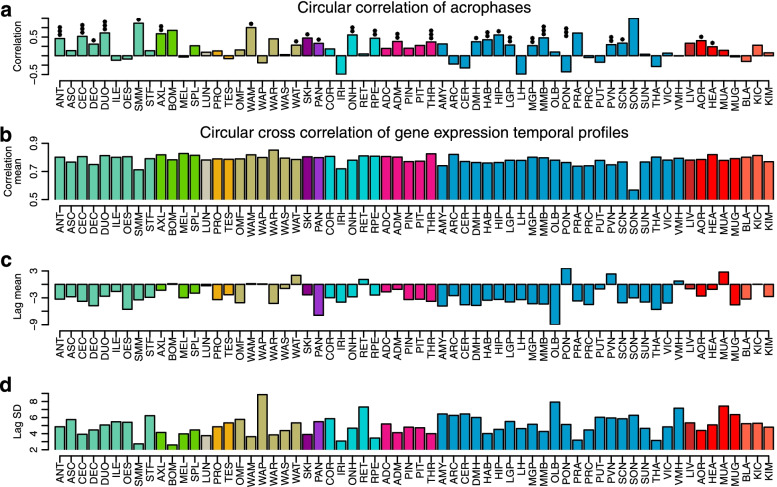
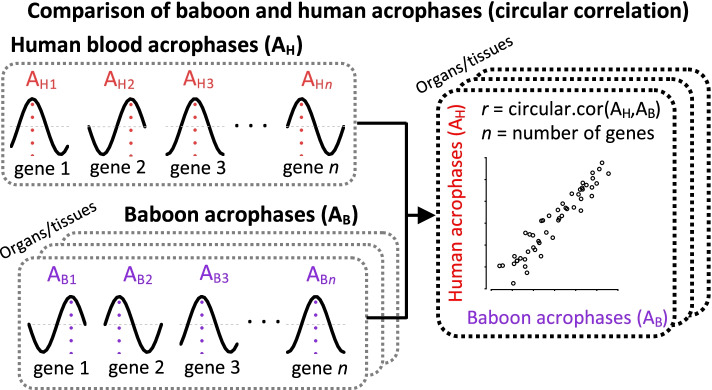
We compared rhythmicity in transcriptomic time series collected from humans and baboons using set logic, circular cross-correlation, circular clustering, functional enrichment analyses, and least squares regression. Of the 759 orthologous genes that were rhythmic in human blood, 652 (86%) were also rhythmic in at least one baboon tissue and most of these genes were associated with basic processes such as transcription and protein homeostasis. In total, 109 (17%) of the 652 overlapping rhythmic genes were reported as rhythmic in only one baboon tissue or organ and several of these genes have tissue/organ-specific functions. The timing of human and baboon rhythmic transcripts displayed prominent 'night' and 'day' clusters, with genes in the dark cluster associated with translation. Alignment between baboon rhythmic transcriptomes and the overlapping human blood transcriptome was significantly closer when light onset, rather than midpoint of light, or end of light period, was used as phase reference point. The timing of overlapping human and baboon rhythmic transcriptomes was significantly correlated in 25 tissue/organs with an average earlier timing of 3.21 h (SD 2.47 h) in human blood.
The human blood transcriptome contains sets of rhythmic genes that overlap with rhythmic genes of tissues/organs in baboon. The rhythmic sets vary across tissues/organs, but the timing of most rhythmic genes is similar in human blood and baboon tissues/organs. These results have implications for development of blood transcriptome-based biomarkers for circadian rhythmicity in tissues and organs.
哺乳动物组织和器官的 24 小时节律性由局部生物钟振荡器、全身因素、中央生物钟起搏器和光-暗周期驱动。在生理水平上,神经和内分泌系统使外周组织和器官的基因表达与 24 小时昼夜周期同步,并且已经证明这种调节的破坏会导致病理状况。因此,监测组织/器官的节律性有望应用于生物钟医学;然而,大多数组织和器官在人体中不容易接近,需要替代方法来量化生物钟的节律性。我们研究了人类血液中节律性转录本与在狒狒 64 种组织/器官中显示出节律性的转录本之间的重叠,这些节律如何与光-暗周期和彼此对齐,以及是否可以从血液样本预测组织特异性节律性的时间。
我们使用集合逻辑、循环互相关、循环聚类、功能富集分析和最小二乘回归比较了从人类和狒狒采集的转录组时间序列中的节律性。在人类血液中节律性的 759 个同源基因中,有 652 个(86%)在至少一种狒狒组织中也具有节律性,其中大多数基因与转录和蛋白质稳态等基本过程相关。总共,在 652 个重叠的节律性基因中,有 109 个(17%)仅在一种狒狒组织或器官中报告为节律性,其中一些基因具有组织/器官特异性功能。人类和狒狒节律性转录本的时间显示出明显的“夜间”和“白天”簇,与暗簇相关的基因与翻译有关。当以光起始而不是光中点或光结束作为相位参考点时,狒狒节律性转录本与重叠的人类血液转录本之间的对齐更加紧密。在 25 种组织/器官中,重叠的人类和狒狒节律性转录本的时间显著相关,人类血液中的时间平均早 3.21 小时(SD 2.47 小时)。
人类血液转录组包含与狒狒组织/器官中的节律性基因重叠的节律性基因集。这些节律集在不同的组织/器官中有所不同,但大多数节律性基因在人类血液和狒狒组织/器官中的时间相似。这些结果为开发基于血液转录组的组织和器官节律性生物标志物具有启示意义。