Center for Integrative Genomics, Faculty of Biology and Medicine, University of Lausanne, CH-1015 Lausanne, Switzerland.
Institute of Bioengineering, School of Life Sciences, Ecole Polytechnique Fédérale de Lausanne, CH-1015 Lausanne, Switzerland.
Proc Natl Acad Sci U S A. 2019 Dec 17;116(51):25773-25783. doi: 10.1073/pnas.1910590116. Epub 2019 Nov 27.
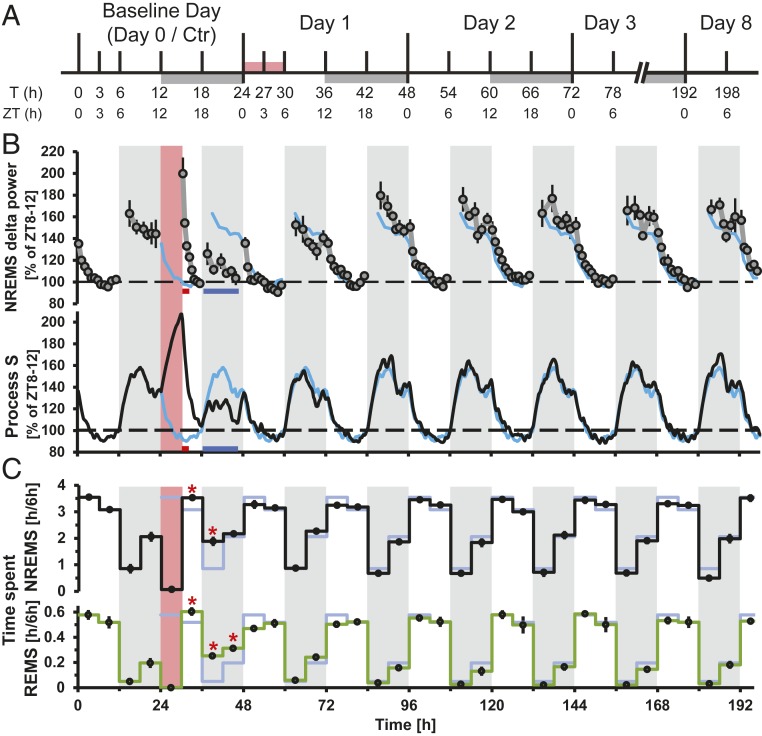
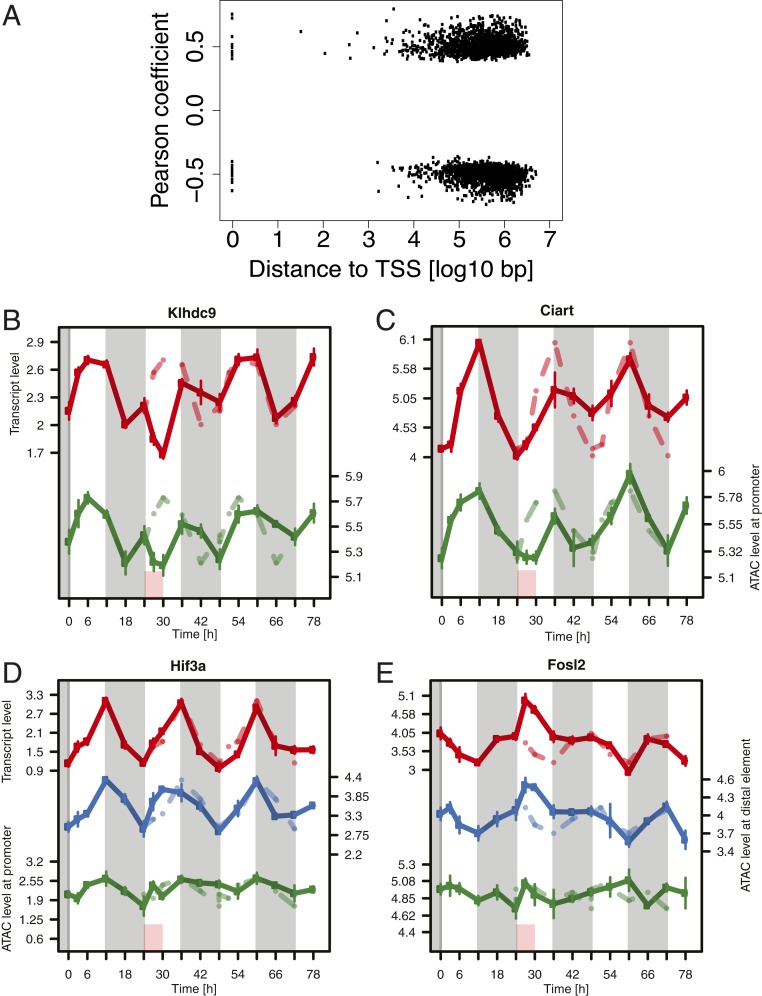
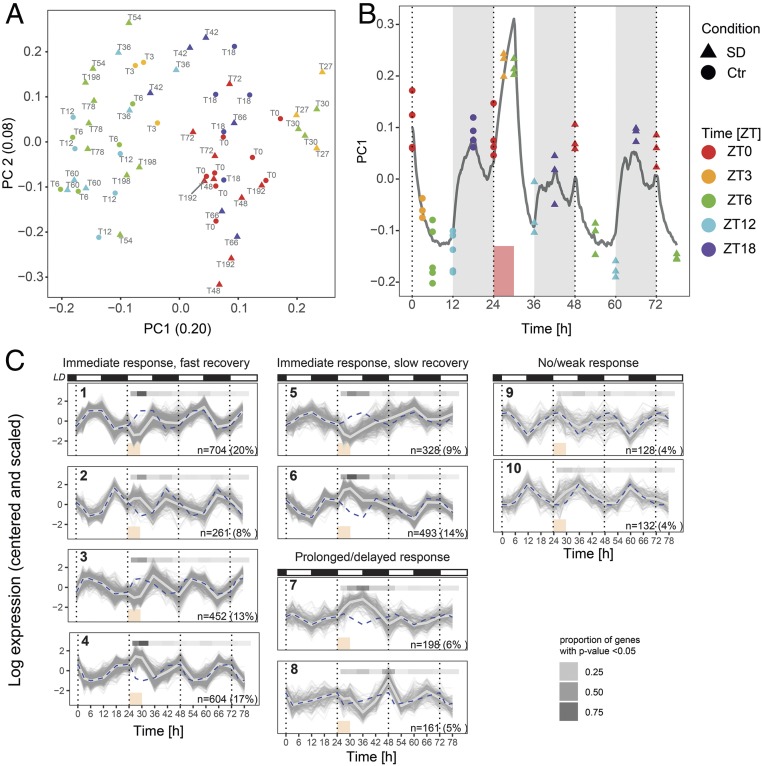
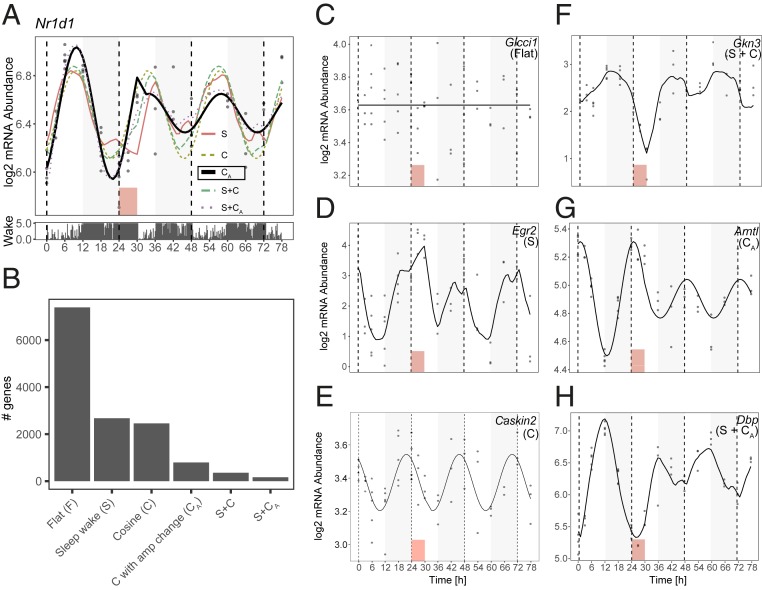
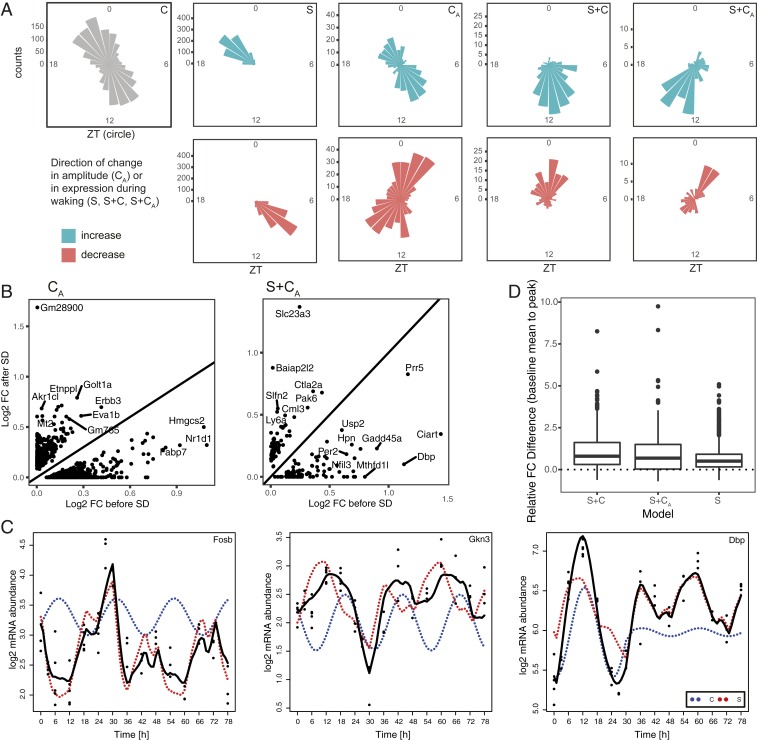
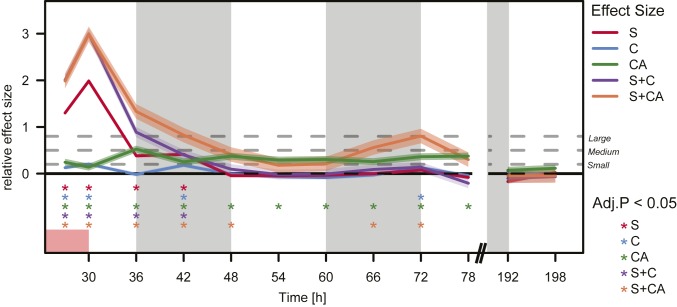
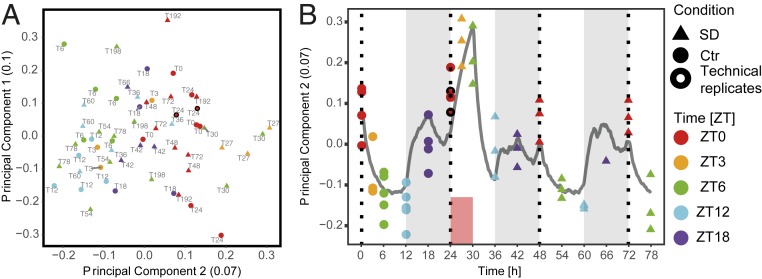
The timing and duration of sleep results from the interaction between a homeostatic sleep-wake-driven process and a periodic circadian process, and involves changes in gene regulation and expression. Unraveling the contributions of both processes and their interaction to transcriptional and epigenomic regulatory dynamics requires sampling over time under conditions of unperturbed and perturbed sleep. We profiled mRNA expression and chromatin accessibility in the cerebral cortex of mice over a 3-d period, including a 6-h sleep deprivation (SD) on day 2. We used mathematical modeling to integrate time series of mRNA expression data with sleep-wake history, which established that a large proportion of rhythmic genes are governed by the homeostatic process with varying degrees of interaction with the circadian process, sometimes working in opposition. Remarkably, SD caused long-term effects on gene-expression dynamics, outlasting phenotypic recovery, most strikingly illustrated by a damped oscillation of most core clock genes, including /, suggesting that enforced wakefulness directly impacts the molecular clock machinery. Chromatin accessibility proved highly plastic and dynamically affected by SD. Dynamics in distal regions, rather than promoters, correlated with mRNA expression, implying that changes in expression result from constitutively accessible promoters under the influence of enhancers or repressors. Serum response factor (SRF) was predicted as a transcriptional regulator driving immediate response, suggesting that SRF activity mirrors the build-up and release of sleep pressure. Our results demonstrate that a single, short SD has long-term aftereffects at the genomic regulatory level and highlights the importance of the sleep-wake distribution to diurnal rhythmicity and circadian processes.
睡眠的时间和持续时间是由稳态睡眠-觉醒驱动过程和周期性昼夜节律过程相互作用的结果,涉及基因调控和表达的变化。揭示这两个过程及其相互作用对转录和表观遗传调控动态的贡献,需要在不受干扰和受干扰的睡眠条件下进行随时间的采样。我们在 3 天的时间内对小鼠大脑皮层的 mRNA 表达和染色质可及性进行了分析,其中包括第 2 天的 6 小时睡眠剥夺(SD)。我们使用数学建模将 mRNA 表达数据的时间序列与睡眠-觉醒史进行了整合,结果表明,很大一部分节律基因受稳态过程控制,与昼夜节律过程存在不同程度的相互作用,有时甚至相互拮抗。值得注意的是,SD 对基因表达动态产生了长期影响,超过了表型恢复,最明显的例子是大多数核心时钟基因(如 / )的表达呈阻尼振荡,表明强制清醒直接影响分子时钟机制。染色质可及性被证明具有高度的可塑性,并受到 SD 的动态影响。远端区域(而非启动子)的动态与 mRNA 表达相关,这表明表达的变化是由于增强子或抑制剂的影响下,启动子持续开放所致。血清反应因子(SRF)被预测为驱动即时反应的转录调节剂,这表明 SRF 活性反映了睡眠压力的积累和释放。我们的研究结果表明,单次短暂的 SD 在基因组调控水平上具有长期的后续影响,并强调了睡眠-觉醒分布对昼夜节律性和昼夜节律过程的重要性。