Institute of Neurobiology, Center of Brain Behavior & Metabolism, University of Lübeck, Lübeck, Germany.
Department of Medical Biochemistry and Biophysics, Karolinska Institute, Stockholm, Sweden.
Elife. 2022 Jul 27;11:e79405. doi: 10.7554/eLife.79405.
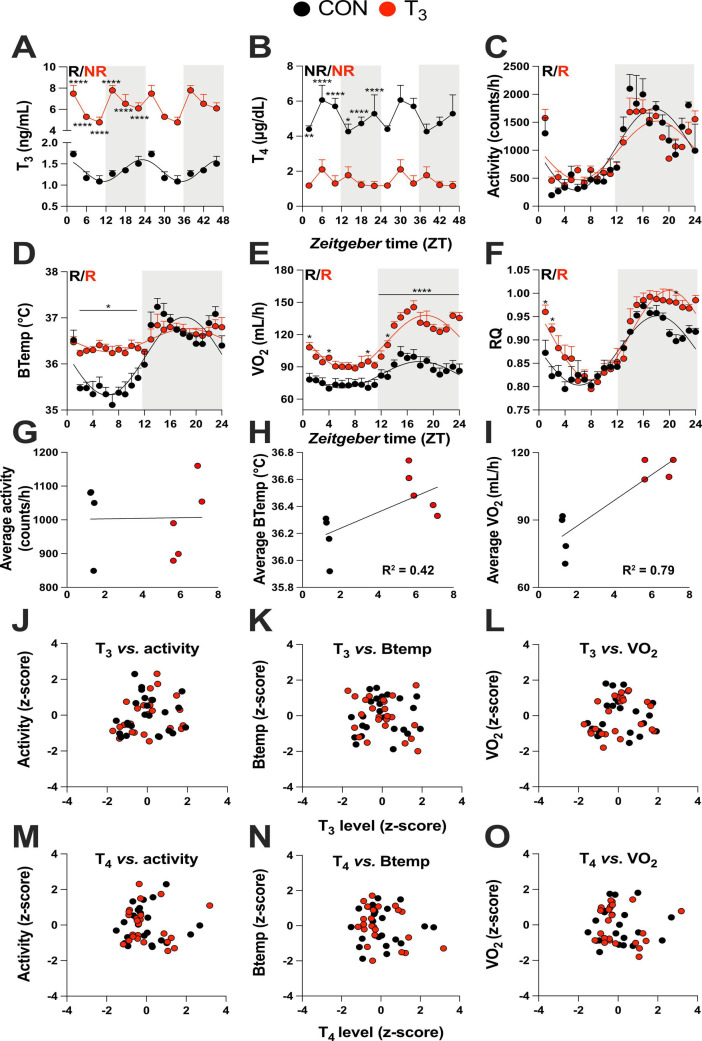
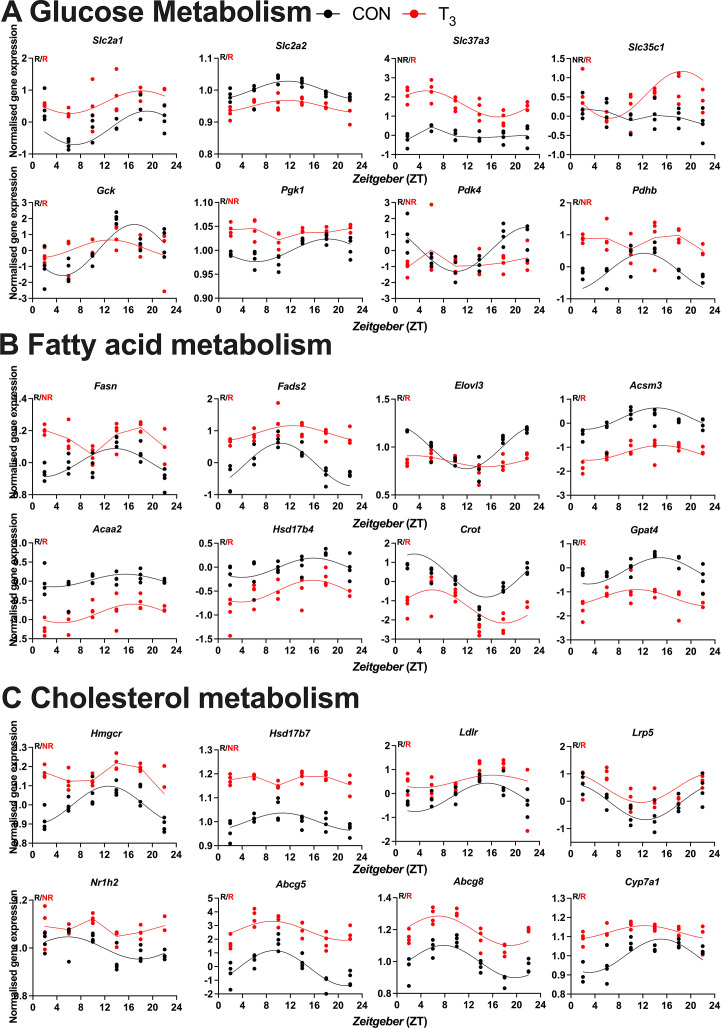
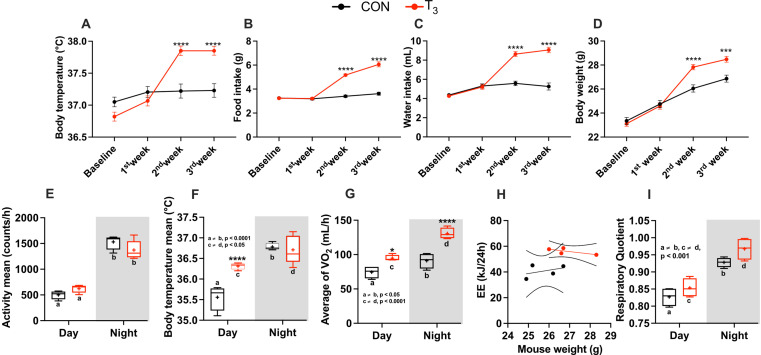
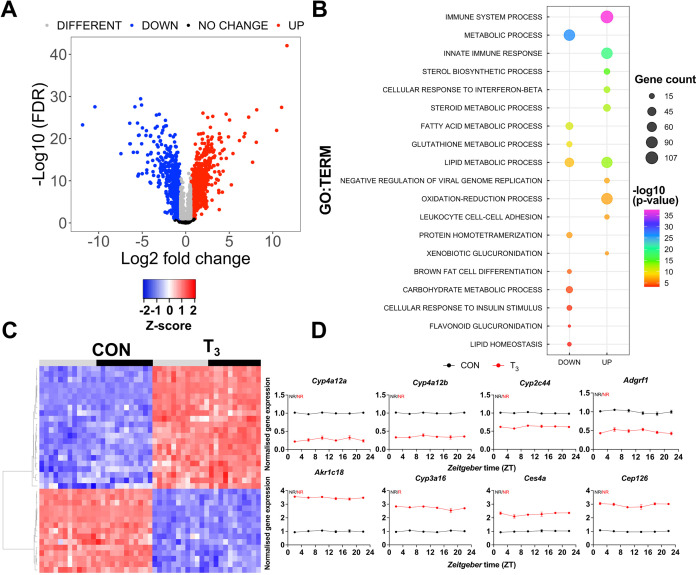
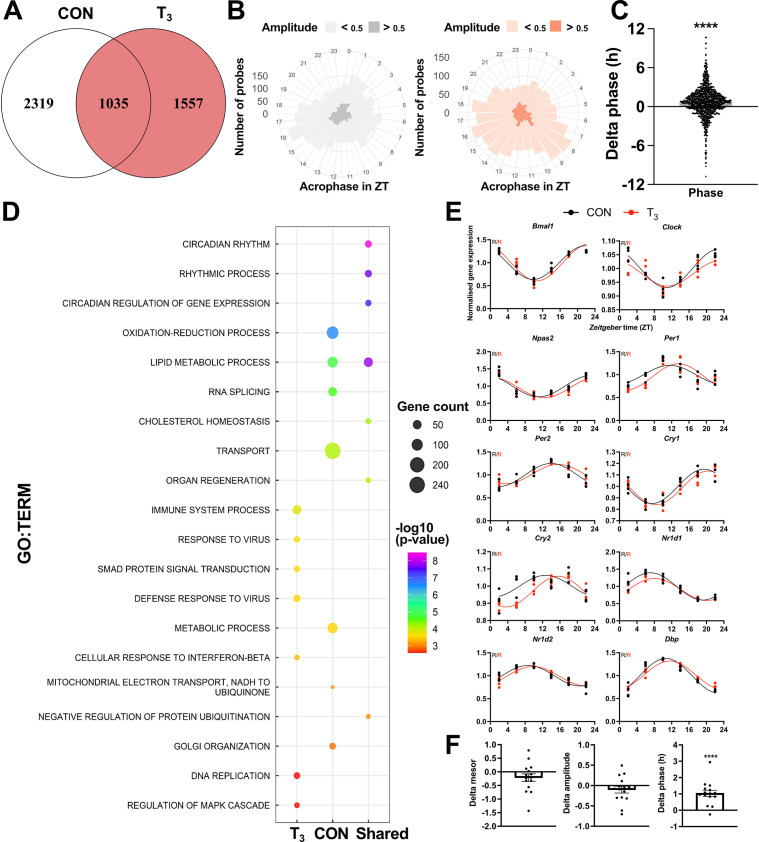
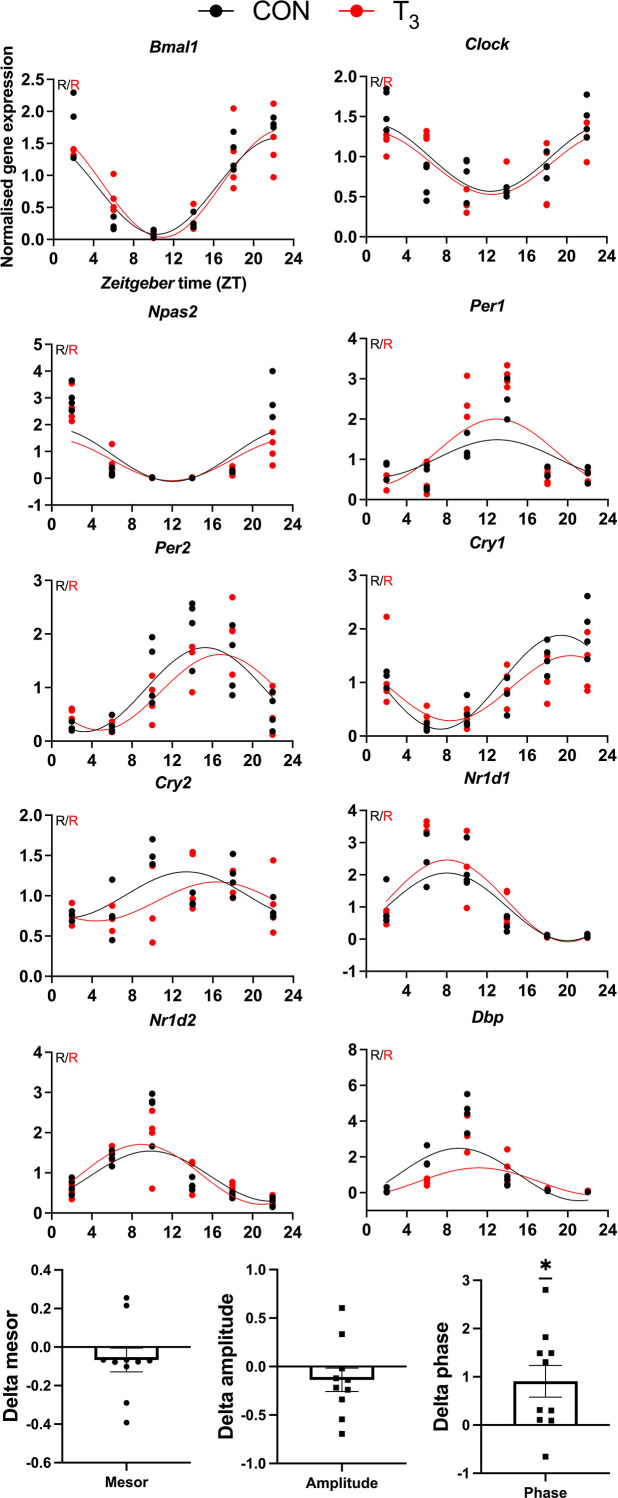
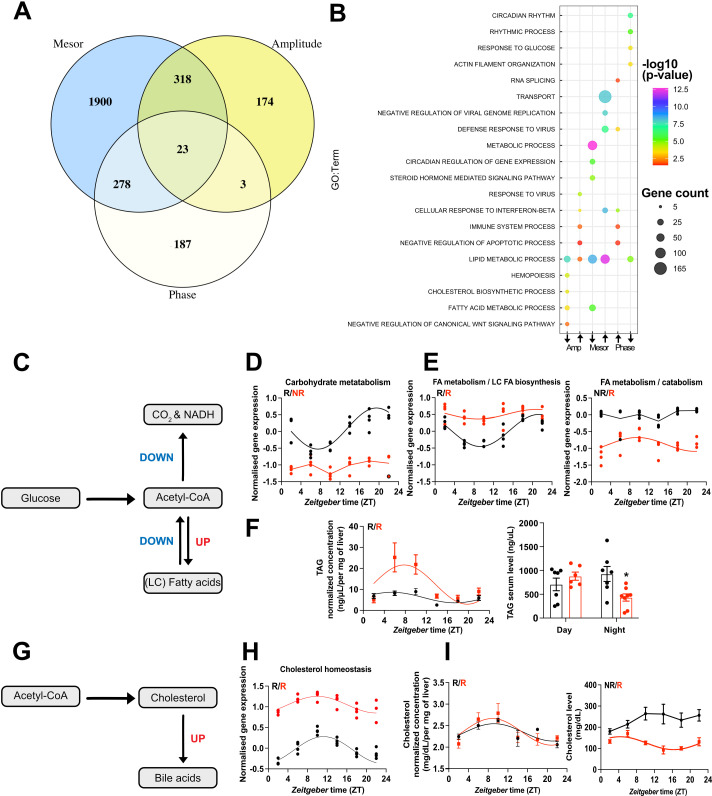
Diurnal (i.e., 24 hr) physiological rhythms depend on transcriptional programs controlled by a set of circadian clock genes/proteins. Systemic factors like humoral and neuronal signals, oscillations in body temperature, and food intake align physiological circadian rhythms with external time. Thyroid hormones (THs) are major regulators of circadian clock target processes such as energy metabolism, but little is known about how fluctuations in TH levels affect the circadian coordination of tissue physiology. In this study, a high triiodothyronine (T) state was induced in mice by supplementing T in the drinking water, which affected body temperature, and oxygen consumption in a time-of-day-dependent manner. A 24-hr transcriptome profiling of liver tissue identified 37 robustly and time independently T-associated transcripts as potential TH state markers in the liver. Such genes participated in xenobiotic transport, lipid and xenobiotic metabolism. We also identified 10-15% of the liver transcriptome as rhythmic in control and T groups, but only 4% of the liver transcriptome (1033 genes) were rhythmic across both conditions - amongst these, several core clock genes. In-depth rhythm analyses showed that most changes in transcript rhythms were related to mesor (50%), followed by amplitude (10%), and phase (10%). Gene set enrichment analysis revealed TH state-dependent reorganization of metabolic processes such as lipid and glucose metabolism. At high T levels, we observed weakening or loss of rhythmicity for transcripts associated with glucose and fatty acid metabolism, suggesting increased hepatic energy turnover. In summary, we provide evidence that tonic changes in T levels restructure the diurnal liver metabolic transcriptome independent of local molecular circadian clocks.
昼夜(即 24 小时)生理节律依赖于转录程序,这些程序由一组生物钟基因/蛋白控制。像体液和神经元信号、体温波动和食物摄入等系统性因素使生理昼夜节律与外部时间同步。甲状腺激素(THs)是调节生物钟靶过程(如能量代谢)的主要因素,但对于 TH 水平波动如何影响组织生理学的昼夜协调,知之甚少。在这项研究中,通过在饮用水中补充 T,在小鼠中诱导出高三碘甲状腺原氨酸(T)状态,这种状态以时间依赖的方式影响体温和耗氧量。对肝组织的 24 小时转录组谱分析确定了 37 个与 T 密切相关的转录本,作为肝脏中潜在的 TH 状态标志物。这些基因参与了外源性物质转运、脂质和外源性物质代谢。我们还发现,在对照组和 T 组中,有 10%-15%的肝转录组呈节律性,但只有 4%的肝转录组(1033 个基因)在两种条件下均呈节律性——其中一些是核心时钟基因。深入的节律分析表明,转录节律变化的大部分与中值(50%)相关,其次是振幅(10%)和相位(10%)。基因集富集分析显示,TH 状态依赖性代谢过程的重新组织,如脂质和葡萄糖代谢。在高 T 水平下,我们观察到与葡萄糖和脂肪酸代谢相关的转录本的节律性减弱或丧失,表明肝内能量周转增加。总之,我们提供的证据表明,T 水平的持续变化独立于局部分子生物钟重新构建了昼夜肝脏代谢转录组。