Department of Orthopedics, Sixth Affiliated Hospital of Xinjiang Medical University, 39 Wuxing Nan Rd, Tianshan District, Ürümqi, 830001, Xinjiang, People's Republic of China.
Department of Spine Surgery, Sixth Affiliated Hospital of Xinjiang Medical University, Ürümqi, 830001, Xinjiang, People's Republic of China.
J Orthop Surg Res. 2022 Mar 9;17(1):150. doi: 10.1186/s13018-022-03037-0.
To study the biomechanical effects of femoral prostheses at different coronal positions using finite element analysis and provide a clinical reference for unicompartmental knee arthroplasty (UKA).
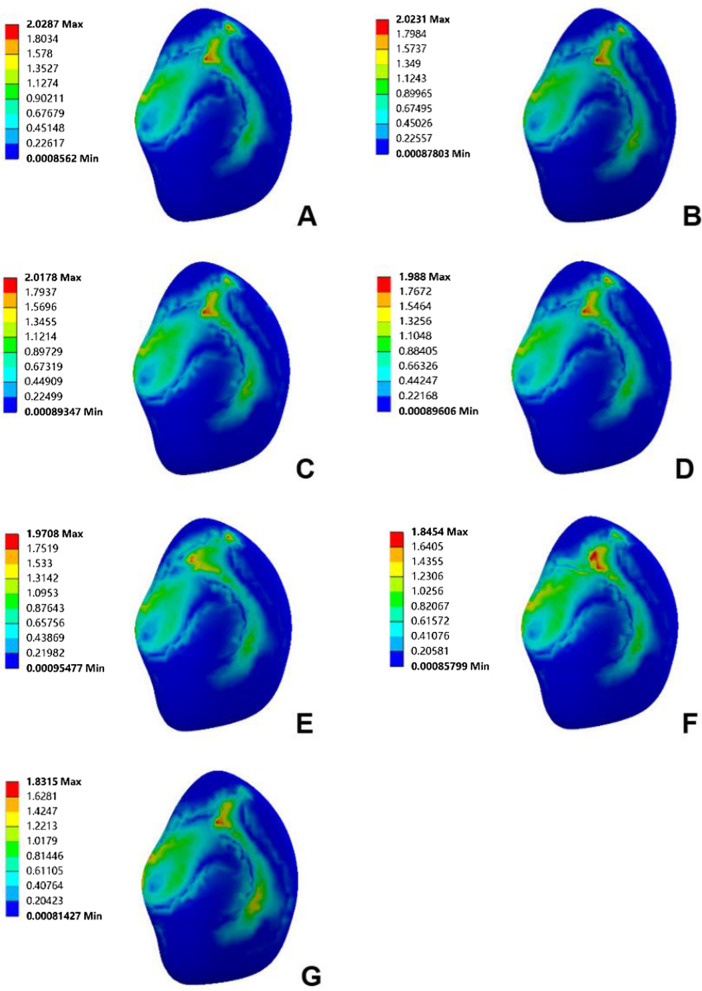
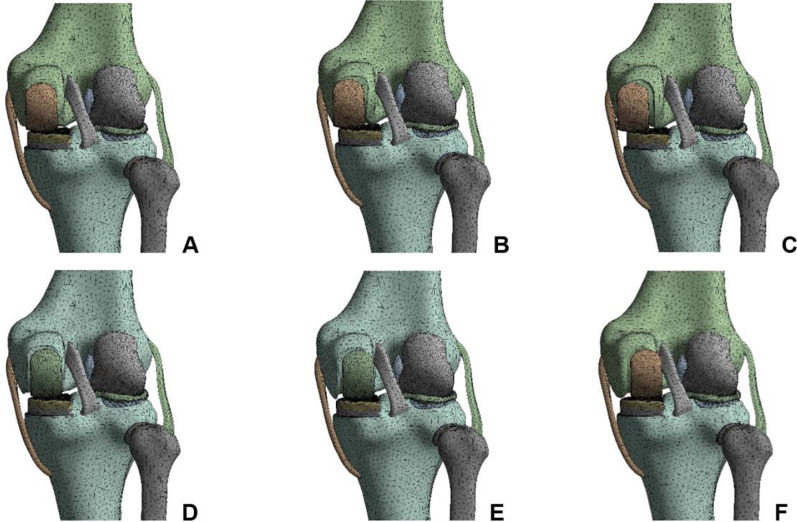
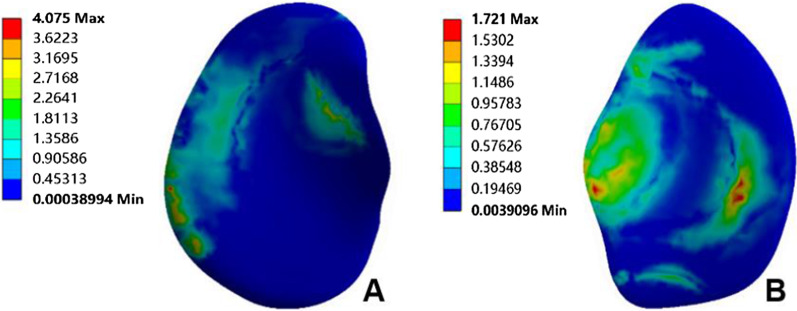
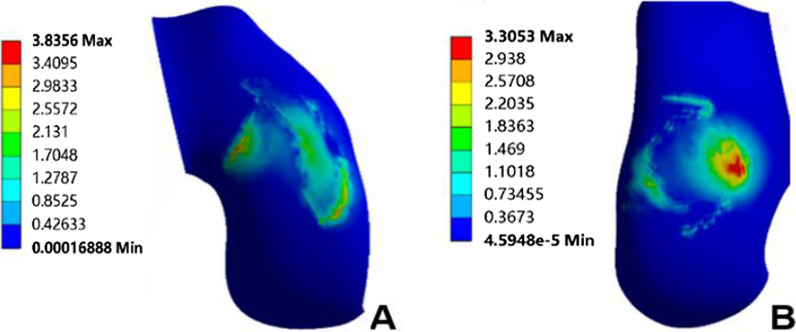
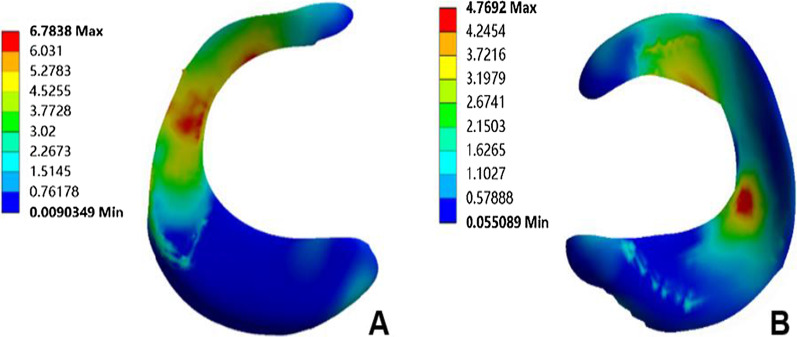
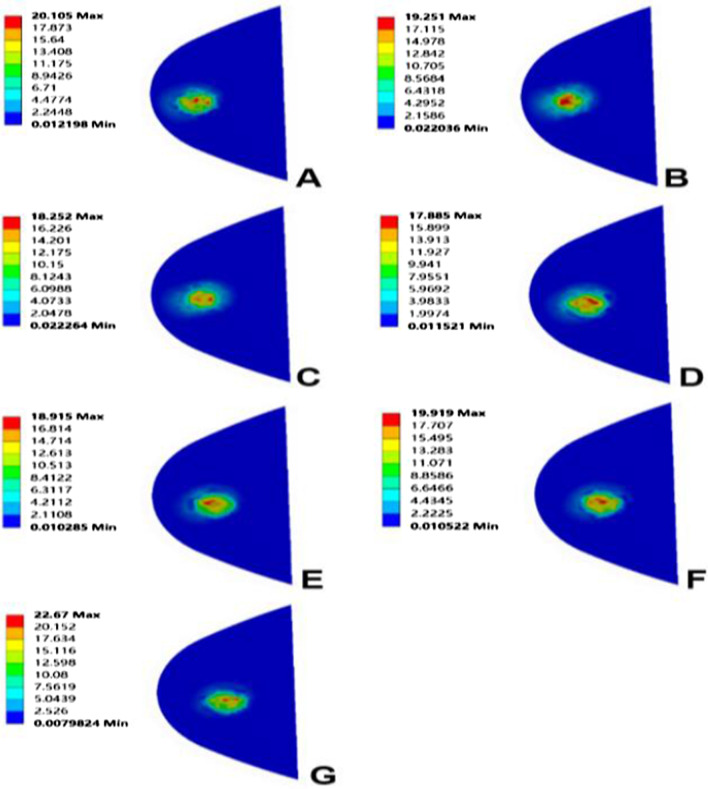
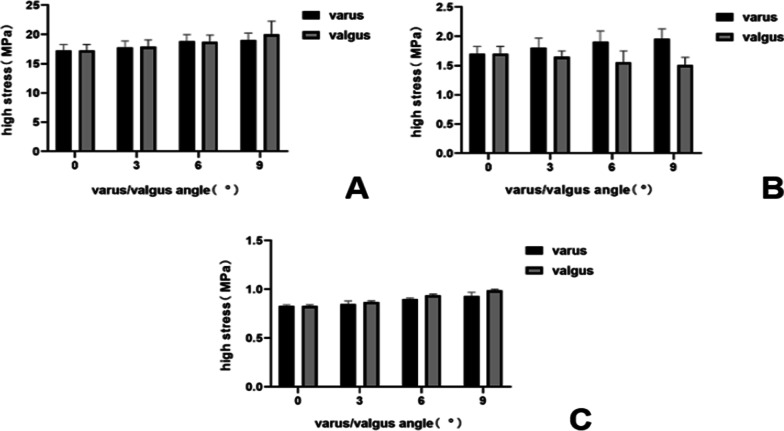
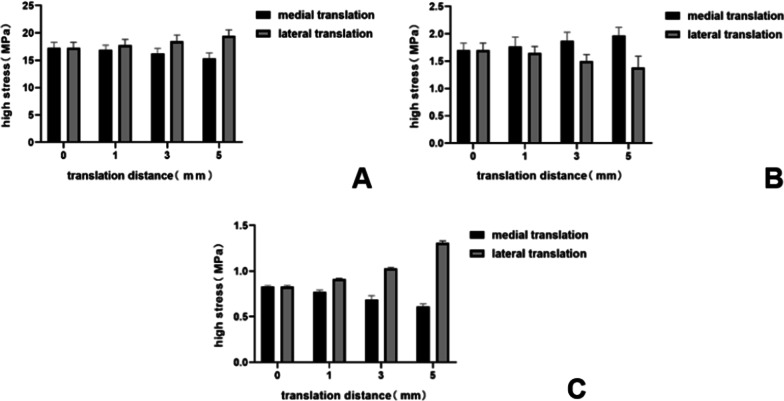
A normal knee joint model was established and verified, establishing 13 working conditions for the femoral prosthesis: the standard position, varus and valgus angles of 3°, 6° and 9° and medial and lateral translations of 1 mm, 3 mm and 5 mm. The stress changes at different positions were analysed, including the polyethylene (PE) insert upper surface, the surface of lateral compartment cartilage and the surface of cancellous bone under tibial prosthesis.
The stresses on the PE insert upper surface and the cancellous bone surface increased with increasing femoral prosthesis valgus/varus, and the stress increased gradually during medial to lateral translation. The stress change is more significant during valgus and lateral translation. However, the stress on the cartilage surface decreases in the process of varus to valgus and medial translation to lateral translation.
The fixed-bearing femoral prosthesis of the medial UKA should avoid translation or varus/valgus tilt on the coronal plane as much as possible. The obvious misalignment of the femoral prosthesis will significantly affect the stress on the internal structure of the knee joint, especially the PE insert and cartilage surface. A femoral prosthesis coronal tilt of more than 6° may significantly increase the stress on the PE surface, and varus of more than 6° may significantly increase the stress on the cartilage surface. For the femoral prosthesis position at the distal end of the femoral condyle, it is recommended to be placed in the centre.
通过有限元分析研究股骨假体在不同冠状面位置的生物力学效应,为单髁膝关节置换术(UKA)提供临床参考。
建立并验证了一个正常的膝关节模型,为股骨假体建立了 13 种工作状态:标准位置,内翻和外翻 3°、6°和 9°,以及内、外侧平移 1mm、3mm 和 5mm。分析了不同位置的应力变化,包括聚乙烯(PE)插入物上表面、外侧间室软骨表面和胫骨假体下的松质骨表面。
随着股骨假体外翻/内翻的增加,PE 插入物上表面和松质骨表面的应力增加,内、外侧平移过程中应力逐渐增加。外翻和外侧平移过程中的应力变化更为明显。然而,软骨表面的应力在从内翻到外翻和从内侧平移到外侧平移的过程中减小。
内侧 UKA 的固定轴承股骨假体应尽量避免在冠状面上发生平移或内翻/外翻倾斜。股骨假体明显的错位会显著影响膝关节内部结构的应力,特别是 PE 插入物和软骨表面。股骨假体冠状倾斜超过 6°可能会显著增加 PE 表面的应力,而超过 6°的内翻会显著增加软骨表面的应力。对于股骨髁远端的股骨假体位置,建议放置在中心。