School of Environment and Science, Griffith University, Gold Coast, Queensland, 4222, Australia.
University of South Australia, Clinical Health Sciences and Basil Hetzel Institute for Translational Health Research, Adelaide, 5011, Australia.
Pharm Res. 2022 Apr;39(4):783-793. doi: 10.1007/s11095-022-03215-z. Epub 2022 Mar 9.
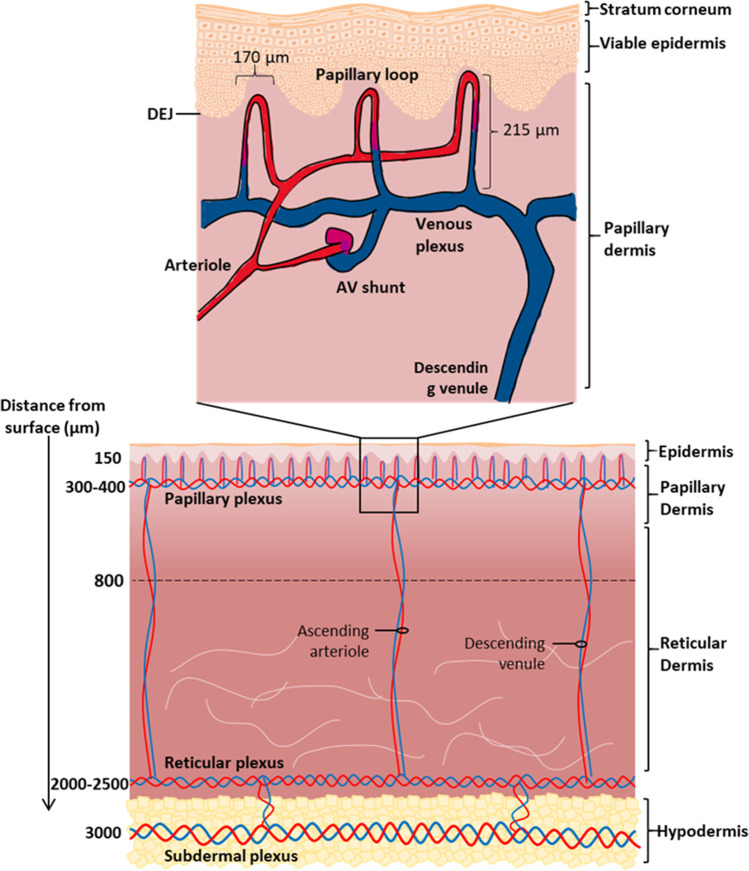
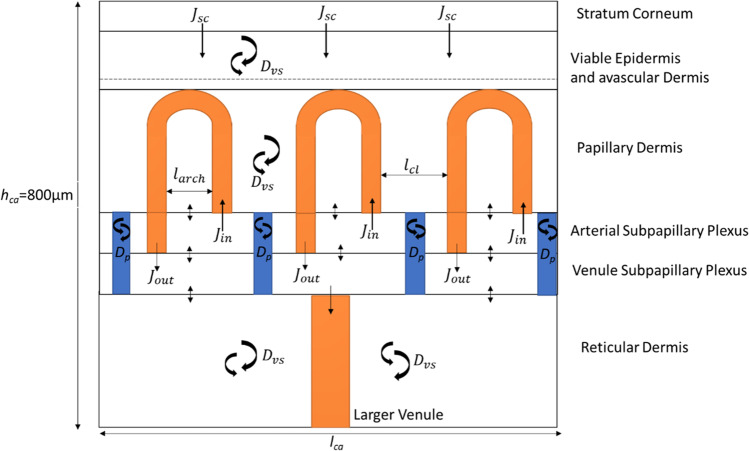
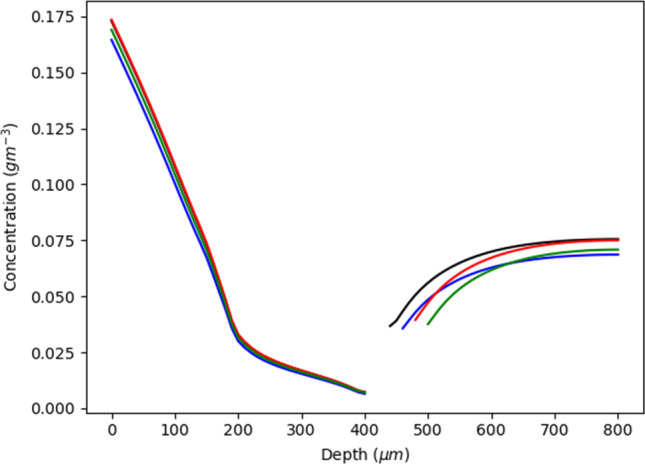
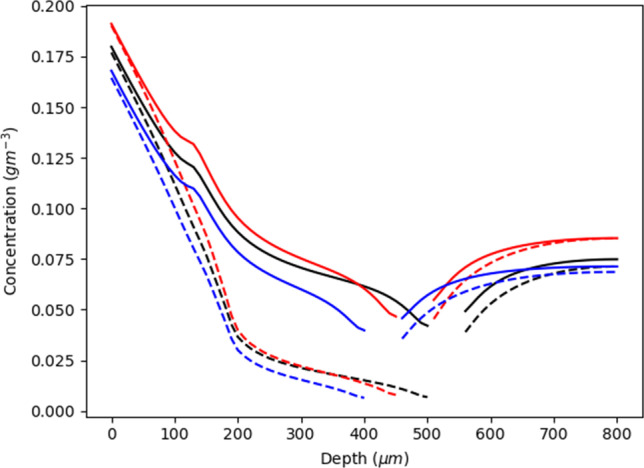
The skin concentration of a substance after a topical application or exposure determines both local treatment outcomes and the dermal toxicity assessment of various products. However, quantifying the time course of those concentrations at skin effect sites, such as the viable epidermal, superficial dermis and appendages in humans is especially problematic in vivo, making physiologically based mathematical modelling an essential tool to meet this need. This work further develops our published physiologically based pharmacokinetic and COMSOL based dermal transport modelling by considering the impact of the superficial subpapillary dermal plexus, which we represent as two well stirred compartments. The work also studied the impact on dermal concentrations of subpapillary plexus size, depth, blood velocity and density of subpapillary plexus vessels. Sensitivity analyses are used to define the most important transport determinants of skin concentrations after topical application of a substance, with previously published results used to validate the resulting analyses. This resulting model describes the available experimental data better than previous models, especially at deeper dermal depths.
皮肤中某种物质的浓度取决于局部治疗效果和各种产品的皮肤毒性评估。然而,在体内定量评估皮肤效应部位(如人类有活力的表皮、浅层真皮和附属物)的浓度随时间的变化特别困难,这使得基于生理学的数学建模成为满足这一需求的必要工具。这项工作通过考虑浅层真皮下神经丛的影响,进一步发展了我们已发表的基于生理学的药代动力学和基于 COMSOL 的皮肤传输建模,将其表示为两个充分混合的隔室。这项工作还研究了浅层真皮下神经丛的大小、深度、血管血流速度和密度对皮肤浓度的影响。敏感性分析用于确定局部应用物质后皮肤浓度的最重要传输决定因素,使用先前发表的结果验证了分析结果的有效性。与以前的模型相比,该模型能更好地描述现有的实验数据,特别是在更深的真皮深度。