Zambrano Nicola, Froechlich Guendalina, Lazarevic Dejan, Passariello Margherita, Nicosia Alfredo, De Lorenzo Claudia, Morelli Marco J, Sasso Emanuele
Dipartimento di Medicina Molecolare e Biotecnologie Mediche, Università Degli Studi di Napoli Federico II, Via Pansini 5, 80131 Napoli, Italy.
CEINGE-Biotecnologie Avanzate s.c. a.r.l., Via Gaetano Salvatore 486, 80145 Naples, Italy.
Cancers (Basel). 2022 Mar 4;14(5):1325. doi: 10.3390/cancers14051325.
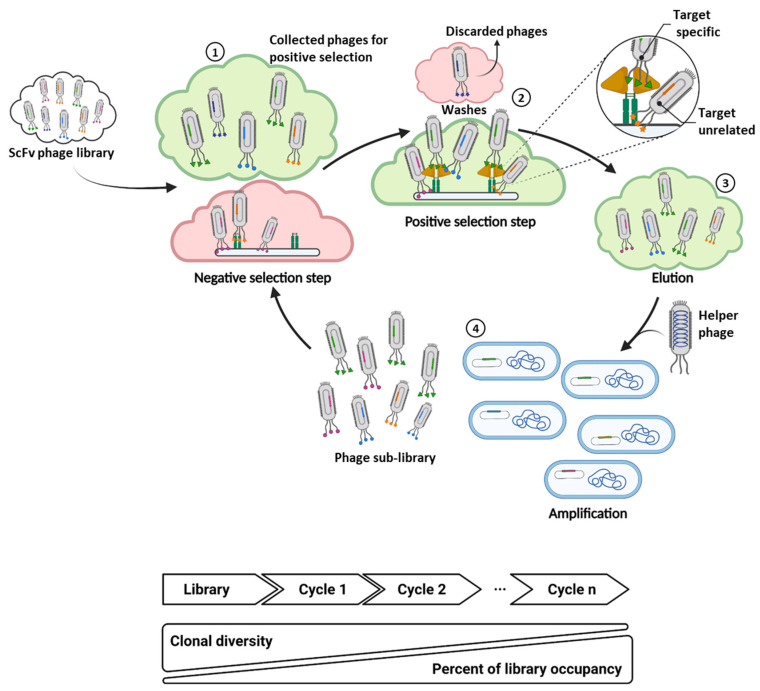
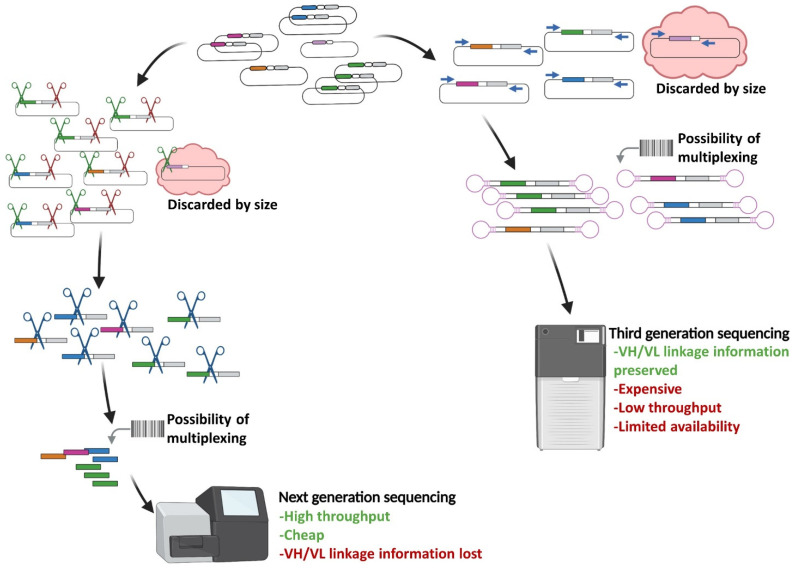
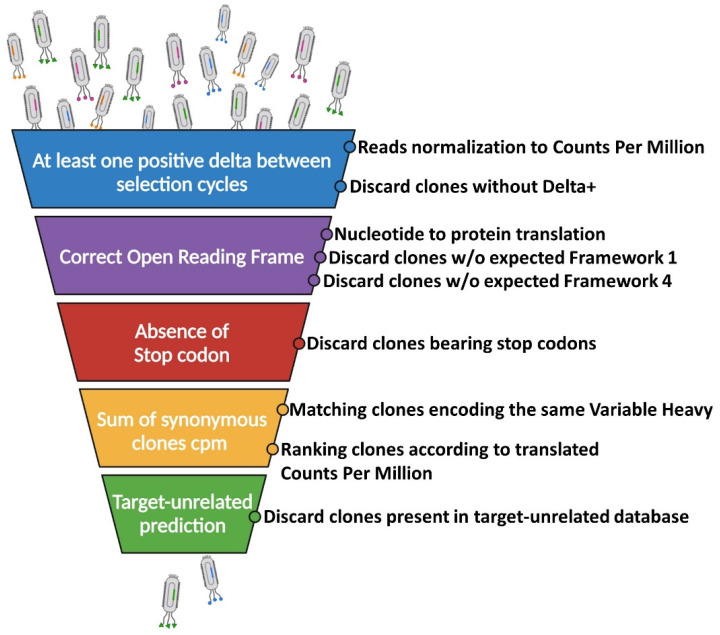
Monoclonal antibodies are among the most powerful therapeutics in modern medicine. Since the approval of the first therapeutic antibody in 1986, monoclonal antibodies keep holding great expectations for application in a range of clinical indications, highlighting the need to provide timely and sustainable access to powerful screening options. However, their application in the past has been limited by time-consuming and expensive steps of discovery and production. The screening of antibody repertoires is a laborious step; however, the implementation of next-generation sequencing-guided screening of single-chain antibody fragments has now largely overcome this issue. This review provides a detailed overview of the current strategies for the identification of monoclonal antibodies from phage display-based libraries. We also discuss the challenges and the possible solutions to improve the limiting selection and screening steps, in order to keep pace with the increasing demand for monoclonal antibodies.
单克隆抗体是现代医学中最强大的治疗手段之一。自1986年首个治疗性抗体获批以来,单克隆抗体在一系列临床适应症中的应用一直备受期待,这凸显了及时且持续地提供强大筛选选项的必要性。然而,它们过去的应用受到发现和生产过程中耗时且昂贵步骤的限制。抗体库的筛选是一个费力的步骤;不过,基于下一代测序的单链抗体片段筛选的实施现已在很大程度上克服了这个问题。本综述详细概述了从基于噬菌体展示的文库中鉴定单克隆抗体的当前策略。我们还讨论了改进有限的选择和筛选步骤的挑战及可能的解决方案,以便跟上对单克隆抗体日益增长的需求。