Faculty of Pharmacy, King Abdulaziz University, Jeddah, Saudi Arabia.
Vaccines and Immunotherapy Unit, King Fahd Medical Research Center, King Abdulaziz University, Jeddah, Saudi Arabia.
Front Immunol. 2020 Aug 28;11:1986. doi: 10.3389/fimmu.2020.01986. eCollection 2020.
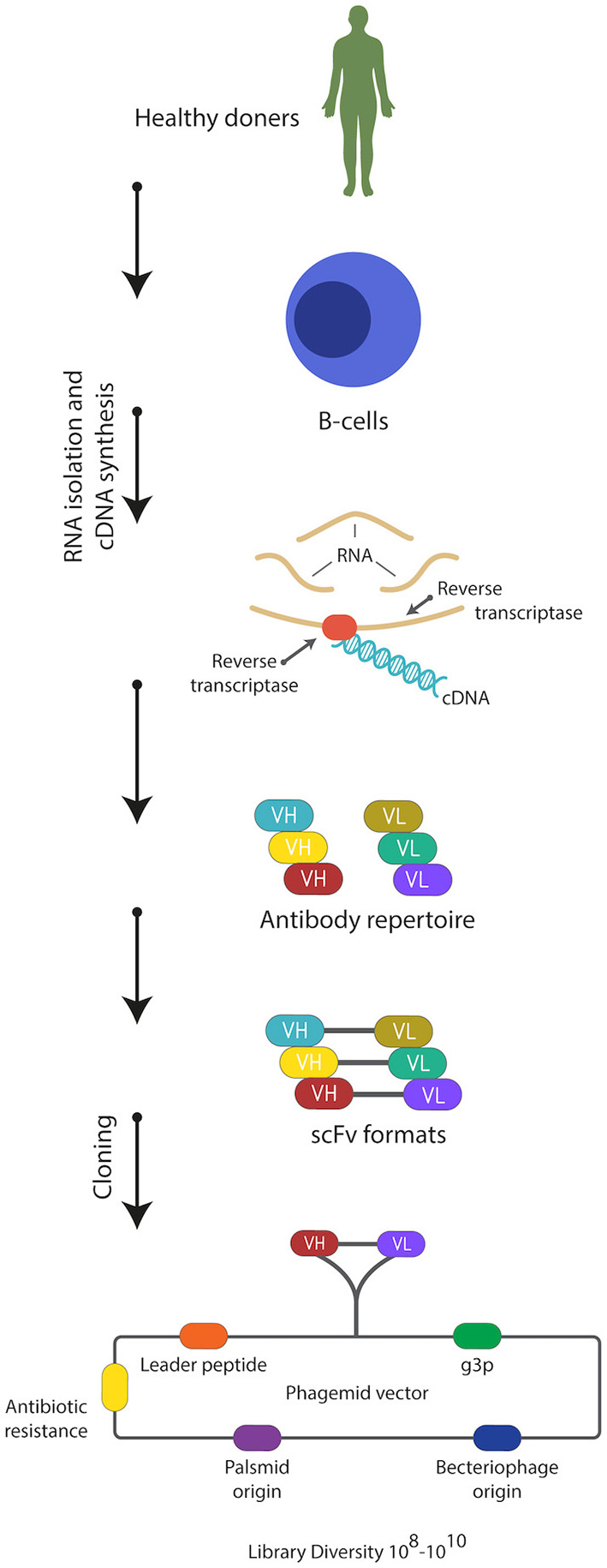
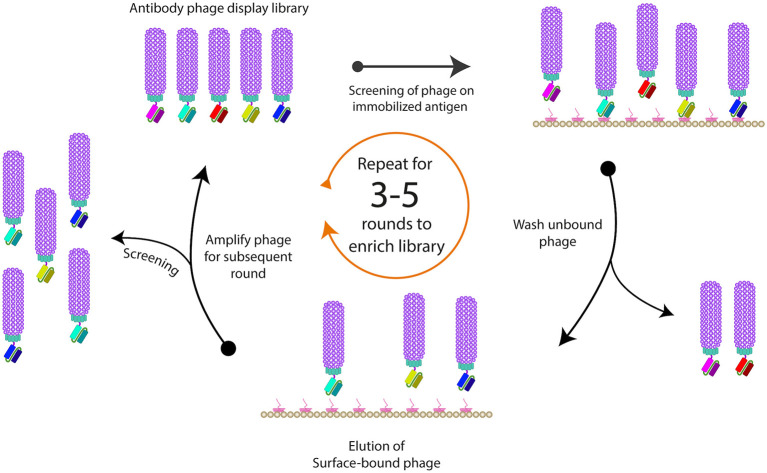
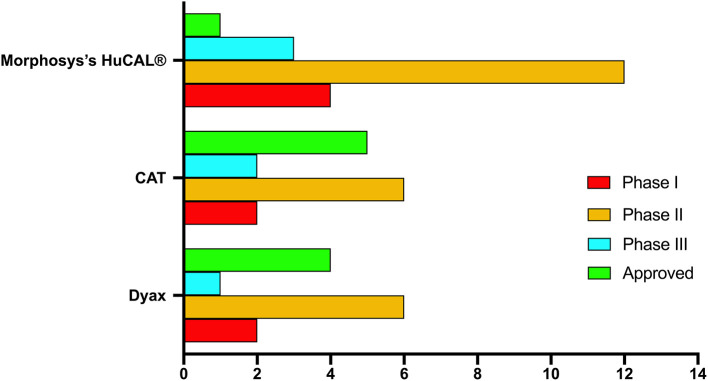
Monoclonal antibodies (mAbs) have become one of the most important classes of biopharmaceutical products, and they continue to dominate the universe of biopharmaceutical markets in terms of approval and sales. They are the most profitable single product class, where they represent six of the top ten selling drugs. At the beginning of the 1990s, an antibody selection technology known as antibody phage display was developed by John McCafferty and Sir. Gregory Winter that enabled the discovery of human antibodies for diverse applications, particularly antibody-based drugs. They created combinatorial antibody libraries on filamentous phage to be utilized for generating antigen specific antibodies in a matter of weeks. Since then, more than 70 phage-derived antibodies entered clinical studies and 14 of them have been approved. These antibodies are indicated for cancer, and non-cancer medical conditions, such as inflammatory, optical, infectious, or immunological diseases. This review will illustrate the utility of phage display as a powerful platform for therapeutic antibodies discovery and describe in detail all the approved mAbs derived from phage display.
单克隆抗体(mAbs)已成为最重要的生物制药产品之一,就批准和销售而言,它们继续主导生物制药市场的格局。它们是最赚钱的单一产品类别,其中有六种是销售额最高的药物。在 20 世纪 90 年代初,John McCafferty 和 Gregory Winter 爵士开发了一种称为抗体噬菌体展示的抗体选择技术,该技术使人们能够发现用于各种应用的人类抗体,特别是基于抗体的药物。他们在丝状噬菌体上创建了组合抗体文库,以便在数周内生成针对抗原的特异性抗体。自那时以来,已有 70 多种噬菌体衍生的抗体进入临床研究,其中 14 种已获得批准。这些抗体用于治疗癌症和非癌症疾病,如炎症、光学、传染性或免疫性疾病。这篇综述将说明噬菌体展示作为一种强大的治疗性抗体发现平台的实用性,并详细描述所有从噬菌体展示中衍生出的已批准的 mAbs。