Smith Ella S, McKay Alannah K A, Kuikman Megan, Ackerman Kathryn E, Harris Rachel, Elliott-Sale Kirsty J, Stellingwerff Trent, Burke Louise M
Mary MacKillop Institute for Health Research, Australian Catholic University, Melbourne, VIC 3000, Australia.
Wu Tsai Female Athlete Program, Boston Children's Hospital and Harvard Medical School, Boston, MA 02115, USA.
Nutrients. 2022 Feb 23;14(5):953. doi: 10.3390/nu14050953.
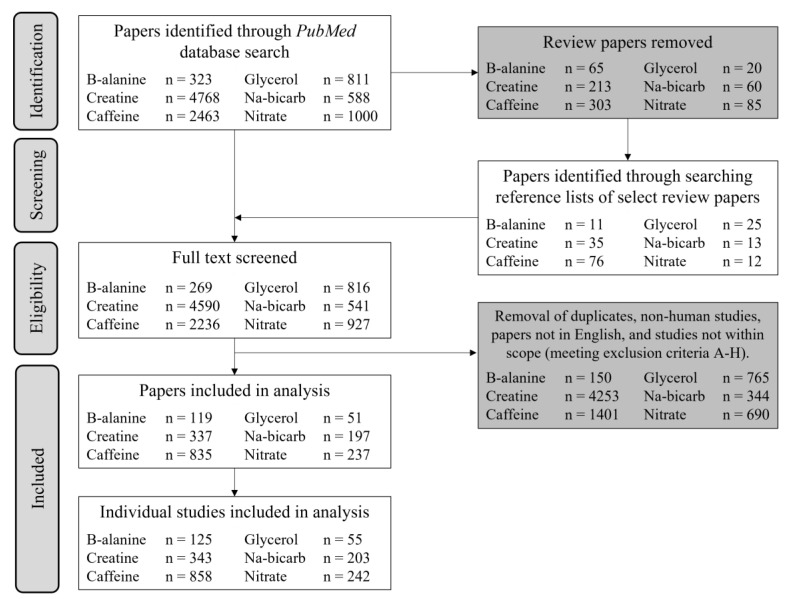
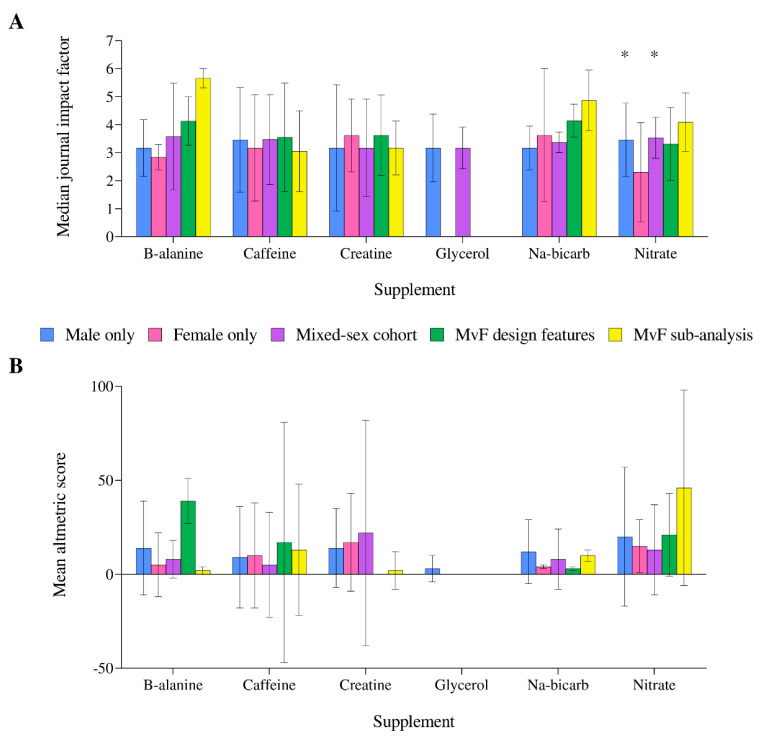
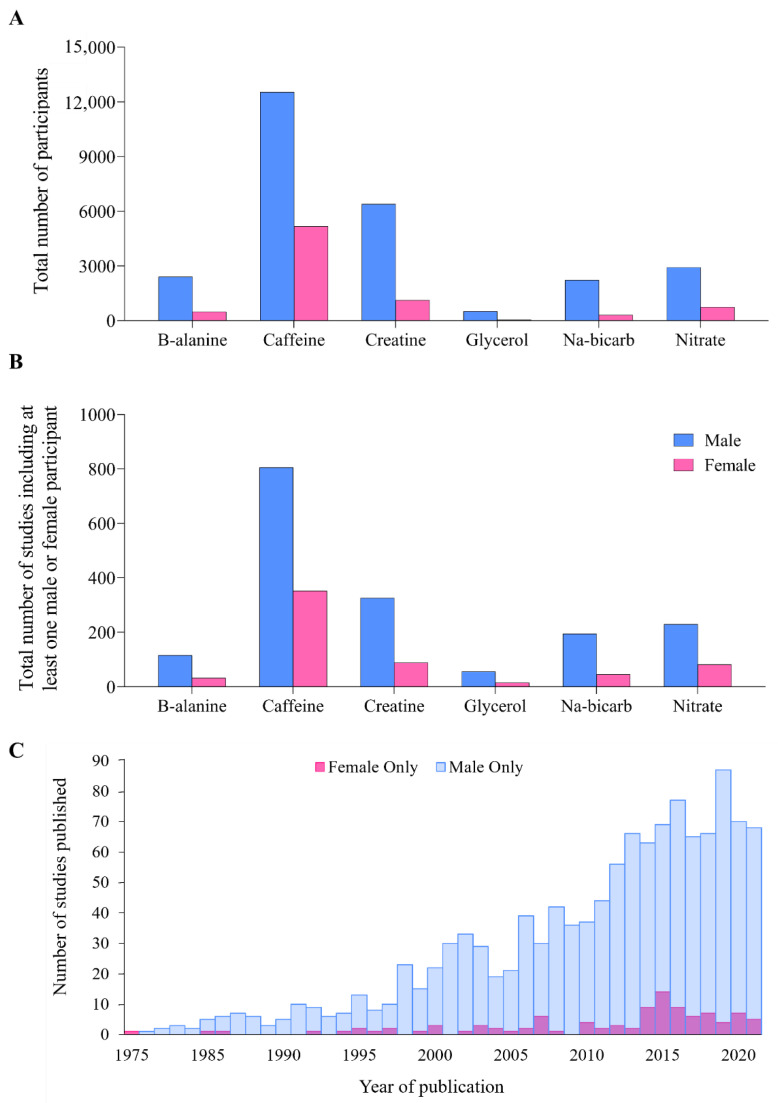
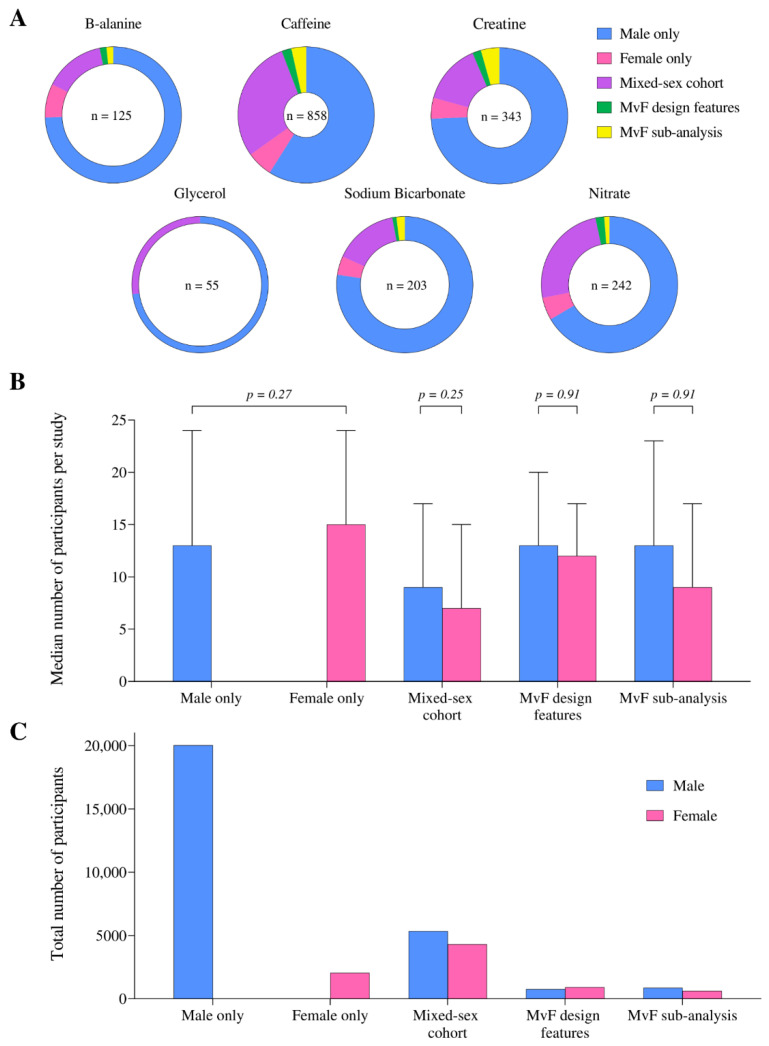
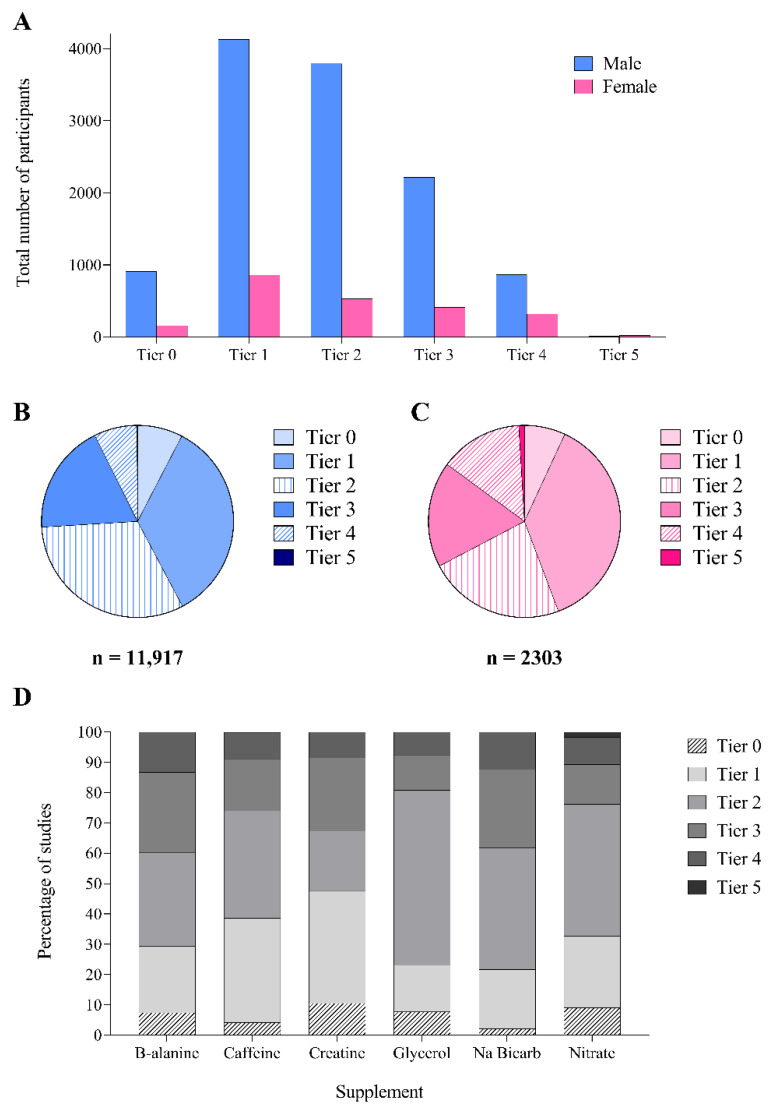
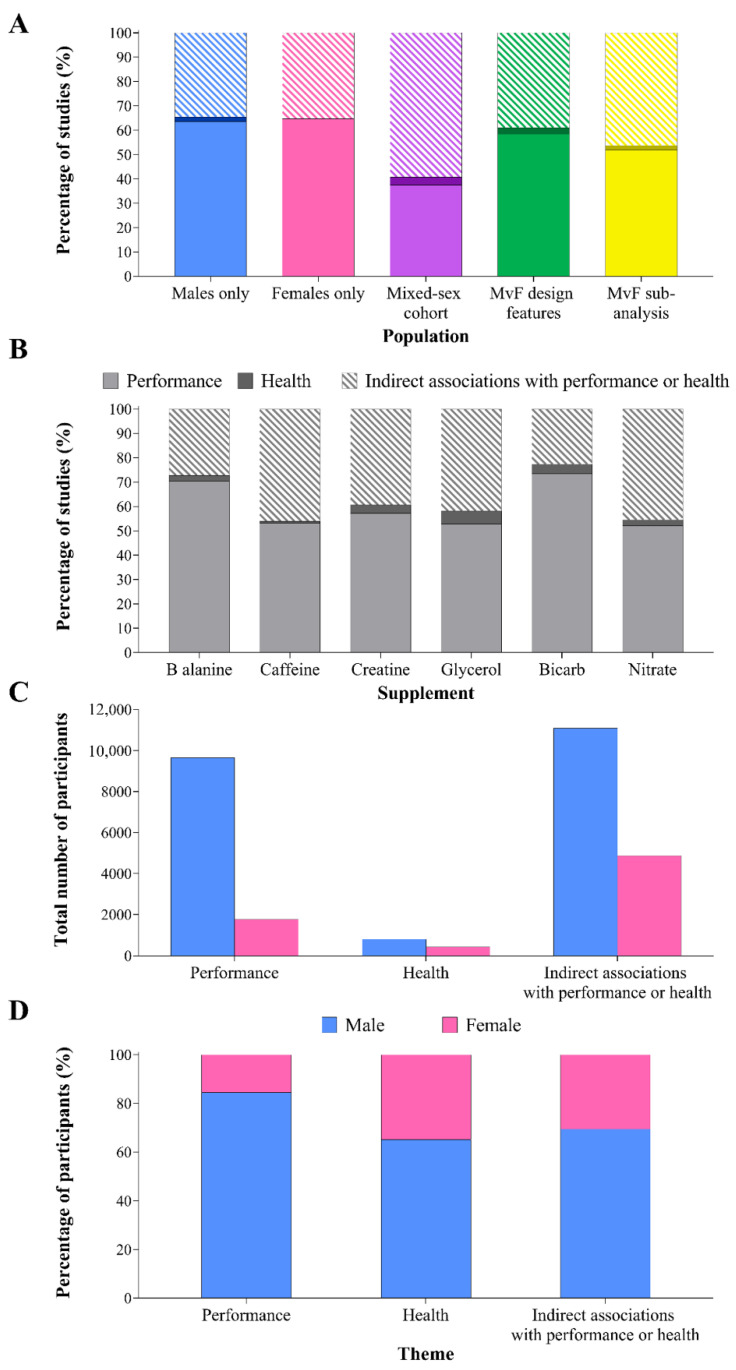
Although sports nutrition guidelines promote evidence-based practice, it is unclear whether women have been adequately included in the underpinning research. In view of the high usage rates of performance supplements by female athletes, we conducted a standardised audit of the literature supporting evidence-based products: β-alanine, caffeine, creatine, glycerol, nitrate/beetroot juice and sodium bicarbonate. Within 1826 studies totalling 34,889 participants, just 23% of participants were women, although 34% of studies included at least one woman. Across different supplements, 0-8% of studies investigated women exclusively, while fewer (0-2%) were specifically designed to compare sex-based responses. The annual publication of female-specific studies was 8 times fewer than those investigating exclusively male cohorts. Interestingly, 15% of the female participants were classified as international/world-class athletes, compared with 7% of men. Most studies investigated performance outcomes but displayed poorer representation of women (16% of participants), whereas health-focussed studies had the greatest proportion of female participants (35%). Only 14% of studies including women attempted to define menstrual status, with only three studies (0.5%) implementing best practice methodologies to assess menstrual status. New research should target the efficacy of performance supplements in female athletes, and future sports nutrition recommendations should specifically consider how well female athletes have contributed to the evidence-base.
尽管运动营养指南提倡循证实践,但尚不清楚女性是否在相关基础研究中得到了充分纳入。鉴于女性运动员对提高运动表现的补充剂使用率很高,我们对支持循证产品(β-丙氨酸、咖啡因、肌酸、甘油、硝酸盐/甜菜根汁和碳酸氢钠)的文献进行了标准化审核。在总计34889名参与者的1826项研究中,只有23%的参与者为女性,尽管34%的研究至少纳入了一名女性。在不同的补充剂研究中,0-8%的研究仅调查女性,而专门设计用于比较性别差异反应的研究更少(0-2%)。每年发表的针对女性的研究比仅针对男性队列的研究少约8倍。有趣的是,15%的女性参与者被归类为国际/世界级运动员,而男性这一比例为7%。大多数研究调查的是运动表现结果,但女性的代表性较差(占参与者的16%),而关注健康的研究中女性参与者比例最高(35%)。在纳入女性的研究中,只有14%试图界定月经状态,只有三项研究(约0.5%)采用了最佳实践方法来评估月经状态。新的研究应针对女性运动员使用提高运动表现补充剂的效果,未来的运动营养建议应特别考虑女性运动员对证据基础的贡献程度。