Department of Clinical and Molecular Medicine, "La Sapienza" University, 00189 Rome, Italy.
Department of Neurosciences, Rehabilitation, Ophthalmology, Genetic and Maternal Infantile, Sciences (DINOGMI), Department of Excellence of MIUR, University of Genoa Medical School, 16132 Genoa, Italy.
Nutrients. 2022 Mar 3;14(5):1061. doi: 10.3390/nu14051061.
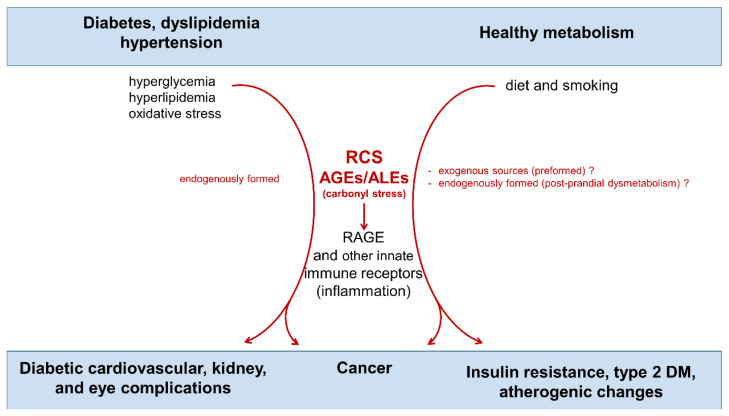
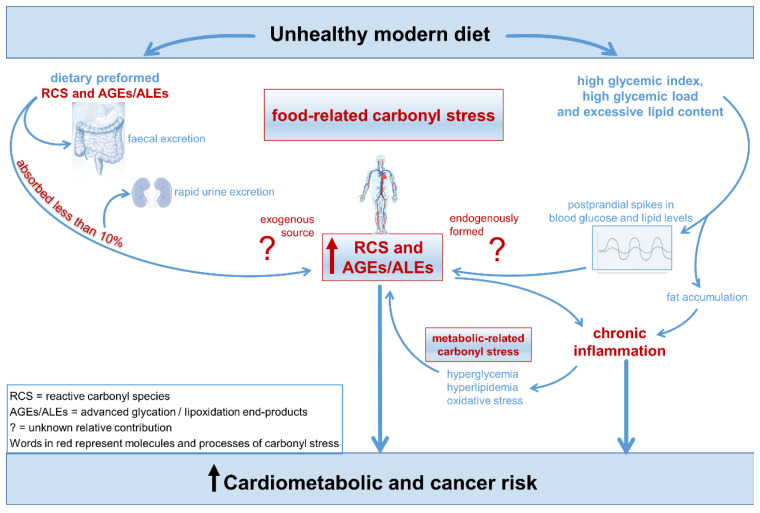
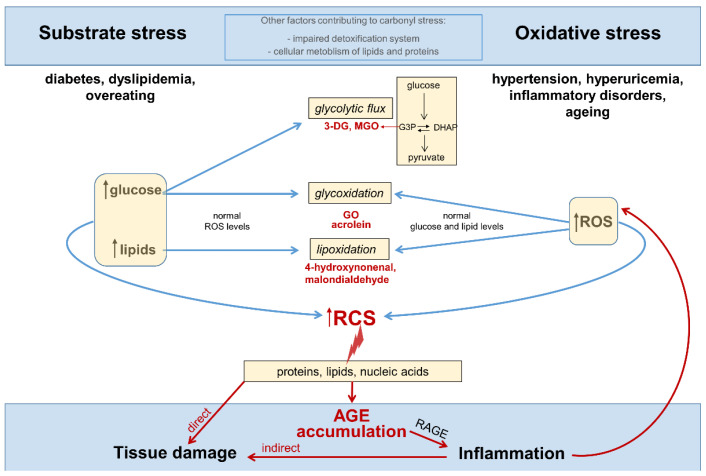
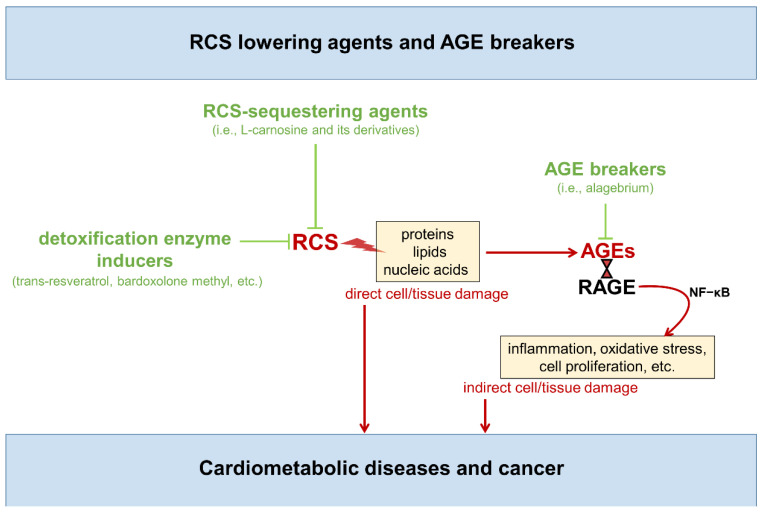
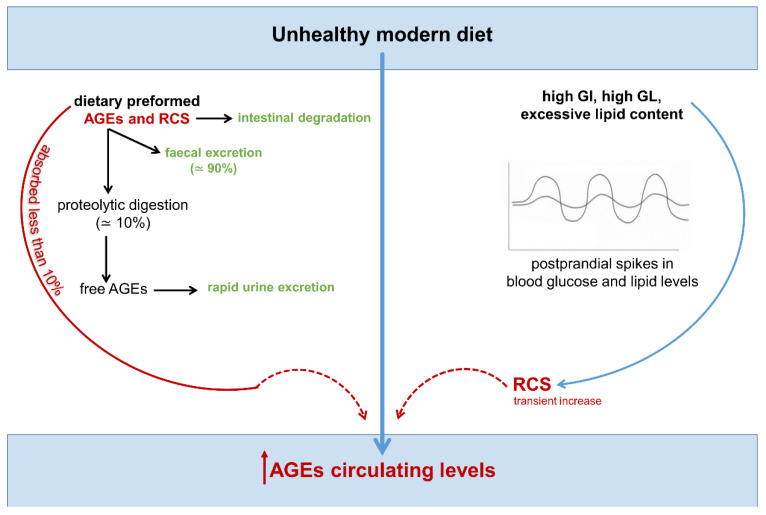
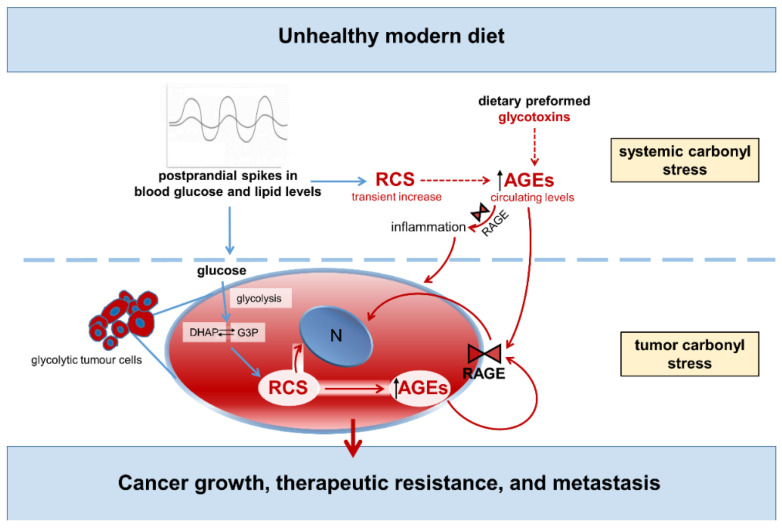
Carbonyl stress is a condition characterized by an increase in the steady-state levels of reactive carbonyl species (RCS) that leads to accumulation of their irreversible covalent adducts with biological molecules. RCS are generated by the oxidative cleavage and cellular metabolism of lipids and sugars. In addition to causing damage directly, the RCS adducts, advanced glycation end-products (AGEs) and advanced lipoxidation end-products (ALEs), cause additional harm by eliciting chronic inflammation through receptor-mediated mechanisms. Hyperglycemia- and dyslipidemia-induced carbonyl stress plays a role in diabetic cardiovascular complications and diabetes-related cancer risk. Moreover, the increased dietary exposure to AGEs/ALEs could mediate the impact of the modern, highly processed diet on cardiometabolic and cancer risk. Finally, the transient carbonyl stress resulting from supraphysiological postprandial spikes in blood glucose and lipid levels may play a role in acute proinflammatory and proatherogenic changes occurring after a calorie dense meal. These findings underline the potential importance of carbonyl stress as a mediator of the cardiometabolic and cancer risk linked to today's unhealthy diet. In this review, current knowledge in this field is discussed along with future research courses to offer new insights and open new avenues for therapeutic interventions to prevent diet-associated cardiometabolic disorders and cancer.
羰基应激是一种由活性羰基物质 (RCS) 的稳态水平增加引起的状态,导致其与生物分子不可逆的共价加合物的积累。RCS 是由脂质和糖的氧化裂解和细胞代谢产生的。除了直接造成损害外,RCS 加合物、晚期糖基化终产物 (AGEs) 和晚期脂质氧化终产物 (ALEs) 通过受体介导的机制引起慢性炎症,从而造成额外的伤害。高血糖和血脂异常引起的羰基应激在糖尿病心血管并发症和糖尿病相关癌症风险中发挥作用。此外,饮食中摄入的 AGEs/ALEs 增加可能会影响现代高度加工饮食对心血管代谢和癌症风险的影响。最后,餐后血糖和血脂水平的超生理餐后高峰引起的短暂羰基应激可能在高热量餐后发生的急性促炎和动脉粥样硬化变化中发挥作用。这些发现强调了羰基应激作为与当今不健康饮食相关的心血管代谢和癌症风险的中介的潜在重要性。在这篇综述中,讨论了该领域的现有知识以及未来的研究方向,为预防与饮食相关的心血管代谢紊乱和癌症的治疗干预提供了新的见解和新途径。