Piccini Chiara, Cantini Claudio, Cai Giampiero, Pinto Diana C G A, Silva Artur M S, Romi Marco, Dias Maria Celeste
Department of Life Sciences, University of Siena, Via Mattioli 4, 53100 Siena, Italy.
Institute for BioEconomy, National Research Council of Italy, 58022 Follonica, Italy.
Plants (Basel). 2022 Mar 2;11(5):680. doi: 10.3390/plants11050680.
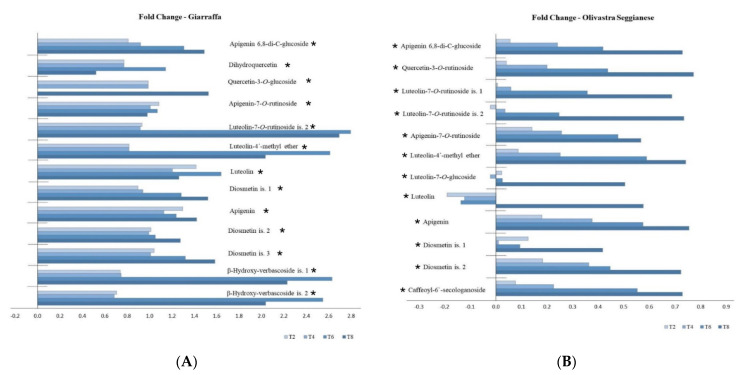
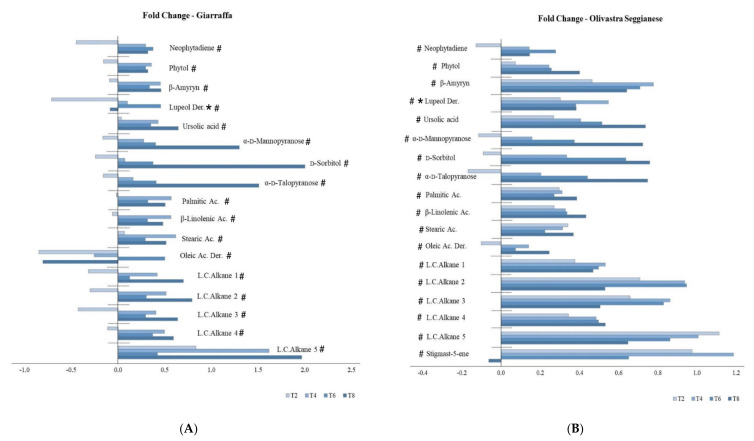
The depletion of the stratospheric ozone layer due to natural and/or anthropogenic causes decreases the amount of UV-B radiation filtered, and consequently increases the risk of potential damage to organisms. In the Mediterranean region, high UV-B indices are frequent. Even for species typical of this region, such as the olive tree, the progressive increase in UV-B radiation represents a threat. This work aimed to understand how high UV-B radiation modulates the phenolic and lipophilic profile of olive varieties, and identify metabolites that enhance olive stress tolerance. Two Italian olive varieties were subjected to chronic UV-B stress, and leaves were analyzed by gas and liquid chromatography. The results indicated that the most representative phenolic and lipophilic compounds of Giarraffa and Olivastra Seggianese were readjusted in response to UV-B stress. The Giarraffa variety seemed better suited to prolonged UV-B stress, possibly due to the higher availability of flavonoids that could help control oxidative damage, and the accumulation of hydroxycinnamic acid derivatives that could provide strong UV-B shield protection. In addition, this variety contained higher levels of fatty acids (e.g., palmitic, α-linolenic, and stearic acids), which can help to maintain membrane integrity and accumulate more sorbitol (which may serve as an osmoprotectant or act a free-radical scavenger), terpenes, and long-chain alkanes, providing higher protection against UV-B stress.
由于自然和/或人为原因导致的平流层臭氧层损耗,会减少被过滤的UV-B辐射量,从而增加生物体受到潜在损害的风险。在地中海地区,高UV-B指数很常见。即使对于该地区的典型物种,如橄榄树,UV-B辐射的逐渐增加也构成了威胁。这项工作旨在了解高UV-B辐射如何调节橄榄品种的酚类和亲脂性特征,并鉴定出增强橄榄耐逆性的代谢物。对两个意大利橄榄品种施加慢性UV-B胁迫,并通过气相色谱和液相色谱对叶片进行分析。结果表明,Giarraffa和Olivastra Seggianese最具代表性的酚类和亲脂性化合物因UV-B胁迫而重新调整。Giarraffa品种似乎更适合长时间的UV-B胁迫,这可能是由于黄酮类化合物的可用性较高,有助于控制氧化损伤,以及羟基肉桂酸衍生物的积累,可提供强大的UV-B屏蔽保护。此外,该品种含有较高水平的脂肪酸(如棕榈酸、α-亚麻酸和硬脂酸),有助于维持膜的完整性,并积累更多的山梨醇(可作为渗透保护剂或自由基清除剂)、萜类化合物和长链烷烃,从而提供更高的抗UV-B胁迫保护。