Institute of Atomic and Molecular Sciences, Academia Sinica, Taipei, 106, Taiwan, ROC.
Department of Physics, National Taiwan University, Taipei, 106, Taiwan, ROC.
Sci Rep. 2022 Mar 10;12(1):3905. doi: 10.1038/s41598-022-07963-1.
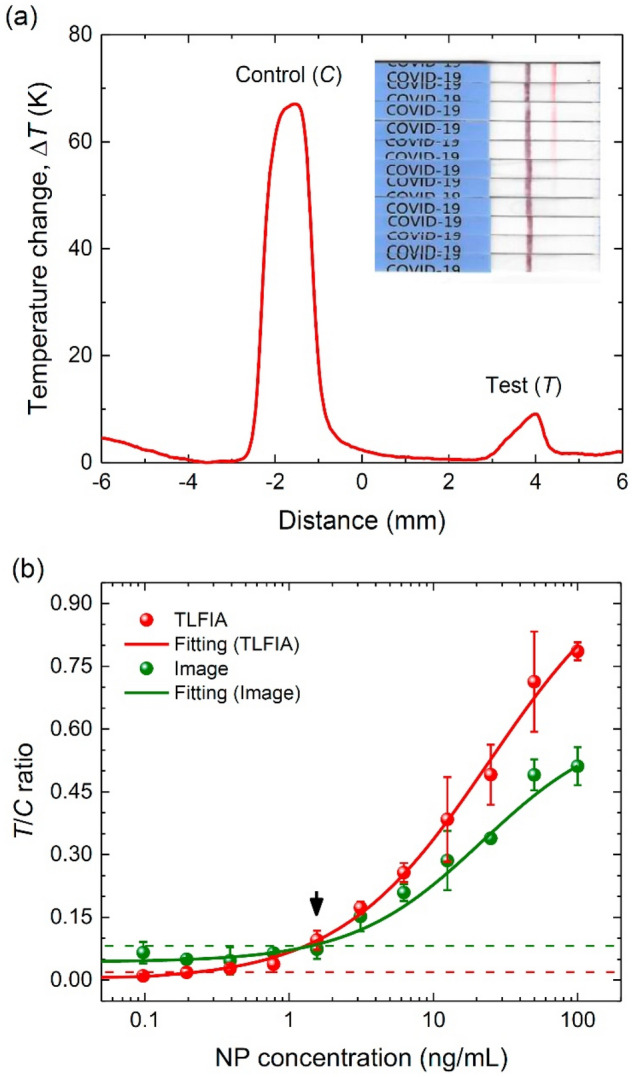
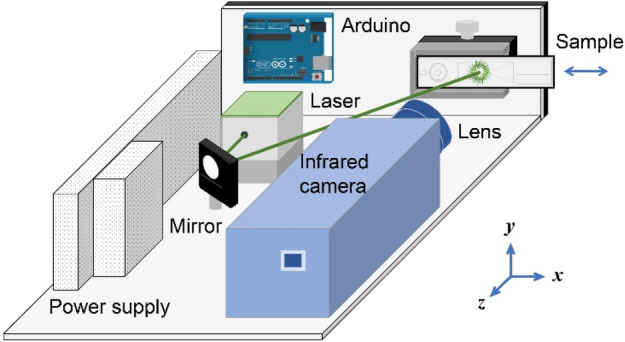
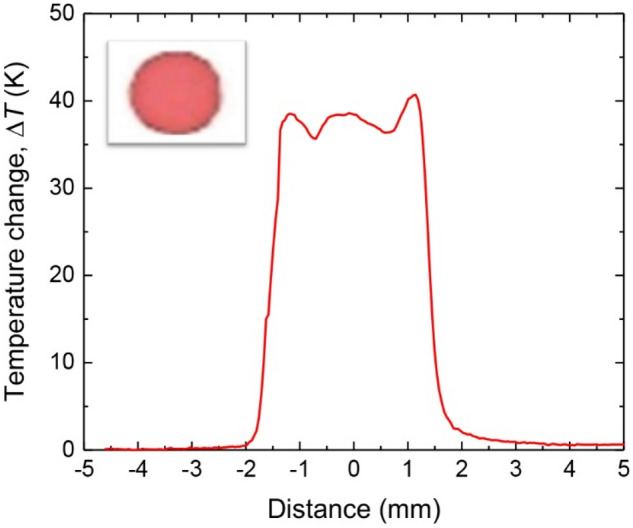
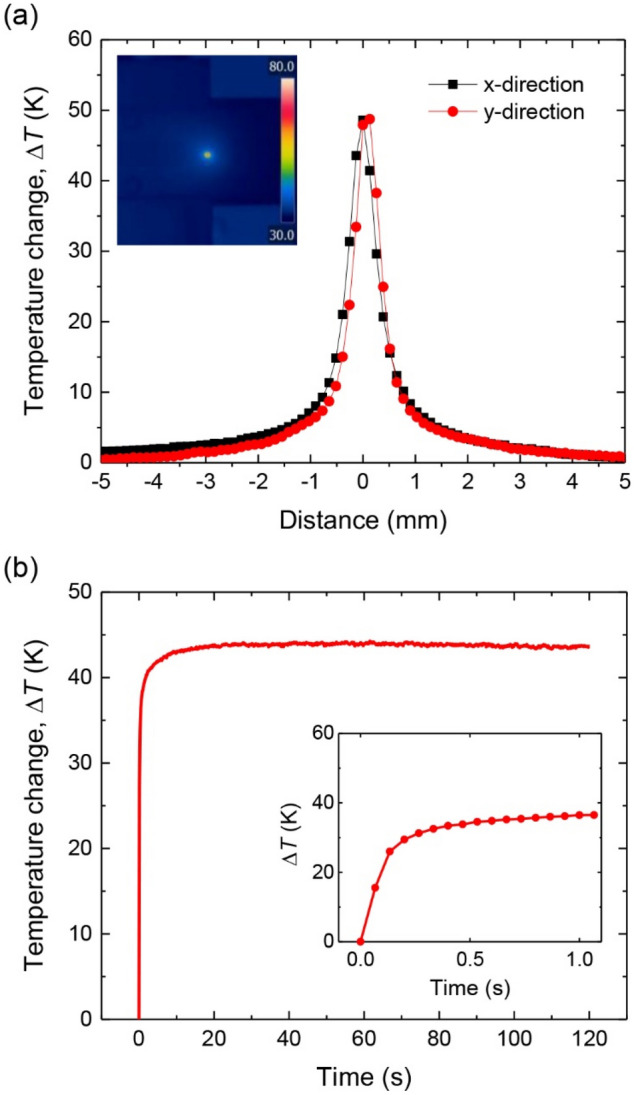
Temperature sensing is a promising method of enhancing the detection sensitivity of lateral flow immunoassay (LFIA) for point-of-care testing. A temperature increase of more than 100 °C can be readily achieved by photoexcitation of reporters like gold nanoparticles (GNPs) or colored latex beads (CLBs) on LFIA strips with a laser power below 100 mW. Despite its promise, processes involved in the photothermal detection have not yet been well-characterized. Here, we provide a fundamental understanding of this thermometric assay using non-fluorescent CLBs as the reporters deposited on nitrocellulose membrane. From a measurement for the dependence of temperature rises on the number density of membrane-bound CLBs, we found a 1.3-fold (and 3.2-fold) enhancement of the light absorption by red (and black) latex beads at 520 nm. The enhancement was attributed to the multiple scattering of light in this highly porous medium, a mechanism that could make a significant impact on the sensitivity improvement of LFIA. The limit of detection was measured to be 1 × 10 particles/mm. In line with previous studies using GNPs as the reporters, the CLB-based thermometric assay provides a 10× higher sensitivity than color visualization. We demonstrated a practical use of this thermometric immunoassay with rapid antigen tests for COVID-19.
温度感应是提高即时检测侧向流动免疫分析(LFIA)检测灵敏度的一种很有前途的方法。通过使用低于 100mW 的激光功率在 LFIA 条上对金纳米颗粒(GNPs)或彩色乳胶珠(CLB)等报告器进行光激发,可以轻易地实现超过 100°C 的温度升高。尽管有前景,但光热检测中涉及的过程尚未得到很好的描述。在这里,我们使用非荧光 CLB 作为沉积在硝酸纤维素膜上的报告器,对这种测温分析进行了基本的理解。从测量温度升高与膜结合的 CLB 数密度的关系中,我们发现红色(和黑色)乳胶珠在 520nm 处的光吸收增强了 1.3 倍(和 3.2 倍)。这种增强归因于在这种高度多孔介质中的光多次散射,这种机制可能对 LFIA 的灵敏度提高产生重大影响。检测限测量为 1×10 个颗粒/mm。与使用 GNPs 作为报告器的先前研究一致,基于 CLB 的测温分析比颜色可视化提供了 10 倍的更高灵敏度。我们用 COVID-19 的快速抗原检测证明了这种测温免疫分析的实际用途。