Institute of HIV Research and Innovation, Bangkok, Thailand.
King Chulalongkorn Memorial Hospital, Thai Red Cross Society, Bangkok, Thailand.
J Infect Dis. 2022 Jun 15;225(12):2167-2175. doi: 10.1093/infdis/jiac089.
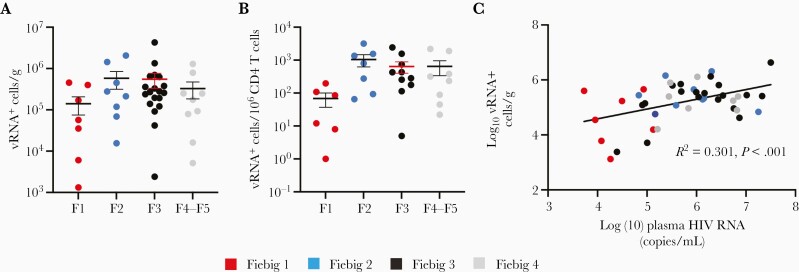
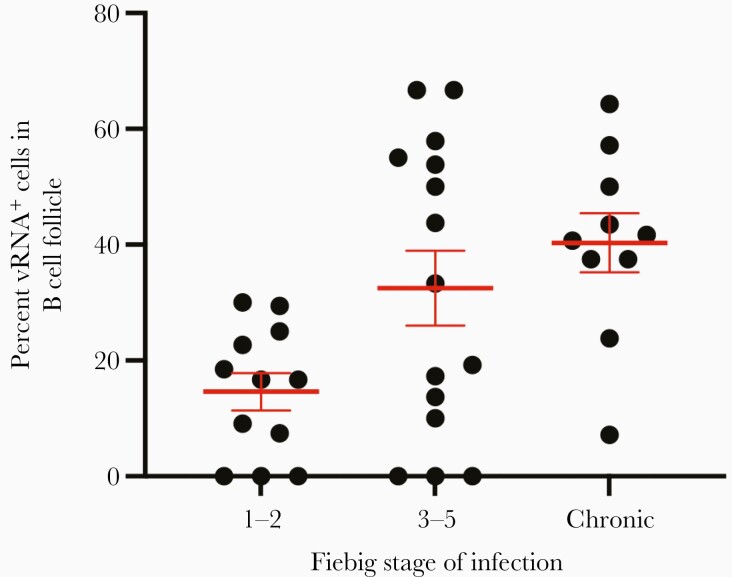
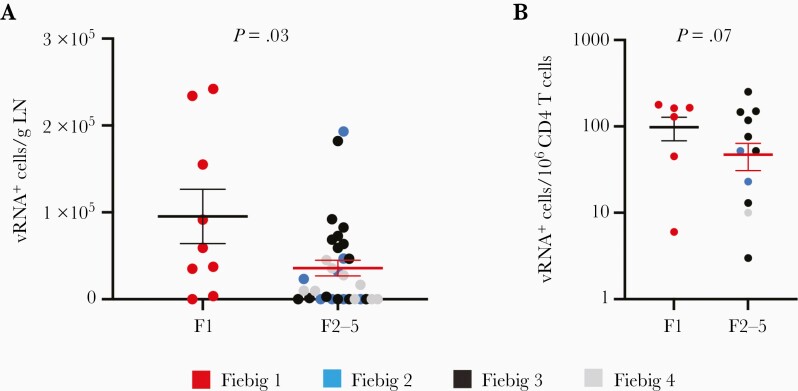
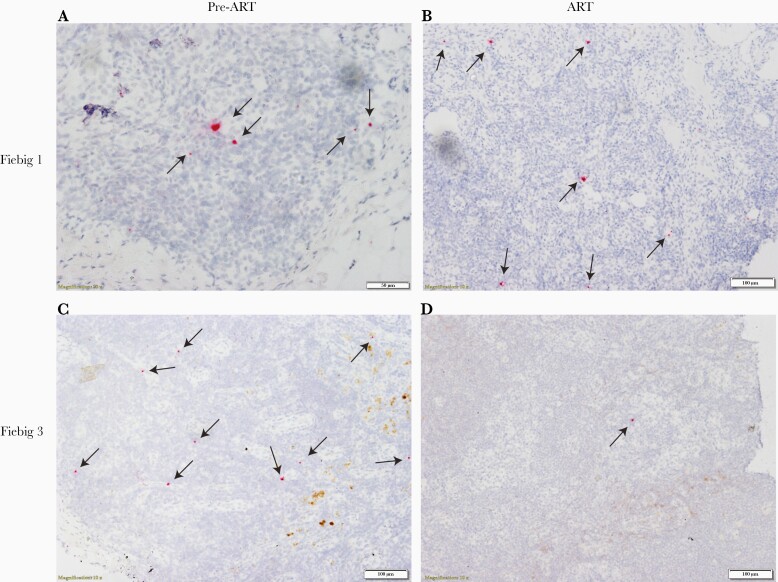
Starting antiretroviral therapy (ART) in Fiebig 1 acute HIV infection limits the size of viral reservoirs in lymphoid tissues, but does not impact time to virus rebound during a treatment interruption. To better understand why the reduced reservoir size did not increase the time to rebound we measured the frequency and location of HIV RNA+ cells in lymph nodes from participants in the RV254 acute infection cohort. HIV RNA+ cells were detected more frequently and in greater numbers when ART was initiated in Fiebig 1 compared to later Fiebig stages and were localized to the T-cell zone compared to the B-cell follicle with treatment in later Fiebig stages. Variability of virus production in people treated during acute infection suggests that the balance between virus-producing cells and the immune response to clear infected cells rapidly evolves during the earliest stages of infection. Clinical Trials Registration: NCT02919306.
开始抗逆转录病毒疗法(ART)治疗 Fiebig 1 期急性 HIV 感染可限制淋巴组织中病毒储存库的大小,但不会影响治疗中断期间病毒反弹的时间。为了更好地理解为何减少储存库大小并未增加病毒反弹的时间,我们在 RV254 急性感染队列的参与者的淋巴结中测量了 HIV RNA+细胞的频率和位置。与后期 Fiebig 阶段相比,ART 在 Fiebig 1 期开始时检测到 HIV RNA+细胞的频率更高,数量更多,并且定位于 T 细胞区,而在后期 Fiebig 阶段治疗时则定位于 B 细胞滤泡。在急性感染期间接受治疗的人的病毒产生的变异性表明,在感染的最早阶段,病毒产生细胞与清除感染细胞的免疫反应之间的平衡迅速演变。临床试验注册:NCT02919306。