Takata Hiroshi, Buranapraditkun Supranee, Kessing Cari, Fletcher James L K, Muir Roshell, Tardif Virginie, Cartwright Pearline, Vandergeeten Claire, Bakeman Wendy, Nichols Carmen N, Pinyakorn Suteeraporn, Hansasuta Pokrath, Kroon Eugene, Chalermchai Thep, O'Connell Robert, Kim Jerome, Phanuphak Nittaya, Robb Merlin L, Michael Nelson L, Chomont Nicolas, Haddad Elias K, Ananworanich Jintanat, Trautmann Lydie
U.S. Military HIV Research Program, Walter Reed Army Institute of Research, Silver Spring, MD 20910, USA.
Henry M. Jackson Foundation for the Advancement of Military Medicine, Bethesda, MD 20817, USA.
Sci Transl Med. 2017 Feb 15;9(377). doi: 10.1126/scitranslmed.aag1809.
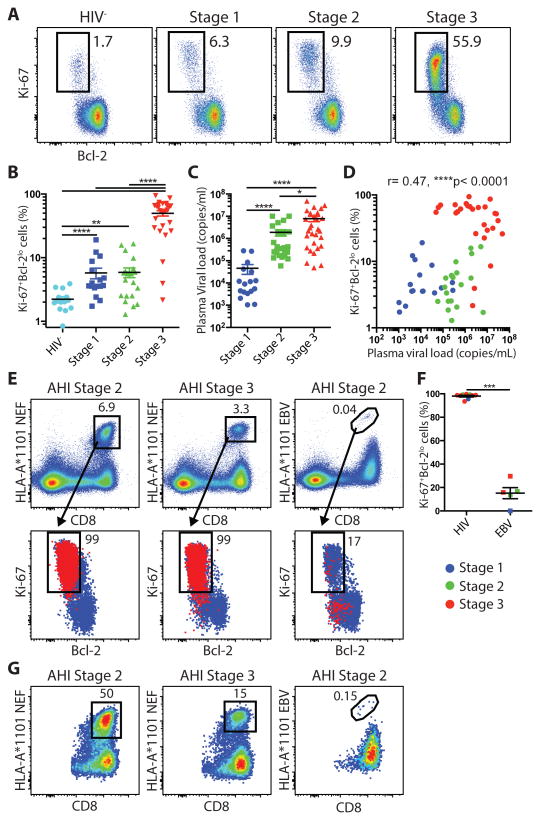
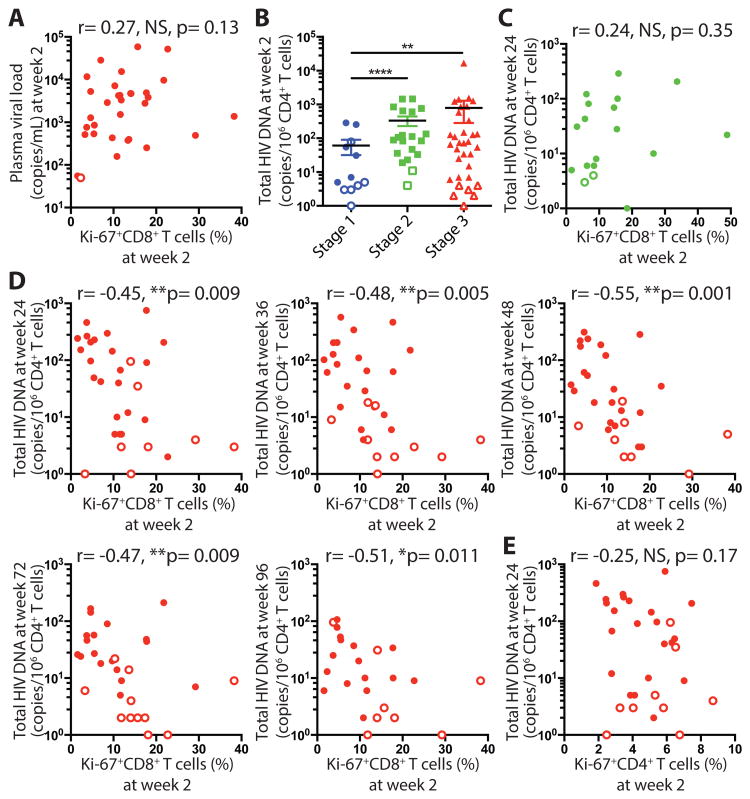
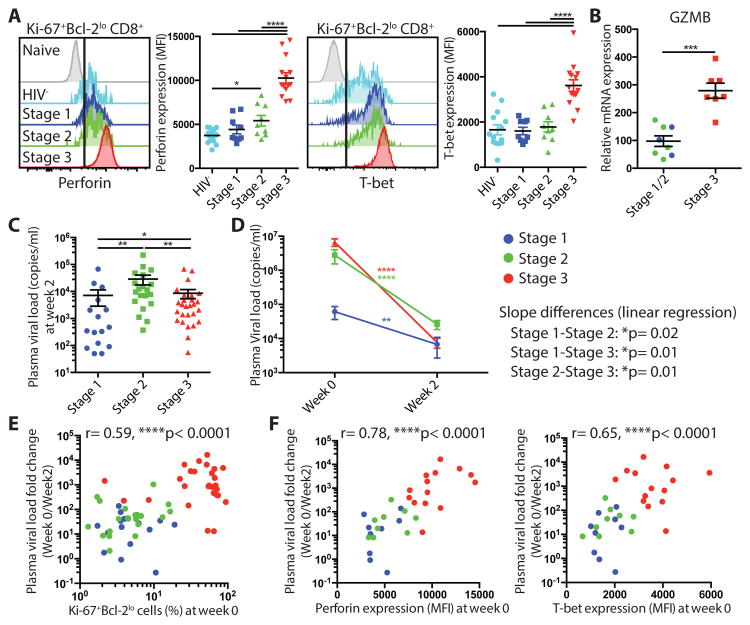
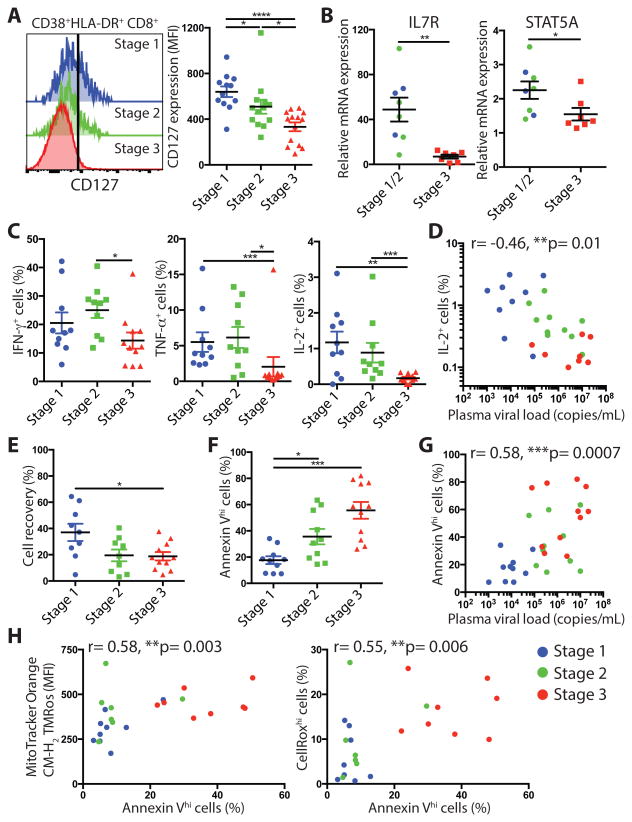
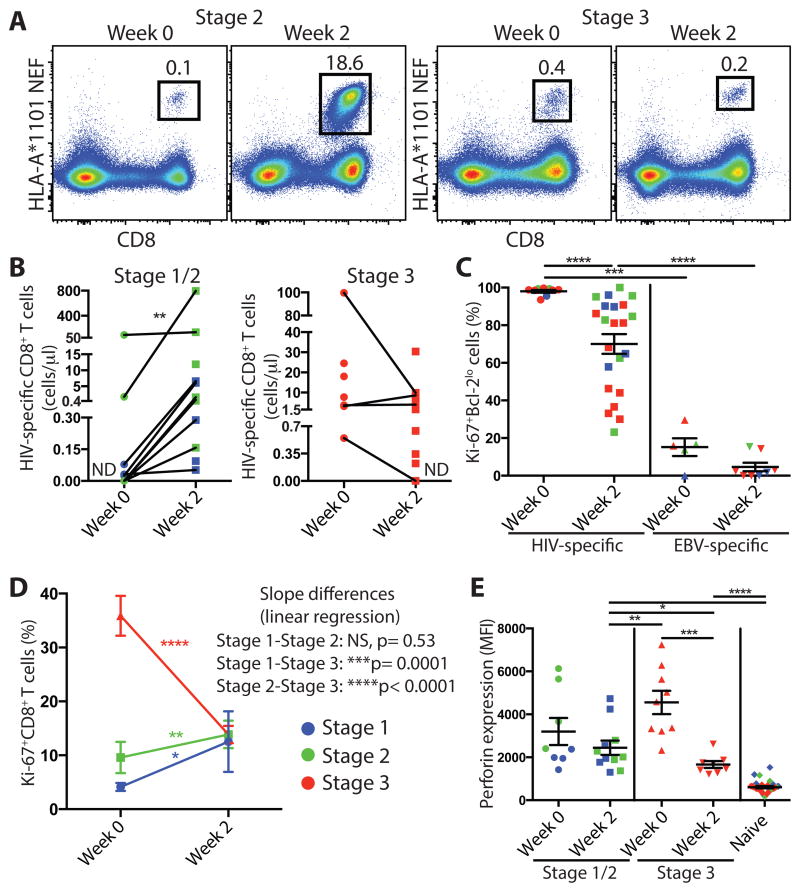
CD8 T cells play a critical role in controlling HIV viremia and could be important in reducing HIV-infected cells in approaches to eradicate HIV. The simian immunodeficiency virus model provided the proof of concept for a CD8 T cell-mediated reservoir clearance but showed conflicting evidence on the role of these cells to eliminate HIV-infected cells. In humans, HIV-specific CD8 T cell responses have not been associated with a reduction of the HIV-infected cell pool in vivo. We studied HIV-specific CD8 T cells in the RV254 cohort of individuals initiating ART in the earliest stages of acute HIV infection (AHI). We showed that the HIV-specific CD8 T cells generated as early as AHI stages 1 and 2 before peak viremia are delayed in expanding and acquiring effector functions but are endowed with higher memory potential. In contrast, the fully differentiated HIV-specific CD8 T cells at peak viremia in AHI stage 3 were more prone to apoptosis but were associated with a steeper viral load decrease after ART initiation. Their capacity to persist in vivo after ART initiation correlated with a lower HIV DNA reservoir. These findings demonstrate that HIV-specific CD8 T cell magnitude and differentiation are delayed in the earliest stages of infection. These results also demonstrate that potent HIV-specific CD8 T cells contribute to the reduction of the pool of HIV-producing cells and the HIV reservoir seeding in vivo and provide the rationale to design interventions aiming at inducing these potent responses to cure HIV infection.
CD8 T细胞在控制HIV病毒血症中起着关键作用,并且在根除HIV的方法中减少HIV感染细胞方面可能很重要。猿猴免疫缺陷病毒模型为CD8 T细胞介导的储存库清除提供了概念验证,但在这些细胞消除HIV感染细胞的作用方面显示出相互矛盾的证据。在人类中,HIV特异性CD8 T细胞反应与体内HIV感染细胞池的减少无关。我们研究了急性HIV感染(AHI)最早阶段开始接受抗逆转录病毒治疗(ART)的个体的RV254队列中的HIV特异性CD8 T细胞。我们发现,早在病毒血症峰值之前的AHI 1期和2期产生的HIV特异性CD8 T细胞在扩增和获得效应功能方面有所延迟,但具有更高的记忆潜能。相比之下,AHI 3期病毒血症峰值时完全分化的HIV特异性CD8 T细胞更容易发生凋亡,但与ART启动后病毒载量的更急剧下降相关。它们在ART启动后在体内持续存在的能力与较低的HIV DNA储存库相关。这些发现表明,HIV特异性CD8 T细胞的数量和分化在感染的最早阶段会延迟。这些结果还表明,强效的HIV特异性CD8 T细胞有助于减少HIV产生细胞池和体内HIV储存库的播种,并为设计旨在诱导这些强效反应以治愈HIV感染的干预措施提供了理论依据。