Department of Genetics, Institute for Developmental Research, Aichi Developmental Disability Center, 713-8 Kamiya-cho, Kasugai, Aichi, 480-0392, Japan.
Laboratory of Bioinformatics, School of Life Sciences, Tokyo University of Pharmacy and Life Sciences, 1432-1 Horinouchi, Hachioji, 192-0392, Japan.
Sci Rep. 2022 Mar 12;12(1):4325. doi: 10.1038/s41598-022-08147-7.
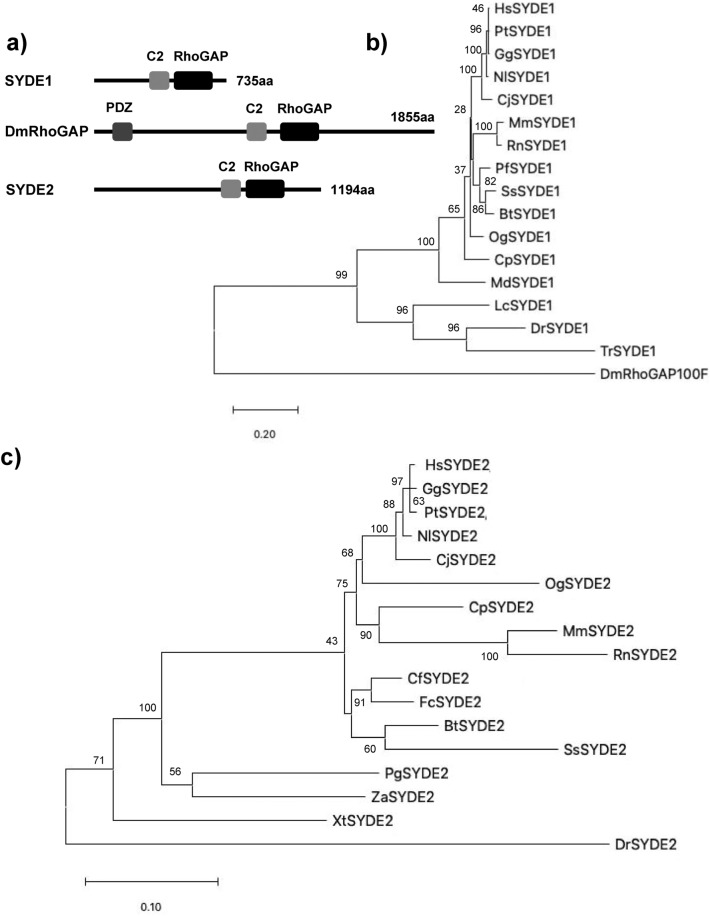
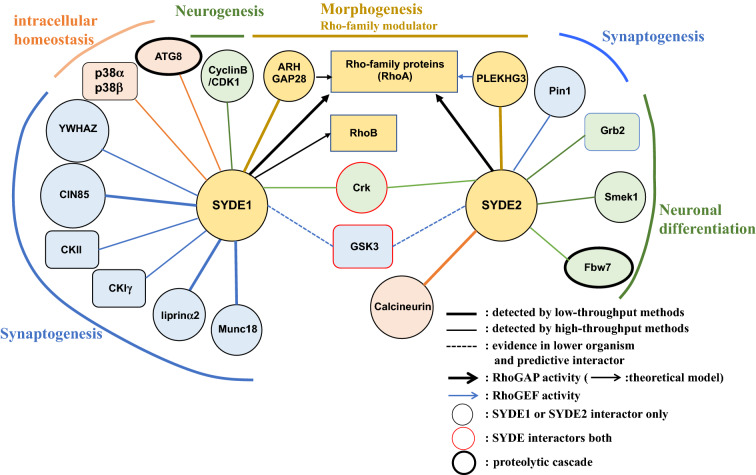
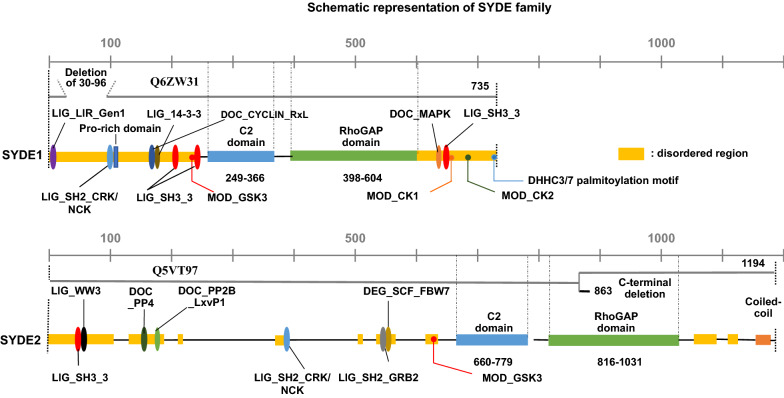
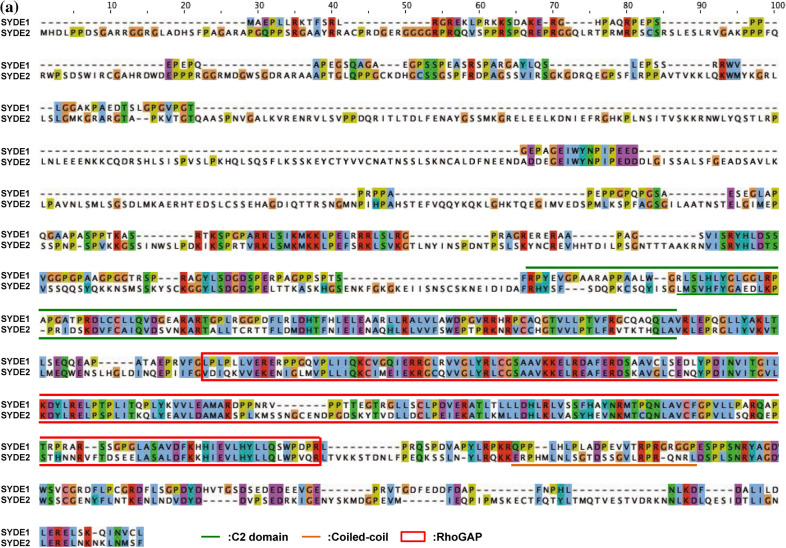
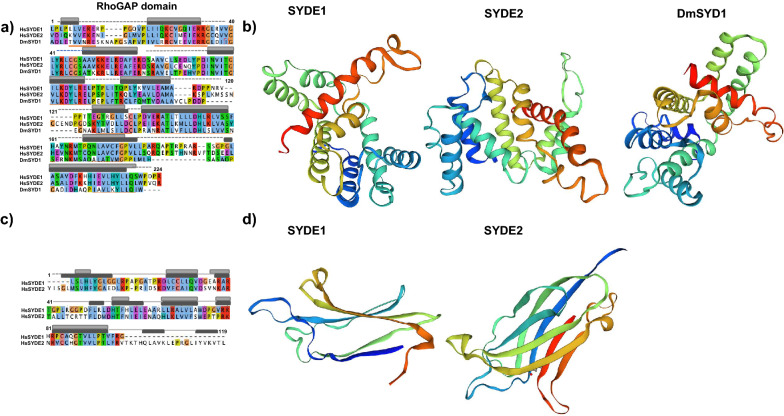
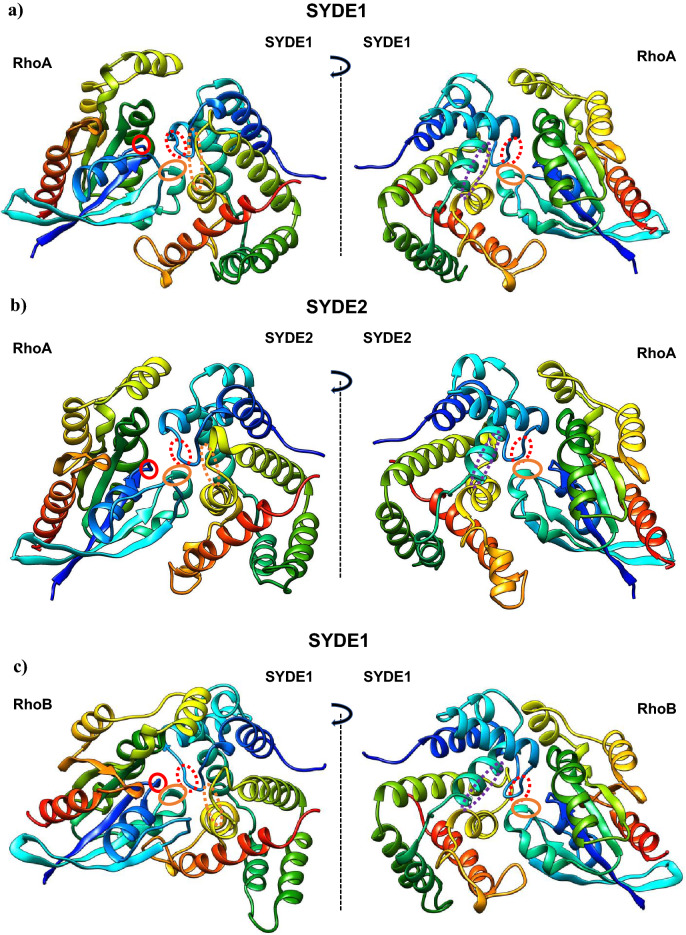
Recent investigations of neurological developmental disorders have revealed the Rho-family modulators such as Syde and its interactors as the candidate genes. Although the mammalian Syde proteins are reported to possess GTPase-accelerating activity for RhoA-family proteins, diverse species-specific substrate selectivities and binding partners have been described, presumably based on their evolutionary variance in the molecular organization. A comprehensive in silico analysis of Syde family proteins was performed to elucidate their molecular functions and neurodevelopmental networks. Predicted structural modeling of the RhoGAP domain may account for the molecular constraints to substrate specificity among Rho-family proteins. Deducing conserved binding motifs can extend the Syde interaction network and highlight diverse but Syde isoform-specific signaling pathways in neuronal homeostasis, differentiation, and synaptic plasticity from novel aspects of post-translational modification and proteolysis.
近年来,对神经发育障碍的研究揭示了 Rho 家族调节剂(如 Syde 及其相互作用蛋白)是候选基因。尽管哺乳动物 Syde 蛋白被报道具有 RhoA 家族蛋白的 GTP 酶加速活性,但已经描述了不同物种特异性的底物选择性和结合伴侣,这可能基于它们在分子组织上的进化差异。对 Syde 家族蛋白进行了全面的计算机分析,以阐明其分子功能和神经发育网络。RhoGAP 结构域的预测结构建模可以解释 Rho 家族蛋白中底物特异性的分子限制。推断保守的结合基序可以扩展 Syde 相互作用网络,并从翻译后修饰和蛋白水解的新方面强调神经元内稳态、分化和突触可塑性中的不同但 Syde 同工型特异性信号通路。