Graduate School of Life and Environmental Sciences, Osaka Prefecture University, Sakai, 599-8531, Japan.
Yokohama Research Center, Nichia Corporation, Yokohama, 221-0022, Japan.
Sci Rep. 2022 Mar 12;12(1):4319. doi: 10.1038/s41598-022-08331-9.
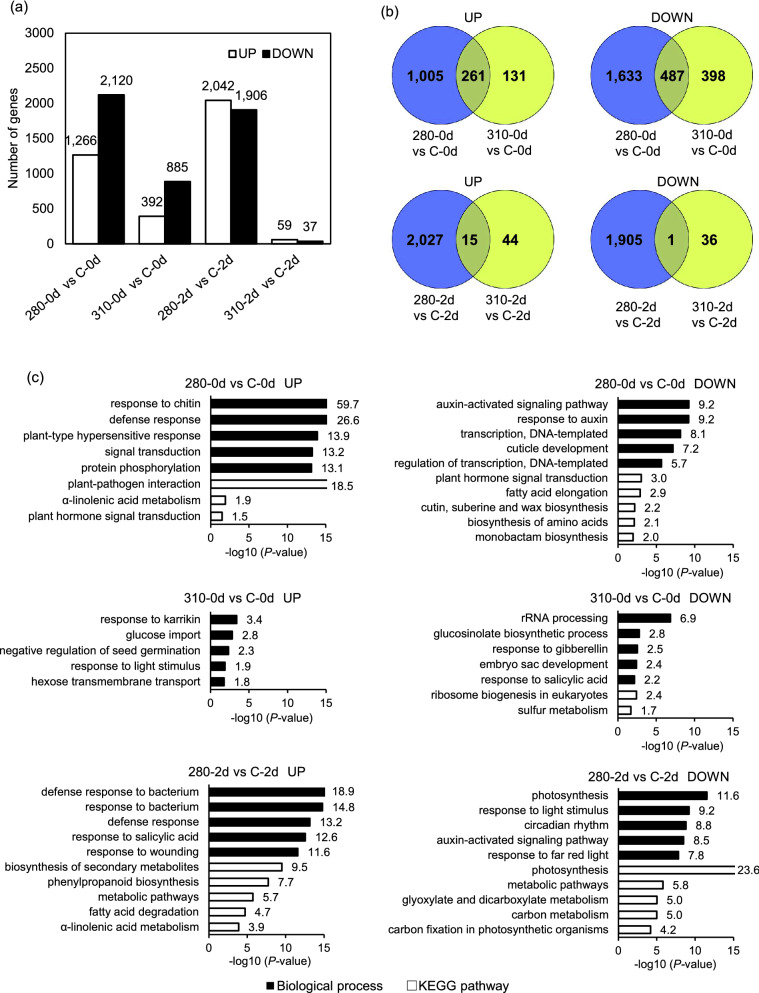
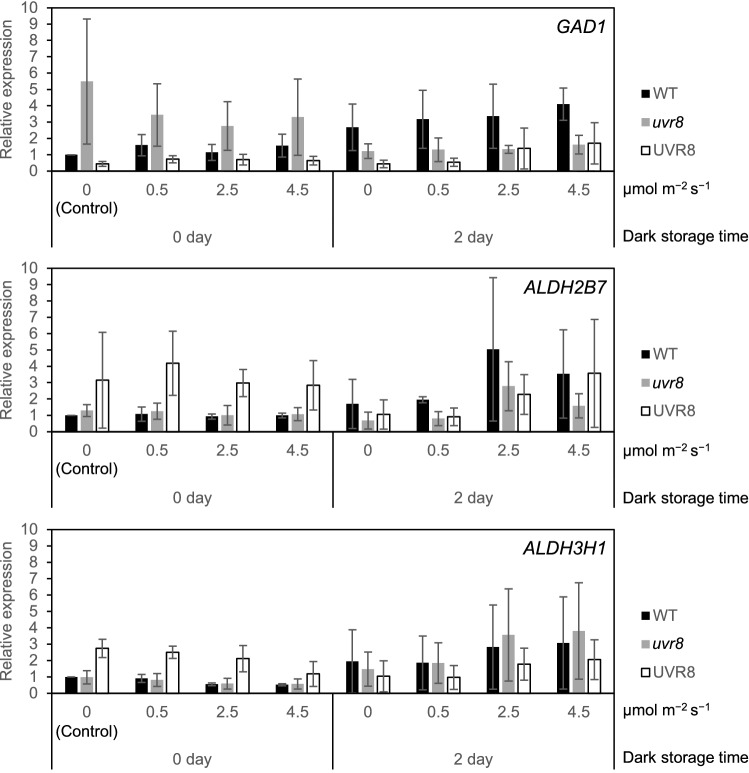
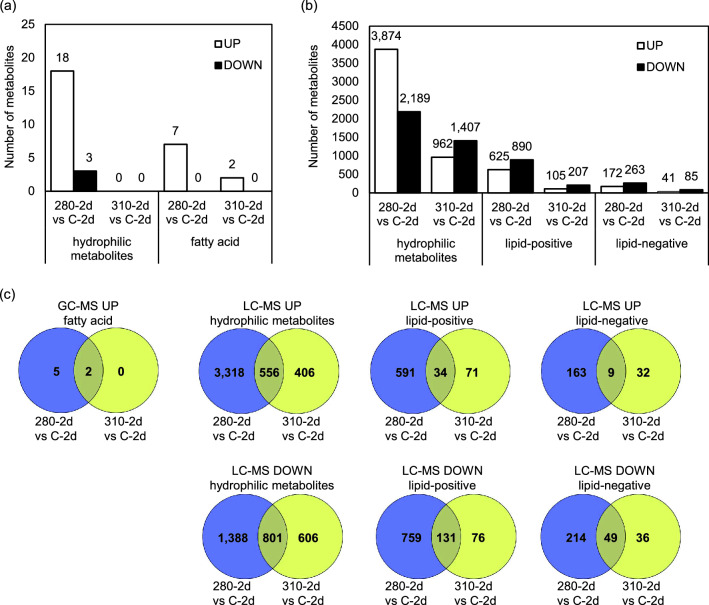
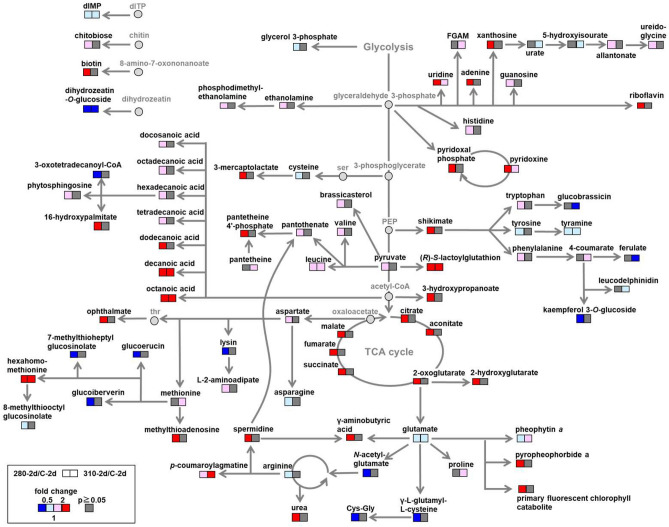
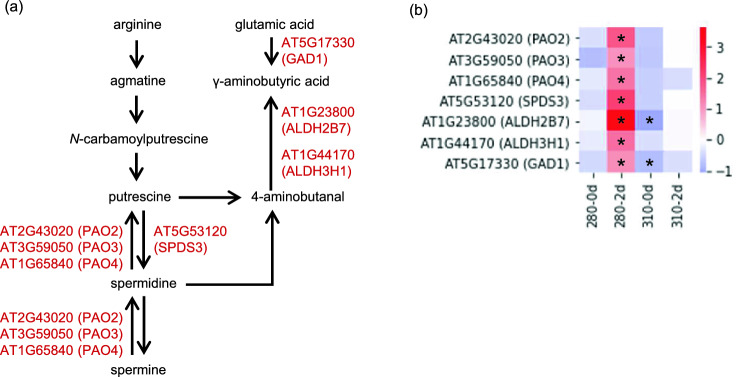
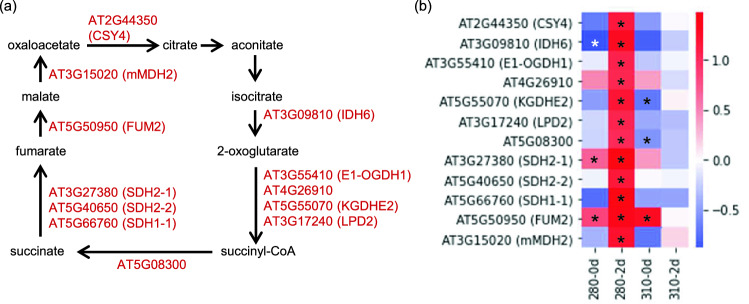
In plants, the UV-B photoreceptor UV RESISTANCE LOCUS8 (UVR8) perceives UV-B and induces UV-B responses. UVR8 absorbs a range of UV-B (260-335 nm). However, the responsiveness of plants to each UV-B wavelength has not been intensively studied so far. Here, we performed transcriptome and metabolome analyses of Arabidopsis using UV light emitting diodes (LEDs) with peak wavelengths of 280 and 310 nm to investigate the differences in the wavelength-specific UV-B responses. Irradiation with both UV-LEDs induced gene expression of the transcription factor ELONGATED HYPOCOTYL 5 (HY5), which has a central role in the UVR8 signaling pathway. However, the overall transcriptomic and metabolic responses to 280 and 310 nm UV-LED irradiation were different. Most of the known UV-B-responsive genes, such as defense-related genes, responded only to 280 nm UV-LED irradiation. Lipids, polyamines and organic acids were the metabolites most affected by 280 nm UV-LED irradiation, whereas the effect of 310 nm UV-LED irradiation on the metabolome was considerably less. Enzymatic genes involved in the phenylpropanoid pathway upstream in anthocyanin biosynthesis were up-regulated only by 280 nm UV-LED irradiation. These results revealed that the responsivenesses of Arabidopsis to 280 and 310 nm UV-B were significantly different, suggesting that UV-B signaling is mediated by more complex pathways than the current model.
在植物中,UV-B 光受体 UV 抗性位点 8(UVR8)感知 UV-B 并诱导 UV-B 反应。UVR8 吸收一系列 UV-B(260-335nm)。然而,到目前为止,植物对每种 UV-B 波长的反应还没有得到深入研究。在这里,我们使用峰值波长为 280nm 和 310nm 的紫外发光二极管(UV-LED)对拟南芥进行了转录组和代谢组分析,以研究波长特异性 UV-B 反应的差异。两种 UV-LED 辐射均诱导转录因子 ELONGATED HYPOCOTYL 5(HY5)的基因表达,HY5 在 UVR8 信号通路中起核心作用。然而,对 280nm 和 310nm UV-LED 辐射的整体转录组和代谢反应是不同的。大多数已知的 UV-B 响应基因,如防御相关基因,仅对 280nm UV-LED 辐射有反应。脂质、多胺和有机酸是受 280nm UV-LED 辐射影响最大的代谢物,而 310nm UV-LED 辐射对代谢组的影响要小得多。参与类黄酮生物合成中苯丙烷途径上游的酶基因仅受 280nm UV-LED 辐射上调。这些结果表明,拟南芥对 280nm 和 310nm UV-B 的反应明显不同,表明 UV-B 信号是由比当前模型更复杂的途径介导的。