Lu Yu-Jie, Gong Yang, Li Wen-Jing, Zhao Chen-Yi, Guo Feng
Department of Oncology, Suzhou Municipal Hospital, The Affiliated Suzhou Hospital of Nanjing Medical University, Suzhou, China.
Department of Clinical Laboratory, Suzhou Municipal Hospital, The Affiliated Suzhou Hospital of Nanjing Medical University, Suzhou, China.
Ann Transl Med. 2022 Feb;10(4):184. doi: 10.21037/atm-22-479.
Breast cancer (BRCA) is the most common malignancy with high heterogeneity in women, and the prognostic prediction for BRCA has remained poor. Ferroptosis, a recently identified iron-dependent form of programmed cell death, plays a significant role in BRCA treatment. Some BRCA cell lines are proven to be sensitive to ferroptosis, and some ferroptosis-related genes have been identified as divers or suppressors in the progress of BRCA. This study aimed to explore the prognostic value of ferroptosis-related genes in BRCA.
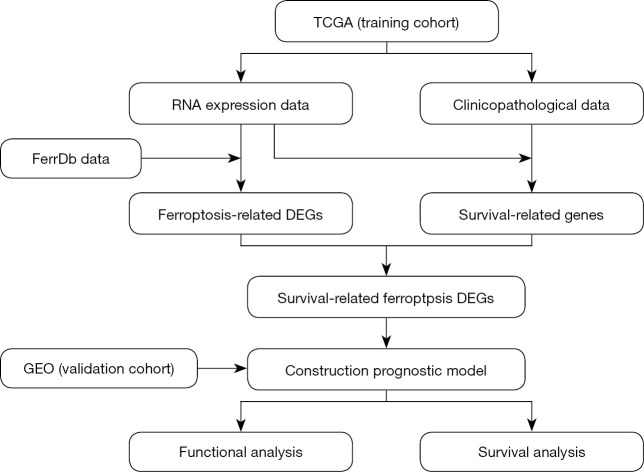
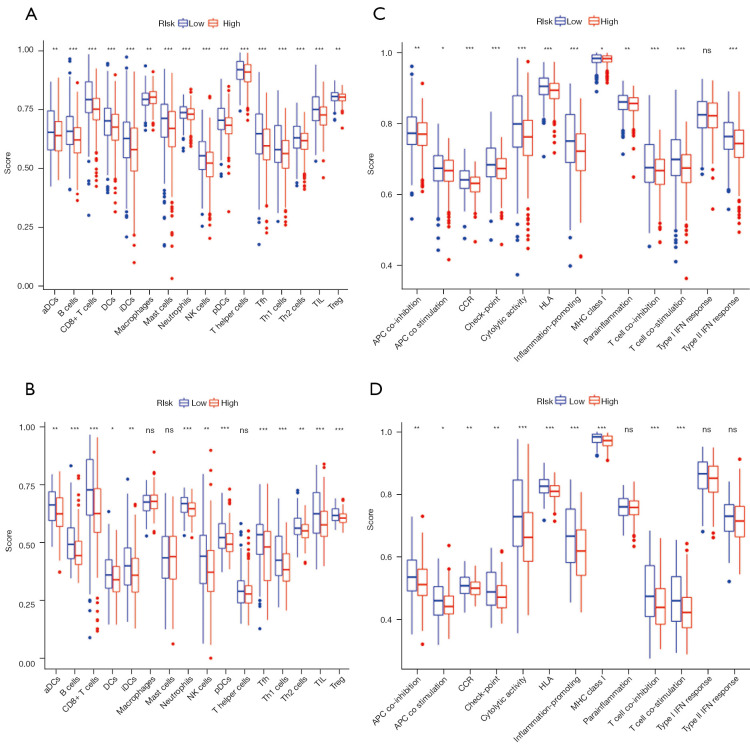
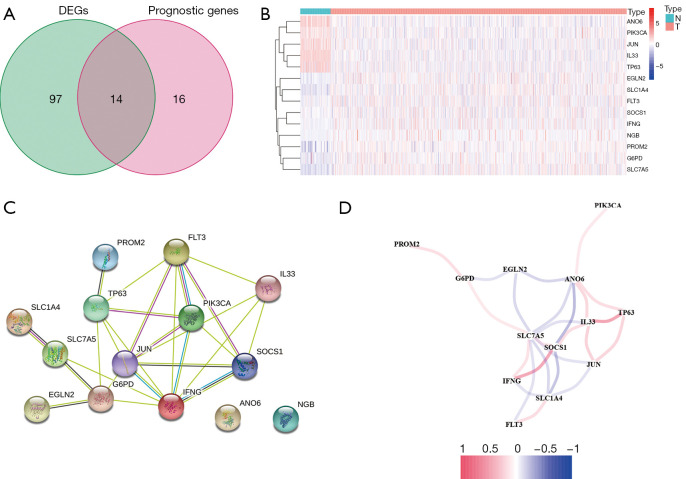
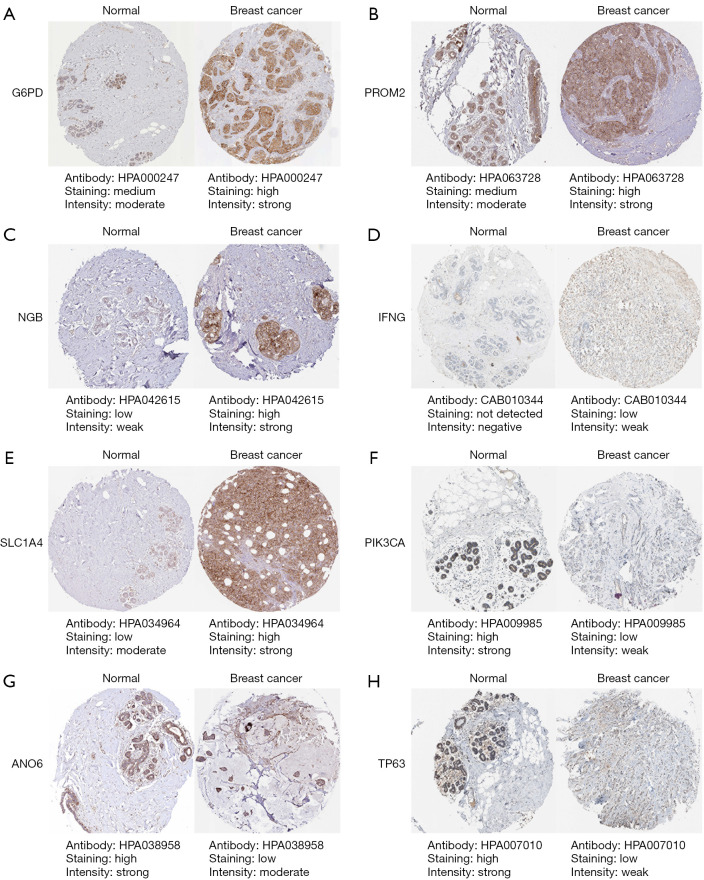
A ferroptosis-related gene list, messenger RNA (mRNA) gene expression of BRCA patients, and corresponding clinicopathological data were collected from public databases. The patients of the Cancer Genome Atlas (TCGA) were identified as the training cohort, and the ones of the Gene Expression Omnibus (GEO) were looked as the validation cohort. Univariate Cox regression analysis was utilized to identify prognostic ferroptosis-related genes, and subsequent multivariate analysis further screened out important genes to establish a prognostic model. Receiver operating characteristic (ROC) curves were used to validate the model in both internal and external cohorts. Functional analysis was generated to evaluate the potential correlation between tumor immunity and ferroptosis-related genes in BRCA.
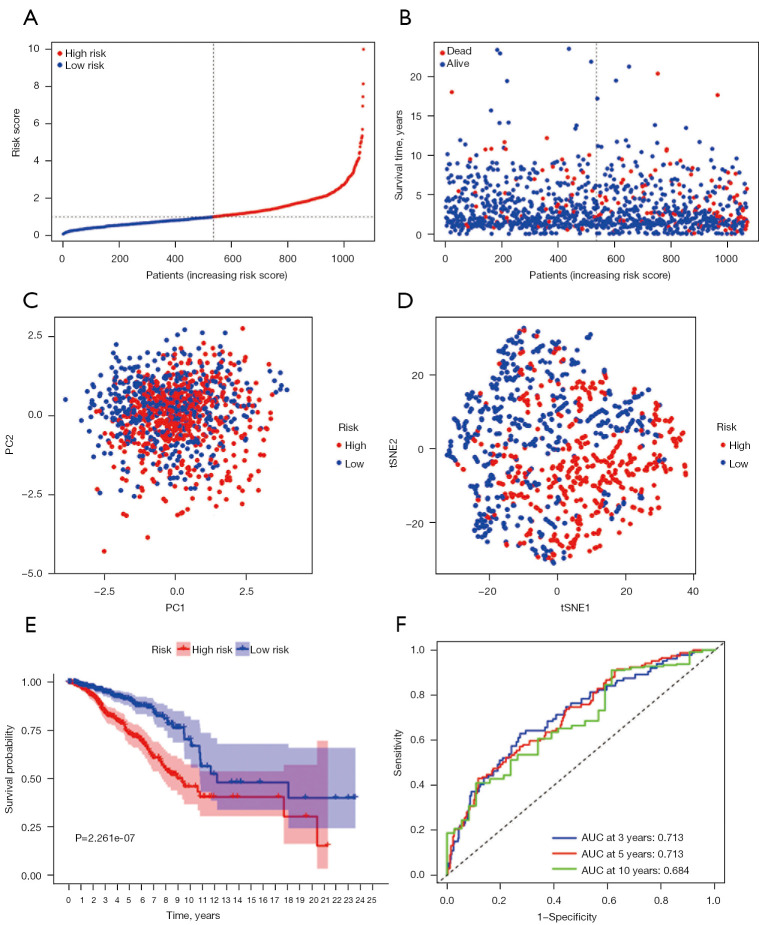
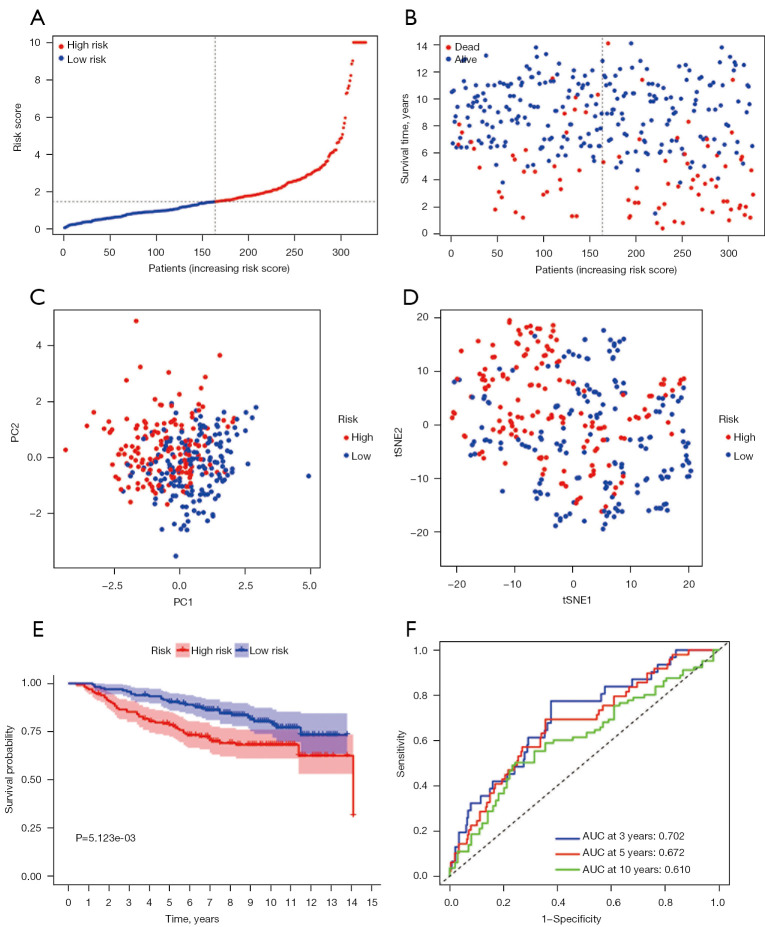
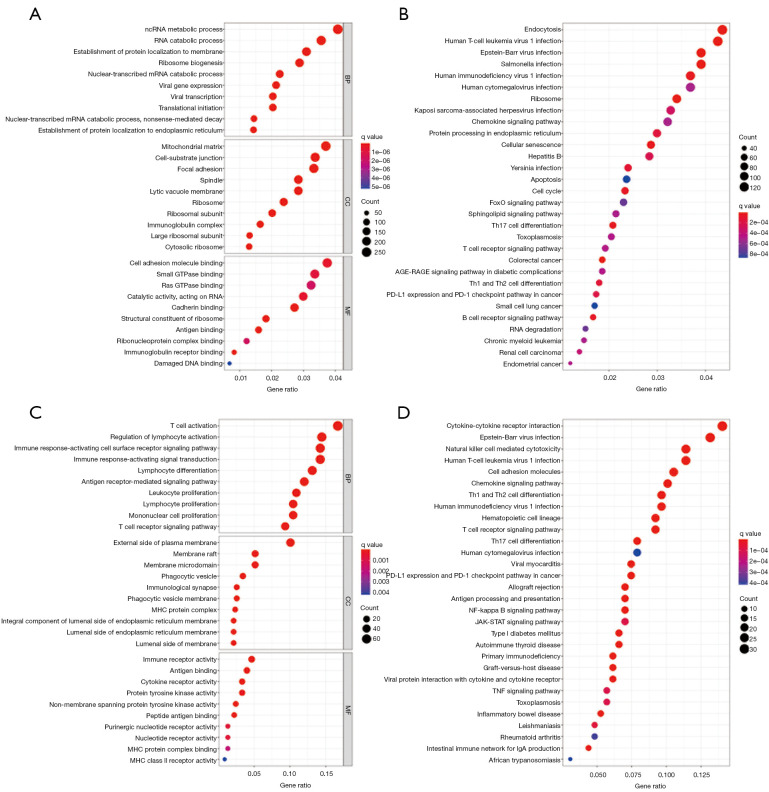
A ferroptosis-related gene signature stratifying patients into 2 risk score groups was established based on the TCGA cohort, and validated in the GEO cohort. Patients with lower risk scores had better overall survival (OS) compared to those with higher risk scores (P<0.001, TCGA cohort; P<0.05, GEO cohort). The risk score was independently associated with the OS of BRCA patients (P<0.001, TCGA cohort; P<0.05, GEO cohort). The area under the curves (AUCs) of the model in the training and validation cohorts were all around 0.7. Immune-related biological pathways and immune status were significantly different between the 2 divided risk groups.
The novel prognostic model composed of 9 ferroptosis-related genes accurately predicts the survival of BRCA patients. It might provide a new sight for ferroptosis-related BRCA therapy.
乳腺癌(BRCA)是女性中最常见且异质性高的恶性肿瘤,对BRCA的预后预测一直较差。铁死亡是最近发现的一种铁依赖性程序性细胞死亡形式,在BRCA治疗中起重要作用。一些BRCA细胞系被证明对铁死亡敏感,并且一些铁死亡相关基因在BRCA进展中已被鉴定为驱动基因或抑制基因。本研究旨在探讨铁死亡相关基因在BRCA中的预后价值。
从公共数据库收集铁死亡相关基因列表、BRCA患者的信使核糖核酸(mRNA)基因表达及相应的临床病理数据。将癌症基因组图谱(TCGA)的患者确定为训练队列,基因表达综合数据库(GEO)的患者作为验证队列。采用单因素Cox回归分析确定预后铁死亡相关基因,随后的多因素分析进一步筛选出重要基因以建立预后模型。采用受试者工作特征(ROC)曲线在内部和外部队列中验证该模型。进行功能分析以评估BRCA中肿瘤免疫与铁死亡相关基因之间的潜在相关性。
基于TCGA队列建立了一个将患者分为两个风险评分组的铁死亡相关基因特征,并在GEO队列中进行了验证。与高风险评分患者相比,低风险评分患者的总生存期(OS)更好(P<0.001,TCGA队列;P<0.05,GEO队列)。风险评分与BRCA患者的OS独立相关(P<0.001,TCGA队列;P<0.05,GEO队列)。训练和验证队列中模型的曲线下面积(AUC)均约为0.7。两个划分的风险组之间免疫相关生物学途径和免疫状态存在显著差异。
由9个铁死亡相关基因组成的新型预后模型准确预测了BRCA患者的生存情况。它可能为与铁死亡相关的BRCA治疗提供新的视角。