Sharma Swati, Mishra Aastha, Ashraf Zahid
Deptartment of Biotechnology, Jamia Millia Islamia, New Delhi, India.
CSIR-Institute of Genomics and Integrative Biology, Delhi, India.
TH Open. 2022 Mar 10;6(1):e70-e79. doi: 10.1055/s-0042-1744185. eCollection 2022 Jan.
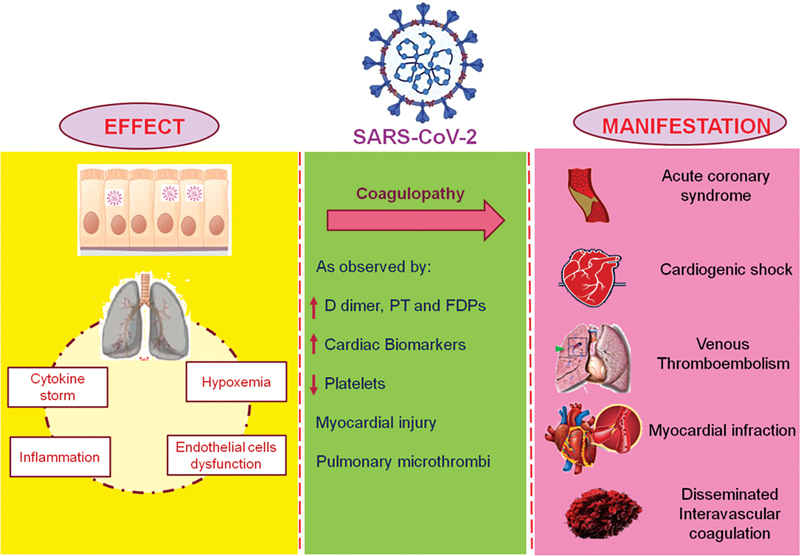
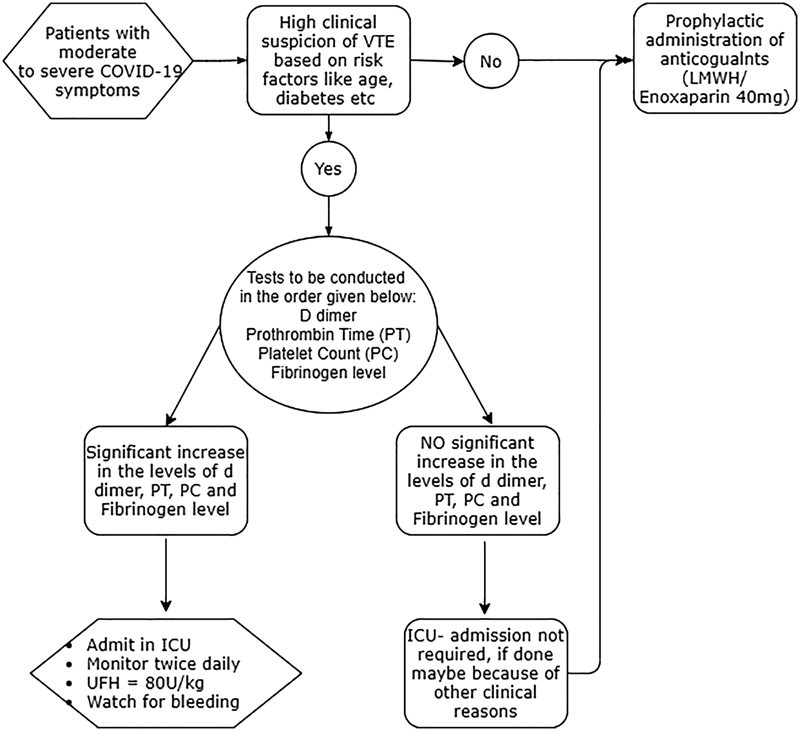
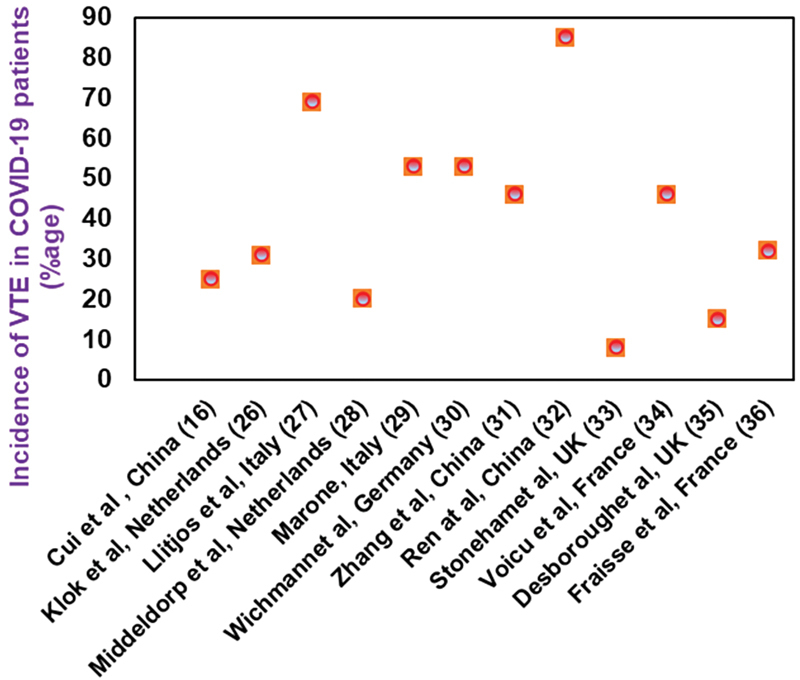
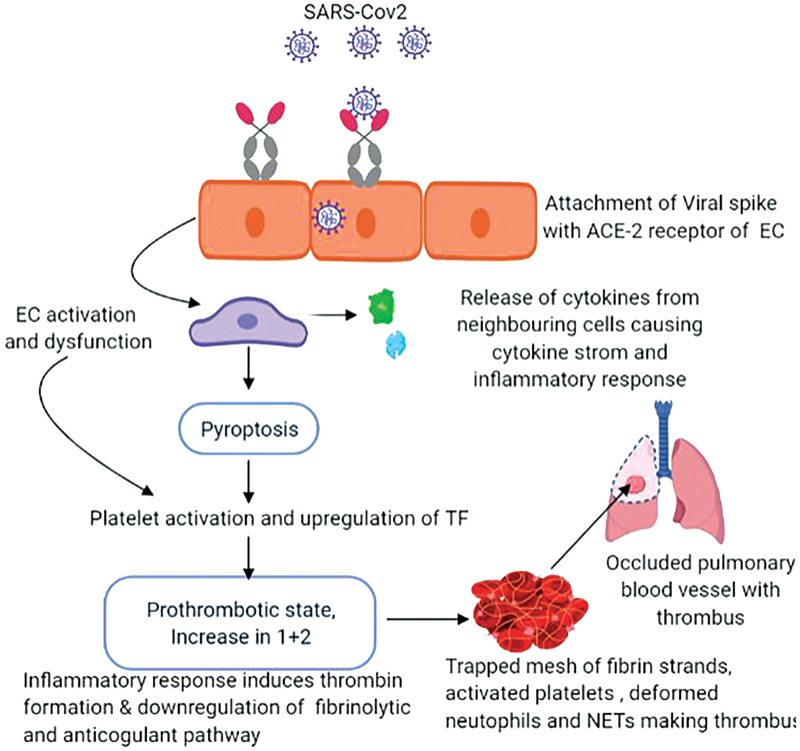
Coronavirus disease 2019 (COVID-19) is caused by the severe acute respiratory syndrome coronavirus 2 (SARS-CoV-2) and may result in an overactive coagulative system, thereby resulting in serious cardiovascular consequences in critically affected patients. The respiratory tract is a primary target for COVID-19 infection, which is manifested as acute lung injury in the most severe form of the viral infection, leading to respiratory failure. A proportion of infected patients may progress to serious systemic disease including dysfunction of multiple organs, acute respiratory distress syndrome (ARDS), and coagulation abnormalities, all of which are associated with increased mortality, additionally depending on age and compromised immunity. Coagulation abnormalities associated with COVID-19 mimic other systemic coagulopathies otherwise involved in other severe infections, such as disseminated intravascular coagulation (DIC) and may be termed COVID-19 induced coagulopathy (CIC). There is substantial evidence that patients with severe COVID-19 exhibiting CIC can develop venous and arterial thromboembolic complications. In the initial stages of CIC, significant elevation of D-dimer and fibrin/fibrinogen degradation products is observed. Alteration in prothrombin time, activated partial thromboplastin time, and platelet counts are less common in the early phase of the disease. In patients admitted to intensive care units (ICUs), coagulation test screening involving the measurement of D-dimer and fibrinogen levels, has been recommended. Prior established protocols for thromboembolic prophylaxis are also followed for CIC, including the use of heparin and other standard supportive care measures. In the present review, we summarize the characteristics of CIC and its implications for thrombosis, clinical findings of coagulation parameters in SARS-CoV-2 infected patients with incidences of thromboembolic events and plausible therapeutic measures.
2019冠状病毒病(COVID-19)由严重急性呼吸综合征冠状病毒2(SARS-CoV-2)引起,可能导致凝血系统过度活跃,从而在重症患者中引发严重的心血管后果。呼吸道是COVID-19感染的主要靶点,在最严重的病毒感染形式中表现为急性肺损伤,导致呼吸衰竭。一部分感染患者可能进展为严重的全身性疾病,包括多器官功能障碍、急性呼吸窘迫综合征(ARDS)和凝血异常,所有这些都与死亡率增加相关,此外还取决于年龄和免疫功能受损情况。与COVID-19相关的凝血异常类似于其他严重感染中涉及的其他全身性凝血病,如弥散性血管内凝血(DIC),可称为COVID-19诱导的凝血病(CIC)。有大量证据表明,表现出CIC的重症COVID-19患者可发生静脉和动脉血栓栓塞并发症。在CIC的初始阶段,可观察到D-二聚体和纤维蛋白/纤维蛋白原降解产物显著升高。在疾病早期,凝血酶原时间、活化部分凝血活酶时间和血小板计数的改变较少见。对于入住重症监护病房(ICU)的患者,建议进行涉及D-二聚体和纤维蛋白原水平测量的凝血试验筛查。对于CIC,也遵循先前既定的血栓栓塞预防方案,包括使用肝素和其他标准支持性护理措施。在本综述中,我们总结了CIC的特征及其对血栓形成的影响、SARS-CoV-2感染患者凝血参数的临床发现、血栓栓塞事件的发生率以及合理的治疗措施。