Wang Shuying, Tan Jin, Miao Yuyang, Zhang Qiang
Department of Geriatrics, Tianjin Medical University General Hospital, Tianjin Geriatrics Institute, Tianjin, China.
Front Cell Dev Biol. 2022 Feb 25;10:848214. doi: 10.3389/fcell.2022.848214. eCollection 2022.
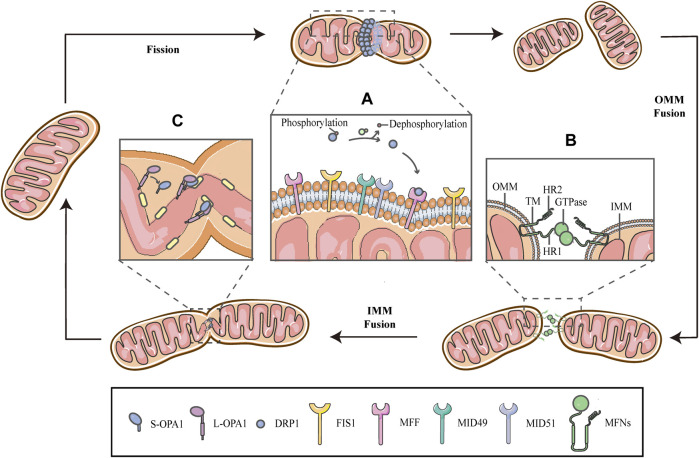
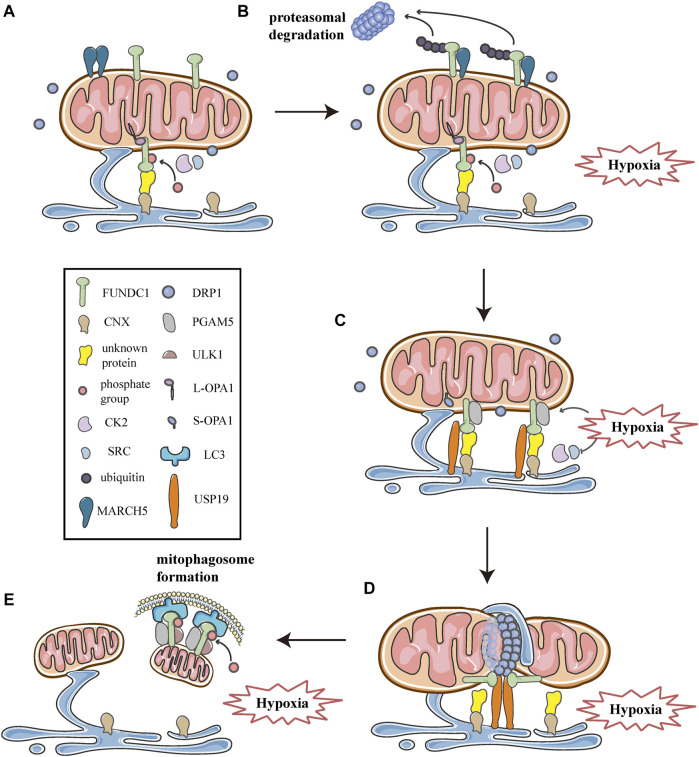
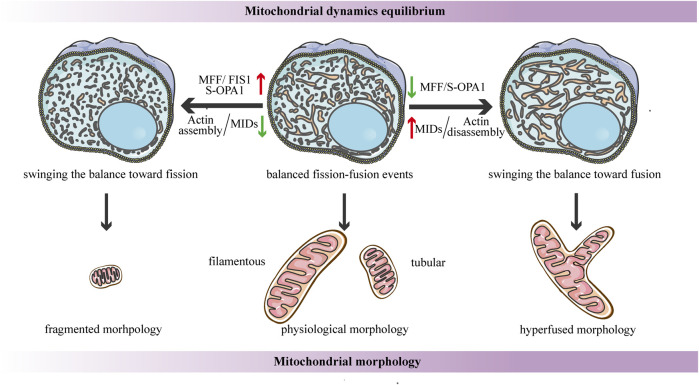
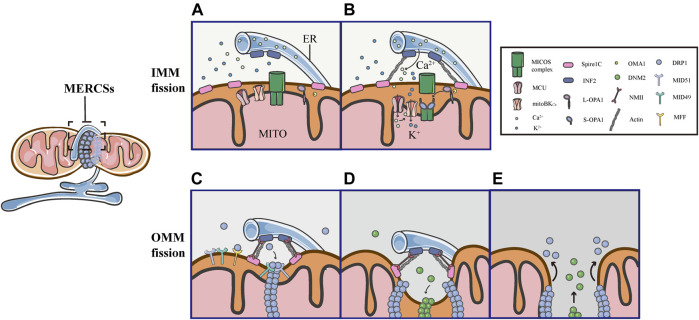
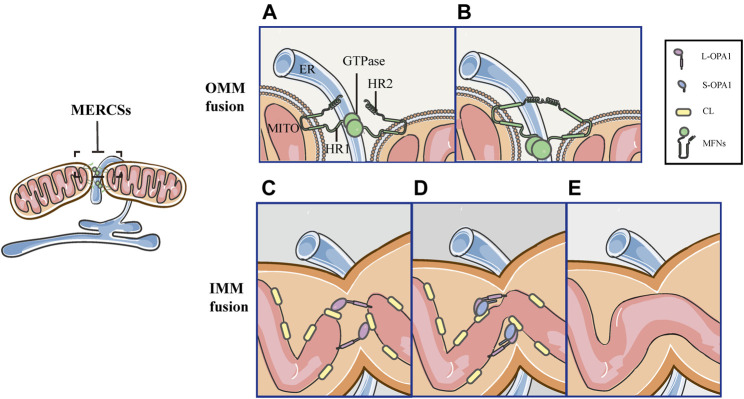
Mitochondria are double membrane organelles within eukaryotic cells, which act as cellular power houses, depending on the continuous availability of oxygen. Nevertheless, under hypoxia, metabolic disorders disturb the steady-state of mitochondrial network, which leads to dysfunction of mitochondria, producing a large amount of reactive oxygen species that cause further damage to cells. Compelling evidence suggests that the dysfunction of mitochondria under hypoxia is linked to a wide spectrum of human diseases, including obstructive sleep apnea, diabetes, cancer and cardiovascular disorders. The functional dichotomy of mitochondria instructs the necessity of a quality-control mechanism to ensure a requisite number of functional mitochondria that are present to fit cell needs. Mitochondrial dynamics plays a central role in monitoring the condition of mitochondrial quality. The fission-fusion cycle is regulated to attain a dynamic equilibrium under normal conditions, however, it is disrupted under hypoxia, resulting in mitochondrial fission and selective removal of impaired mitochondria by mitophagy. Current researches suggest that the molecular machinery underlying these well-orchestrated processes are coordinated at mitochondria-endoplasmic reticulum contact sites. Here, we establish a holistic understanding of how mitochondrial dynamics and mitophagy are regulated at mitochondria-endoplasmic reticulum contact sites under hypoxia.
线粒体是真核细胞内的双层膜细胞器,它们作为细胞的动力源,依赖于氧气的持续供应。然而,在缺氧条件下,代谢紊乱会扰乱线粒体网络的稳态,导致线粒体功能障碍,产生大量活性氧,进而对细胞造成进一步损伤。有力证据表明,缺氧条件下线粒体功能障碍与多种人类疾病有关,包括阻塞性睡眠呼吸暂停、糖尿病、癌症和心血管疾病。线粒体的功能二分法表明需要一种质量控制机制,以确保存在足够数量的功能性线粒体来满足细胞需求。线粒体动力学在监测线粒体质量状况方面起着核心作用。在正常条件下,裂变-融合循环受到调节以达到动态平衡,然而,在缺氧条件下它会被破坏,导致线粒体裂变,并通过线粒体自噬选择性清除受损的线粒体。目前的研究表明,这些精心编排的过程背后的分子机制在线粒体-内质网接触位点处得到协调。在此,我们全面了解了缺氧条件下线粒体-内质网接触位点处线粒体动力学和线粒体自噬是如何被调节的。