Wang Zhiguo, Lu Conghua, Zhang Kejun, Lin Caiyu, Wu Fang, Tang Xiaolin, Wu Di, Dou Yuanyao, Han Rui, Wang Yubo, Hou Chao, Ouyang Qin, Feng Mingxia, He Yong, Li Li
Department of Respiratory Disease, Daping Hospital, Third Military Medical University (Army Medical University), Chongqing, China.
Department of Outpatients, Daping Hospital, Third Military Medical University (Army Medical University), Chongqing, China.
Front Mol Biosci. 2022 Feb 23;9:780200. doi: 10.3389/fmolb.2022.780200. eCollection 2022.
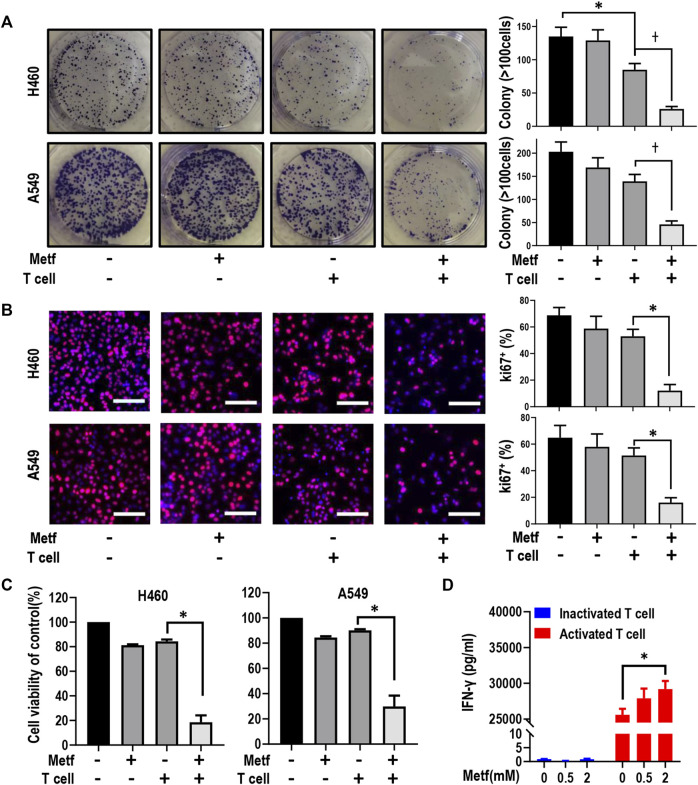
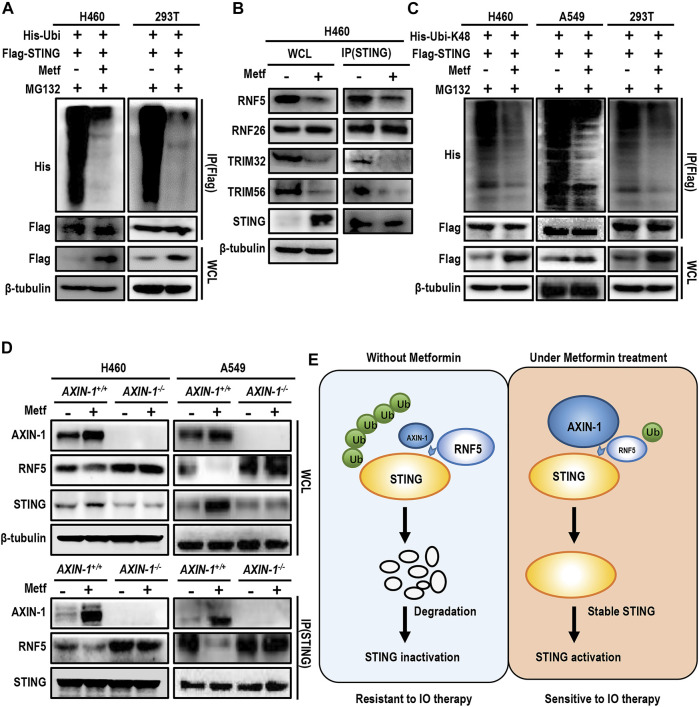
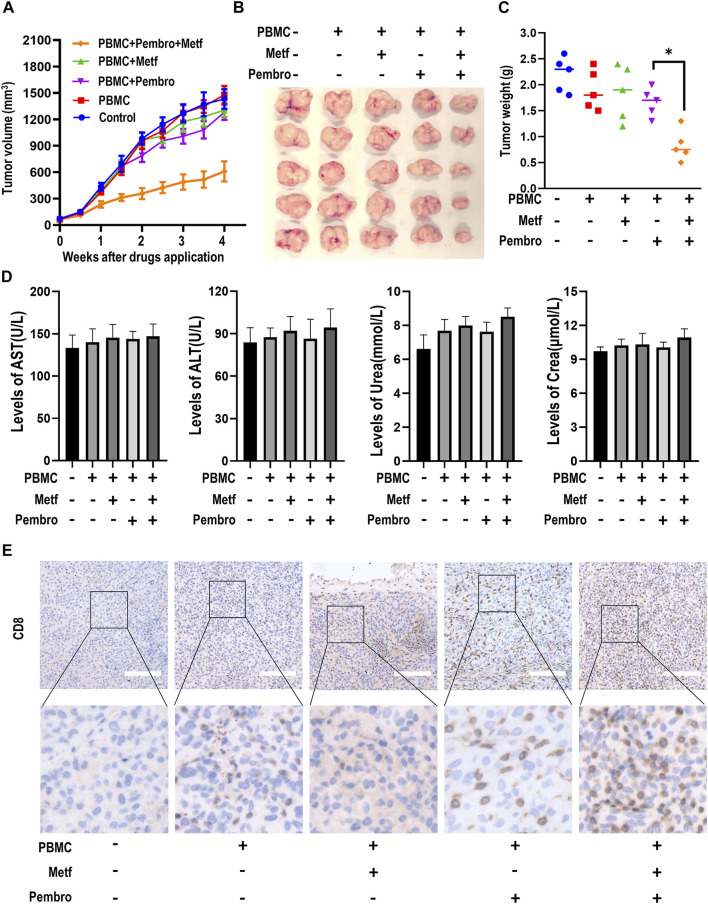
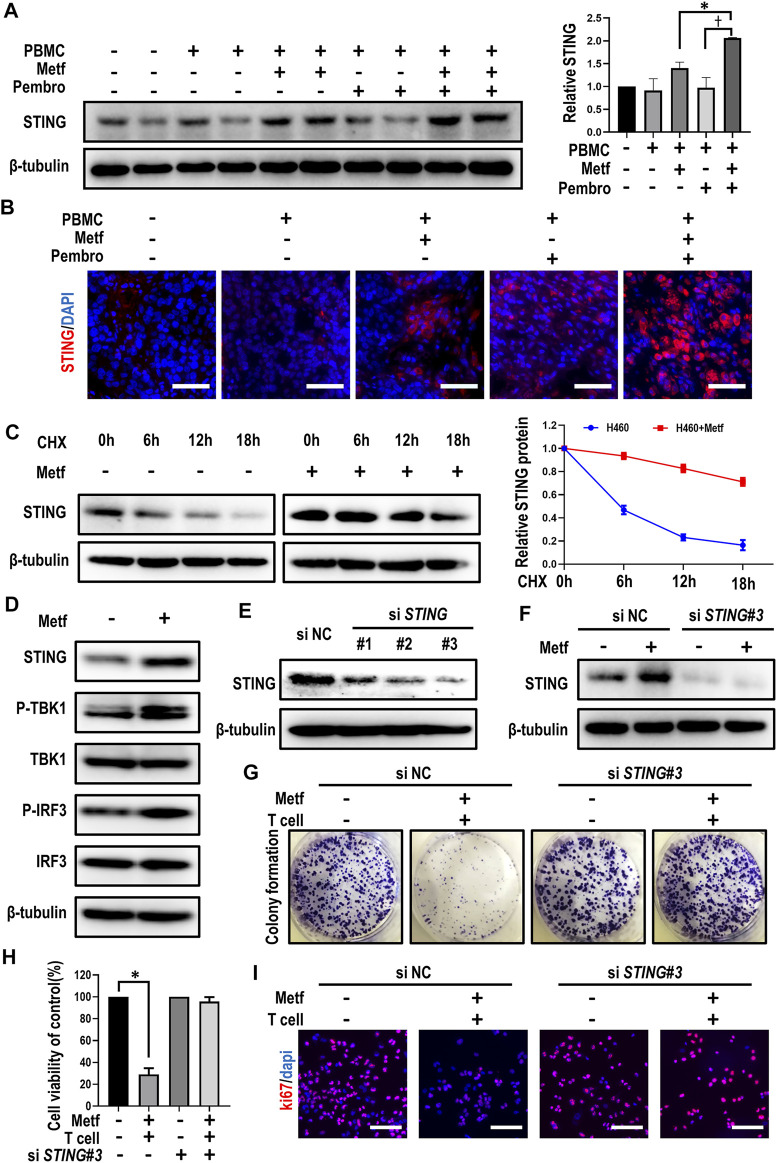
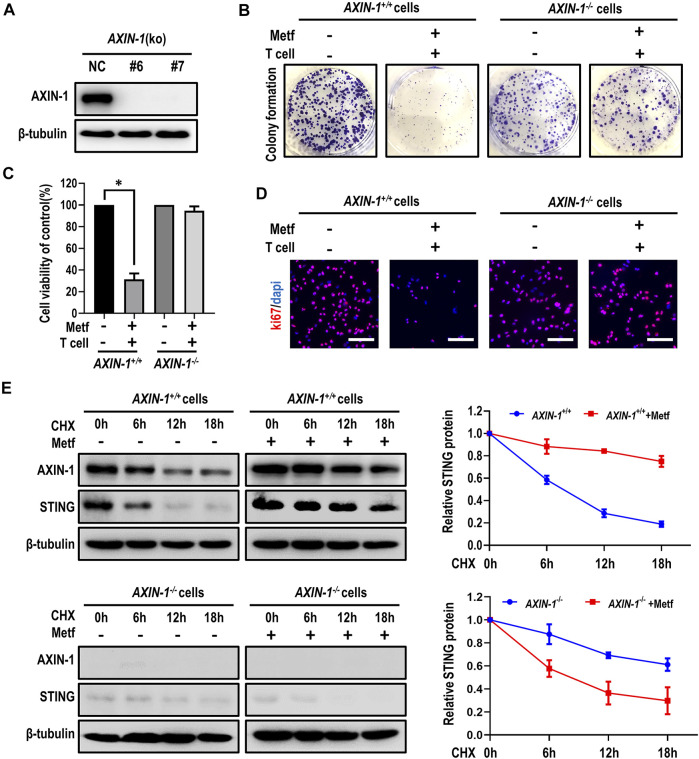
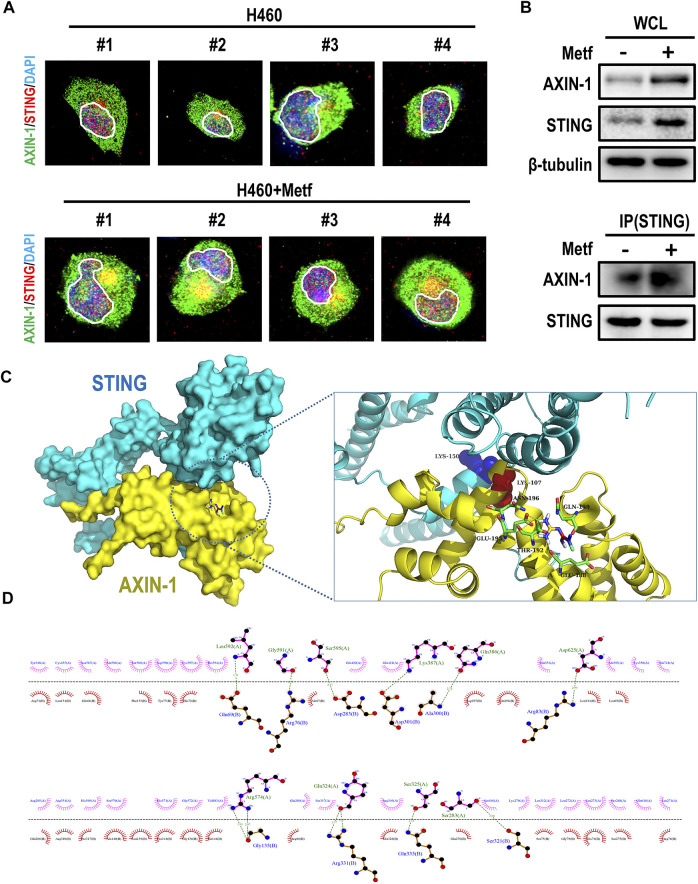
Non-small-cell lung cancer (NSCLC) with mutation showed primary resistance to immune checkpoint inhibitors (ICIs). The glucose-lowering drug metformin exerted anti-cancer effect and enhanced efficacy of chemotherapy in NSCLC with co-mutation, yet it is unknown whether metformin may enhance ICI efficacy in mutant NSCLC. We studied the impact of metformin on ICI efficacy in mutant NSCLC and using colony formation assay, cell viability assay, Ki67 staining, ELISA, CRISPR/Cas9-mediated knockout, and animal experiments. Through colony formation assay, Ki67 incorporation assay, and CCK-8 assay, we found that metformin significantly enhanced the killing of H460 cells and A549 cells by T cells. In NOD-SCID xenografts, metformin in combination with PD-1 inhibitor pembrolizumab effectively decreased tumor growth and increased infiltration of CD8 T cells. Metformin enhanced stabilization of STING and activation of its downstream signaling pathway. siRNA-mediated knockdown of abolished the effect of metformin on T cell-mediated killing of tumor cells. Next, we found that CRISPR/Cas9-mediated knockout of the scaffold protein AXIN-1 abolished the effect of metformin on T cell-mediated killing and STING stabilization. Immunoprecipitation and confocal macroscopy revealed that metformin enhanced the interaction and colocalization between AXIN-1 and STING. Protein-protein interaction modeling indicated that AXIN-1 may directly bind to STING at its K150 site. Next, we found that metformin decreased K48-linked ubiquitination of STING and inhibited the interaction of E3-ligand RNF5 and STING. Moreover, in H460 cells, metformin failed to alter the interaction of RNF5 and STING. Metformin combining PD-1 inhibitor enhanced anti-tumor efficacy in mutant lung cancer through inhibition of RNF5-mediated K48-linked ubiquitination of STING, which was dependent on AXIN-1.
携带 突变的非小细胞肺癌(NSCLC)对免疫检查点抑制剂(ICI)表现出原发性耐药。降糖药物二甲双胍在携带 共突变的NSCLC中发挥抗癌作用并增强化疗疗效,但二甲双胍是否能增强携带 突变的NSCLC中ICI的疗效尚不清楚。我们使用集落形成试验、细胞活力试验、Ki67染色、酶联免疫吸附测定(ELISA)、CRISPR/Cas9介导的基因敲除和动物实验,研究了二甲双胍对携带 突变的NSCLC中ICI疗效的影响。通过集落形成试验、Ki67掺入试验和CCK-8试验,我们发现二甲双胍显著增强了T细胞对H460细胞和A549细胞的杀伤作用。在NOD-SCID异种移植模型中,二甲双胍与PD-1抑制剂帕博利珠单抗联合使用可有效降低肿瘤生长并增加CD8 T细胞浸润。二甲双胍增强了干扰素基因刺激蛋白(STING)的稳定性并激活其下游信号通路。小干扰RNA(siRNA)介导的 敲低消除了二甲双胍对T细胞介导的肿瘤细胞杀伤作用。接下来,我们发现CRISPR/Cas9介导的支架蛋白AXIN-1基因敲除消除了二甲双胍对T细胞介导的杀伤作用和STING稳定性的影响。免疫沉淀和共聚焦显微镜检查显示,二甲双胍增强了AXIN-1与STING之间的相互作用和共定位。蛋白质-蛋白质相互作用建模表明,AXIN-1可能在其K150位点直接与STING结合。接下来,我们发现二甲双胍降低了STING的K48连接的泛素化,并抑制了E3连接酶RNF5与STING的相互作用。此外,在 H460细胞中,二甲双胍未能改变RNF5与STING的相互作用。二甲双胍联合PD-1抑制剂通过抑制RNF5介导的STING的K48连接的泛素化增强了携带 突变的肺癌的抗肿瘤疗效,这依赖于AXIN-1。