Lv Liting, Miao Qing, Zhan Sutong, Chen Peilin, Liu Wei, Lv Jiawen, Yan Wenjie, Wang Dong, Liu Hongbing, Yin Jie, Feng Jian, Song Yong, Ye Mingxiang, Lv Tangfeng
Department of Respiratory Medicine, Jinling Hospital, Nanjing Medical University, Nanjing, China.
Department of Oncology, Affiliated Hospital of Nantong University, Nantong, China.
J Immunother Cancer. 2024 Dec 18;12(12):e009444. doi: 10.1136/jitc-2024-009444.
Loss-of-function mutations of (, also termed as ()) are frequently detected in patients with non-small cell lung cancer (NSCLC). The mutant NSCLC was refractory to almost all the antitumor treatments, including programmed cell death protein 1 (PD-1)/programmed death-ligand 1 (PD-L1) blockade therapy. Unfortunately, mechanisms underlying resistance to immunotherapy are not fully understood. In this study, we deciphered how LKB1 regulated sensitivity to anti-PD-1/PD-L1 immunotherapy.
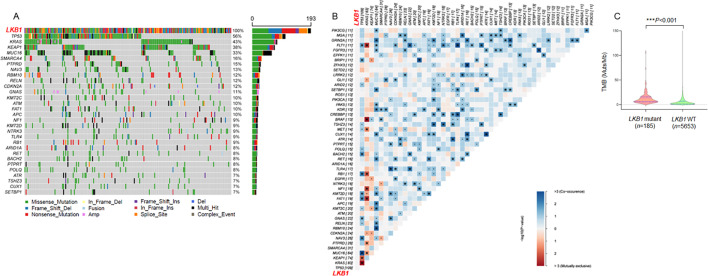
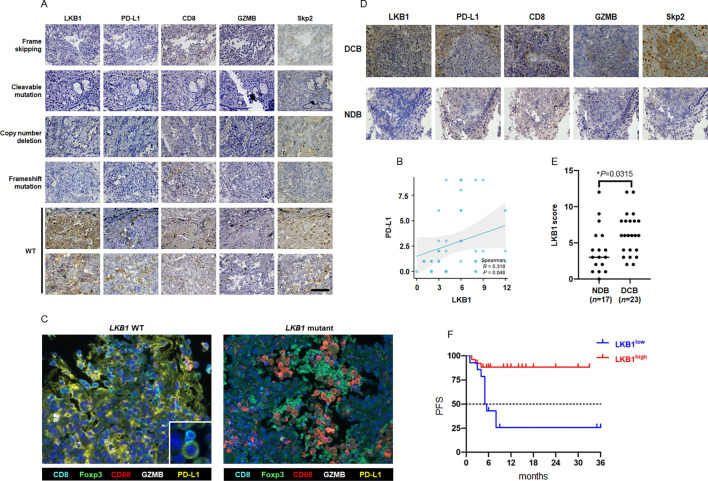
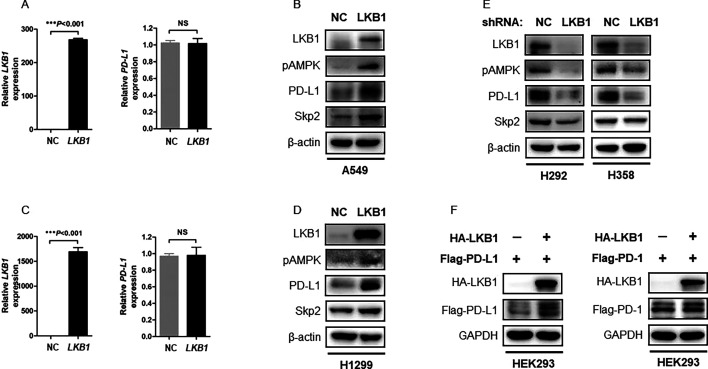
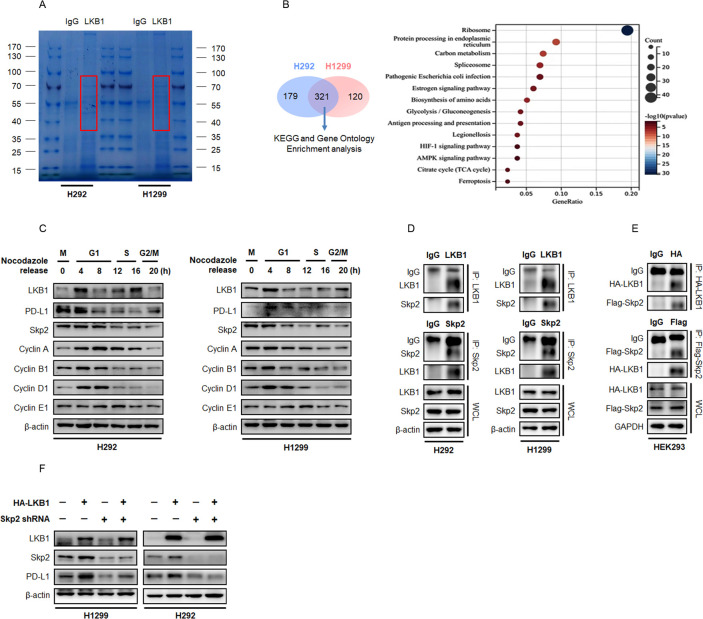
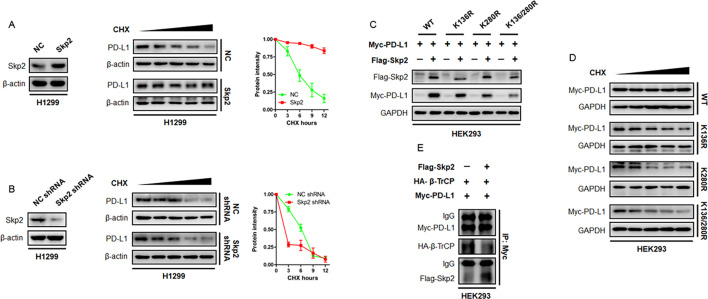
We investigated the mutational landscape of mutant NSCLC in next generation sequencing (NGS) data sets. Expression of LKB1, PD-L1 and S-phase kinase-associated protein 2 (Skp2) in NSCLC samples were assessed by immunohistochemistry (IHC). The tumor microenvironment (TME) profiling of wild type (WT) and mutant NSCLC was performed using fluorescent multiplex IHC. Mass spectrometry and enrichment analysis were used to identify LKB1 interacting proteins. Mechanistic pathways were explored by immunoblotting, ubiquitination assay, cycloheximide chase assay and immunoprecipitation assay.
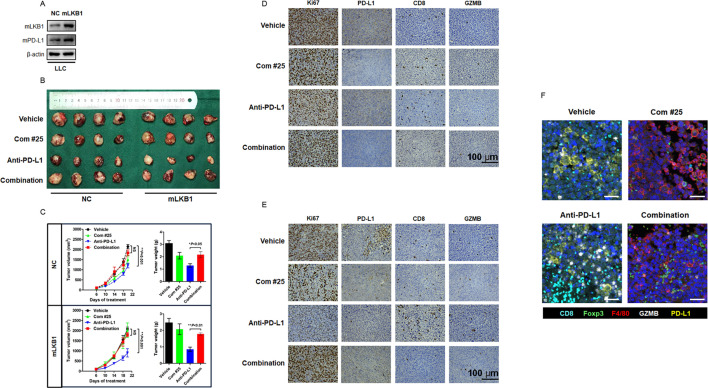
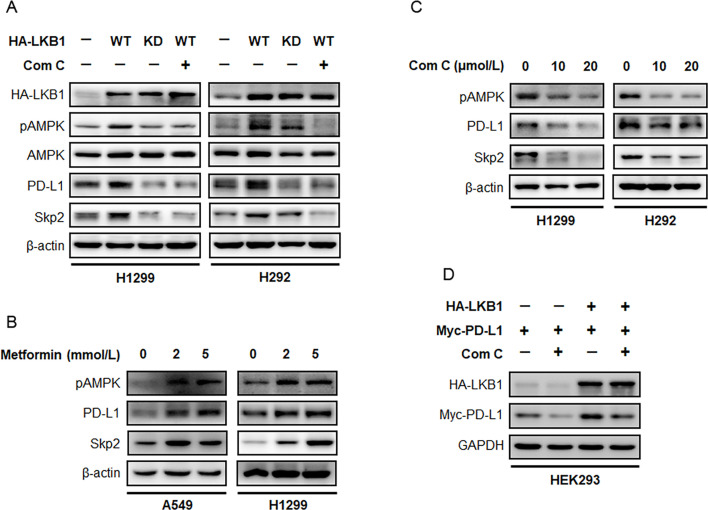
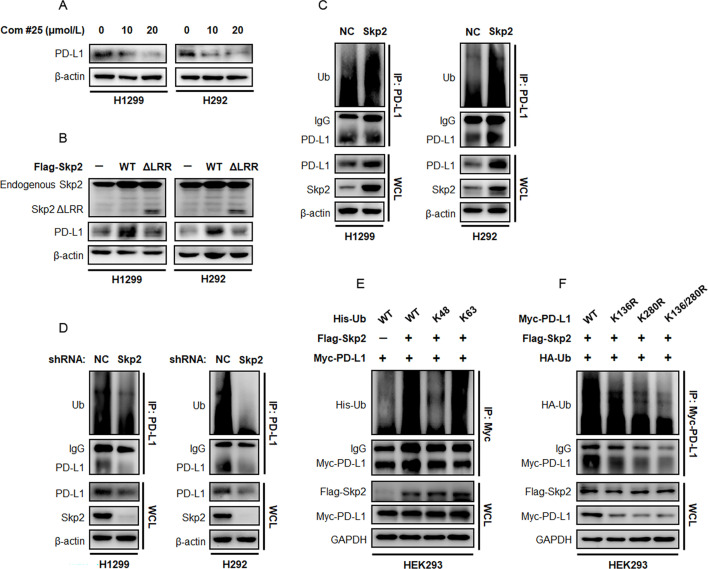
By using NGS data sets and histological approaches, we demonstrated that LKB1 status was positively associated with PD-L1 protein expression and conferred a T cell-enriched "hot" TME in NSCLC. Patients with good responses to anti-PD-1/PD-L1 immunotherapy possessed a high level of LKB1 and PD-L1. Skp2 emerged as the molecular hub connecting LKB1 and PD-L1, by which Skp2 catalyzed K63-linked polyubiquitination on K136 and K280 residues to stabilize PD-L1 protein. Inhibition of Skp2 expression by short hairpin RNA or its E3 ligase activity by compound #25 abrogated intact expression of PD-L1 in vitro and generated a T cell-excluded "cold" TME in vivo. Thus, the LKB1-Skp2-PD-L1 regulatory loop was crucial for retaining PD-L1 protein expression and manipulation of this pathway would be a feasible approach for TME remodeling.
LKB1 and Skp2 are required for intact PD-L1 protein expression and TME remodeling in NSCLC. Inhibition of Skp2 resulted in a conversion from "hot" TME to "cold" TME and abrogated therapeutic outcomes of immunotherapy. Screening LKB1 and Skp2 status would be helpful to select recipients who may benefit from anti-PD-1/PD-L1 immunotherapy.
在非小细胞肺癌(NSCLC)患者中经常检测到(,也称为())的功能丧失突变。携带该突变的NSCLC对几乎所有抗肿瘤治疗均耐药,包括程序性细胞死亡蛋白1(PD-1)/程序性死亡配体1(PD-L1)阻断疗法。不幸的是,免疫治疗耐药的潜在机制尚未完全阐明。在本研究中,我们解析了LKB1如何调节对抗PD-1/PD-L1免疫治疗的敏感性。
我们在下一代测序(NGS)数据集中研究了携带该突变的NSCLC的突变图谱。通过免疫组织化学(IHC)评估NSCLC样本中LKB1、PD-L1和S期激酶相关蛋白2(Skp2)的表达。使用荧光多重免疫组化对野生型(WT)和携带该突变的NSCLC的肿瘤微环境(TME)进行分析。采用质谱和富集分析来鉴定与LKB1相互作用的蛋白。通过免疫印迹、泛素化测定、放线菌酮追踪测定和免疫沉淀测定来探索作用机制途径。
通过使用NGS数据集和组织学方法,我们证明LKB1状态与PD-L1蛋白表达呈正相关,并在NSCLC中赋予富含T细胞的“热”TME。对抗PD-1/PD-L1免疫治疗反应良好的患者具有高水平的LKB1和PD-L1。Skp2成为连接LKB1和PD-L1的分子枢纽,通过它Skp2催化K136和K280残基上的K63连接的多聚泛素化以稳定PD-L1蛋白。通过短发夹RNA抑制Skp2表达或通过化合物#25抑制其E3连接酶活性可在体外消除PD-L1的完整表达,并在体内产生T细胞排除的“冷”TME。因此,LKB1-Skp2-PD-L1调节环对于维持PD-L1蛋白表达至关重要,操纵该途径将是TME重塑的可行方法。
LKB1和Skp2是NSCLC中完整的PD-L1蛋白表达和TME重塑所必需的。抑制Skp2导致从“热”TME转变为“冷”TME,并消除免疫治疗的疗效。筛查LKB1和Skp2状态将有助于选择可能从抗PD-1/PD-L1免疫治疗中获益的患者。