Yang Linqi, Zhang Wenqi, Li Meng, Dam Jinxi, Huang Kai, Wang Yihan, Qiu Zhicong, Sun Tao, Chen Pingping, Zhang Zhenduo, Zhang Wei
Department of Pharmacology, Hebei University of Chinese Medicine, Shijiazhuang, China.
Department of Hematology, The Fourth Hospital of Hebei Medical University, Shijiazhuang, China.
Front Genet. 2022 Feb 24;13:783016. doi: 10.3389/fgene.2022.783016. eCollection 2022.
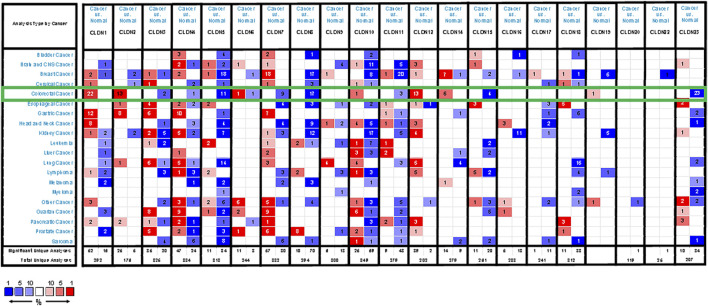
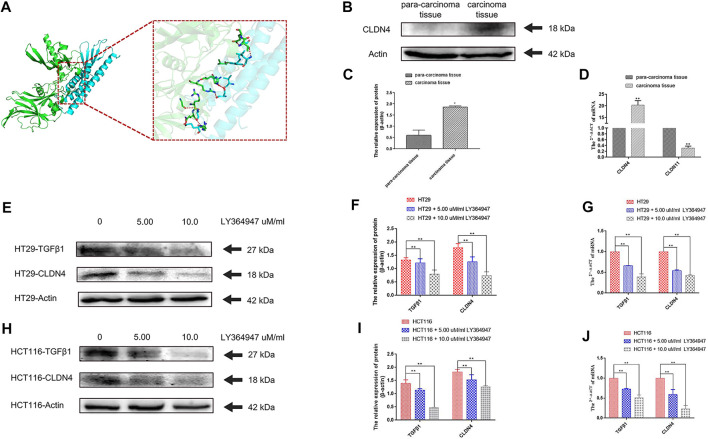
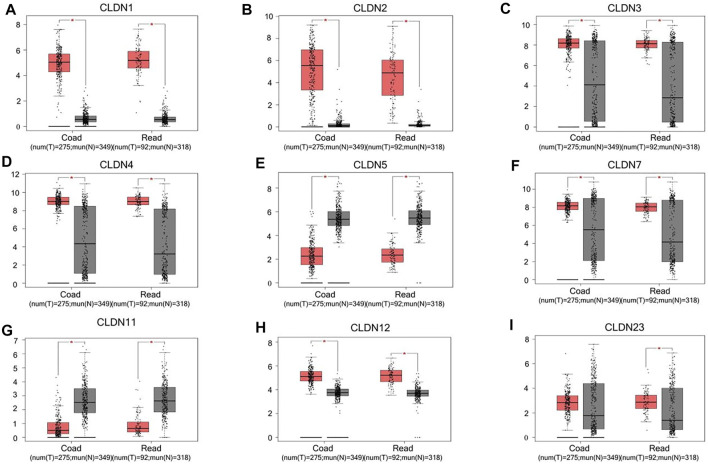
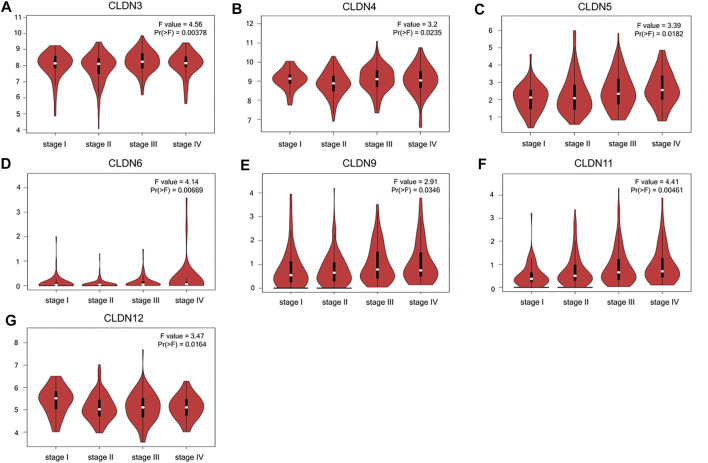
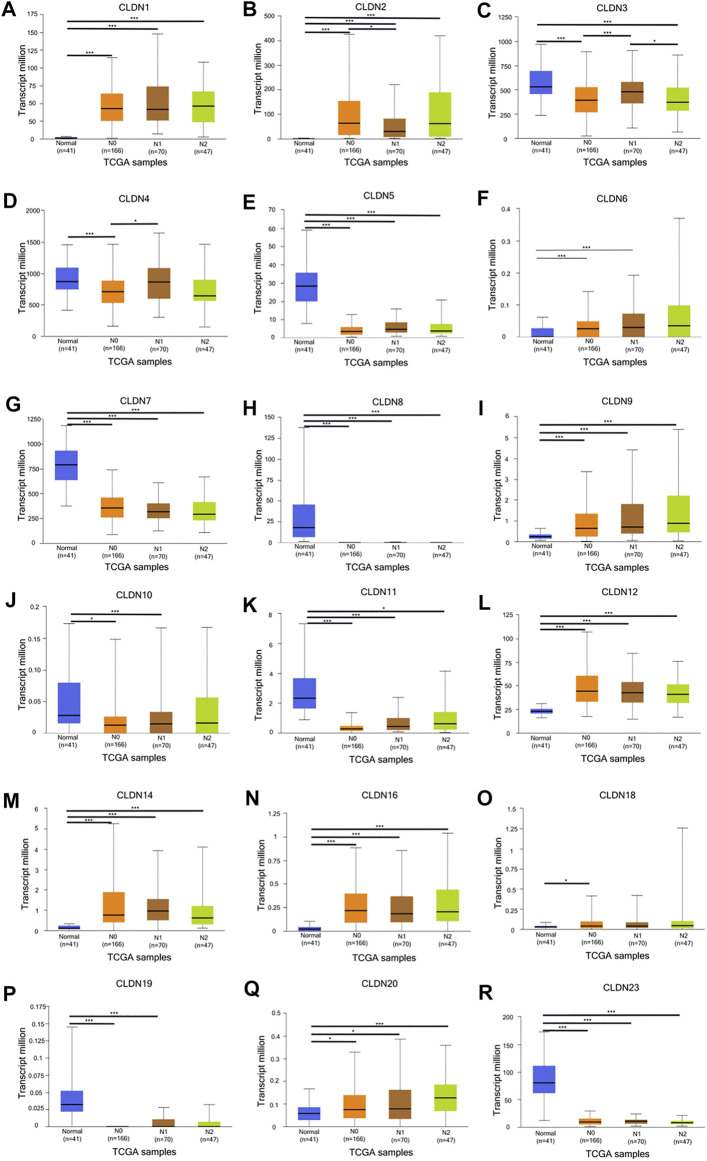
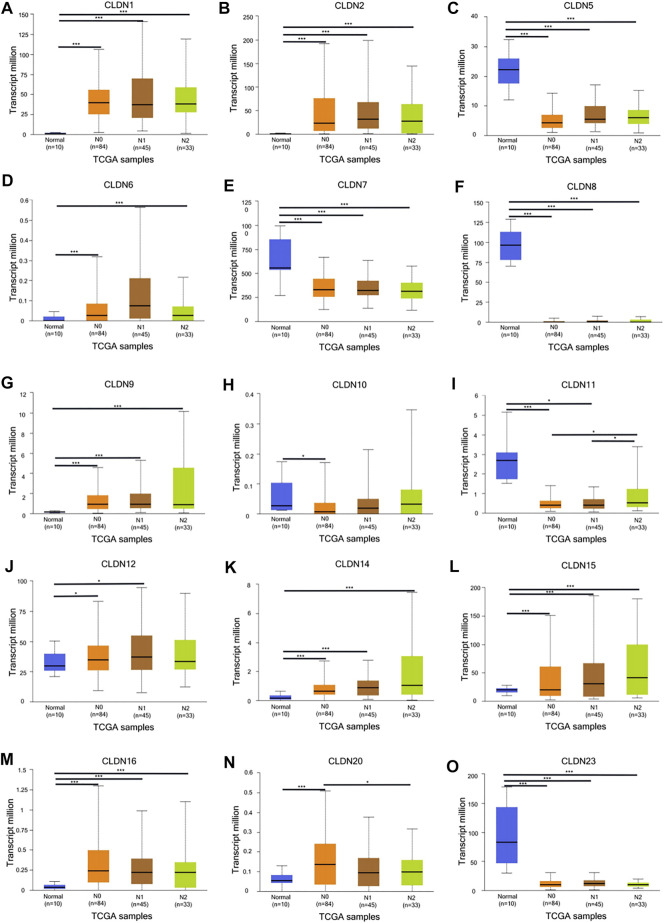
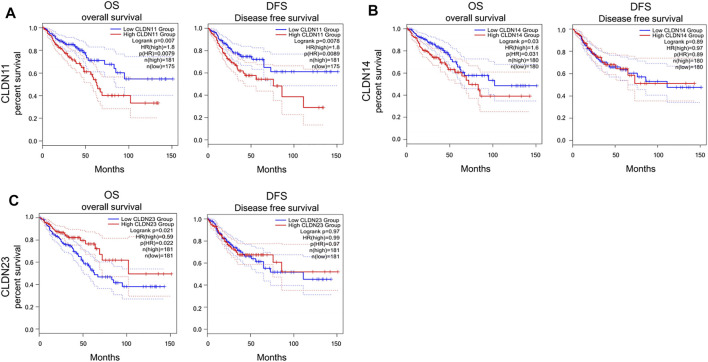
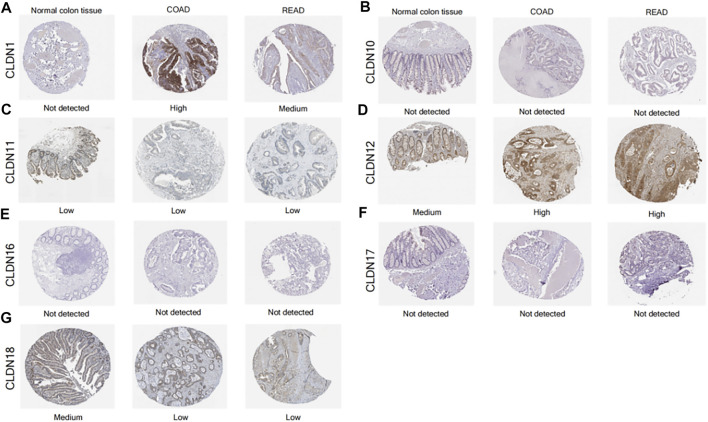
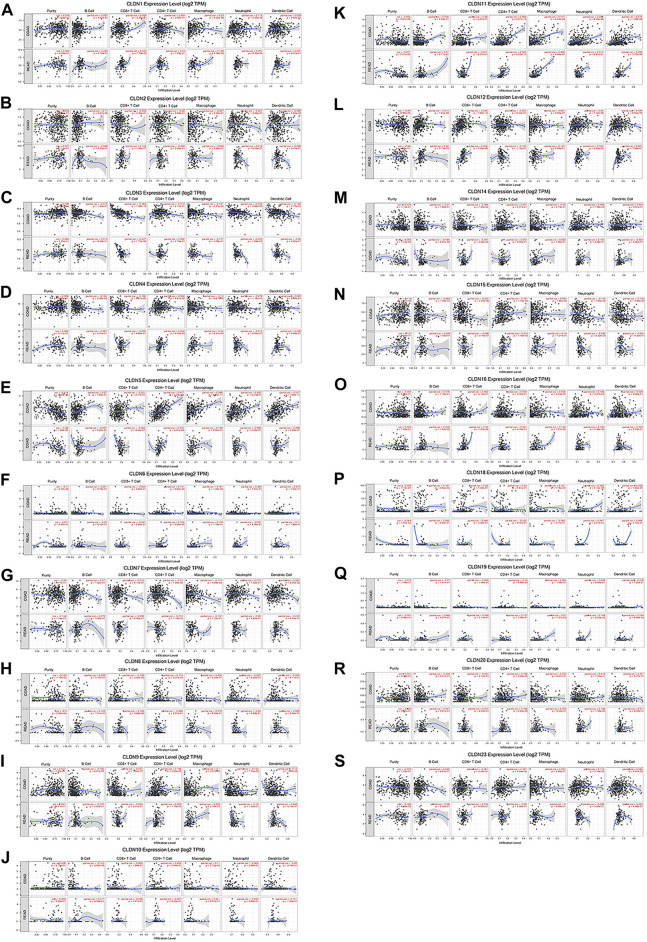
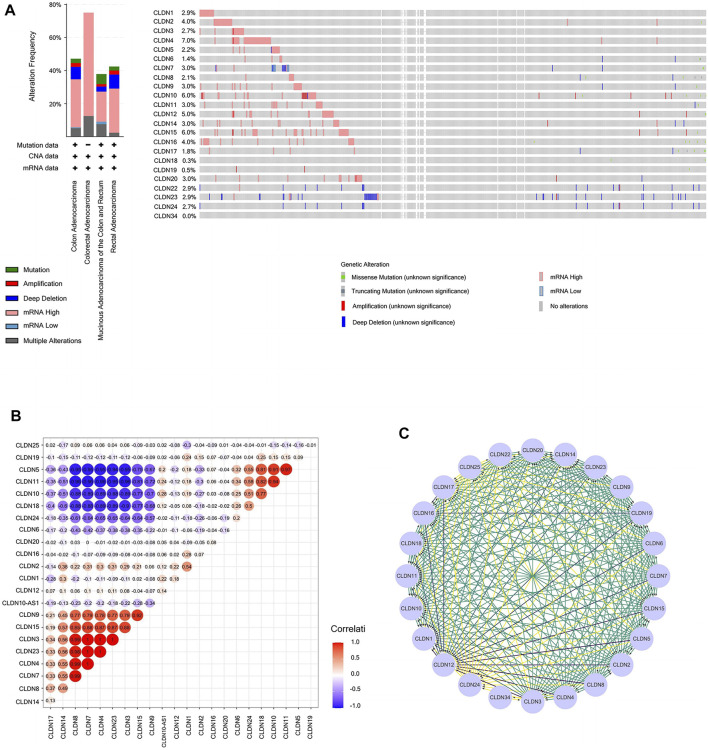
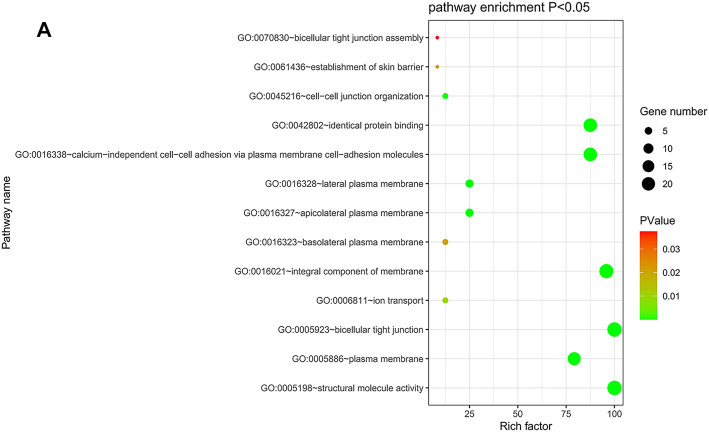
Claudins (CLDNs) are a family of closely related transmembrane proteins that have been linked to oncogenic transformation and metastasis across a range of cancers, suggesting that they may be valuable diagnostic and/or prognostic biomarkers that can be used to evaluate patient outcomes. However, CLDN expression patterns associated with colorectal cancer (CRC) remain to be defined. The mRNA levels of 21 different CLDN family genes were assessed across 20 tumor types using the Oncomine database. Correlations between these genes and patient clinical outcomes, immune cell infiltration, clinicopathological staging, lymph node metastasis, and mutational status were analyzed using the GEPIA, UALCAN, Human Protein Atlas, Tumor Immune Estimation Resource, STRING, Genenetwork, cBioportal, and DAVID databases in an effort to clarify the potential functional roles of different CLDN protein in CRC. Molecular docking analyses were used to probe potential interactions between CLDN4 and TGFβ1. Levels of CLDN4 and CLDN11 mRNA expression in clinical CRC patient samples and in the HT29 and HCT116 cell lines were assessed via qPCR. CLDN4 expression levels in these 2 cell lines were additionally assessed following TGFβ1 inhibitor treatment. These analyses revealed that COAD and READ tissues exhibited the upregulation of CLDN1, CLDN2, CLDN3, CLDN4, CLDN7, and CLDN12 as well as the downregulation of CLDN5 and CLDN11 relative to control tissues. Higher CLDN11 and CLDN14 expression as well as lower CLDN23 mRNA levels were associated with poorer overall survival (OS) outcomes. Moreover, CLDN2 and CLDN3 or CLDN11 mRNA levels were significantly associated with lymph node metastatic progression in COAD or READ lower in COAD and READ tissues. A positive correlation between the expression of CLDN11 and predicted macrophage, dendritic cell, and CD4 T cell infiltration was identified in CRC, with CLDN12 expression further being positively correlated with CD4 T cell infiltration whereas a negative correlation was observed between such infiltration and the expression of CLDN3 and CLDN15. A positive correlation between CLDN1, CLDN16, and neutrophil infiltration was additionally detected, whereas neutrophil levels were negatively correlated with the expression of CLDN3 and CLDN15. Molecular docking suggested that CLDN4 was able to directly bind via hydrogen bond with TGFβ1. Relative to paracancerous tissues, clinical CRC tumor tissue samples exhibited CLDN4 and CLDN11 upregulation and downregulation, respectively. LY364947 was able to suppress the expression of CLDN4 in both the HT29 and HCT116 cell lines. Together, these results suggest that the expression of different CLDN family genes is closely associated with CRC tumor clinicopathological staging and immune cell infiltration. Moreover, CLDN4 expression is closely associated with TGFβ1 in CRC, suggesting that it and other CLDN family members may represent viable targets for antitumor therapeutic intervention.
紧密连接蛋白(CLDNs)是一族密切相关的跨膜蛋白,在多种癌症中与致癌转化和转移相关,这表明它们可能是有价值的诊断和/或预后生物标志物,可用于评估患者预后。然而,与结直肠癌(CRC)相关的CLDN表达模式仍有待确定。利用Oncomine数据库评估了21种不同CLDN家族基因在20种肿瘤类型中的mRNA水平。使用GEPIA、UALCAN、人类蛋白质图谱、肿瘤免疫估计资源、STRING、基因网络、cBioPortal和DAVID数据库分析了这些基因与患者临床预后、免疫细胞浸润、临床病理分期、淋巴结转移和突变状态之间的相关性,以阐明不同CLDN蛋白在CRC中的潜在功能作用。分子对接分析用于探究CLDN4与TGFβ1之间的潜在相互作用。通过qPCR评估临床CRC患者样本以及HT29和HCT116细胞系中CLDN4和CLDN11 mRNA的表达水平。在TGFβ1抑制剂处理后,还对这两种细胞系中的CLDN4表达水平进行了评估。这些分析显示,与对照组织相比,COAD和READ组织中CLDN1、CLDN2、CLDN3、CLDN4、CLDN7和CLDN12上调,而CLDN5和CLDN11下调。CLDN11和CLDN14表达较高以及CLDN23 mRNA水平较低与较差的总生存期(OS)结果相关。此外,CLDN2和CLDN3或CLDN11 mRNA水平与COAD或READ中淋巴结转移进展显著相关,在COAD和READ组织中较低。在CRC中,CLDN11的表达与预测的巨噬细胞、树突状细胞和CD4 T细胞浸润呈正相关,CLDN12的表达与CD4 T细胞浸润进一步呈正相关,而这种浸润与CLDN3和CLDN15的表达呈负相关。还检测到CLDN1、CLDN16与中性粒细胞浸润呈正相关,而中性粒细胞水平与CLDN3和CLDN15的表达呈负相关。分子对接表明,CLDN4能够通过氢键与TGFβ1直接结合。相对于癌旁组织,临床CRC肿瘤组织样本中CLDN4上调而CLDN11下调。LY364947能够抑制HT29和HCT116细胞系中CLDN4的表达。总之,这些结果表明不同CLDN家族基因的表达与CRC肿瘤临床病理分期和免疫细胞浸润密切相关。此外,CRC中CLDN4的表达与TGFβ1密切相关,这表明它和其他CLDN家族成员可能是抗肿瘤治疗干预可行的靶点。