Department of Neurology and Algology, Neuropsychiatry Center, Neuroscience and Neurotechnology Center (NÖROM), Gazi University Faculty of Medicine, Besevler, Ankara, Turkey.
Neurovascular Research Lab, Department of Radiology, Massachusetts General Hospital, Harvard Medical School, MA, Charlestown, USA.
J Headache Pain. 2022 Mar 14;23(1):36. doi: 10.1186/s10194-022-01405-z.
BACKGROUND/AIM: Certain constituents in migraine food triggers and non-steroidal anti-inflammatory drugs (NSAIDs) inhibit sulfotransferases (SULTs) that detoxify drugs/chemicals and play role in the metabolism of neurotransmitters. We aimed to dissect SULT1A1 modulation of CSD susceptibility and behavior in an in vivo experimental model using hesperidin, a SULT1A1 inhibitor found in citrus fruits (known migraine triggers) and mefenamic acid (SULT1A1 inhibitor), an NSAID to simulate medication overuse.
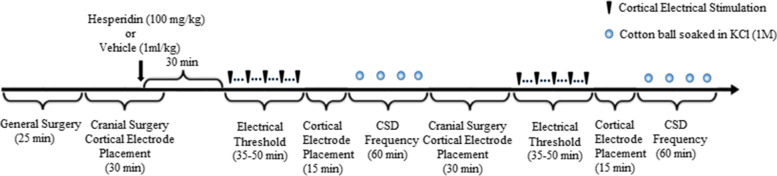
Hesperidin was used as SULT1A1 inhibitor found in citrus fruits, known migraine triggers and mefenamic acid (NSAID), another SULT1A1 inhibitor, was used to induce MO in rats. The groups were; 1) Hesperidin (ip) or its vehicle-DMSO (ip) 2) Chronic (4 weeks) mefenamic acid (ip) or its vehicle (ip) 3) Chronic mefenamic acid+hesperidin (ip) or DMSO (ip). CSD susceptibility was evaluated and behavioral testing was performed. SULT1A1 enzyme activity was measured in brain samples.
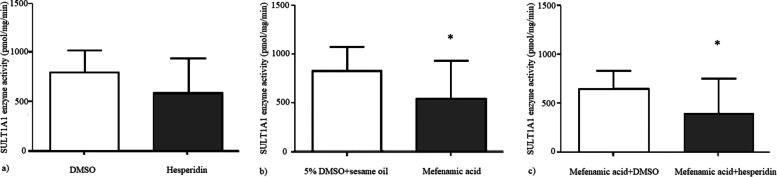
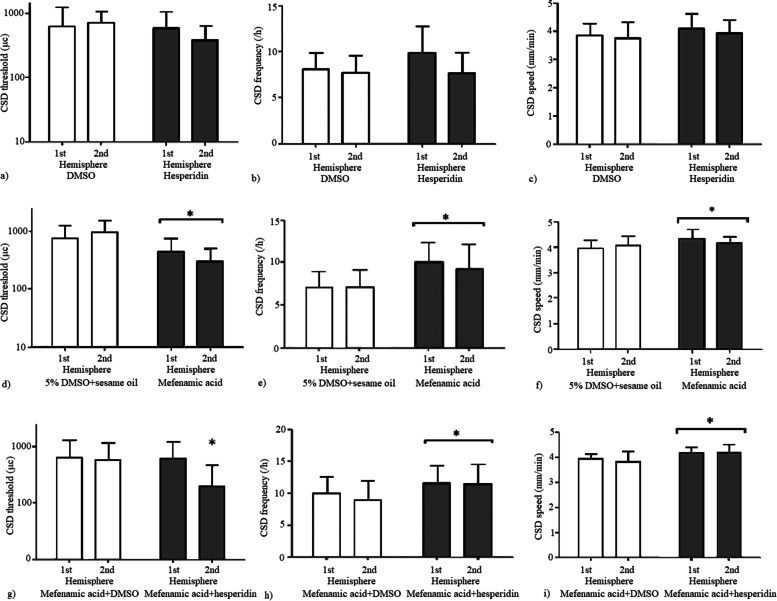
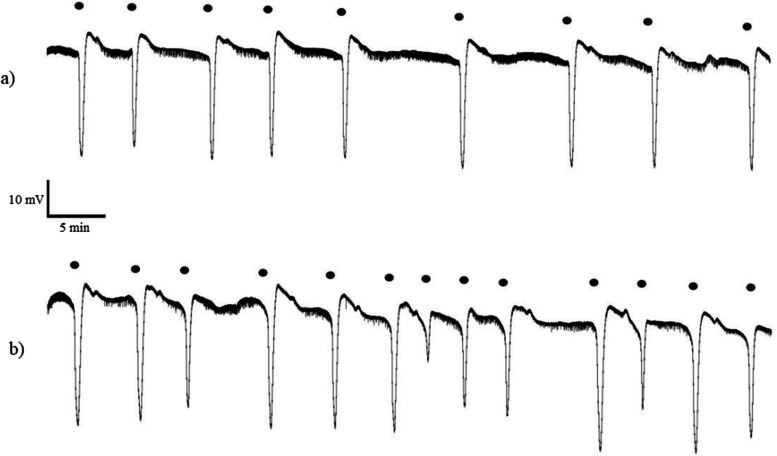
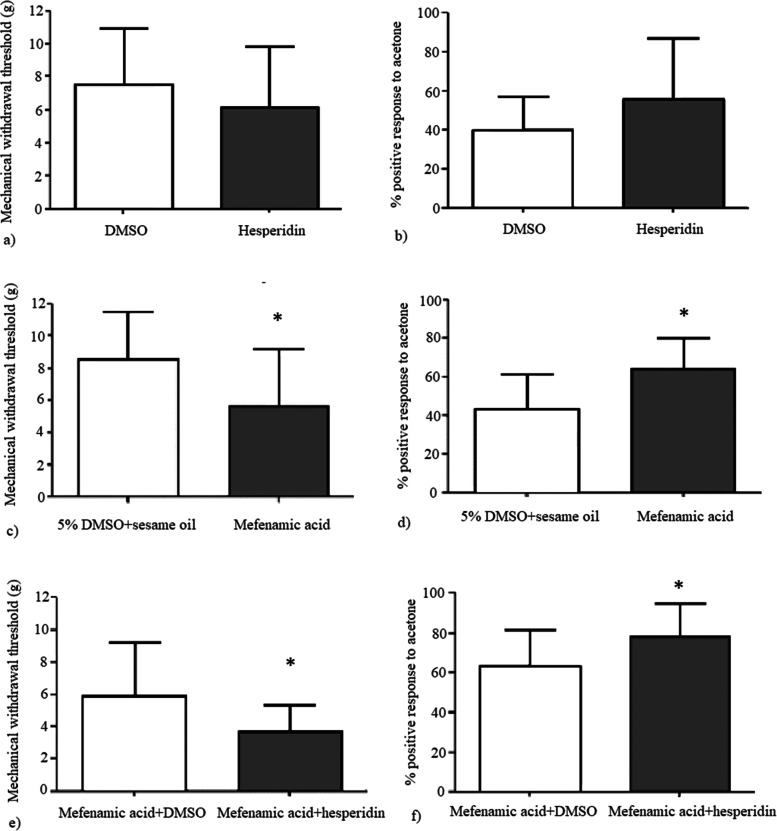
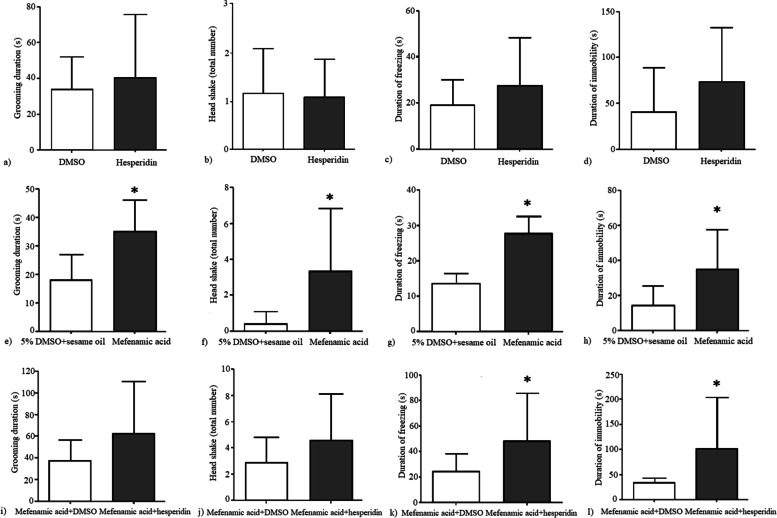
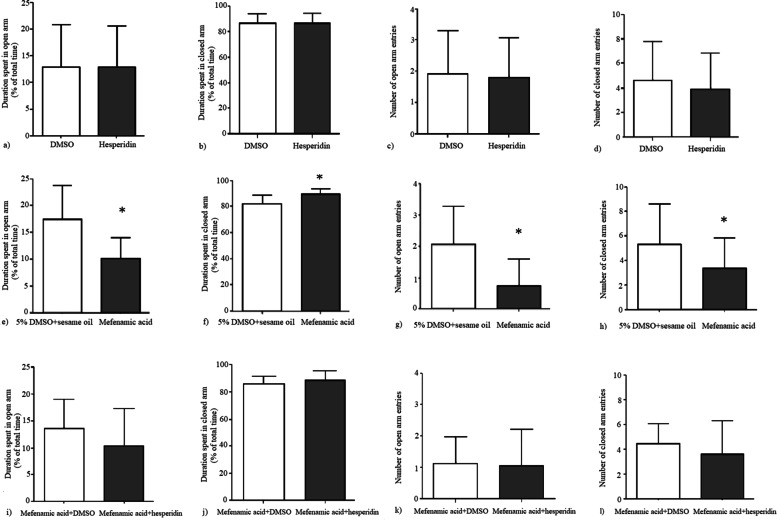
Single-dose of hesperidin neither changed CSD susceptibility nor resulted in any behavioral change. Chronic mefenamic acid exposure resulted in increased CSD susceptibility, mechanical-thermal hypersensitivity, increased head shake, grooming and freezing and decreased locomotion. Single dose hesperidin administration after chronic mefenamic acid exposure resulted in increased CSD susceptibility and mechanical-thermal hypersensitivity, increased freezing and decreased locomotion. SULT1A1 enzyme activity was lower in mefenamic acid and mefenamic acid+hesperidin groups compared to their vehicles.
Mefenamic acid and hesperidin have synergistic effect in modulating CSD susceptibility and pain behavior. Sulfotransferase inhibition may be the common mechanism by which food triggers and NSAIDs modulate migraine susceptibility. Further investigations regarding human provocation studies using hesperidin in migraine patients with medication overuse are needed.
背景/目的:偏头痛食物诱因和非甾体抗炎药(NSAIDs)中的某些成分抑制磺基转移酶(SULTs),这些酶可以解毒药物/化学物质,并在神经递质代谢中发挥作用。我们旨在使用橙皮苷(一种在柑橘类水果中发现的 SULT1A1 抑制剂,已知是偏头痛的诱因)和甲芬那酸(一种 NSAID,也是 SULT1A1 抑制剂),在体内实验模型中剖析 SULT1A1 对 CSD 易感性和行为的调节作用,以模拟药物滥用。
橙皮苷被用作柑橘类水果中发现的 SULT1A1 抑制剂,已知是偏头痛的诱因,而甲芬那酸(NSAID)则用于诱导大鼠的 MO。这些组包括:1)橙皮苷(ip)或其载体 DMSO(ip)2)慢性(4 周)甲芬那酸(ip)或其载体(ip)3)慢性甲芬那酸+橙皮苷(ip)或 DMSO(ip)。评估 CSD 易感性并进行行为测试。测量脑样本中的 SULT1A1 酶活性。
单次给予橙皮苷既不会改变 CSD 易感性,也不会导致任何行为改变。慢性甲芬那酸暴露导致 CSD 易感性增加、机械热过敏、摇头、梳理和冻结增加以及运动减少。慢性甲芬那酸暴露后单次给予橙皮苷导致 CSD 易感性增加、机械热过敏、冻结增加和运动减少。与载体相比,甲芬那酸和甲芬那酸+橙皮苷组的 SULT1A1 酶活性较低。
甲芬那酸和橙皮苷在调节 CSD 易感性和疼痛行为方面具有协同作用。磺基转移酶抑制可能是食物诱因和 NSAIDs 调节偏头痛易感性的共同机制。需要对使用橙皮苷在偏头痛患者药物滥用中进行人体激发研究进行进一步调查。