Division of Cancer Prevention and Control, National Centers for Chronic Disease Prevention and Health Promotion, Centers for Disease Control and Prevention, Atlanta, GA, United States of America.
Immunization Services Division, National Center for Immunization and Respiratory Diseases, Centers for Disease Control and Prevention, Atlanta, GA, United States of America.
Prev Med. 2022 Jun;159:107019. doi: 10.1016/j.ypmed.2022.107019. Epub 2022 Mar 10.
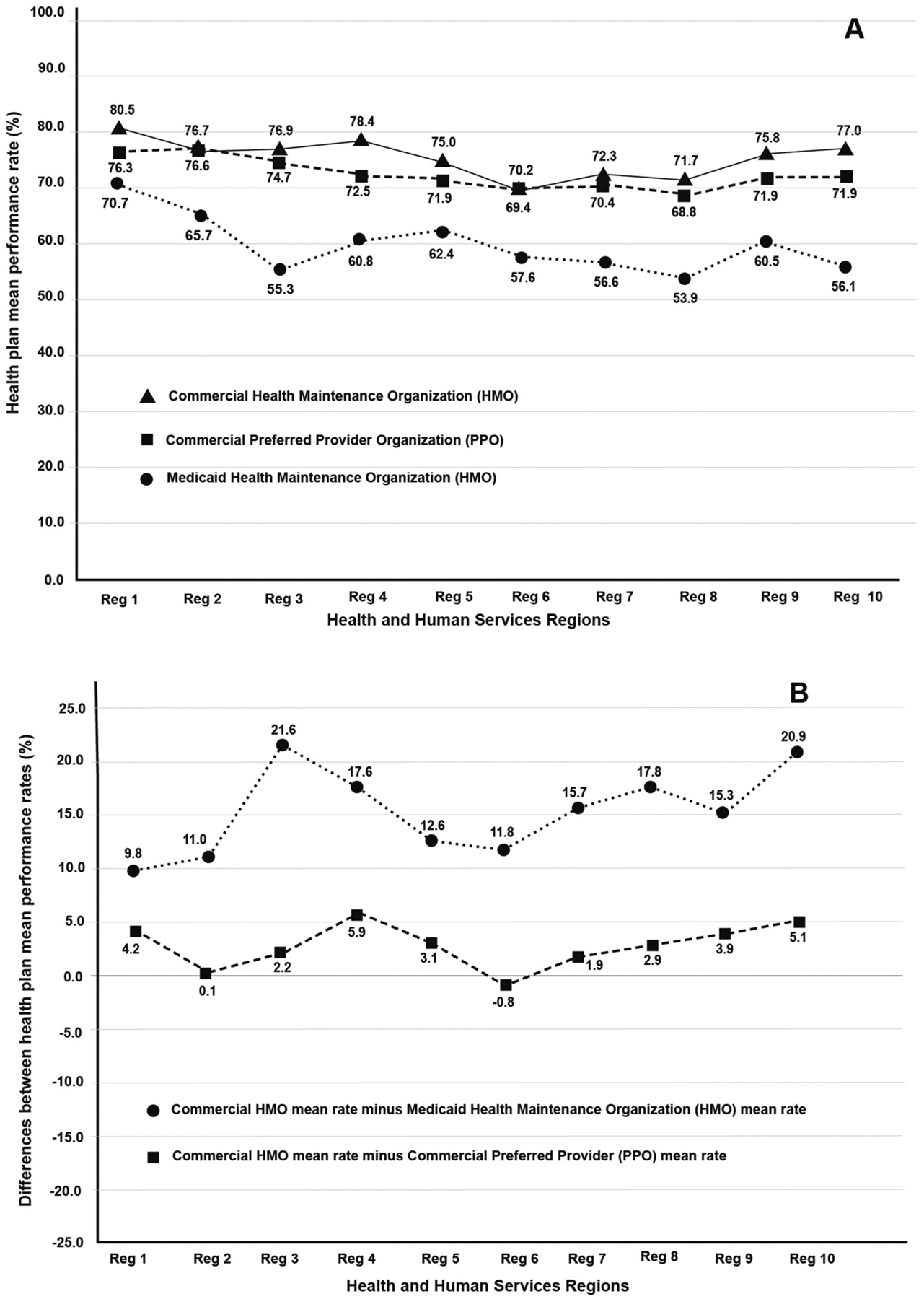
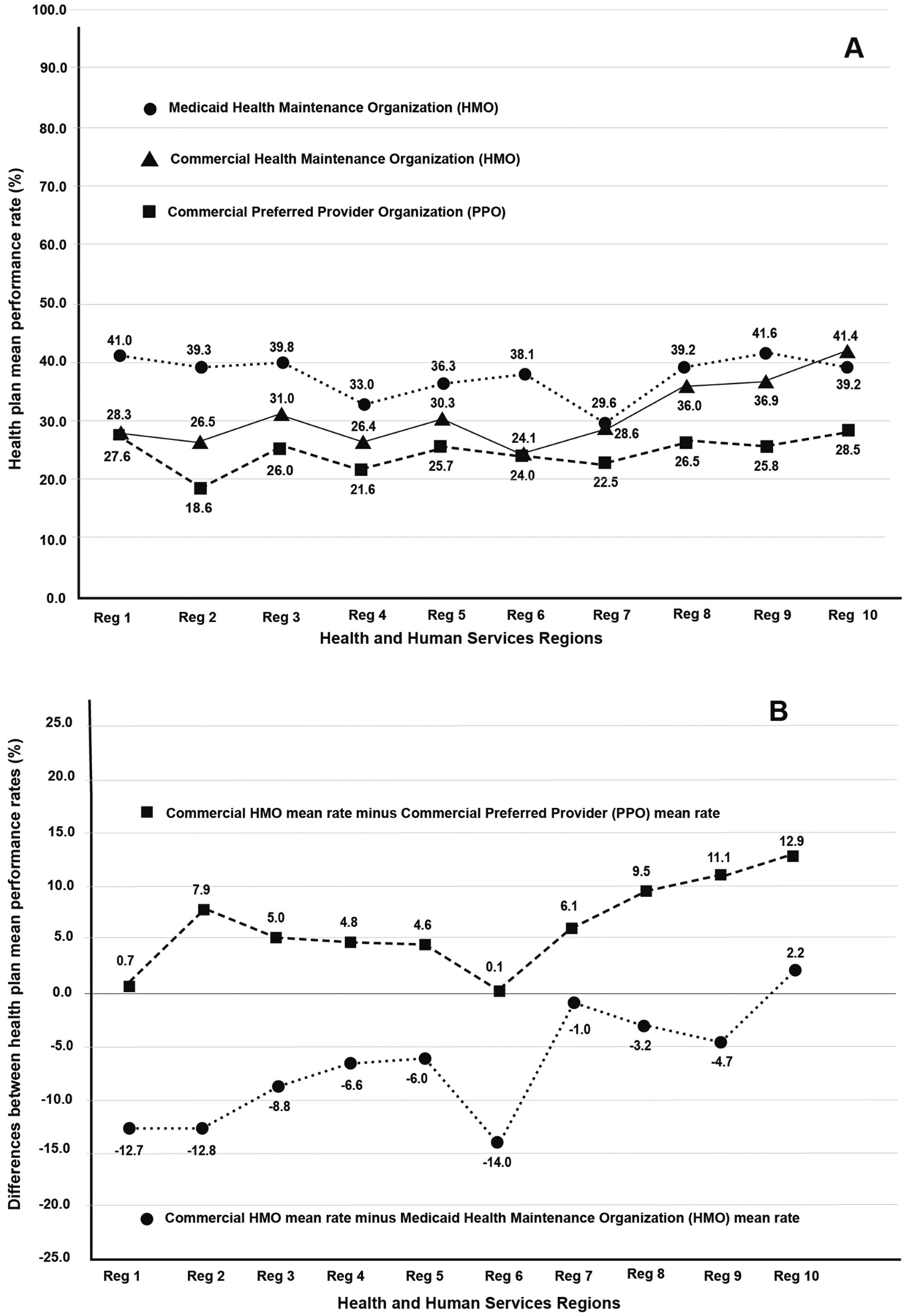
Human papilloma virus (HPV) vaccination for adolescents aged 11-12 years and cervical cancer screening for women aged 21-65 years are recommended to help prevent cervical cancer. The purpose of this study was to describe 2018 National Committee for Quality Assurance (NCQA) Healthcare Effectiveness Data and Information Set (HEDIS®) data for the United States on HPV vaccination and cervical cancer screening from 275 commercial preferred provider organizations (PPOs), 219 commercial health maintenance organizations (HMOs), and 204 Medicaid HMOs. The Centers for Disease Control and Prevention and NCQA analyzed the data in 2021. The HEDIS® measure for HPV vaccination was the percentage of male and female adolescents aged 13 years who completed HPV immunization (2- or 3-dose series) on or before their 13th birthday. The measure for cervical cancer screening was the percentage of women screened either with cervical cytology within the last 3 years for women aged 21-64 years or with cervical cytology/HPV co-testing within the last 5 years for women aged 30-64 years. Nationally, the mean rate for HPV vaccination in 2018 was 37.8% in Medicaid HMOs, 30.3% in commercial HMOs, and 24.9% in commercial PPOs. The mean rate for cervical cancer screening was 75.9% in commercial HMOs, 72.6% in commercial PPOs, and 60.3% among Medicaid HMOs. Medicaid HMOs reported higher HPV vaccination rates but lower cervical cancer screening rates than commercial plans. These differences raise questions about explanatory factors and how to improve prevention performance by plan category.
人乳头瘤病毒(HPV)疫苗接种用于 11-12 岁青少年,宫颈癌筛查用于 21-65 岁女性,这两项措施有助于预防宫颈癌。本研究的目的是描述美国 275 家商业首选提供者组织(PPO)、219 家商业健康维护组织(HMO)和 204 家医疗补助 HMO 于 2018 年在全国质量保证委员会(NCQA)医疗保健效果数据和信息集(HEDIS®)中报告的 HPV 疫苗接种和宫颈癌筛查数据。美国疾病控制与预防中心和 NCQA 于 2021 年分析了这些数据。HPV 疫苗接种的 HEDIS®衡量标准是,在 13 岁生日之前完成 HPV 免疫接种(2 剂或 3 剂系列)的 13 岁男女性青少年的比例。宫颈癌筛查的衡量标准是,在过去 3 年内,对 21-64 岁的女性进行宫颈细胞学检查,或对 30-64 岁的女性进行宫颈细胞学/HPV 联合检测的女性比例。在全国范围内,2018 年 Medicaid HMO 中 HPV 疫苗接种率的平均值为 37.8%,商业 HMO 中的平均值为 30.3%,商业 PPO 中的平均值为 24.9%。宫颈癌筛查的平均比率在商业 HMO 中为 75.9%,在商业 PPO 中为 72.6%,在 Medicaid HMO 中为 60.3%。与商业计划相比, Medicaid HMO 报告 HPV 疫苗接种率较高,但宫颈癌筛查率较低。这些差异引发了关于解释因素的问题,以及如何按计划类别提高预防效果。